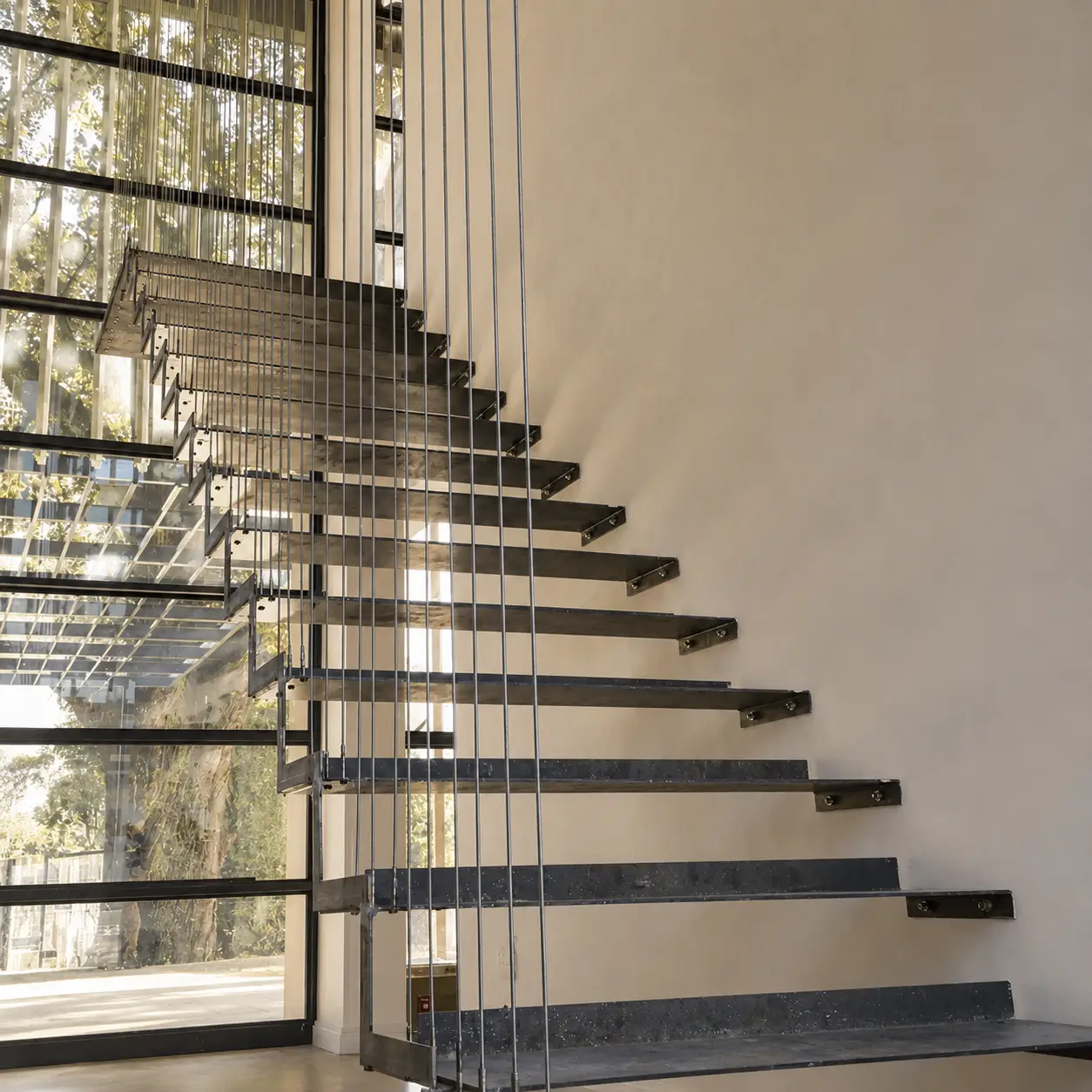
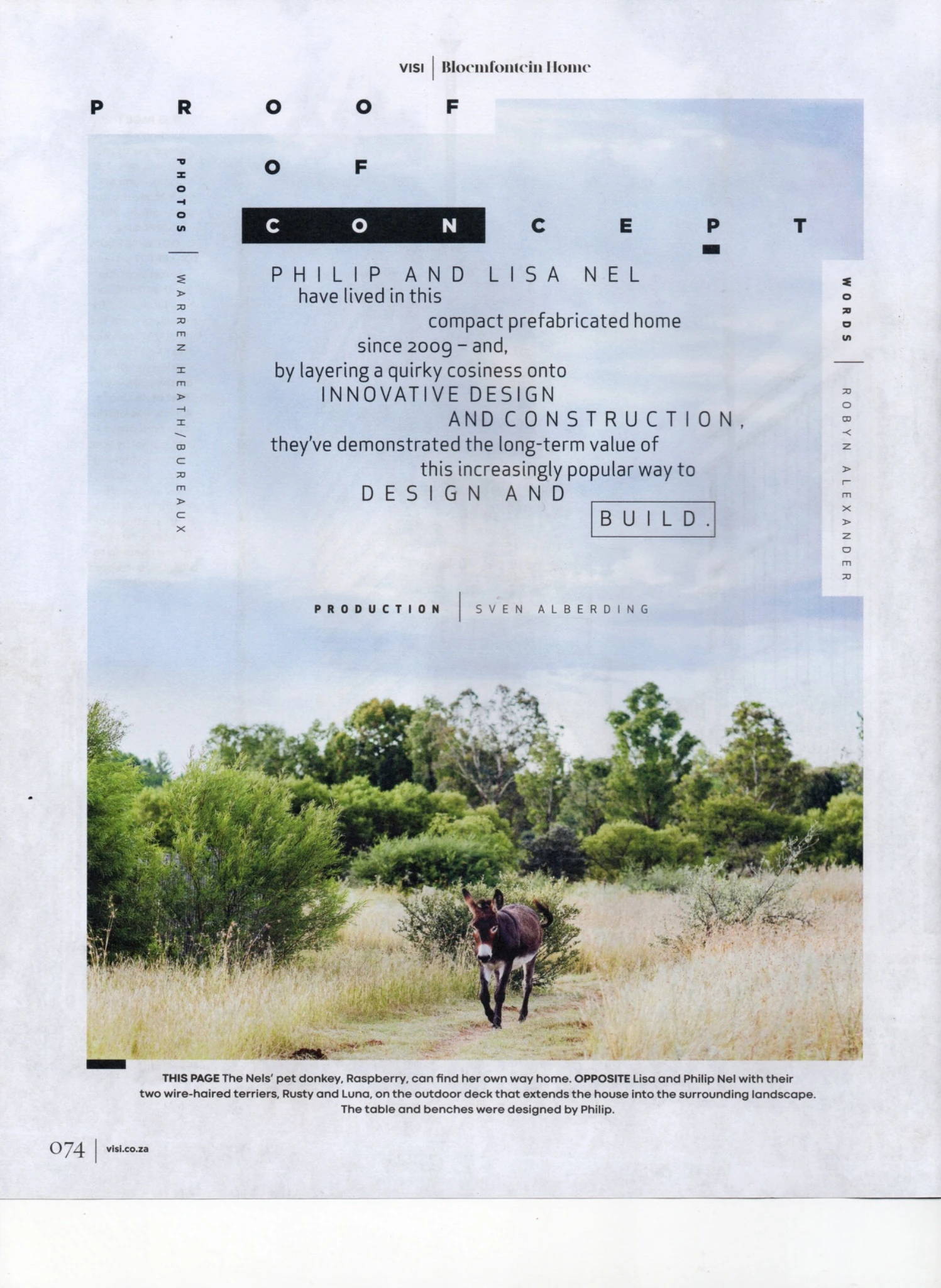
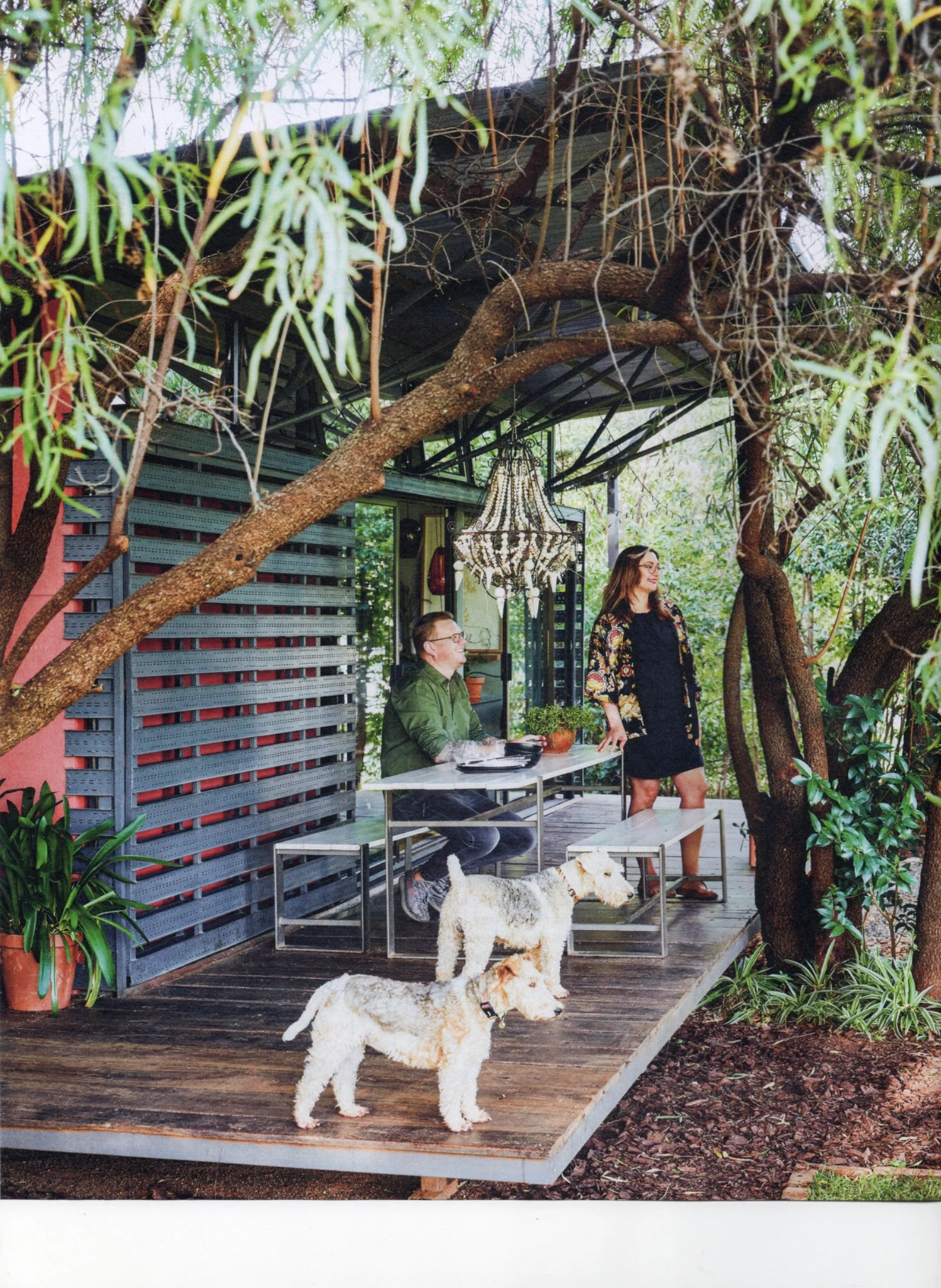
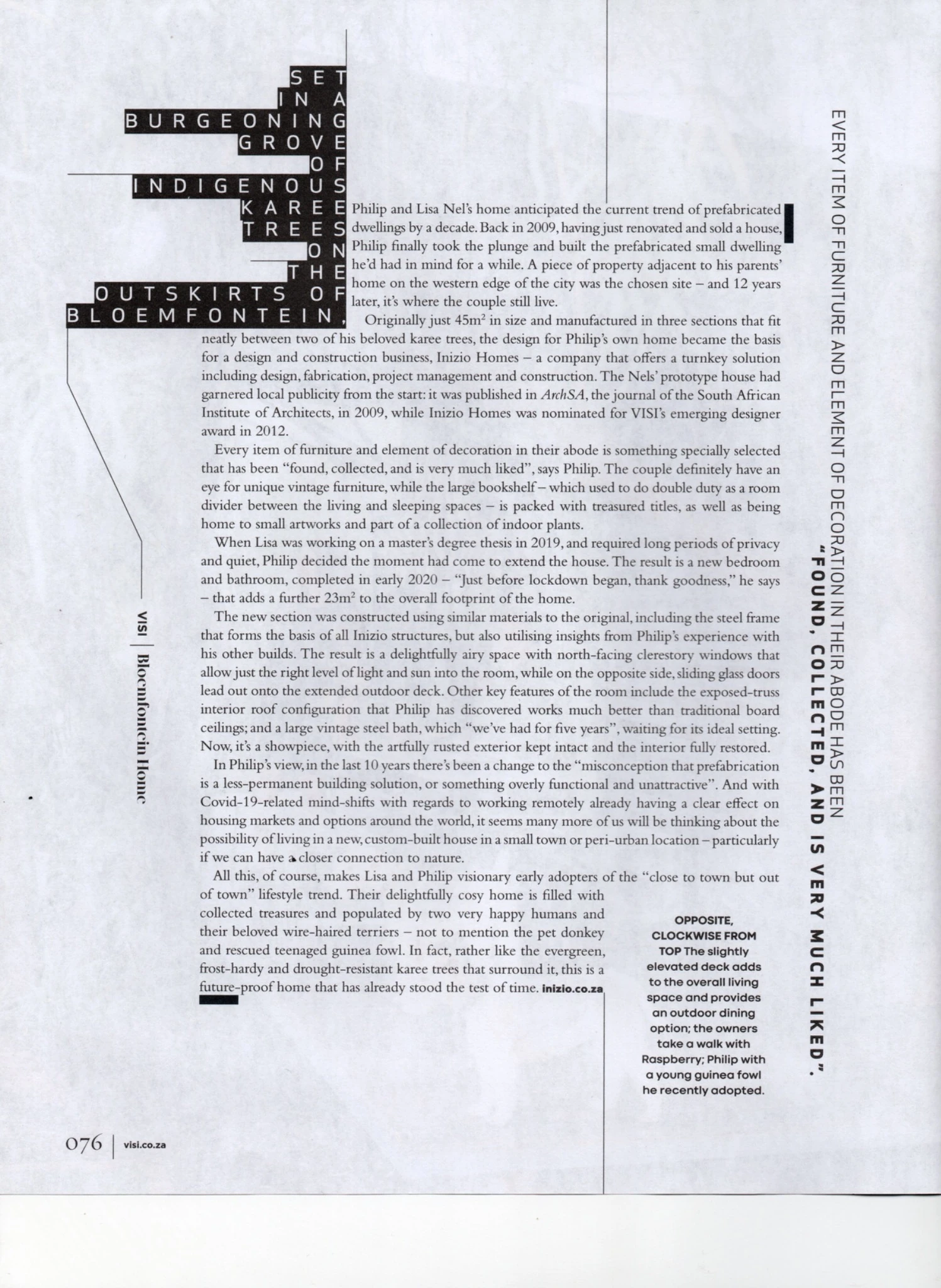
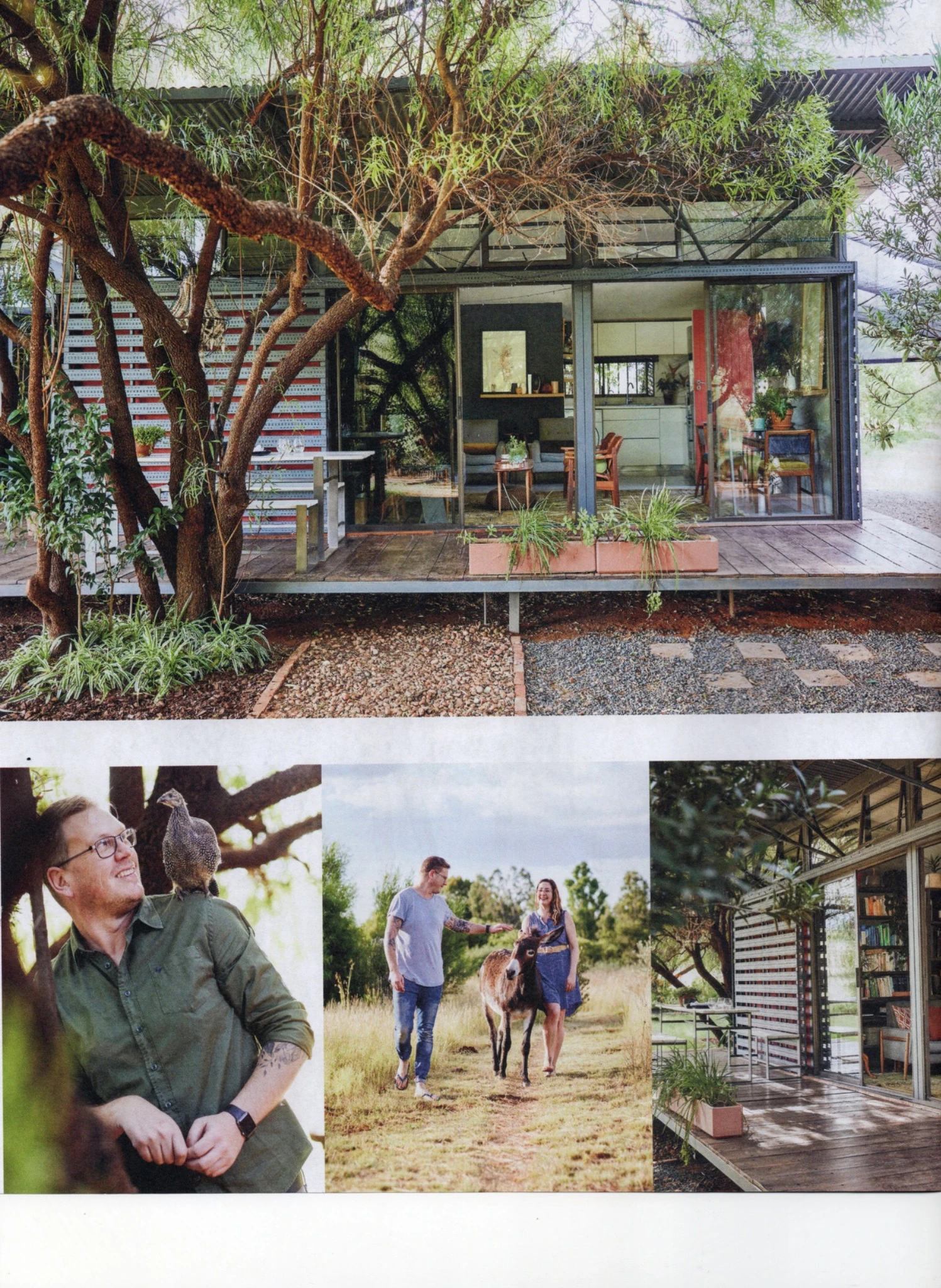
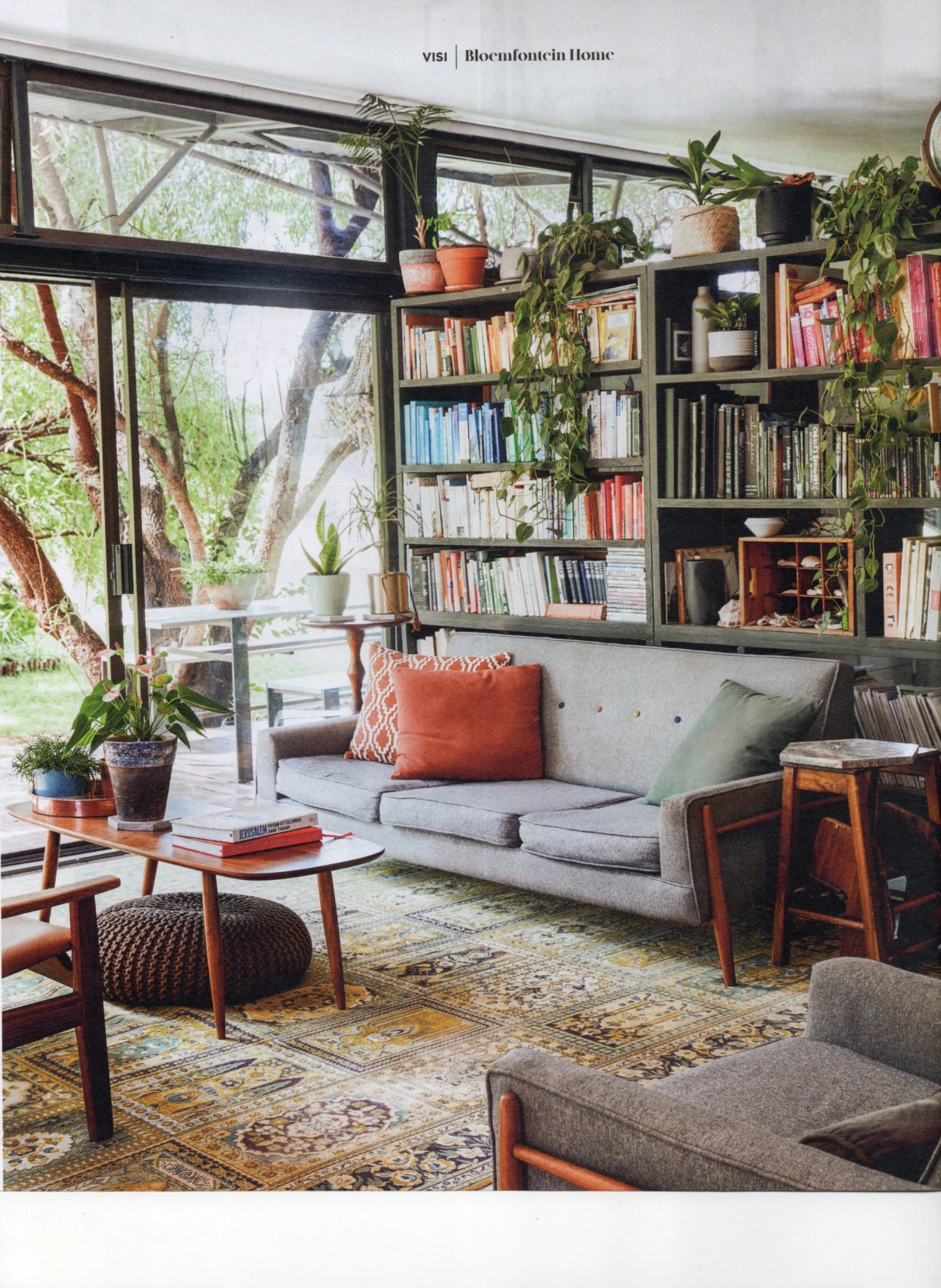
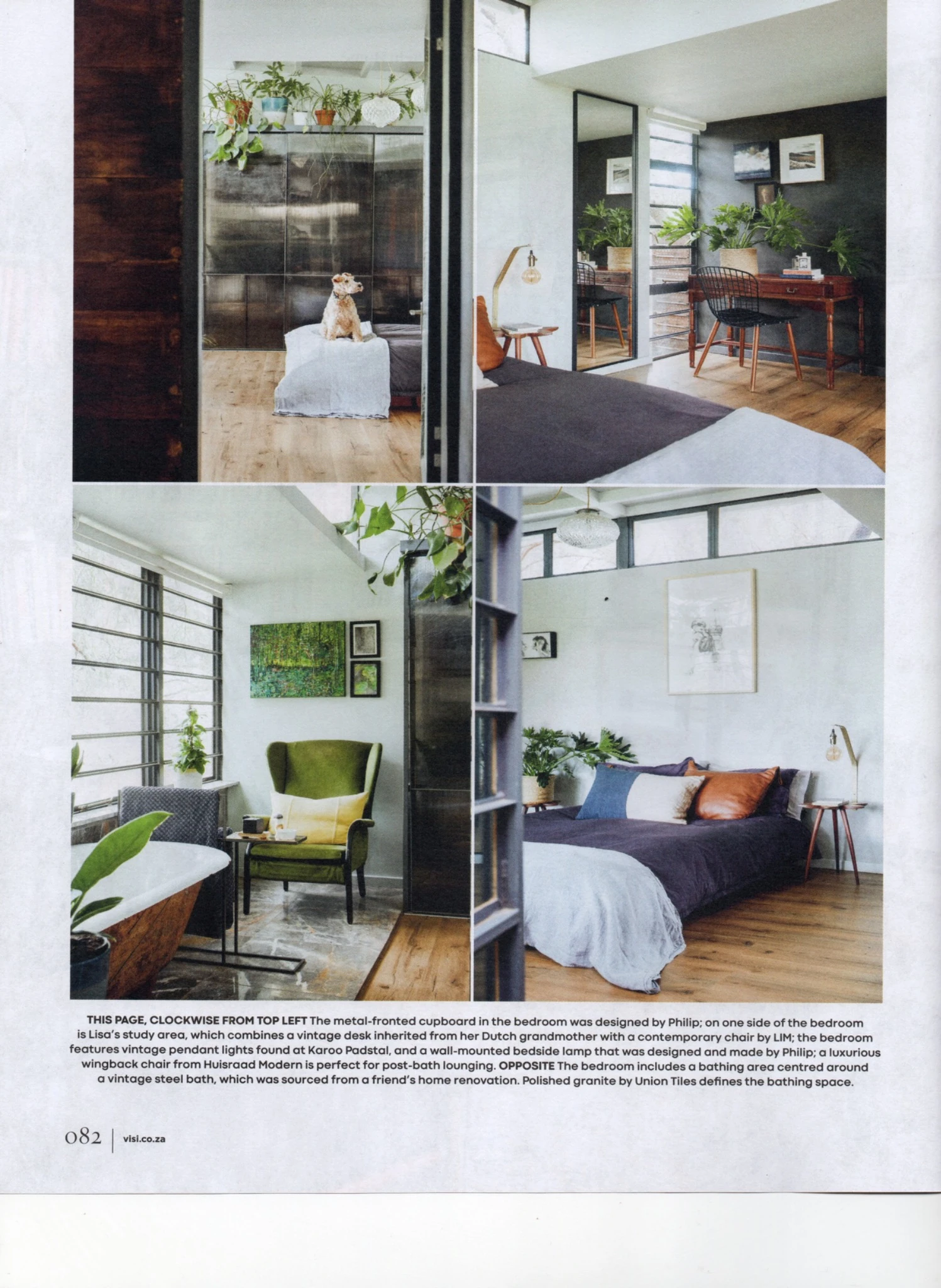
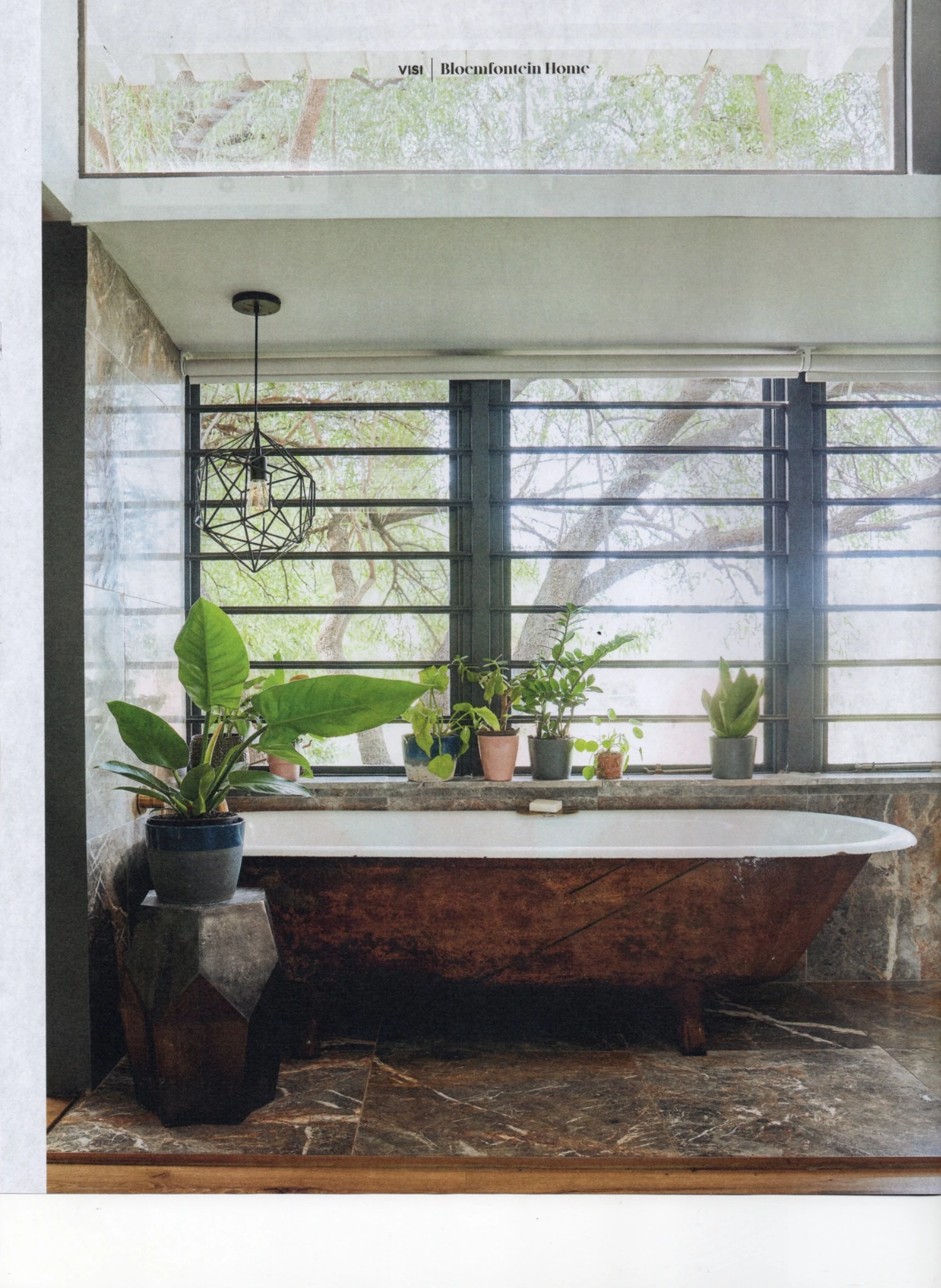
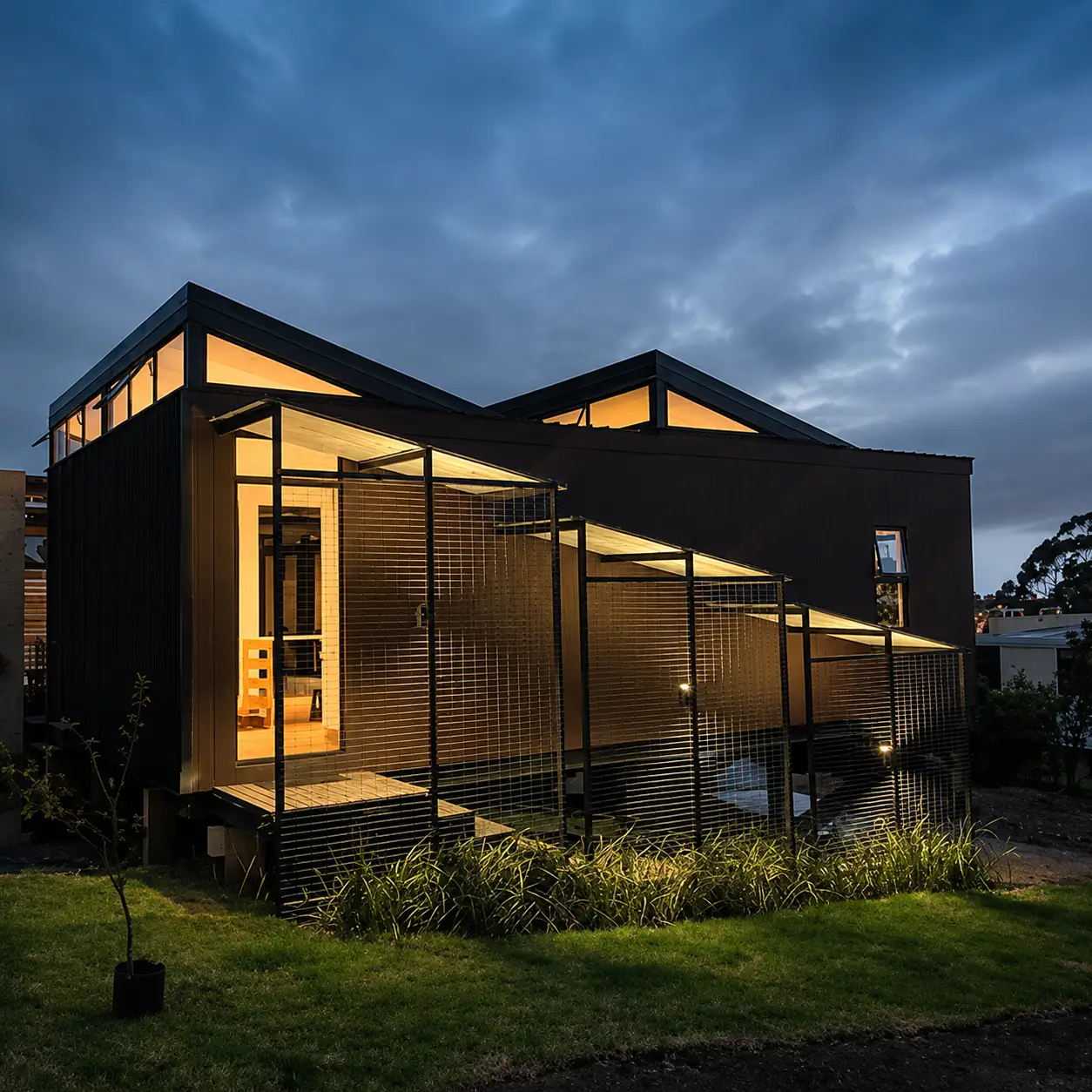
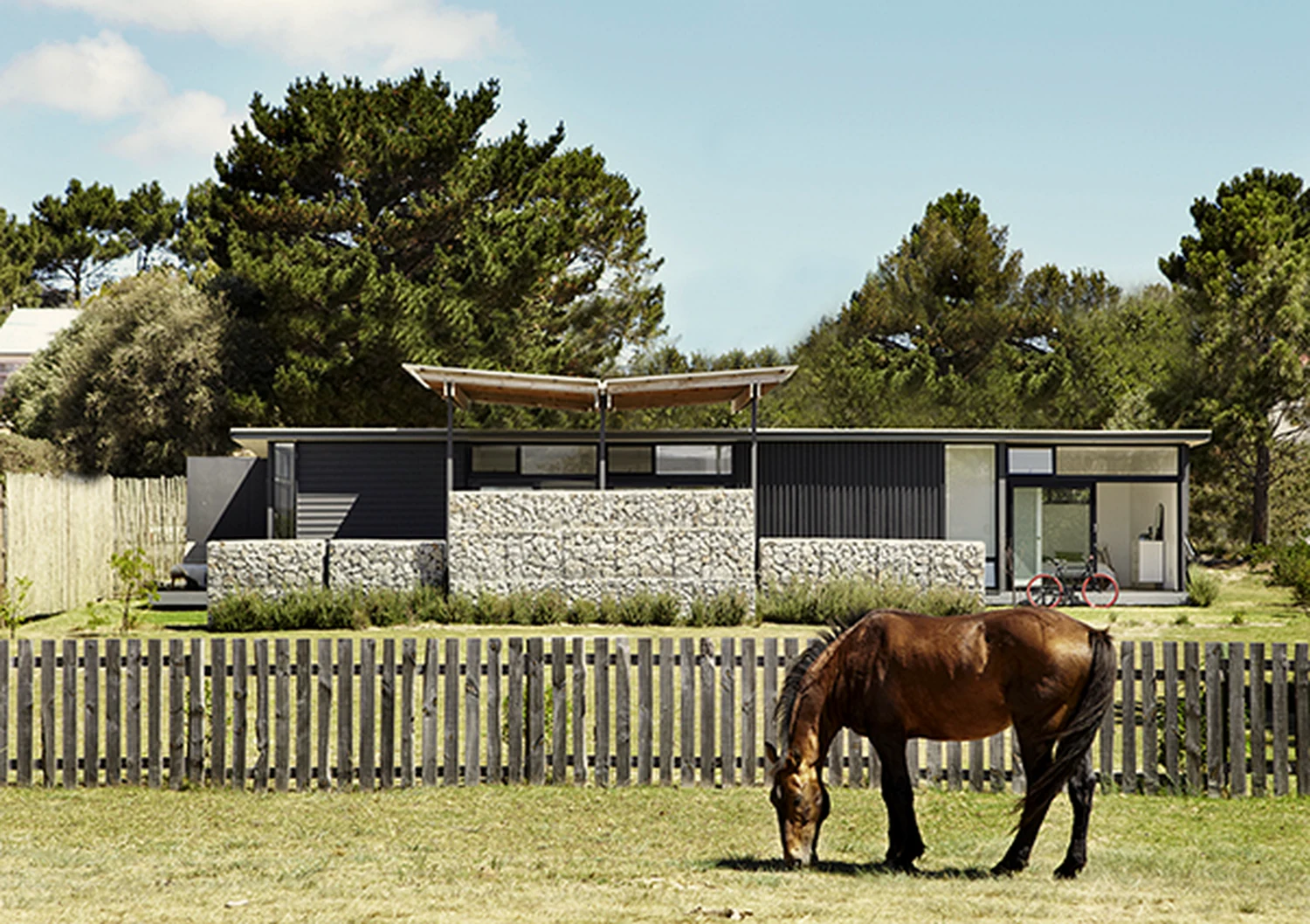
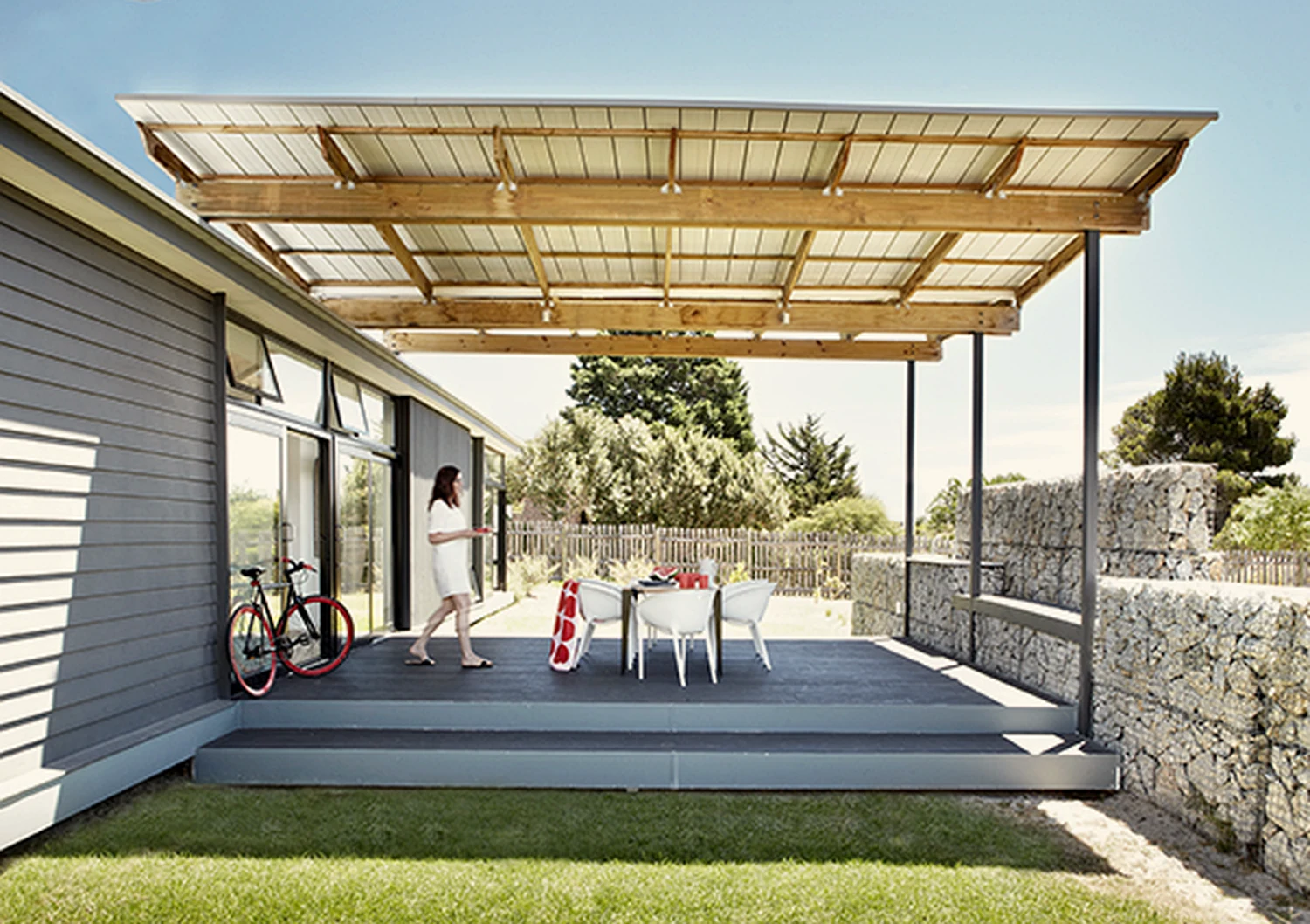
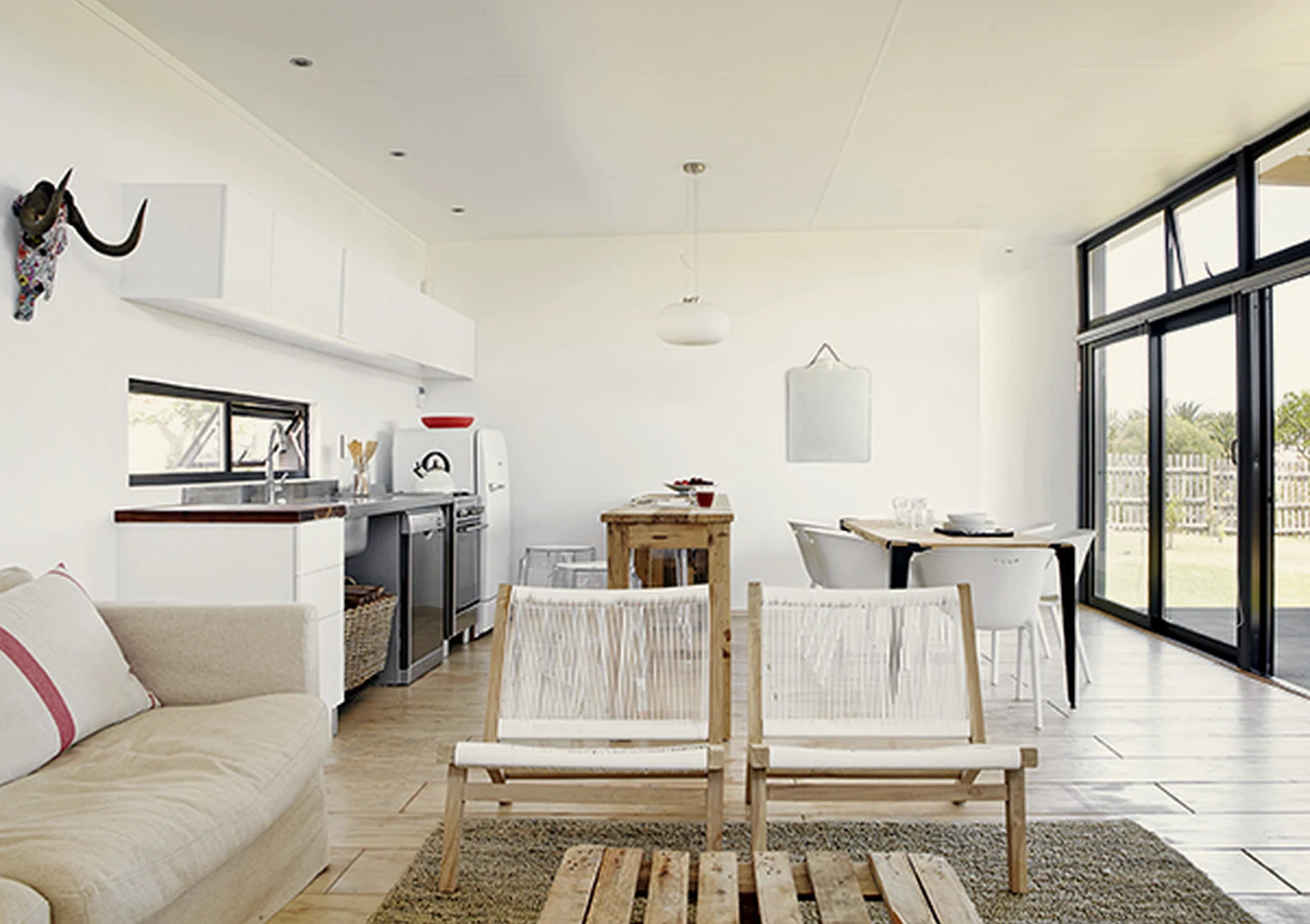
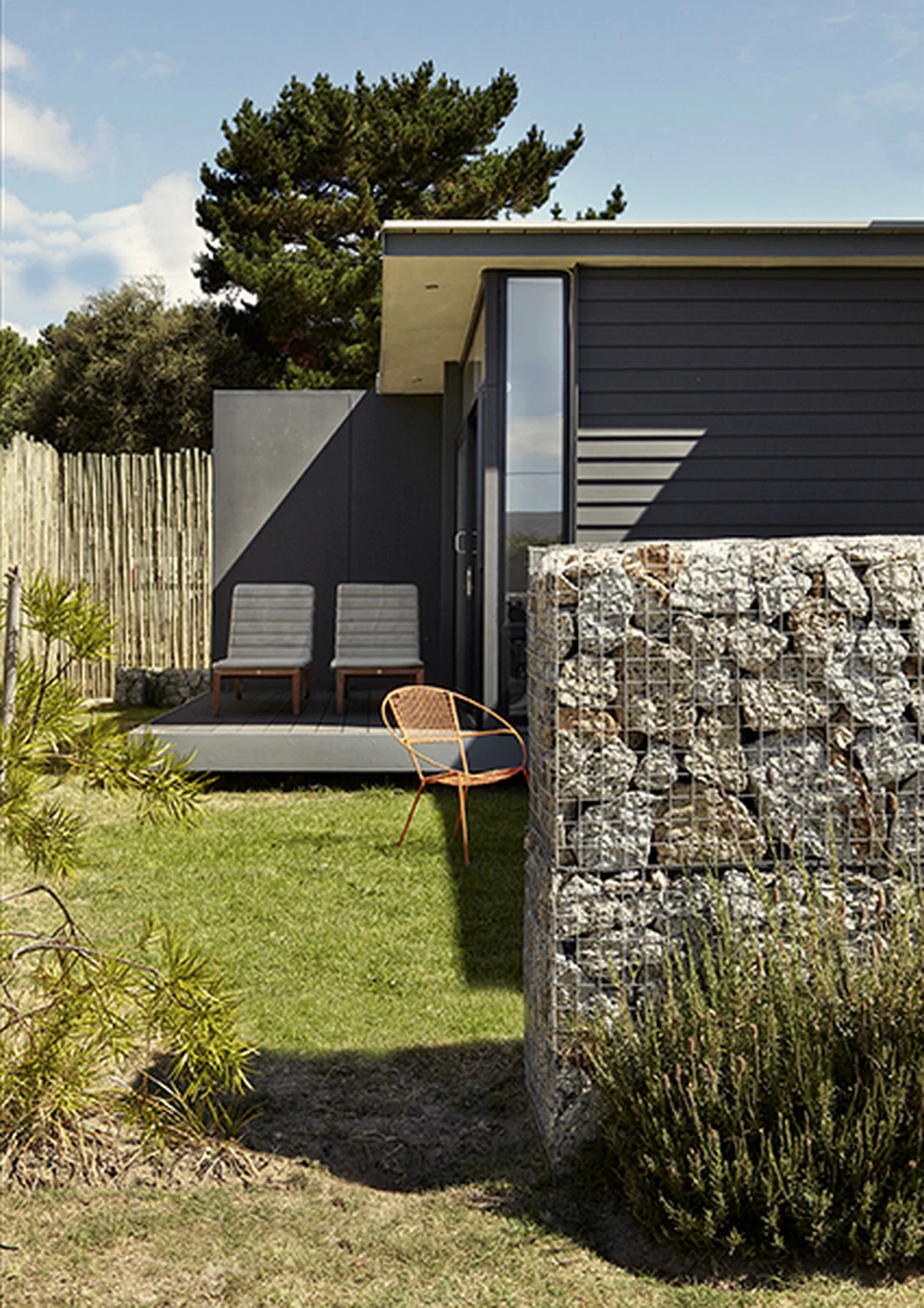
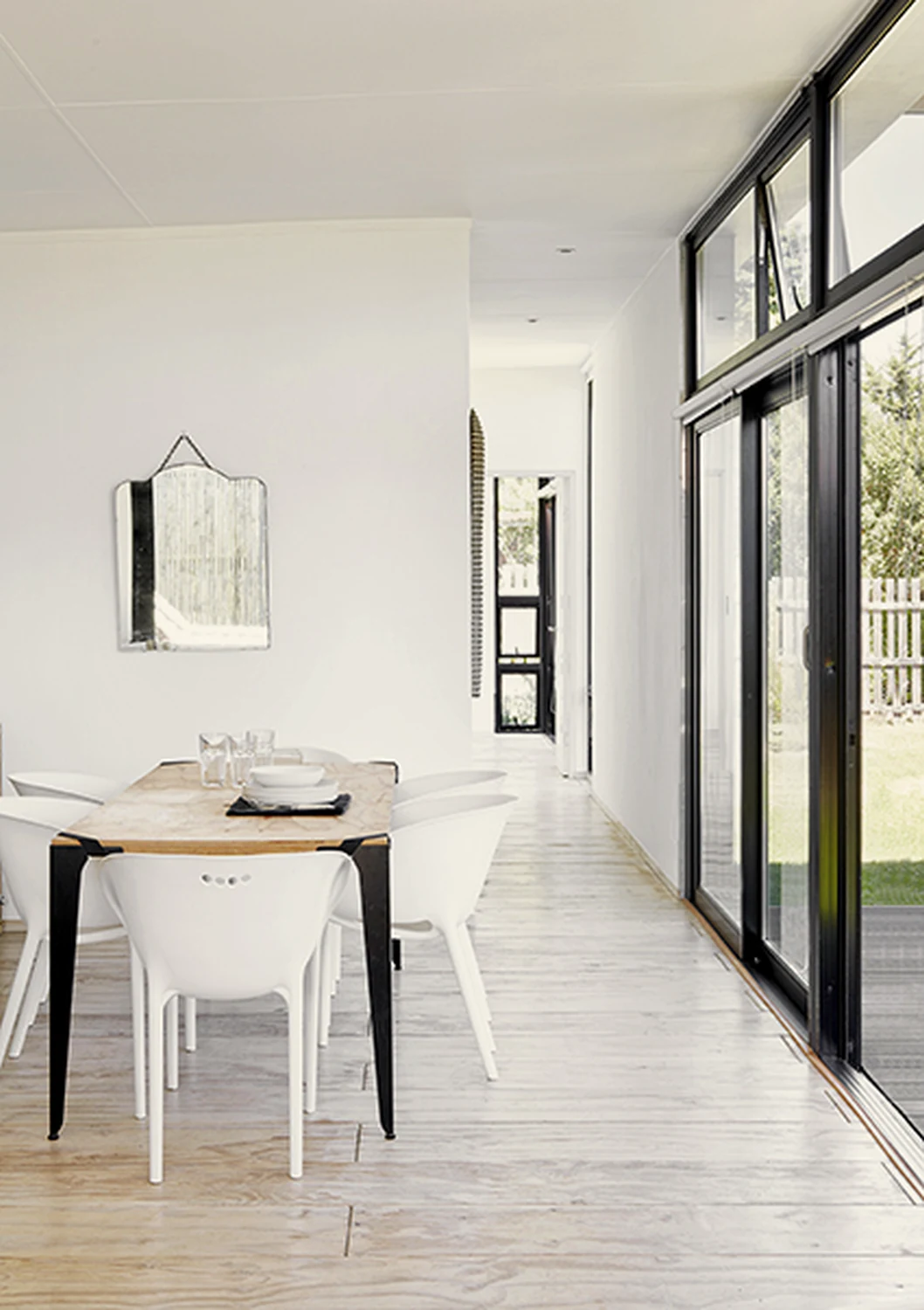
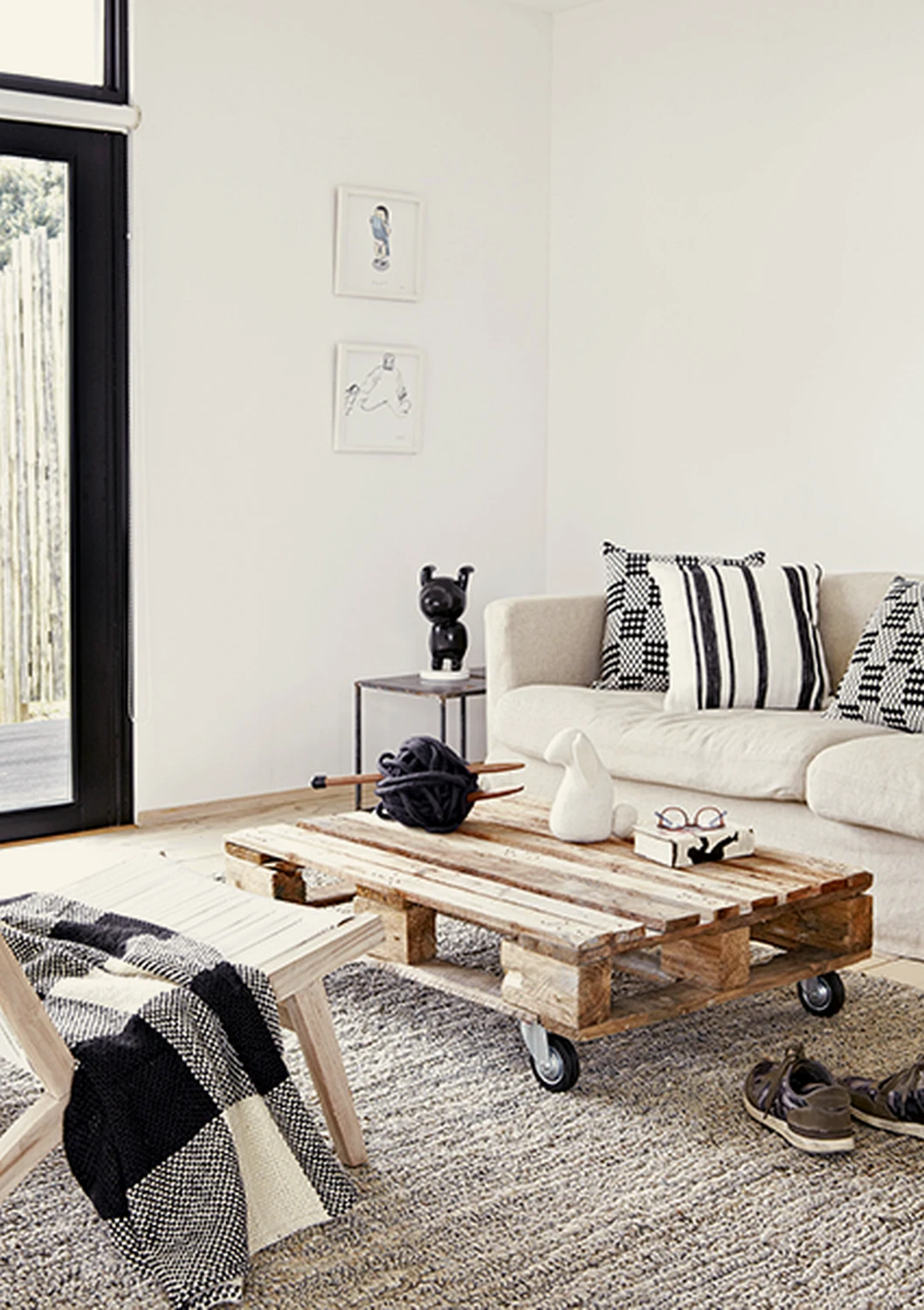
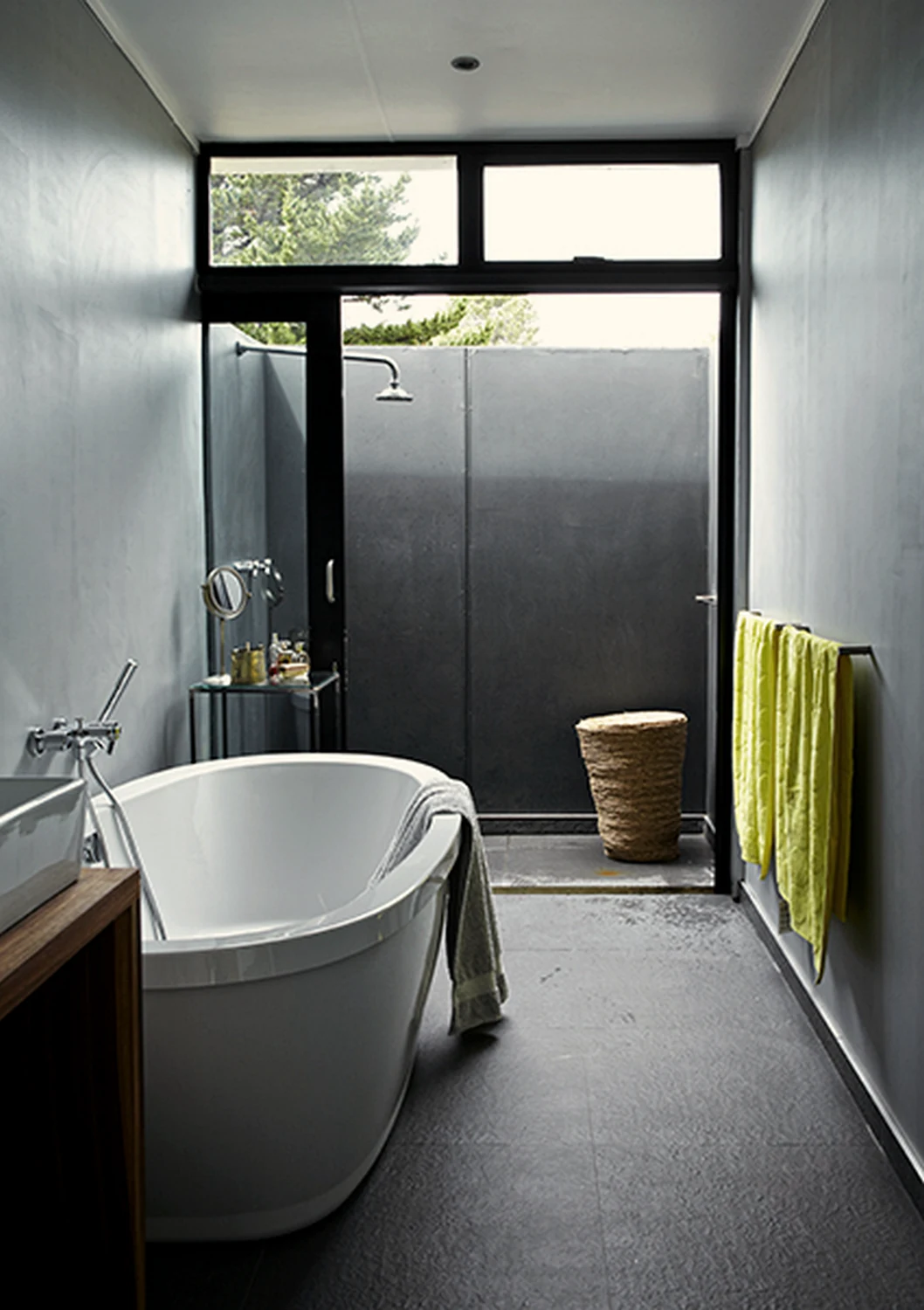
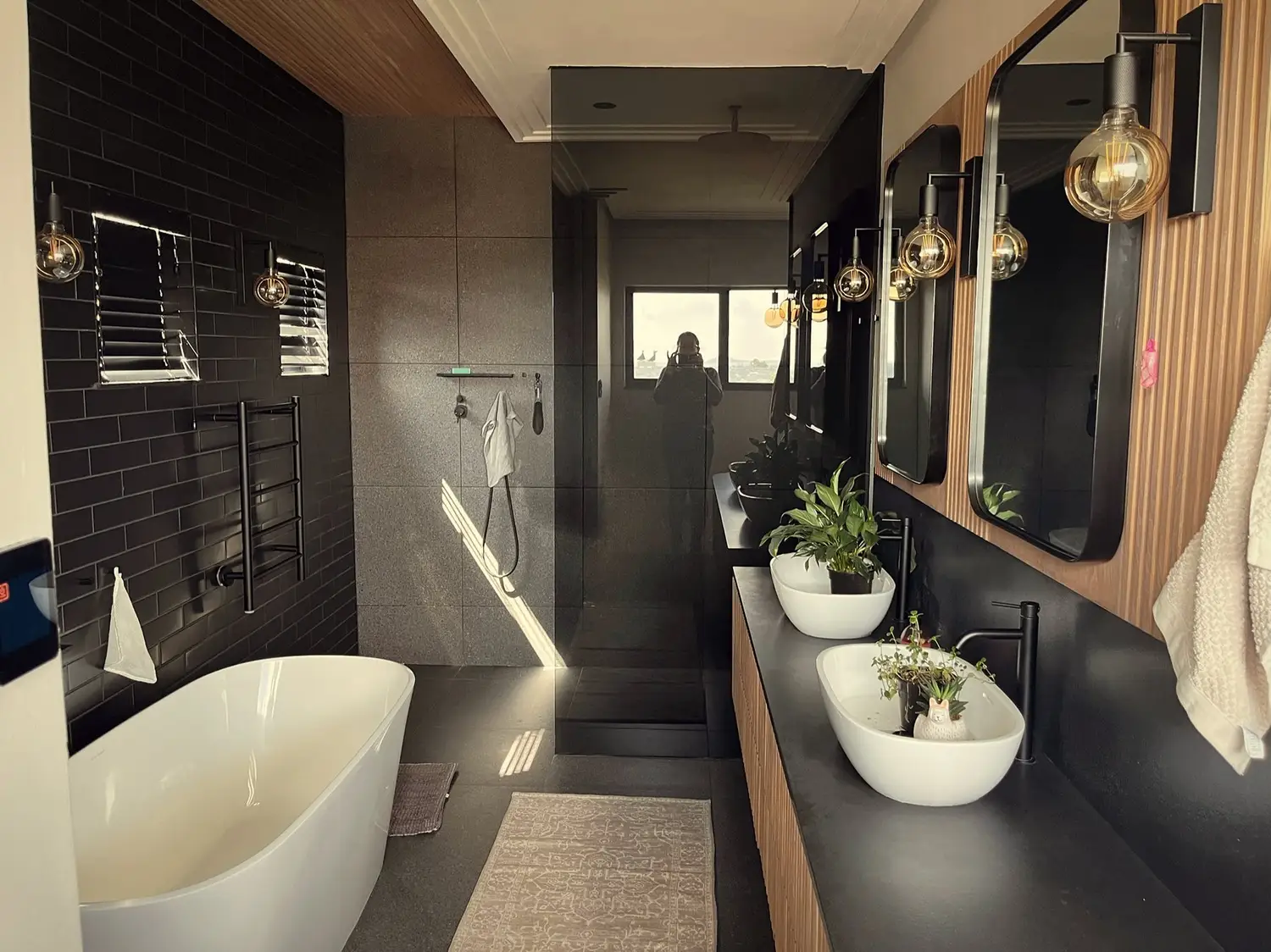
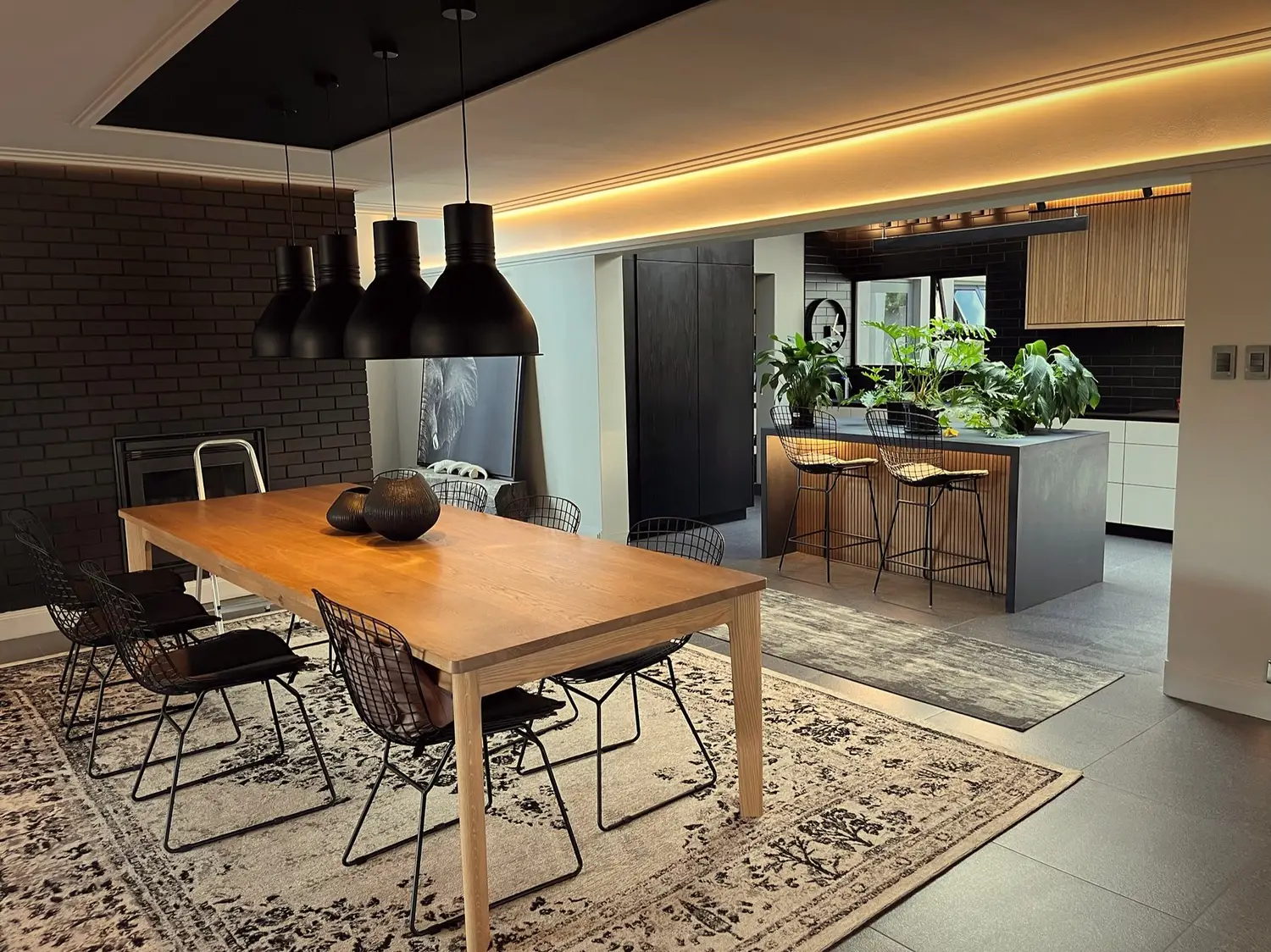
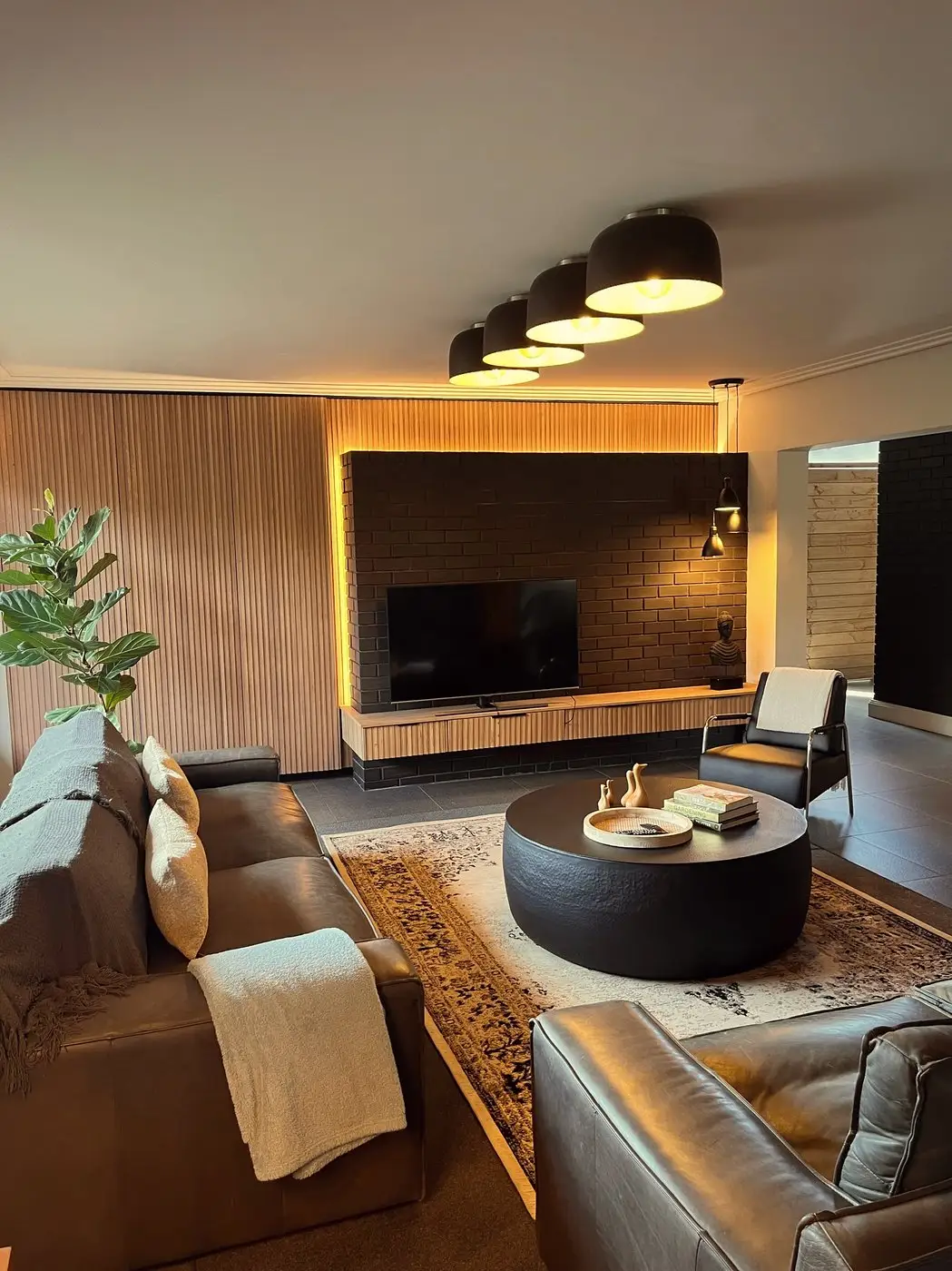
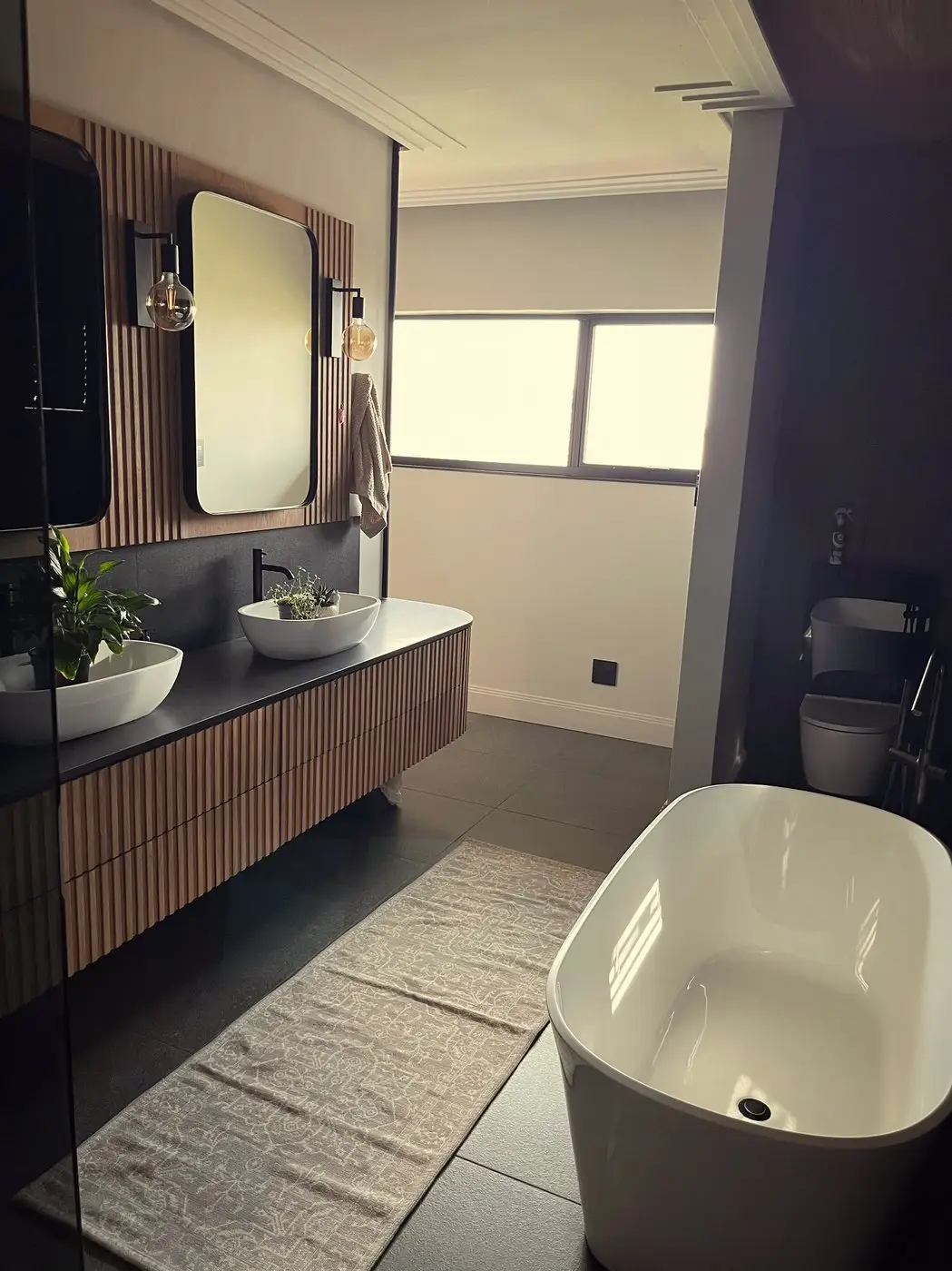
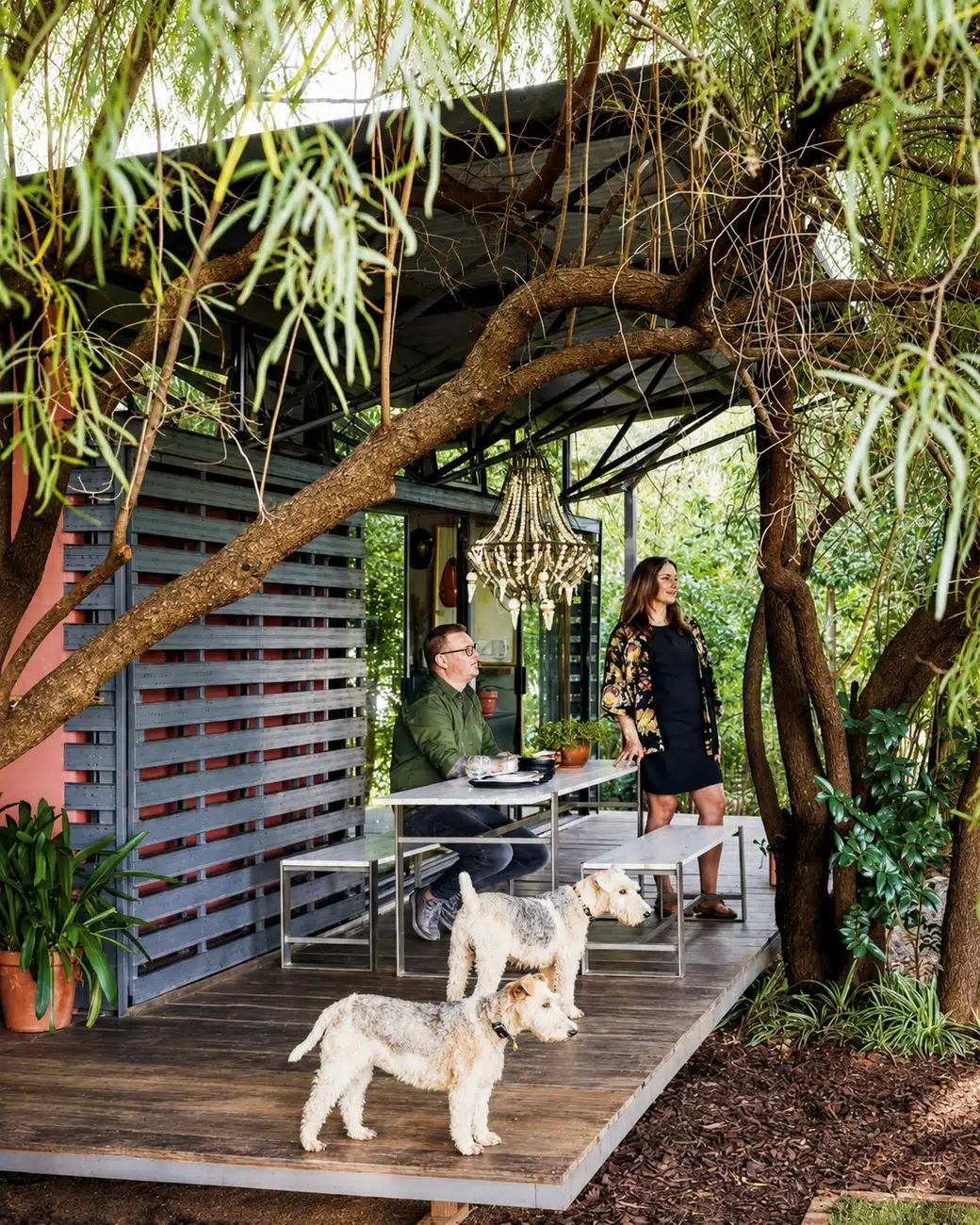
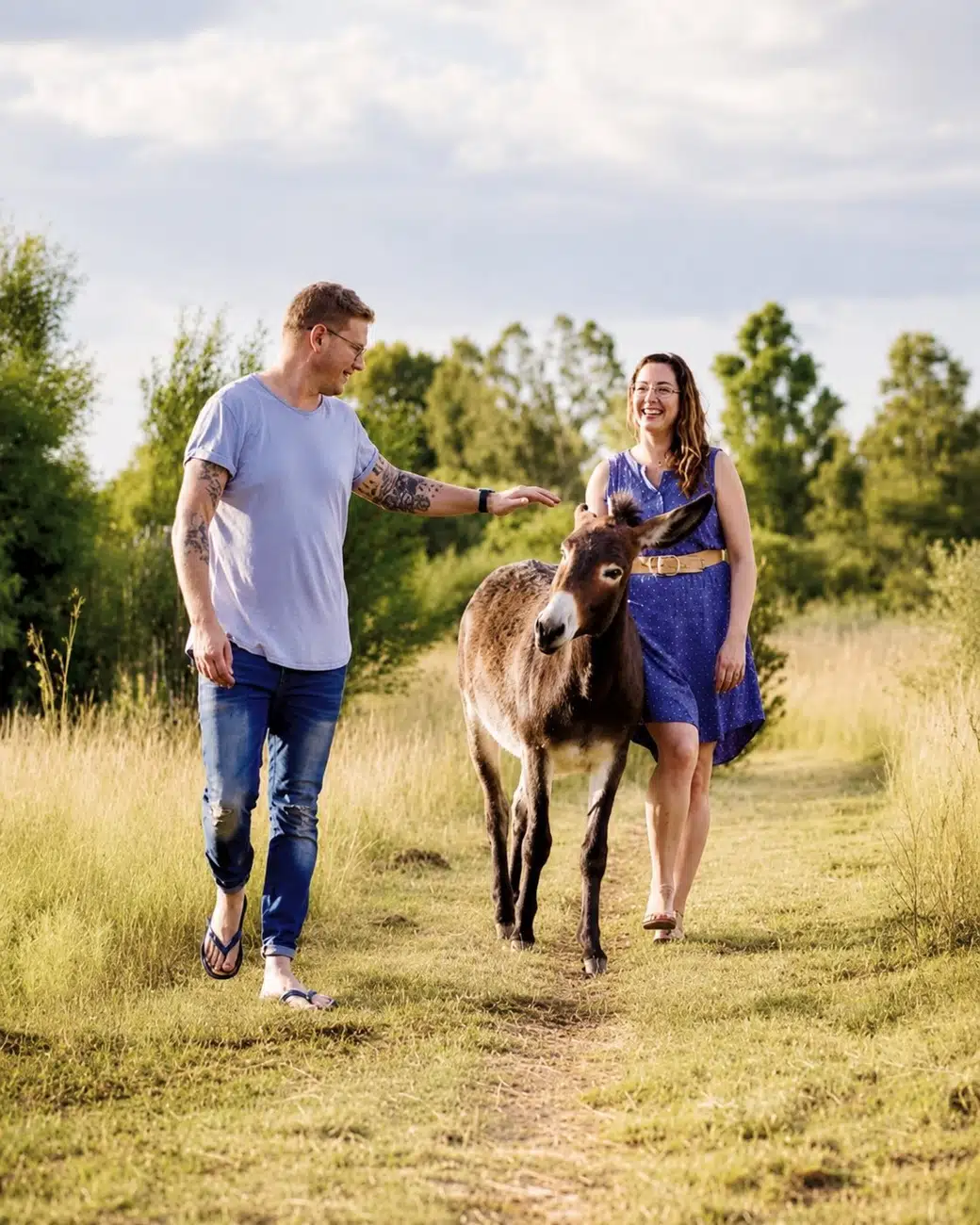
This VISI magazine feature documents Philip and Lisa Nel's compact prefabricated Bloemfontein home — a lived example of Inizio's early thinking around design, making, material precision and a close relationship to landscape.
We design houses, interiors and a few commercial spaces. South Africa, since 2009. The work is for clients who care about how a space feels, not only how it looks.
I started out building before I started drawing. That background still shapes the way we work. We think carefully about details and materials, and we test every decision against how the building will actually be put together — and how it will look in ten years' time.
If you want a house or a workspace that will still feel right in twenty years, come and have a conversation with us.
Family homes, weekend retreats, coastal and Karoo houses, and a few estate homes. Every project starts on the site, with the light, the land and the way the family actually wants to live.
Offices, schools, retail and hospitality. We treat commercial work the same as a private home: same care with materials, same attention to how the space gets used every day.
Projects we're currently busy with — some still on the drawing board, some on site. The images here are renders or pre-construction. We'll replace them with proper photographs once the buildings are finished.
The clients had owned the site for three years before they called us. They knew it well. The instruction was simple: maximum landscape, minimum house. They wanted to sleep inside and live outside, and to feel the fynbos, not look at it from behind glass.
That kind of clear brief is what makes a project possible. We said yes straight away.
The site sits on a slope above the fynbos, facing north-west toward the sea. We visited four times before we drew anything. The last visit was in July at 6am, to watch the first light hit the slope. That morning gave us the orientation of the house, its section, and where every important opening would sit.
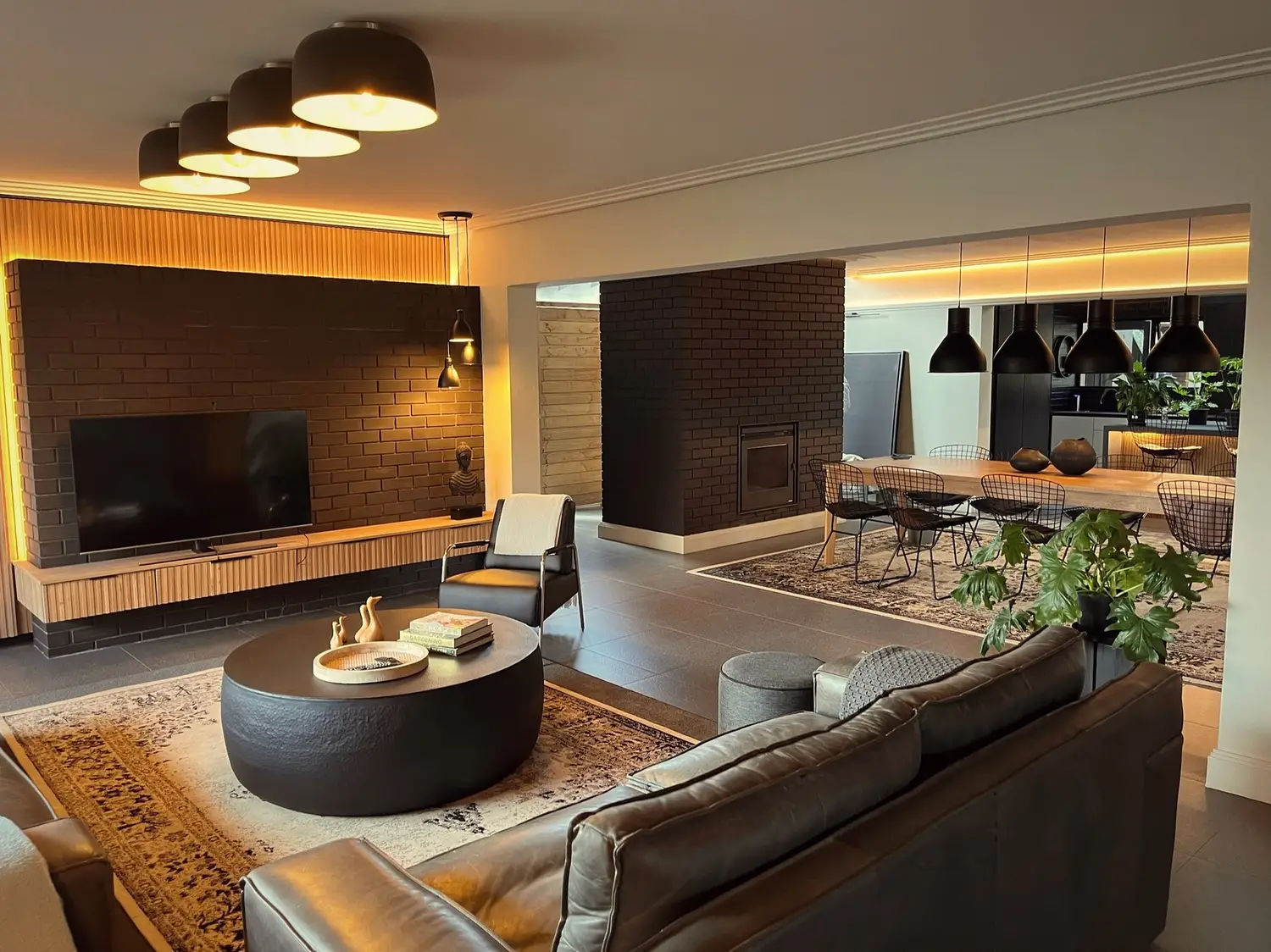
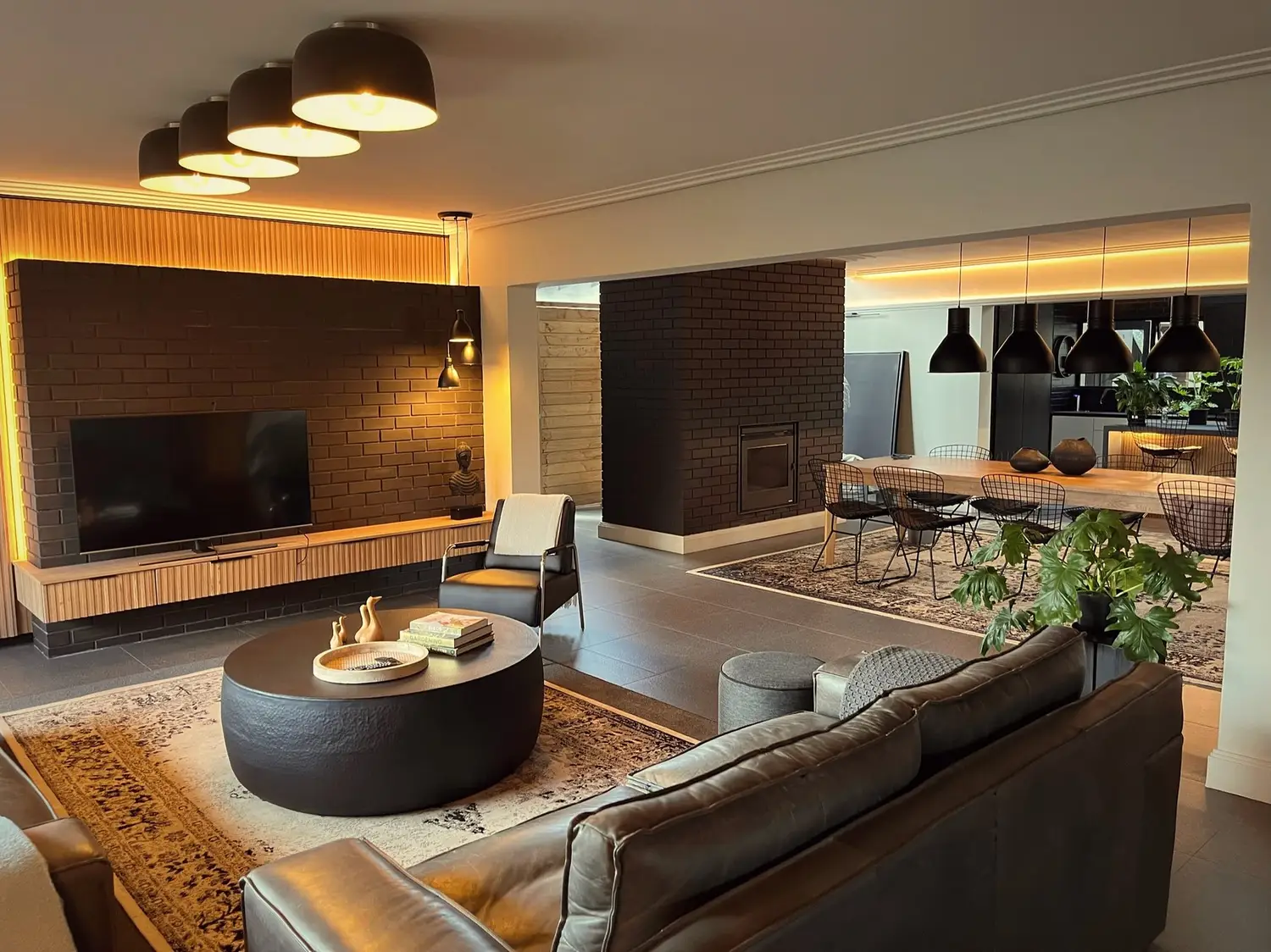
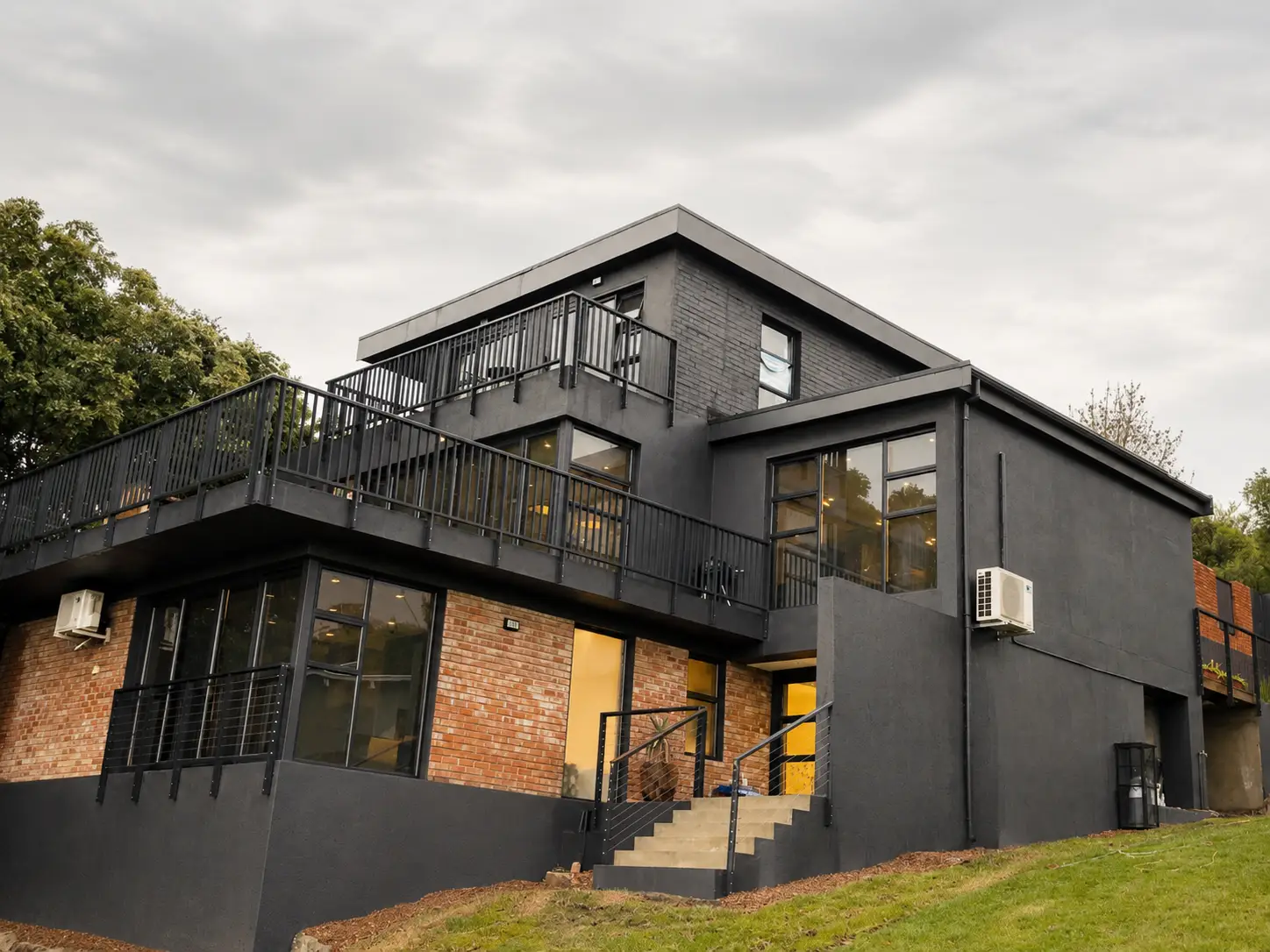
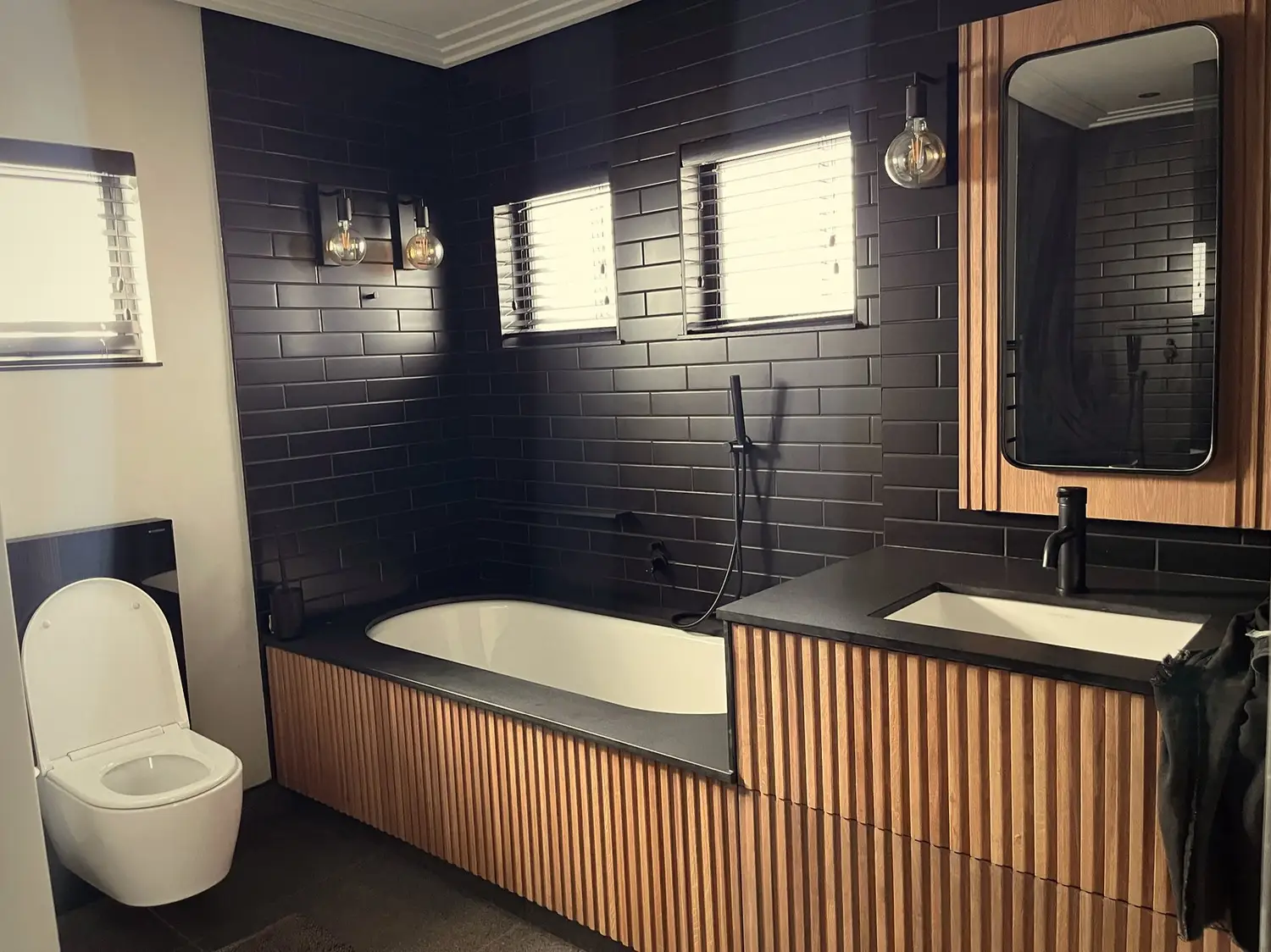
The Clients recently bought the property and found that the space did not suit their lifestyle or needs. The bones were good - but the interior just did not work for them. They wanted a renovation that didn't look like a renovation. Something that felt as if the house had always been this way.
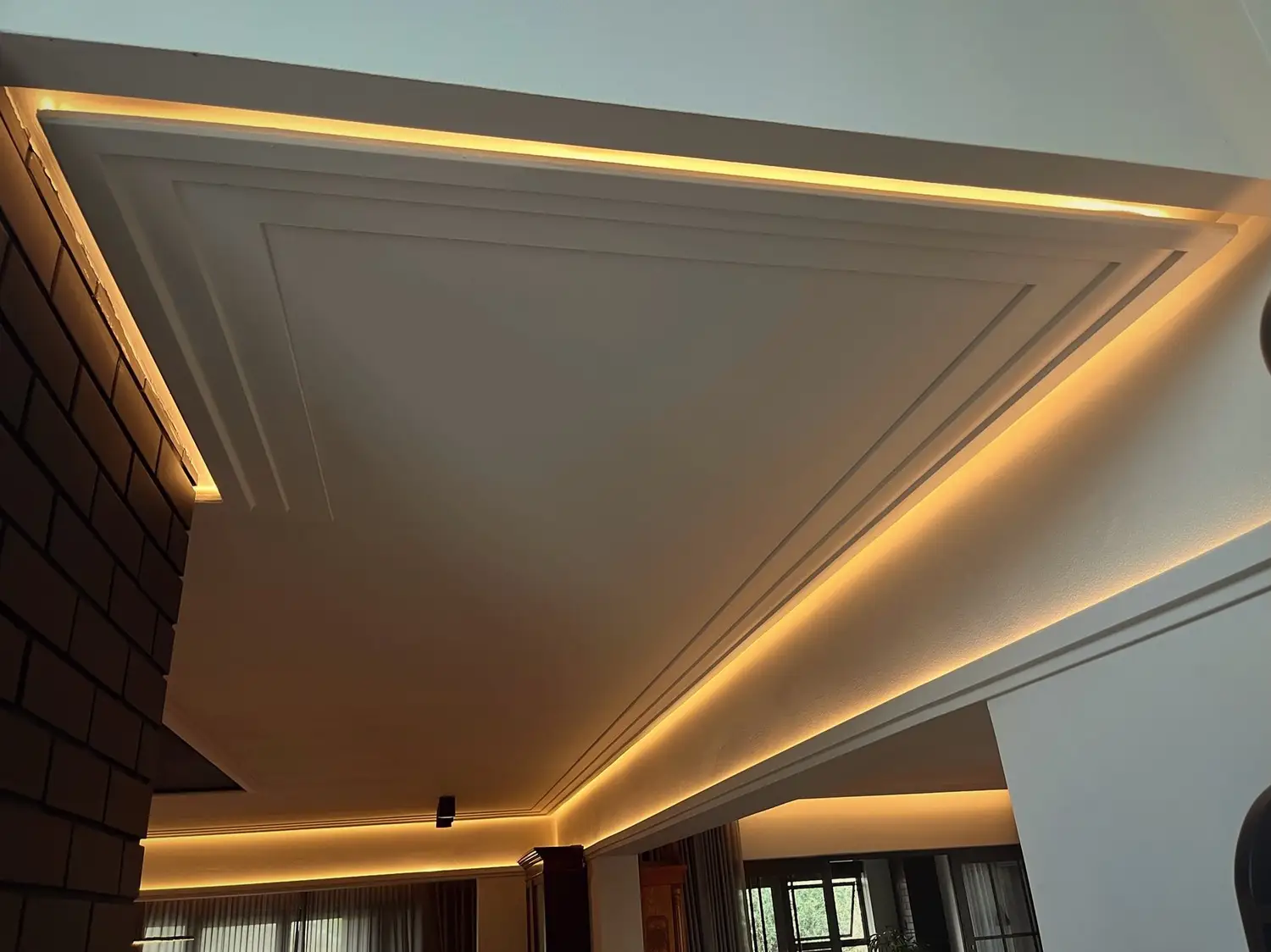
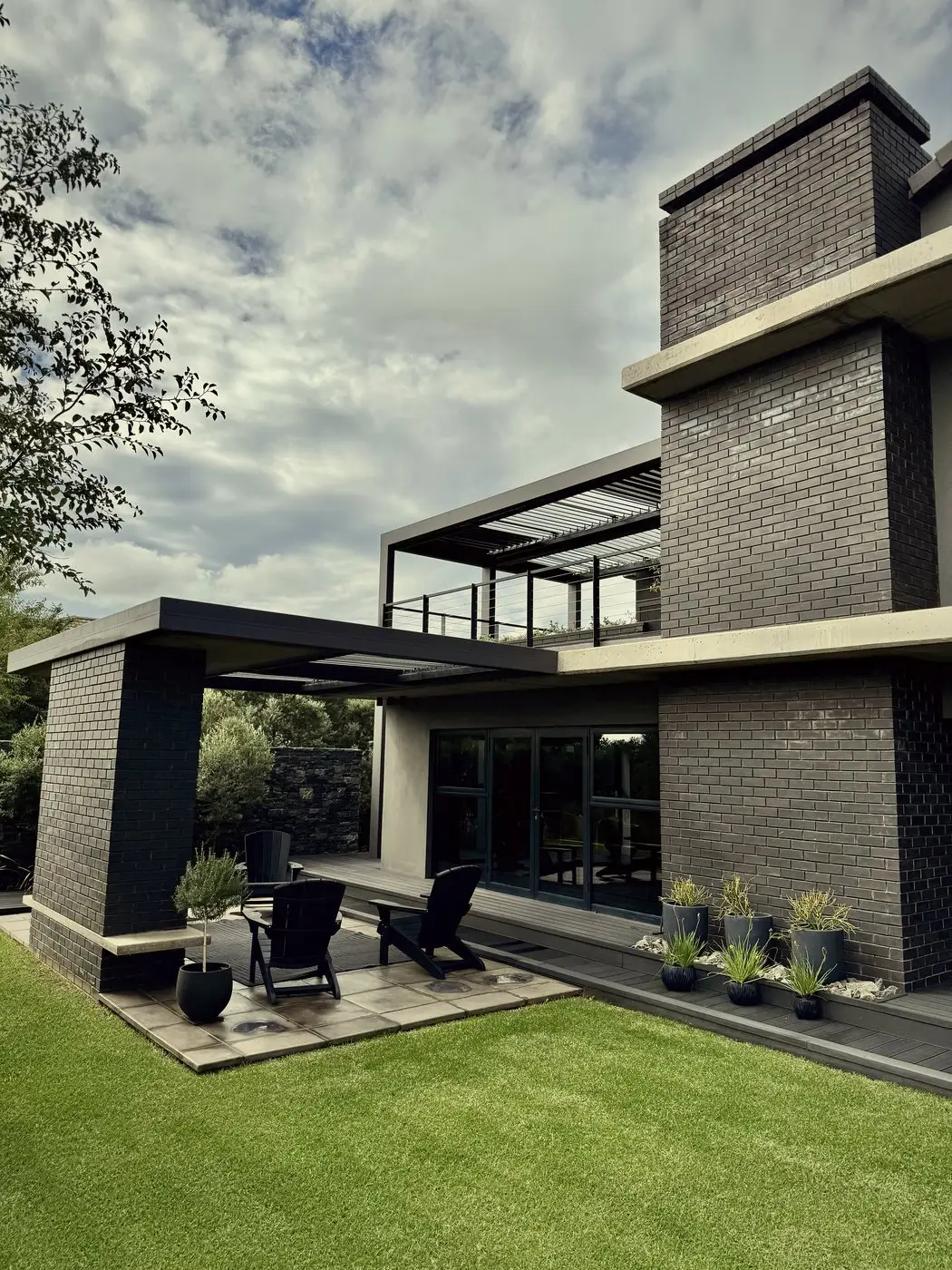
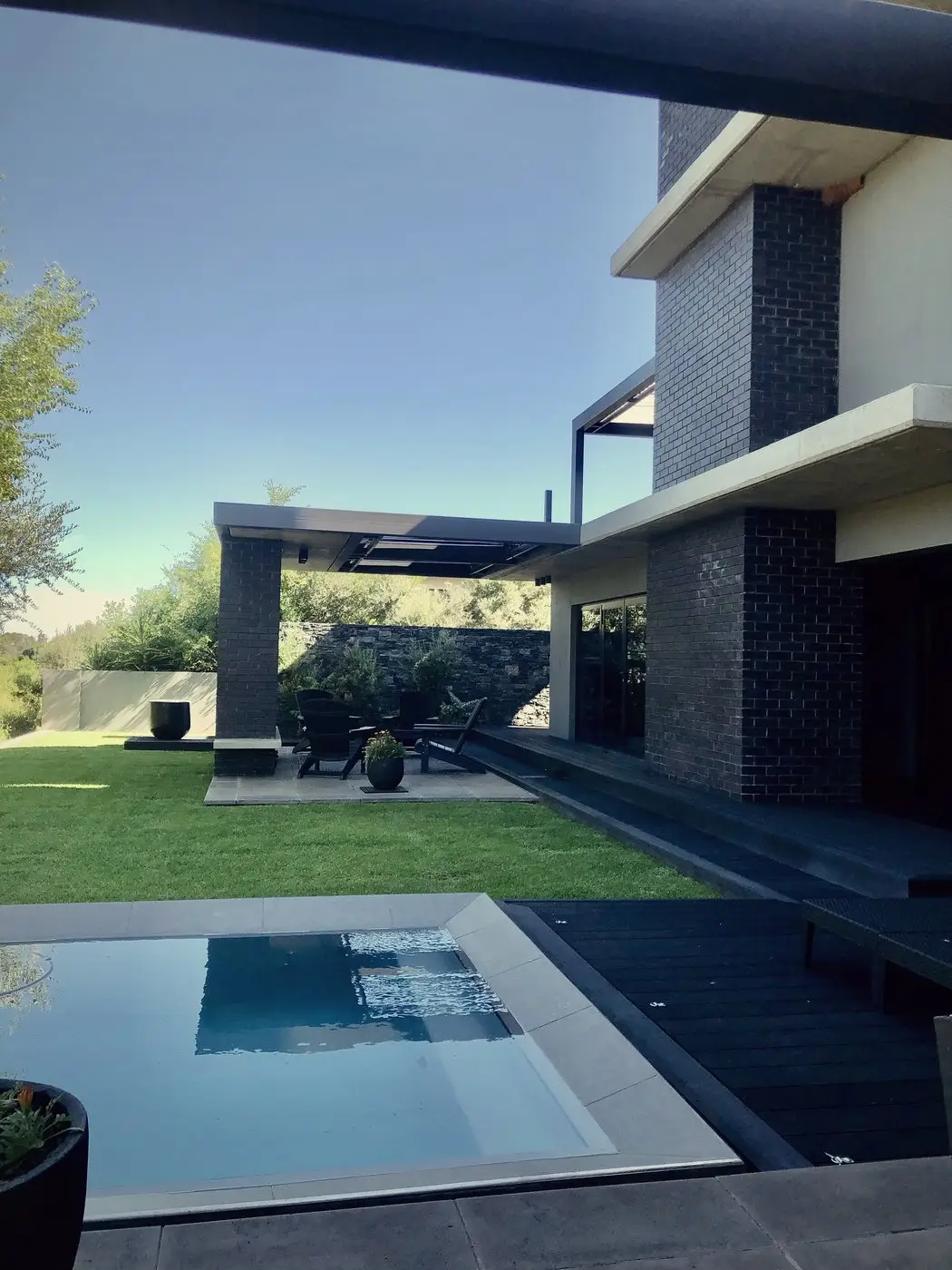
We went darker and warmer throughout. Dark brick on the feature walls, vertical reeded timber, brass and matt-black pendants, layered LED cove lighting in the ceiling details. Every room is now a place to spend time, not pass through.
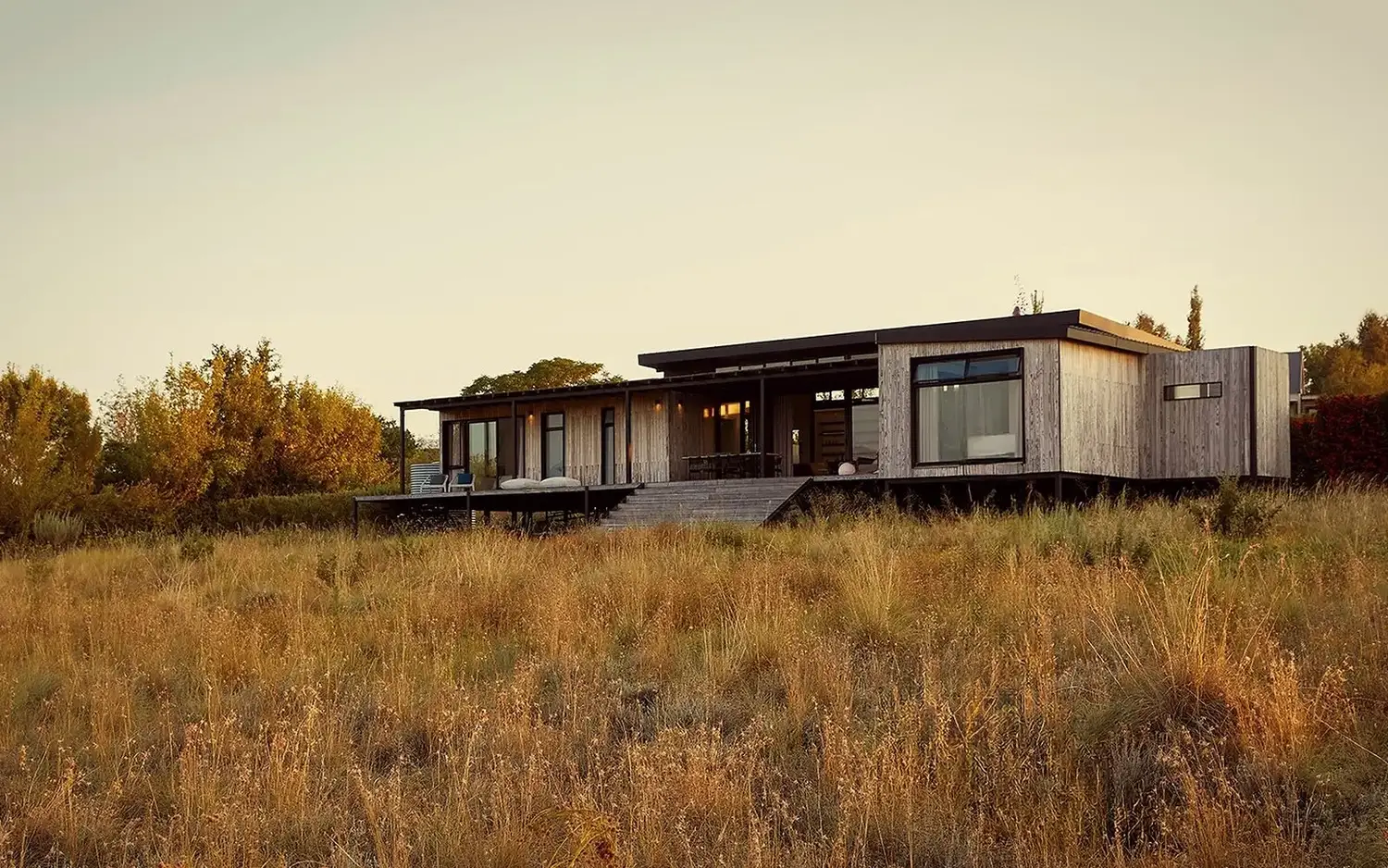
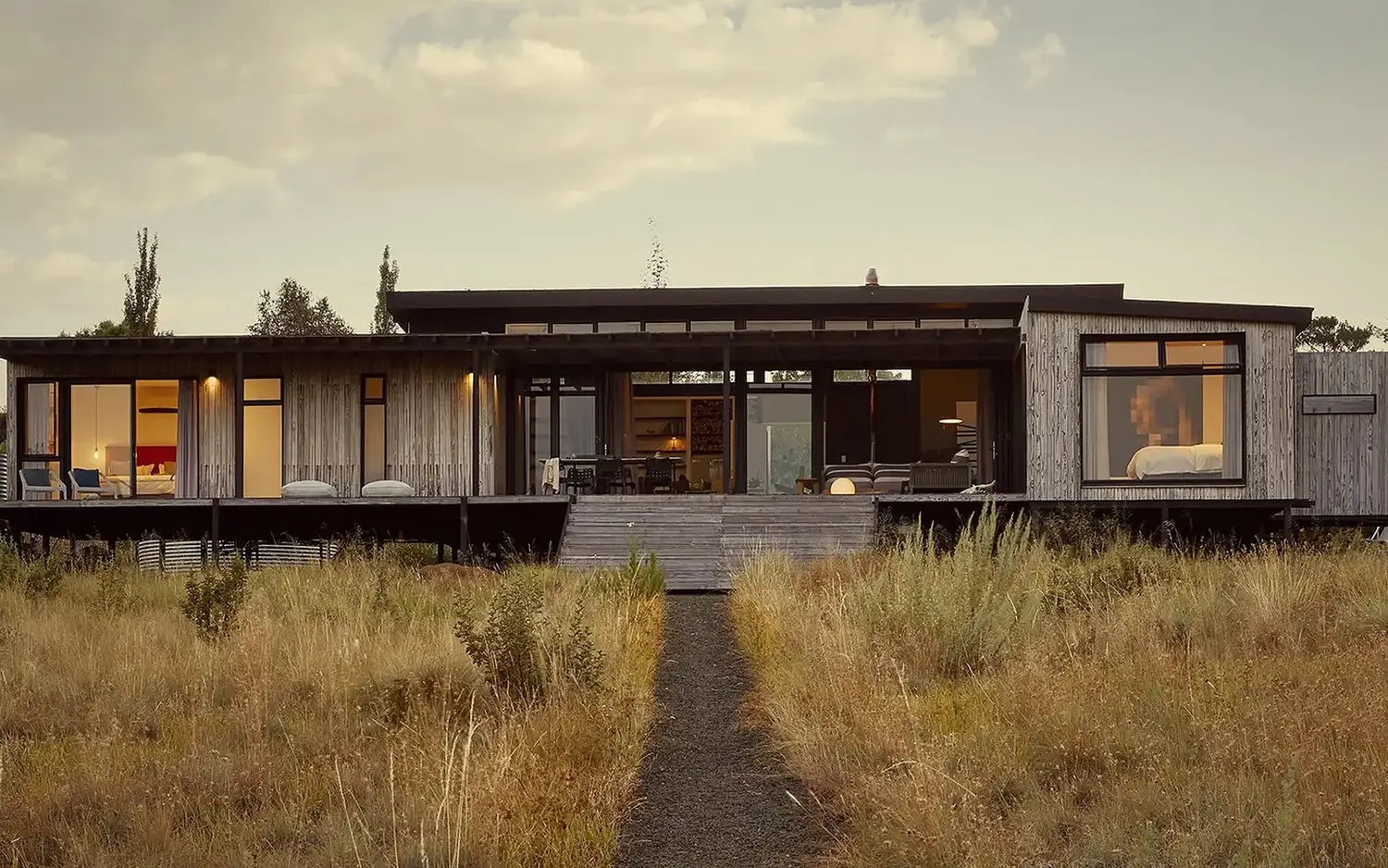
Rosendal is a small creative community in the eastern Free State. The clients wanted a home that would work as studio, retreat and a place to host. Quiet inside, generous outside, and clearly of the landscape it sits in.
The result is a long, low building clad in weathered timber, set on a raised deck above the grass. Reed-thatched pergolas extend the living rooms into deep stoeps. A stock-tank cold plunge sits in the meadow beyond. Nothing here was specified that doesn't sit comfortably in its place.
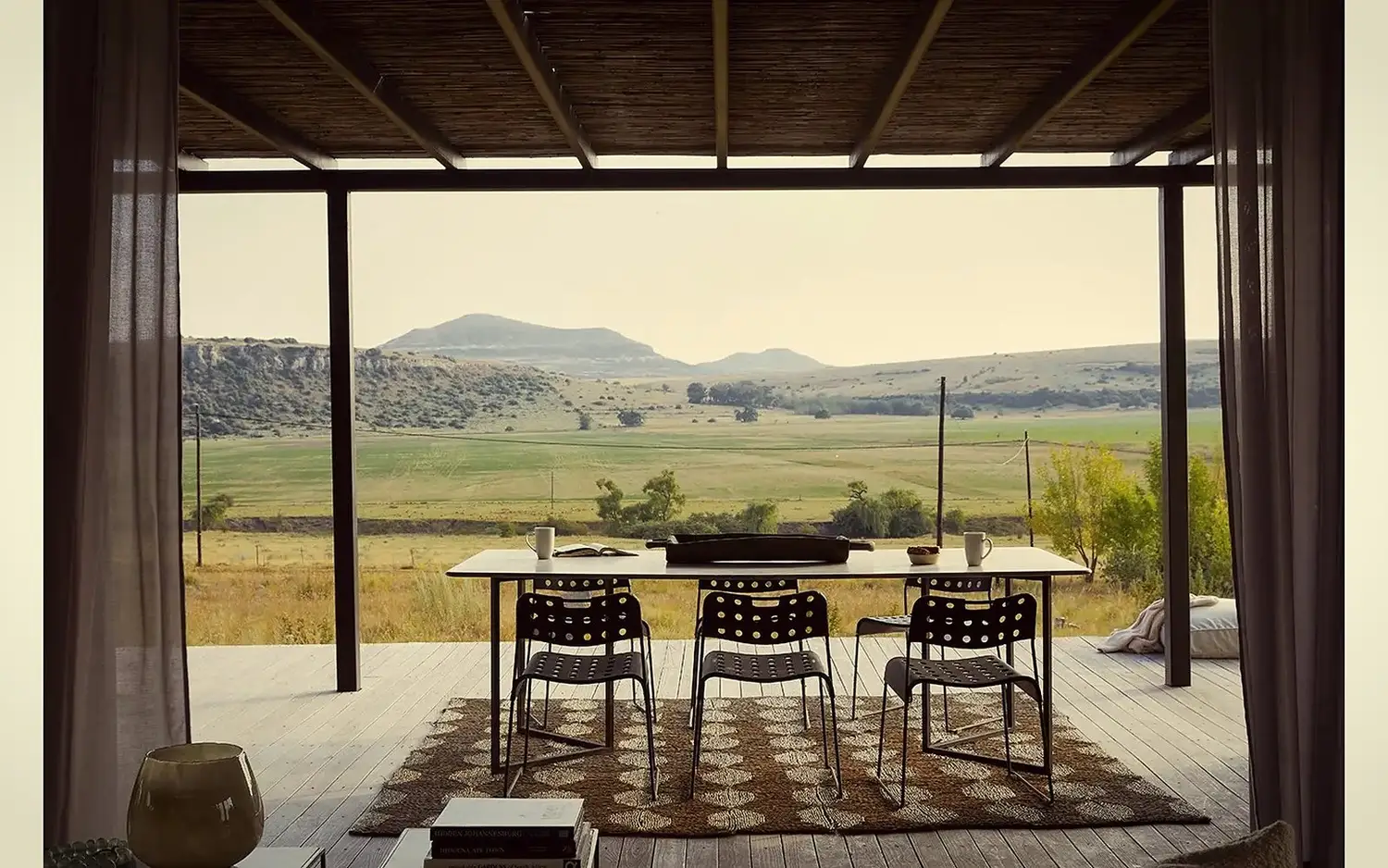
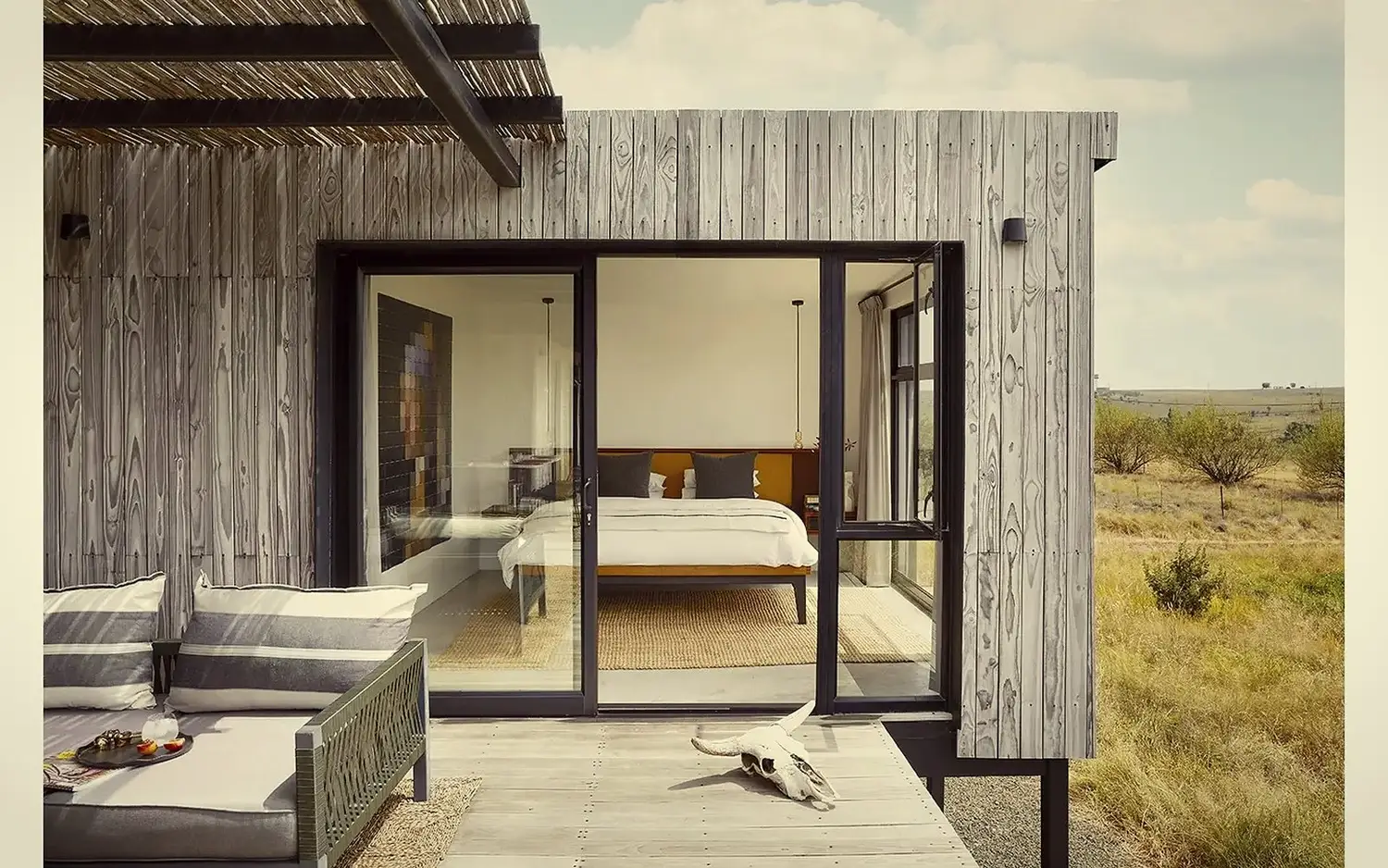
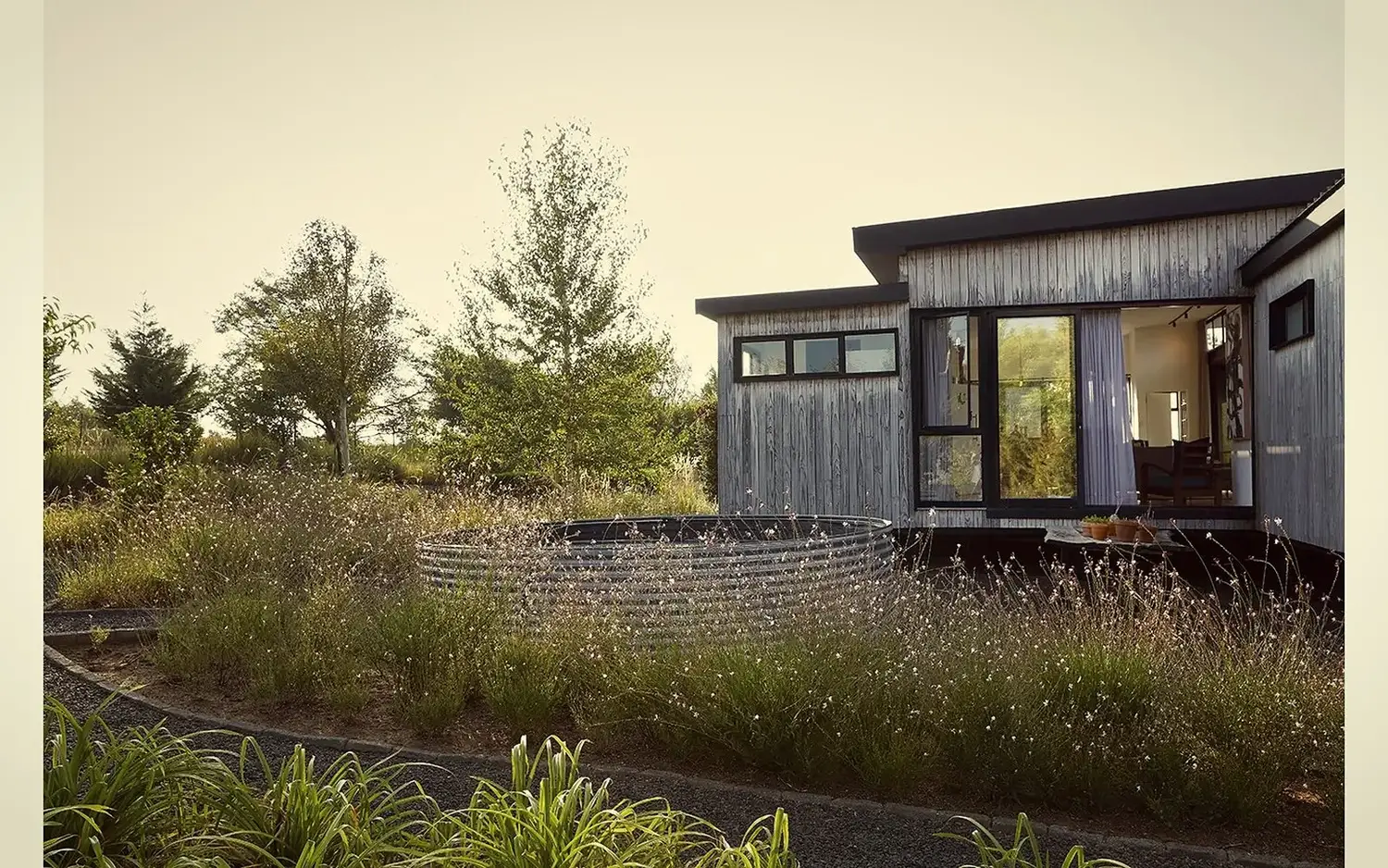
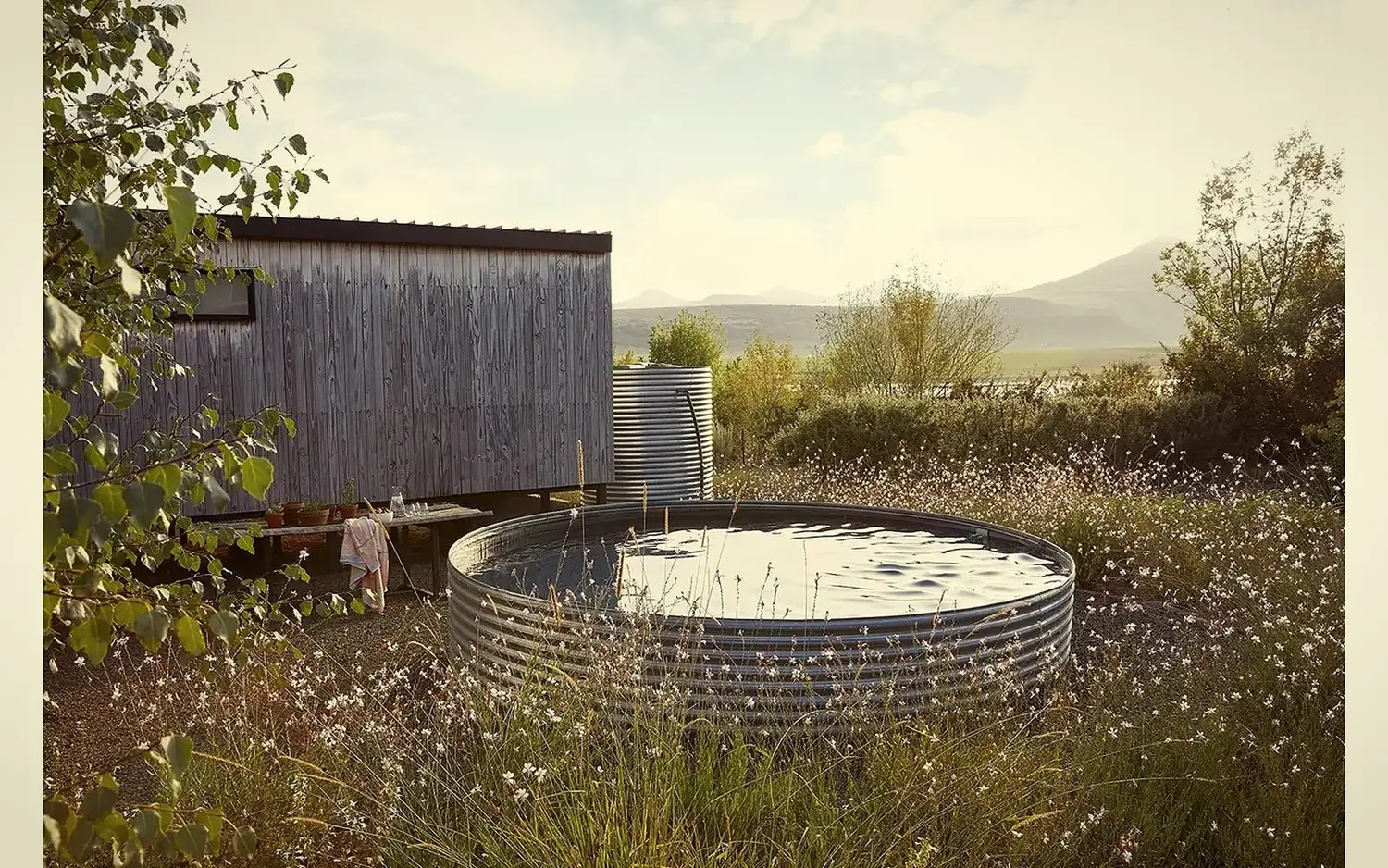
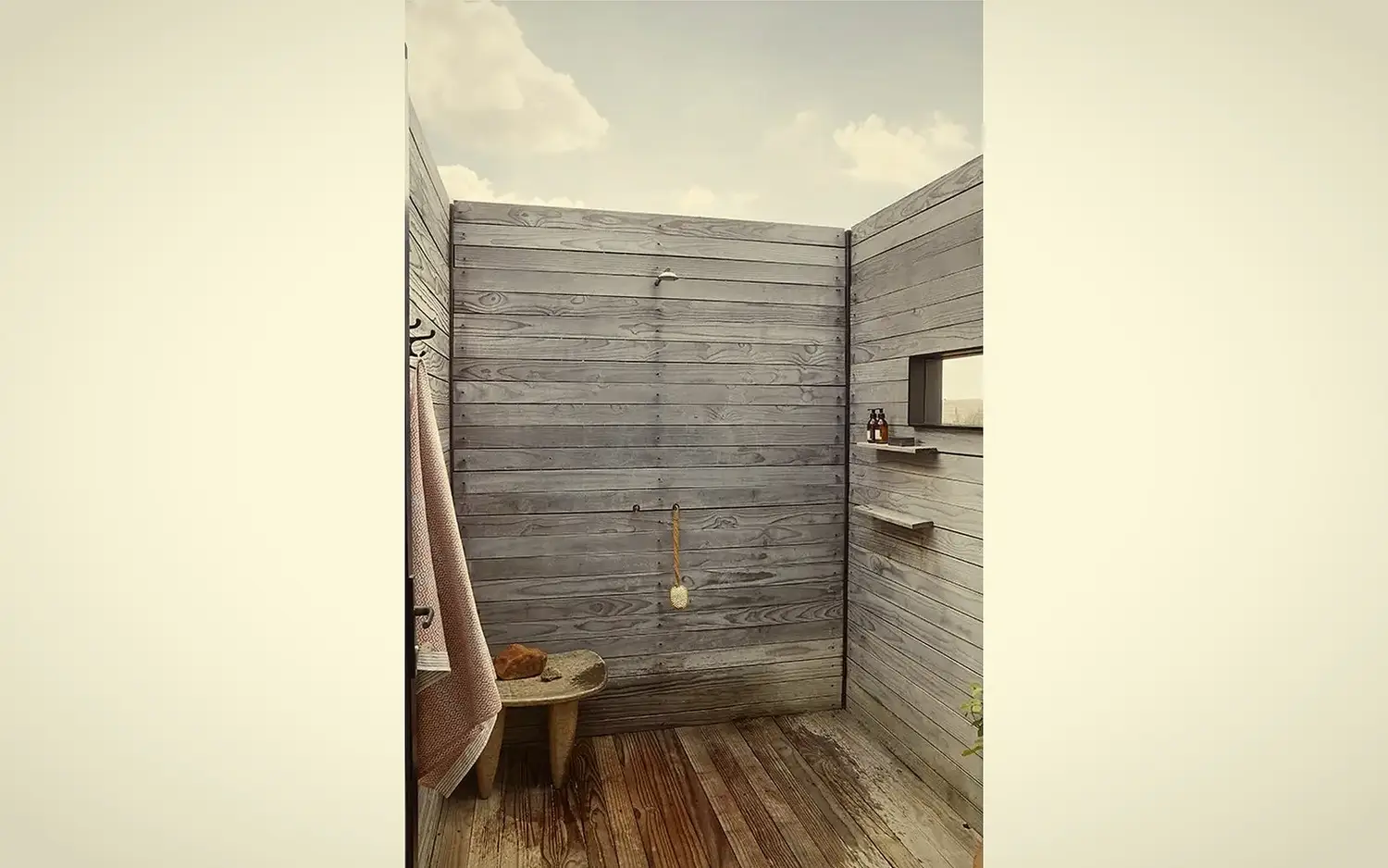
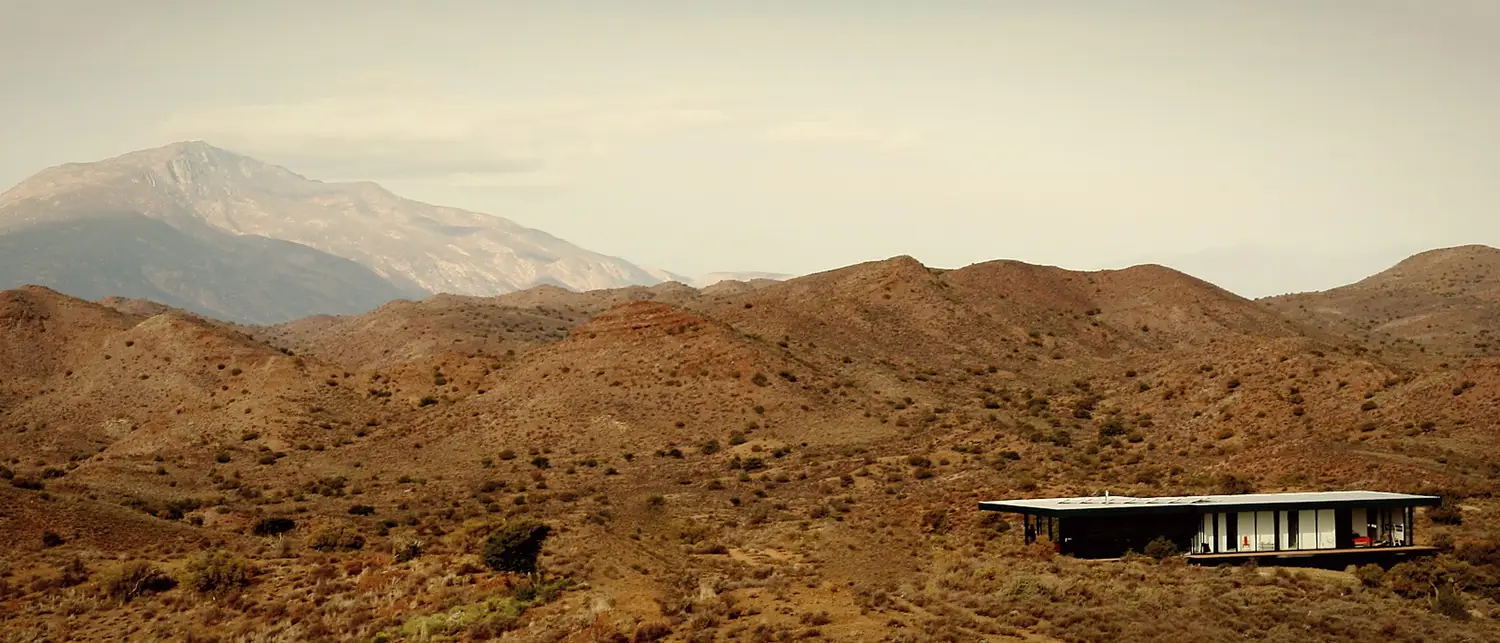
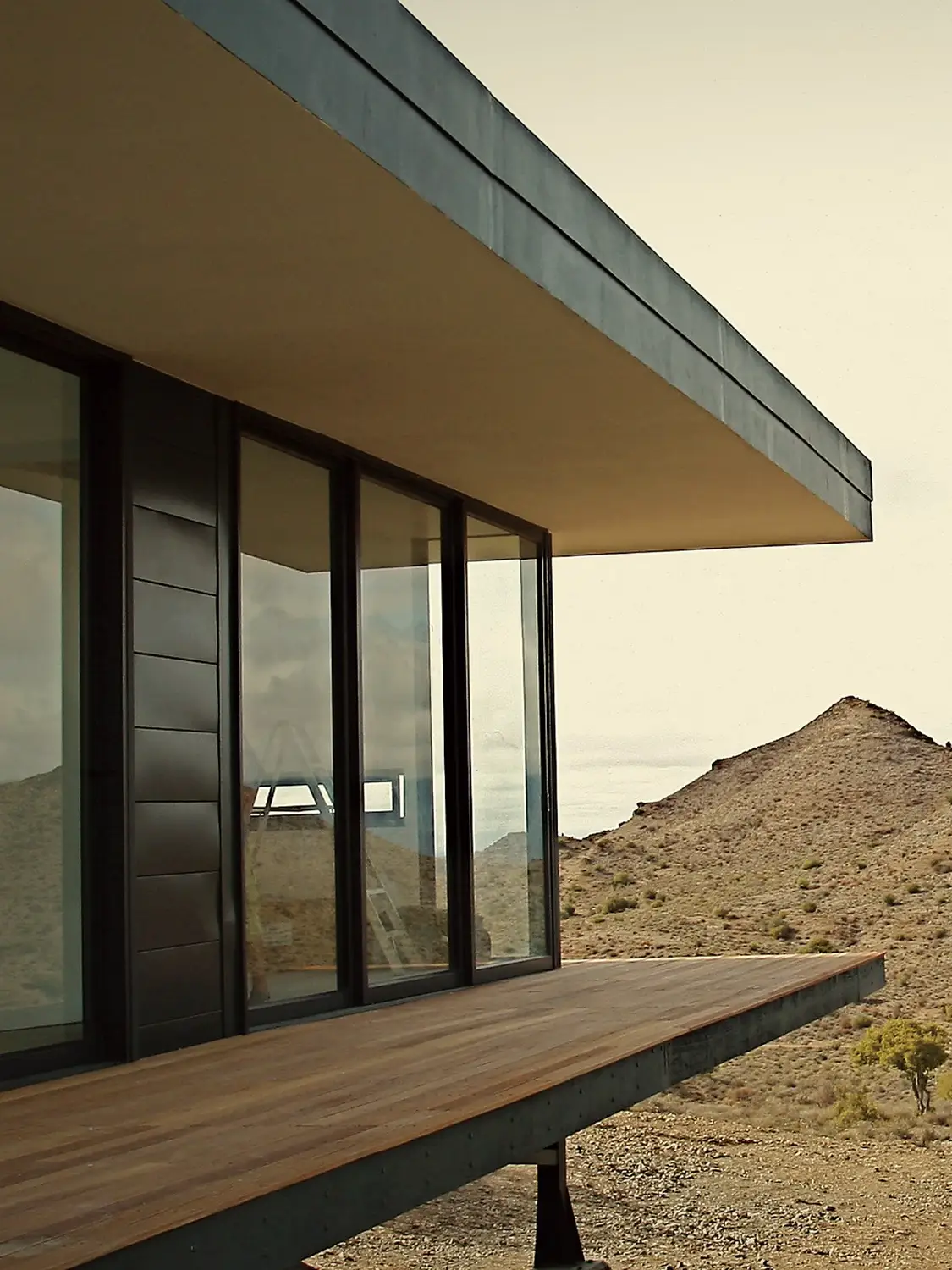
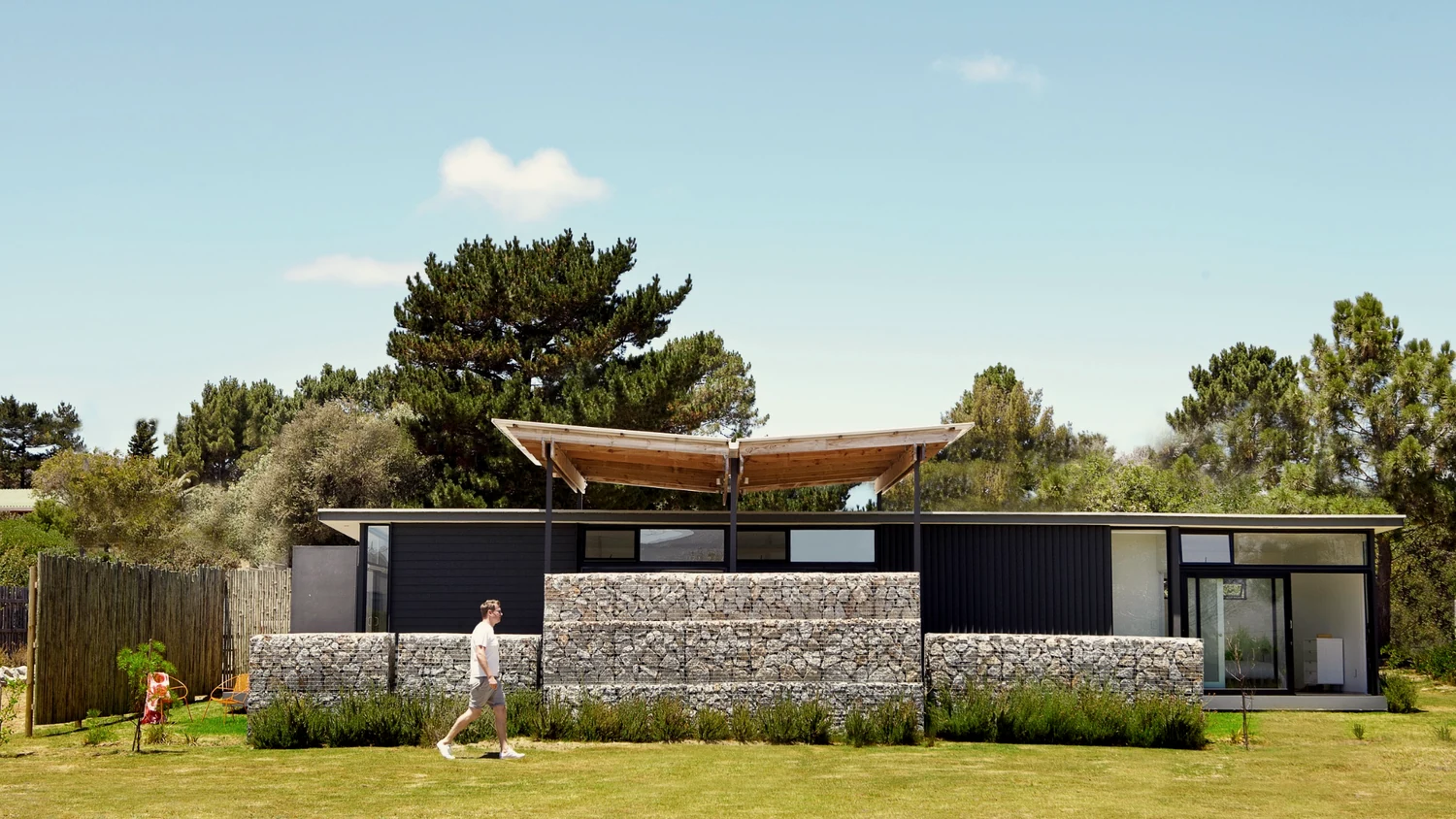
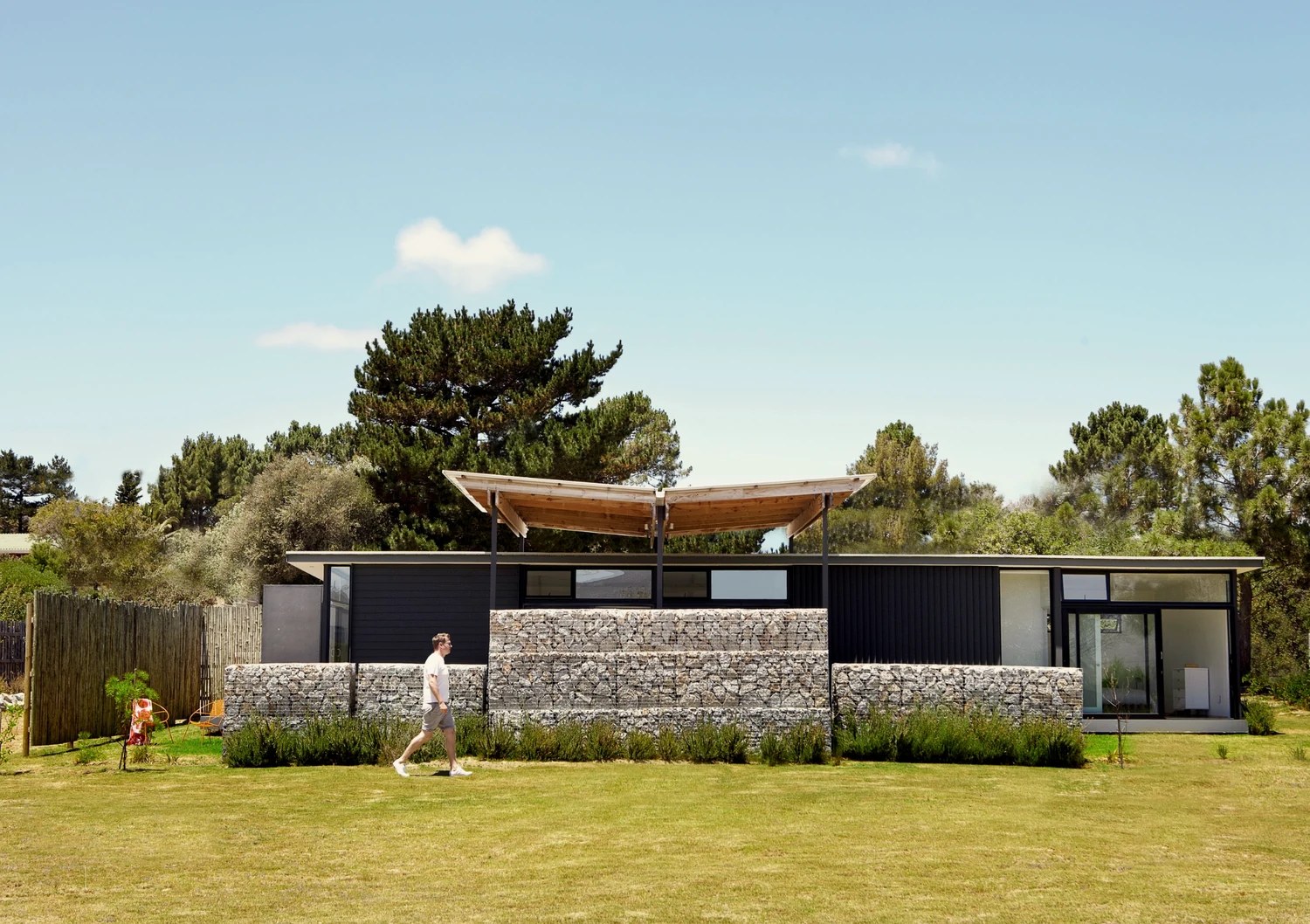
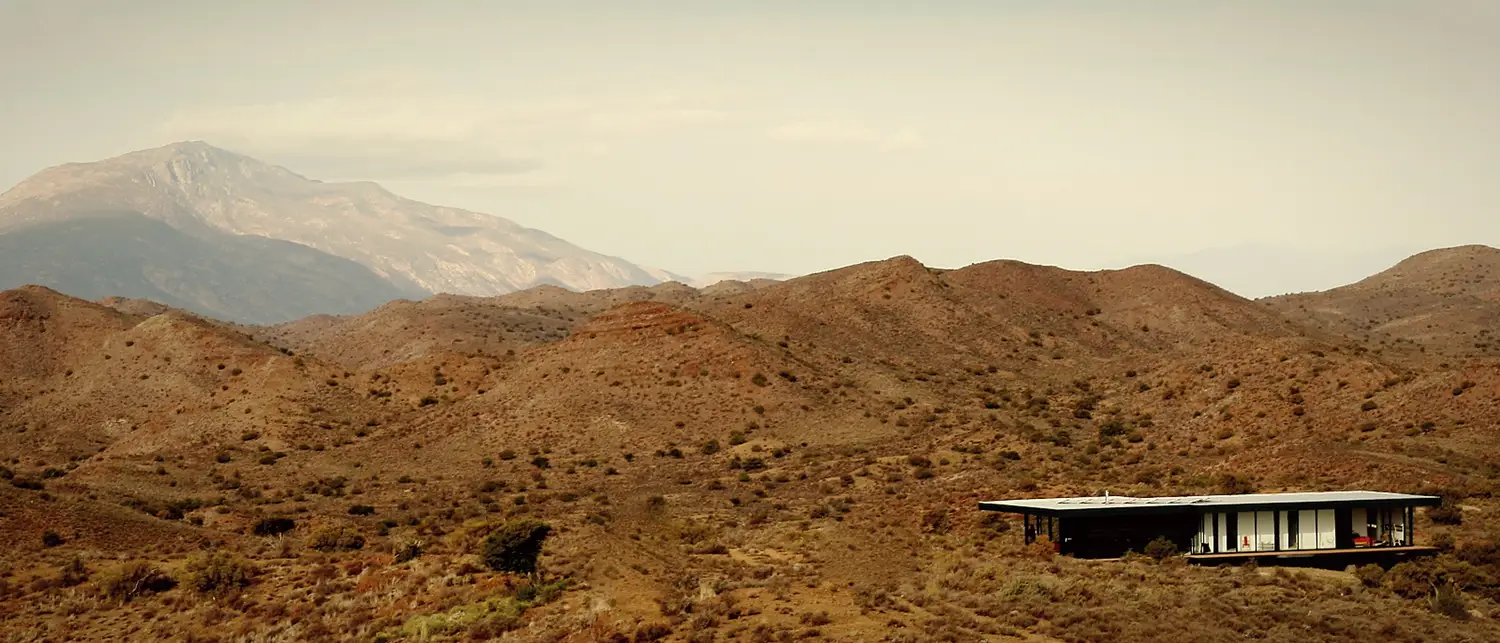
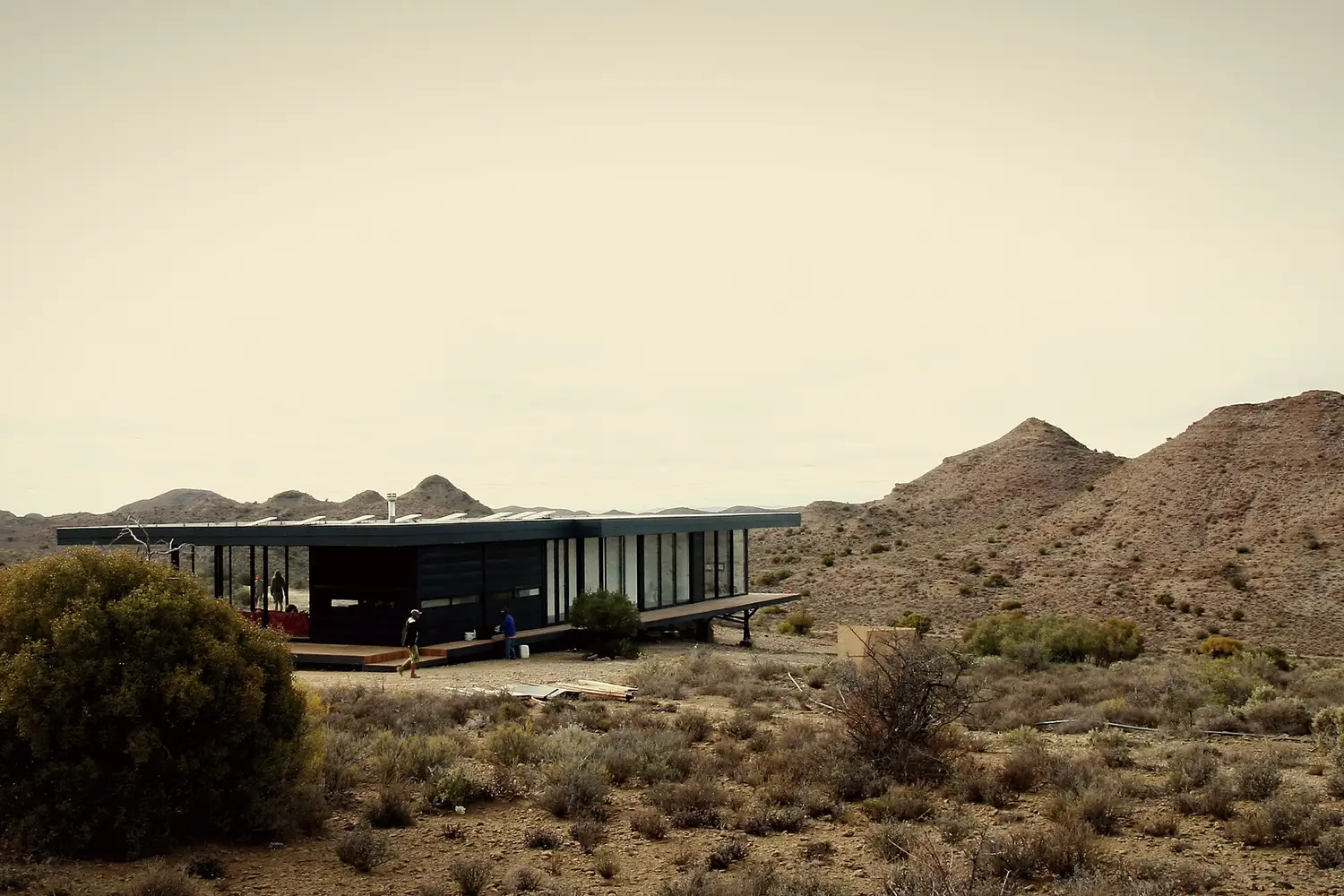
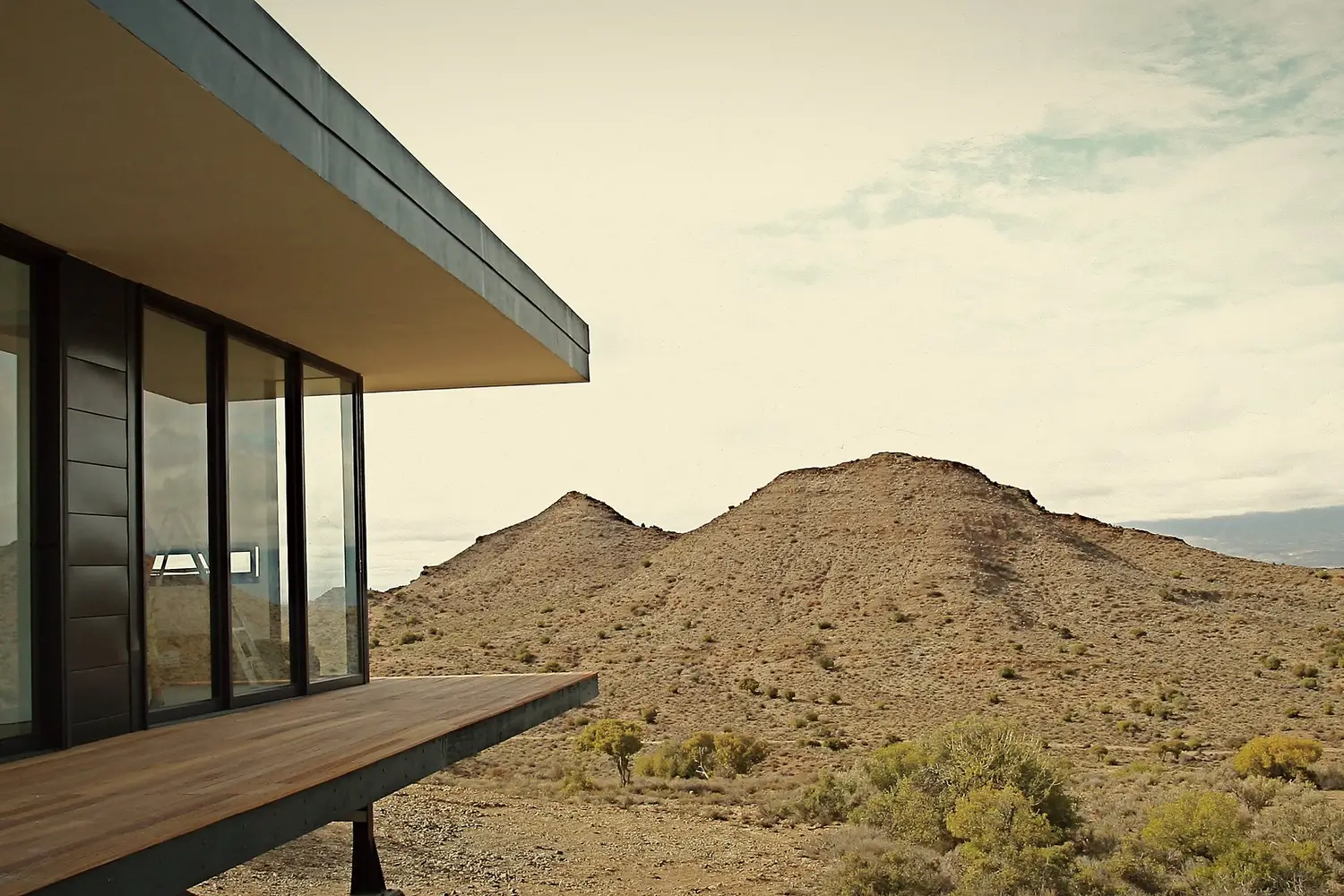
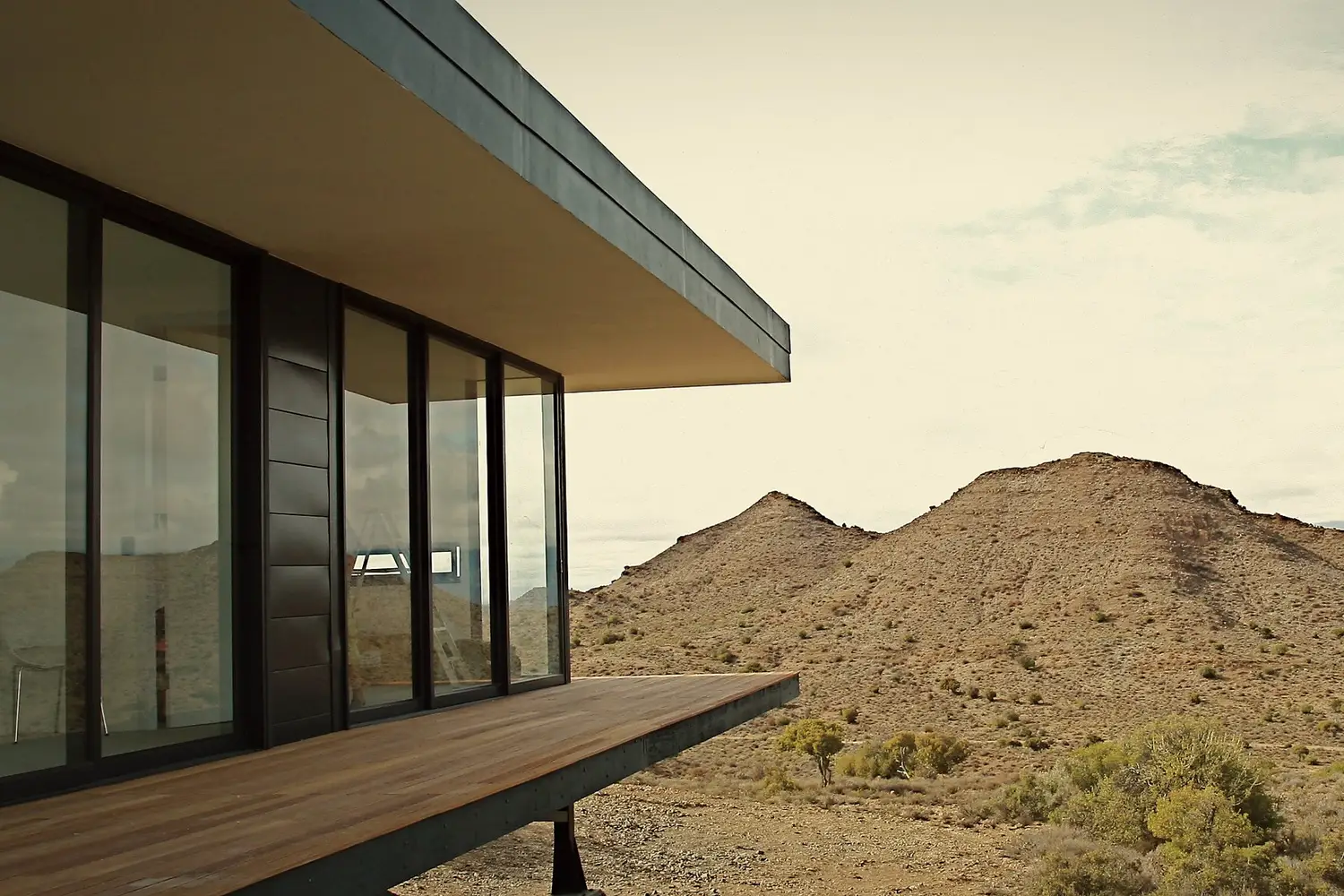
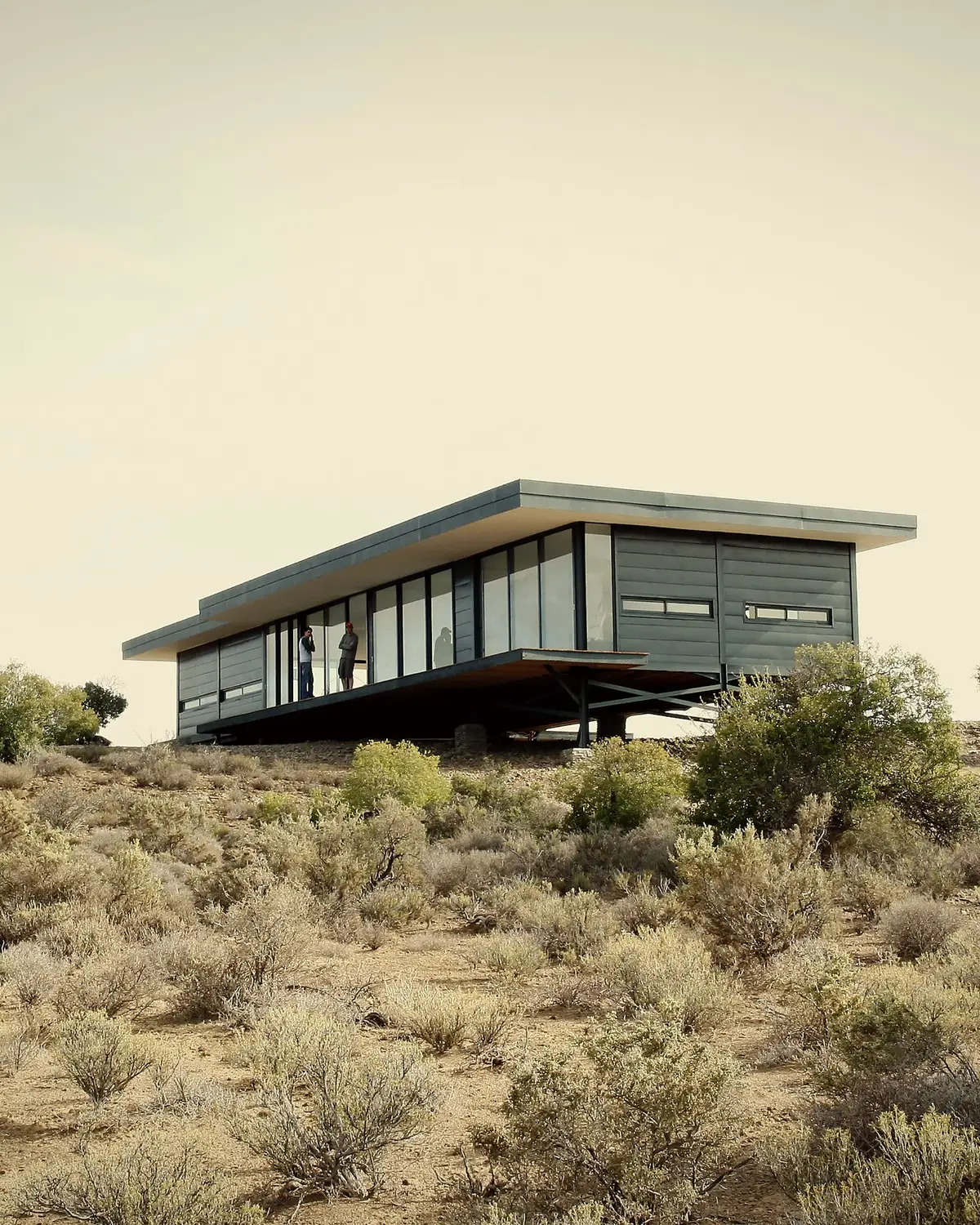
The site is a remote farm, on a hilltop with 360-degree views. The instruction was simple: touch the ground as little as possible. We lifted the structure clear of the ground on steel piloti, used gabion walls filled with stone from the site, and ran full-height glass along the north face to catch the Karoo light.
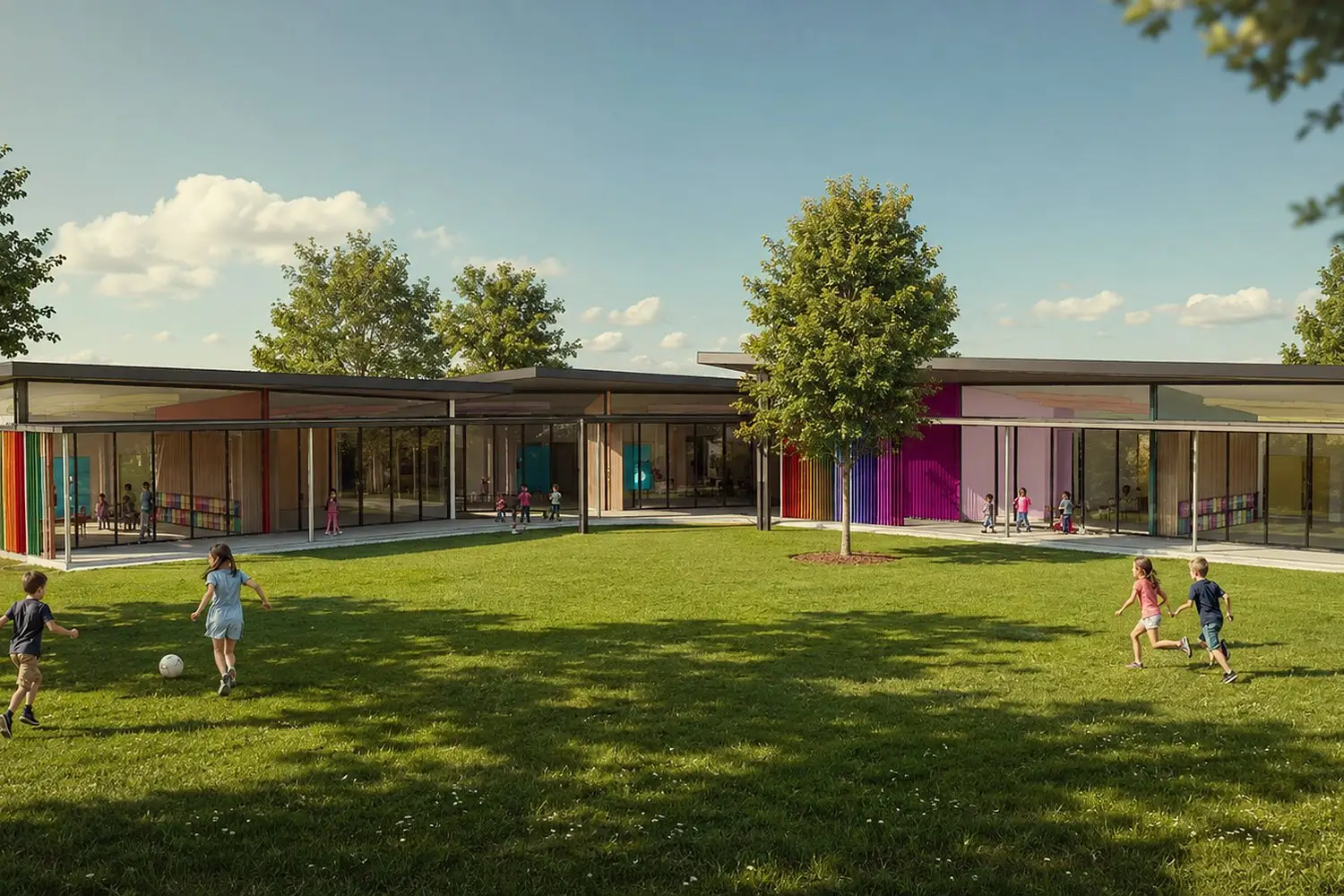
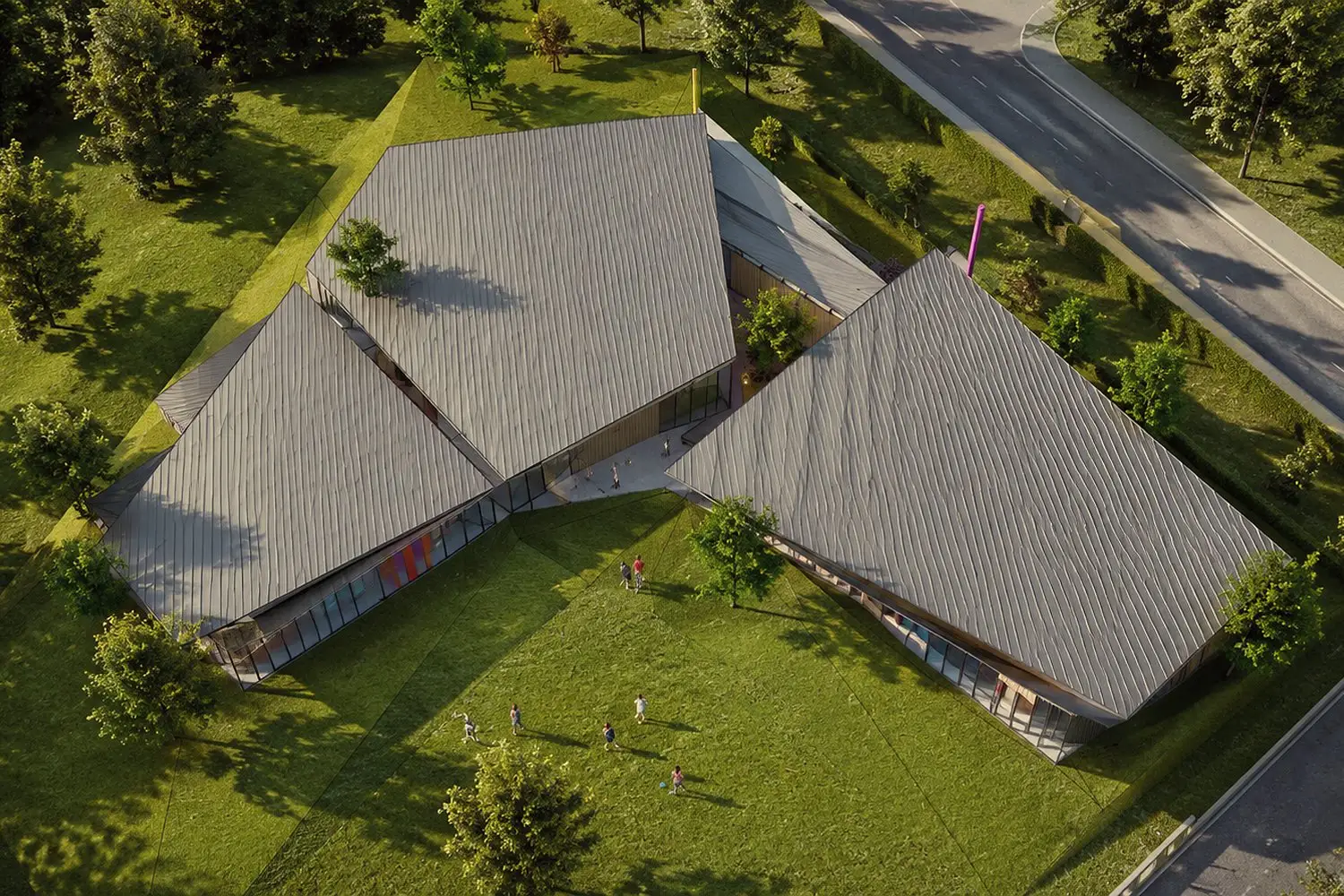
The client wanted a pre-primary school that feels like a place children make the day in, not a building they're told to enter. Low pavilions, no long corridors, generous lawns. A façade that reads as one clear gesture from across the field, and as colour, light and shadow up close.
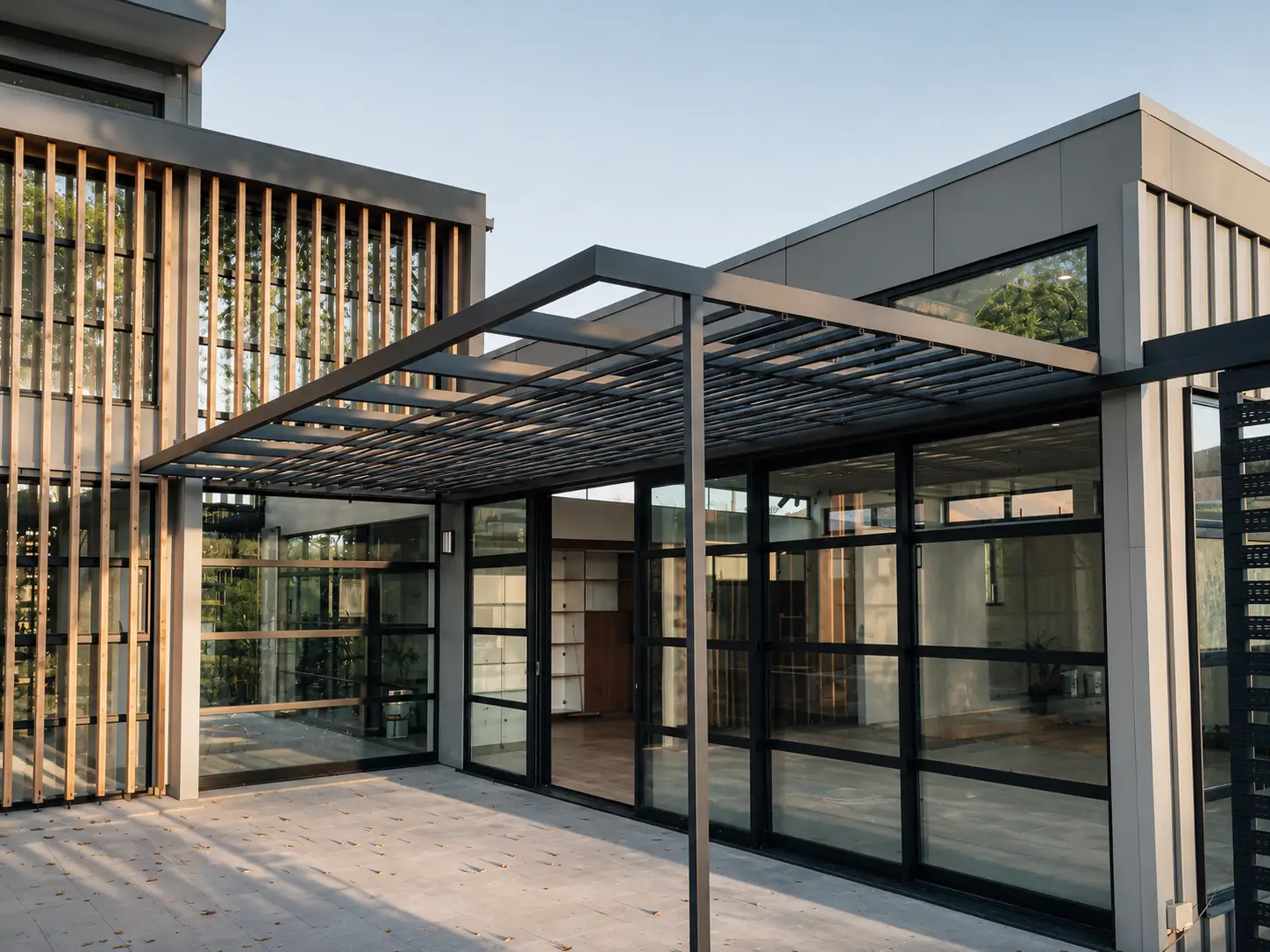
The plan arranges three linked pavilions around a soft, open courtyard. North-facing glazing pulls the winter sun deep into the classrooms. Vertical timber fins on the south and west cut summer glare and paint the inside with shifting bands of colour through the day.
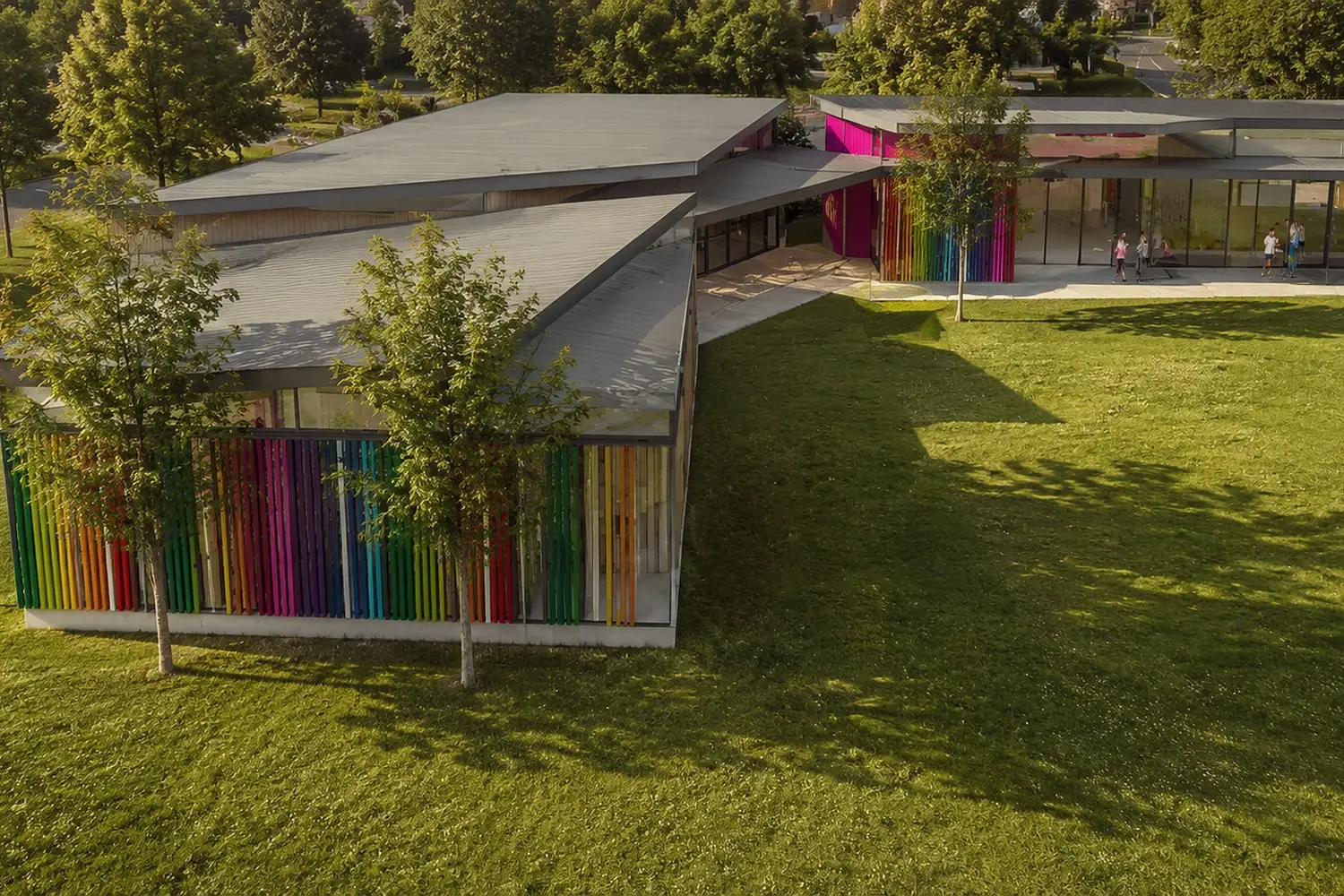
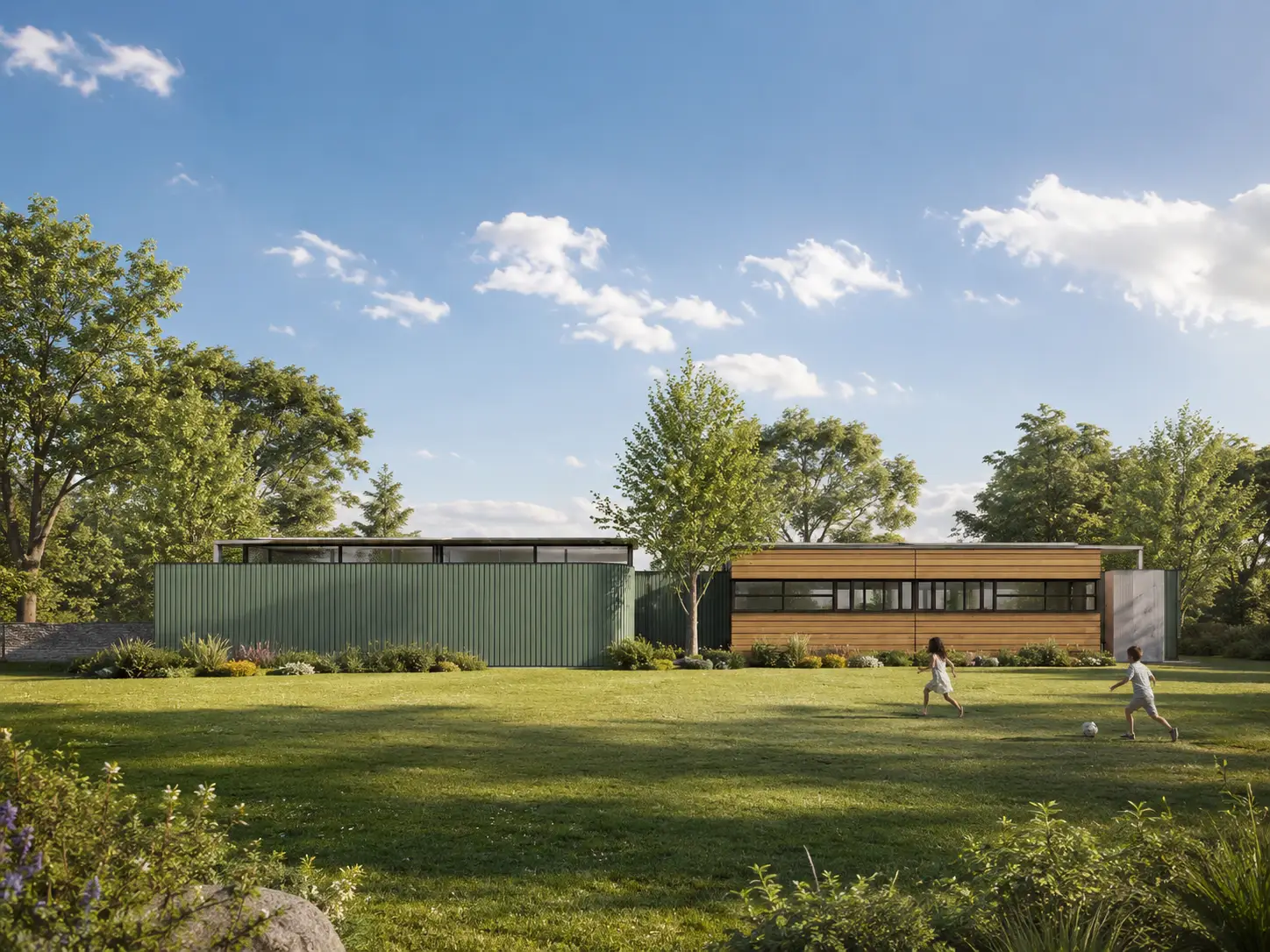
The brief was for more than a functional school cafeteria. It needed to feel generous, calm and useful throughout the day: a place for eating, studying, meeting, waiting and quiet supervision, with the building opening straight onto lawn and trees.
We used a long, low pavilion form with sheltered edges and generous glazing. Study and dining areas open onto outdoor terraces, planted borders and soft play space. The cafeteria becomes a social heart for the school instead of a back-of-house service block.
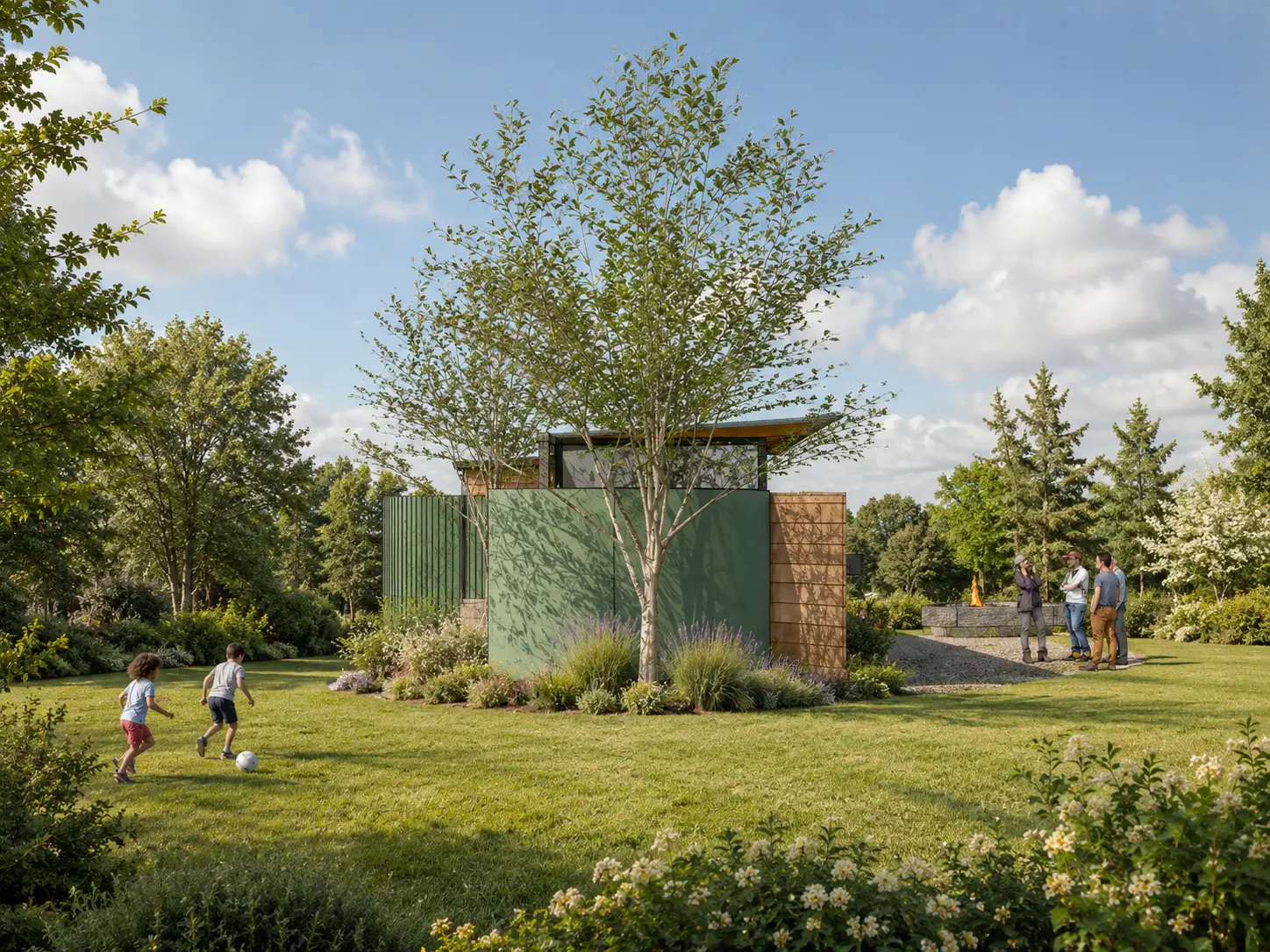
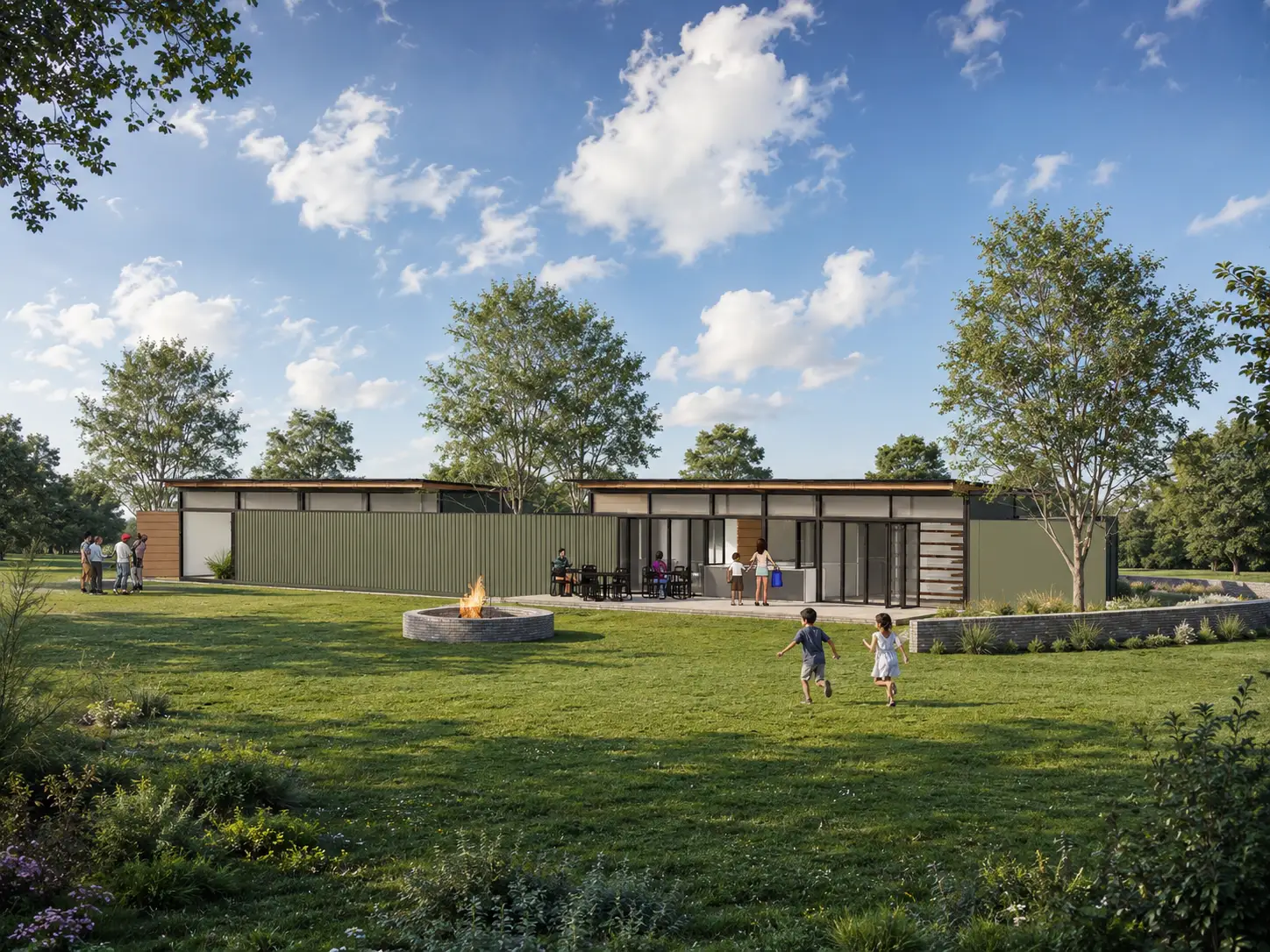
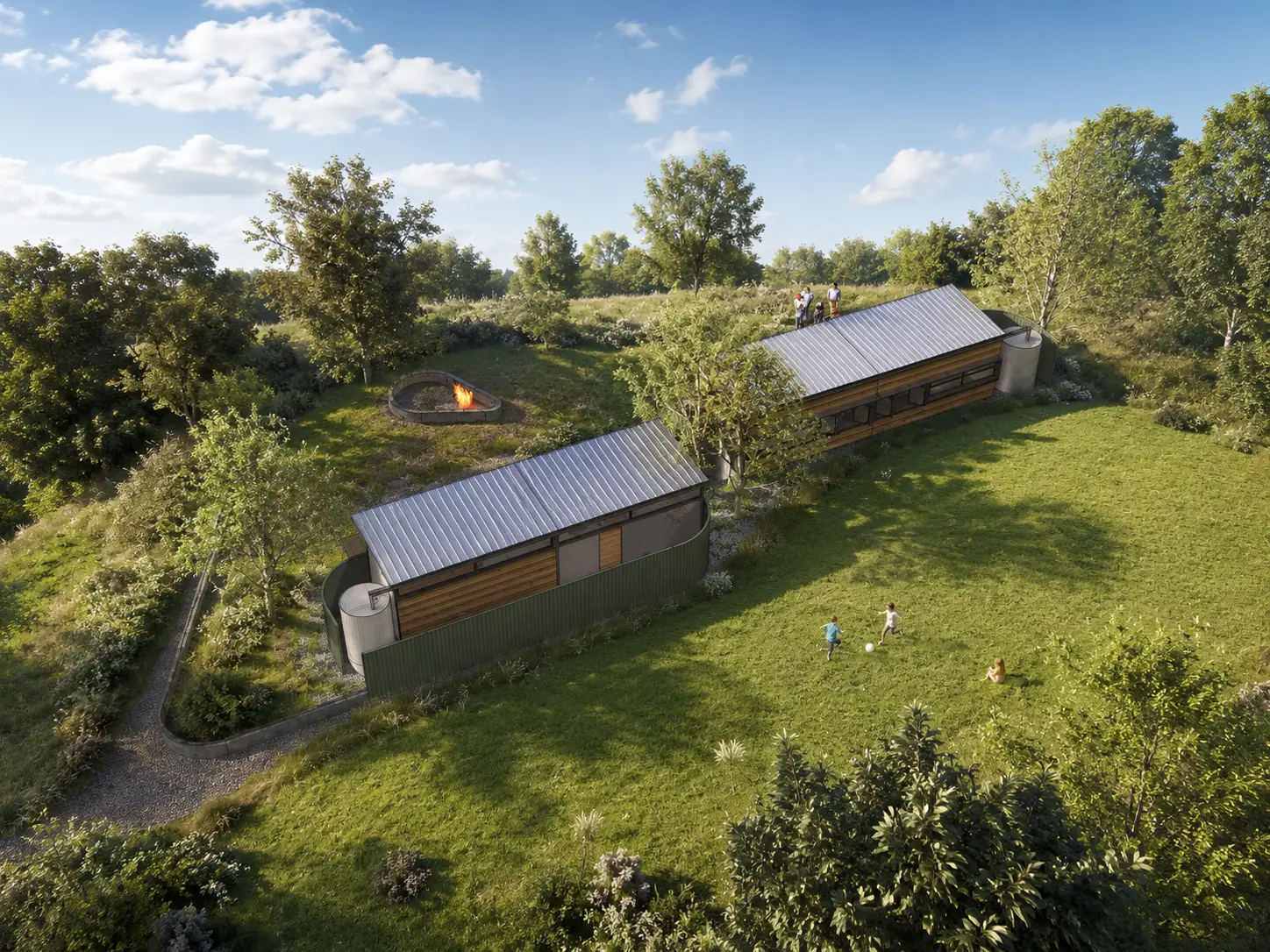
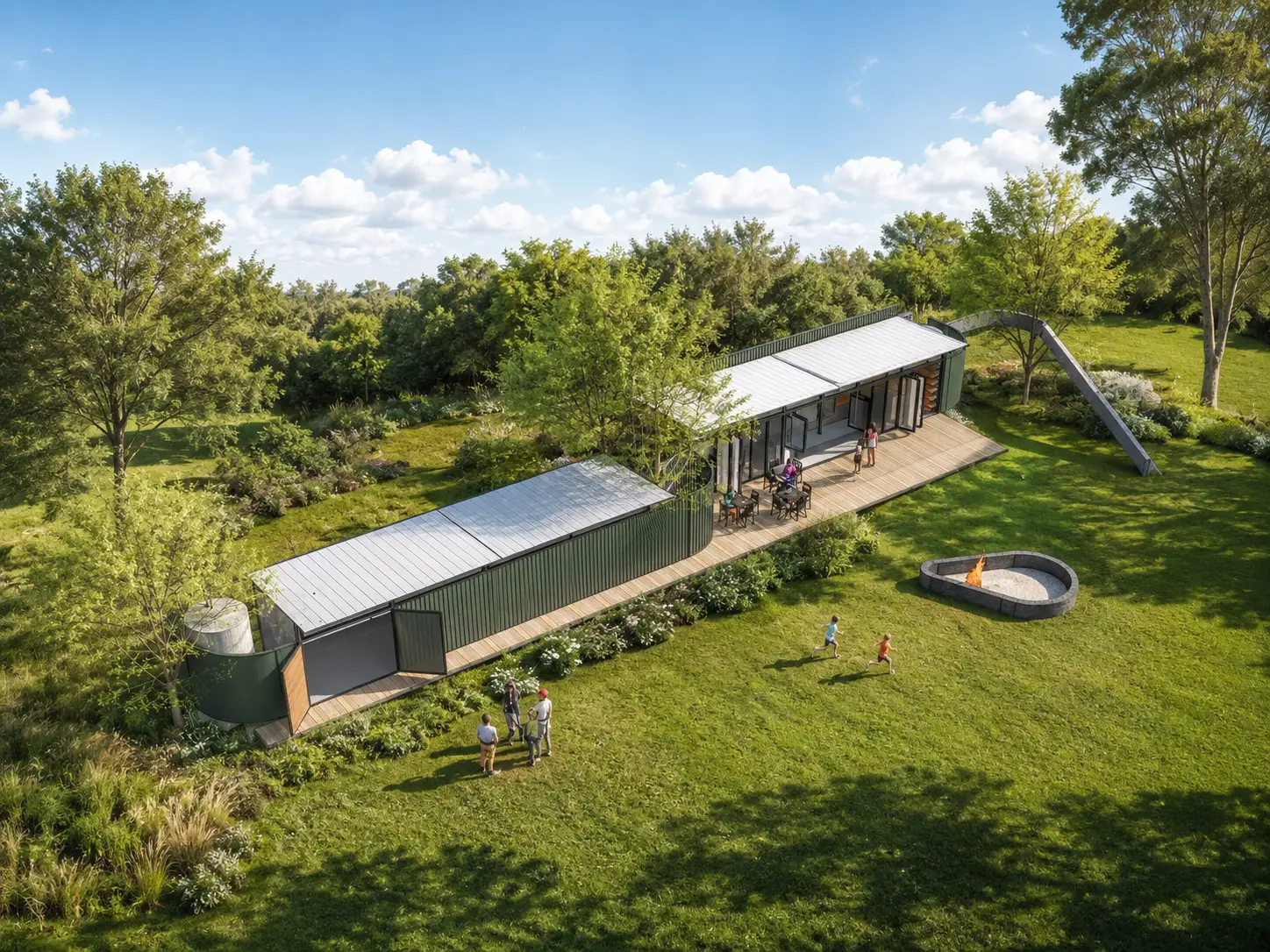
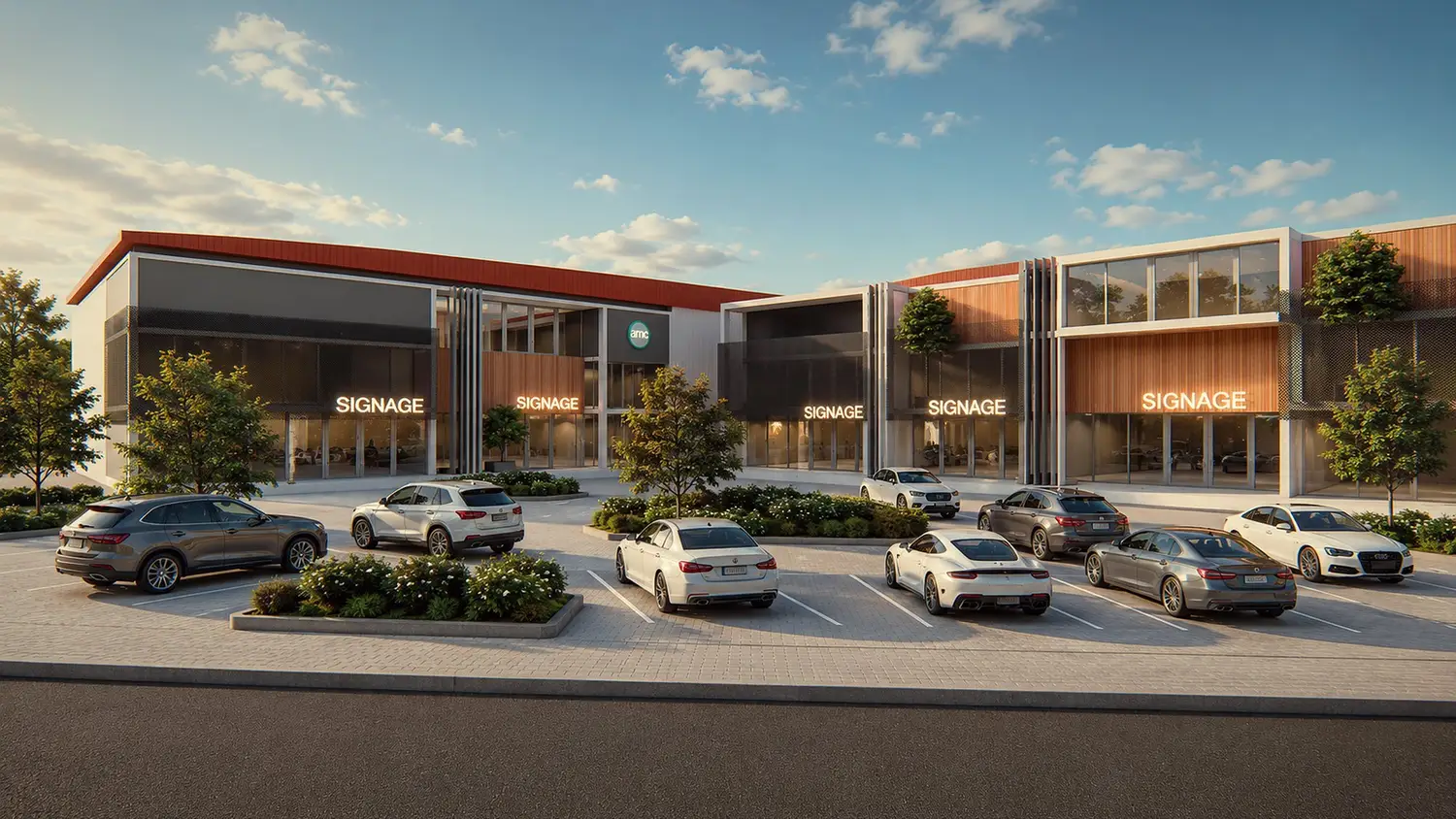
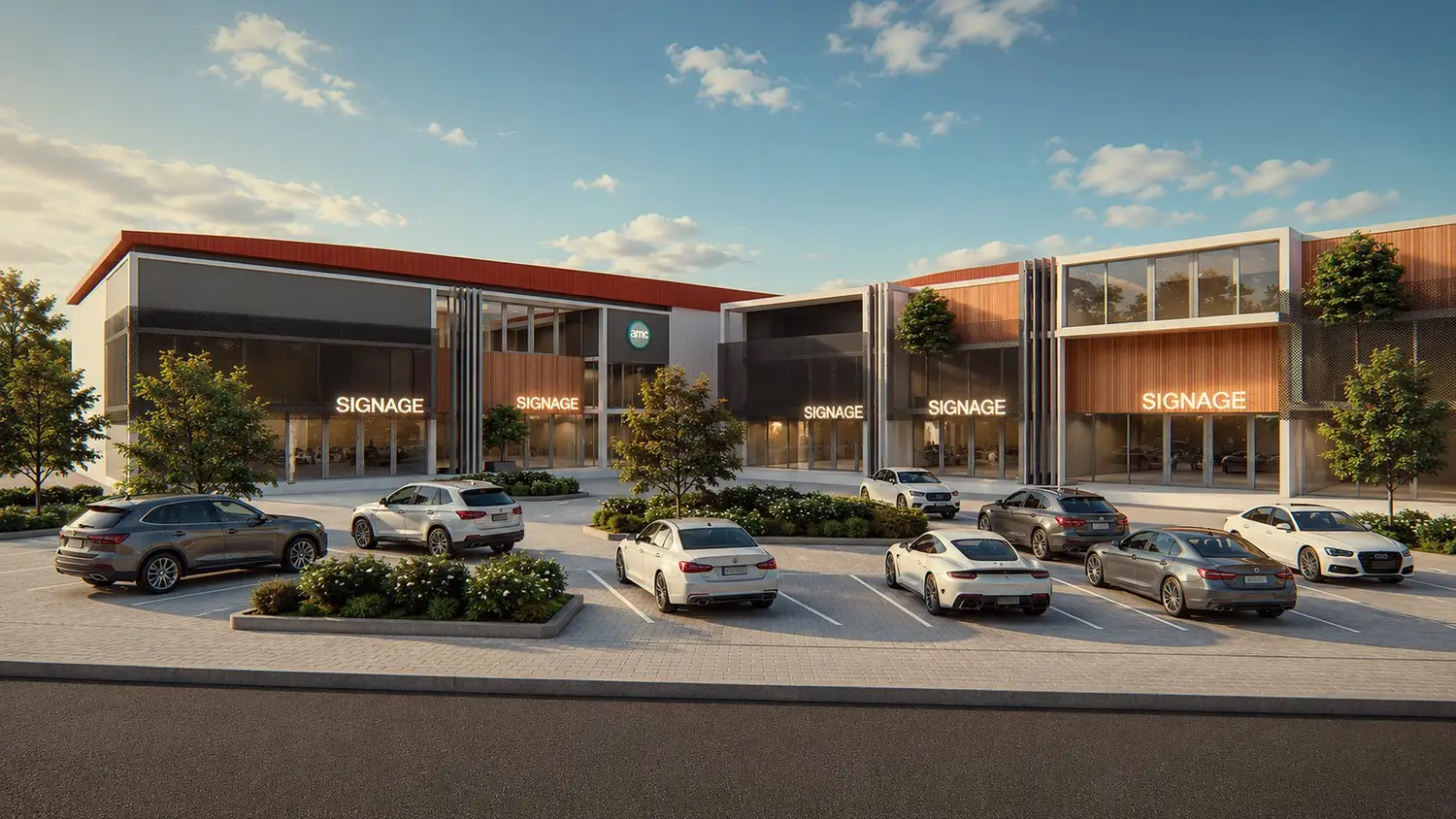
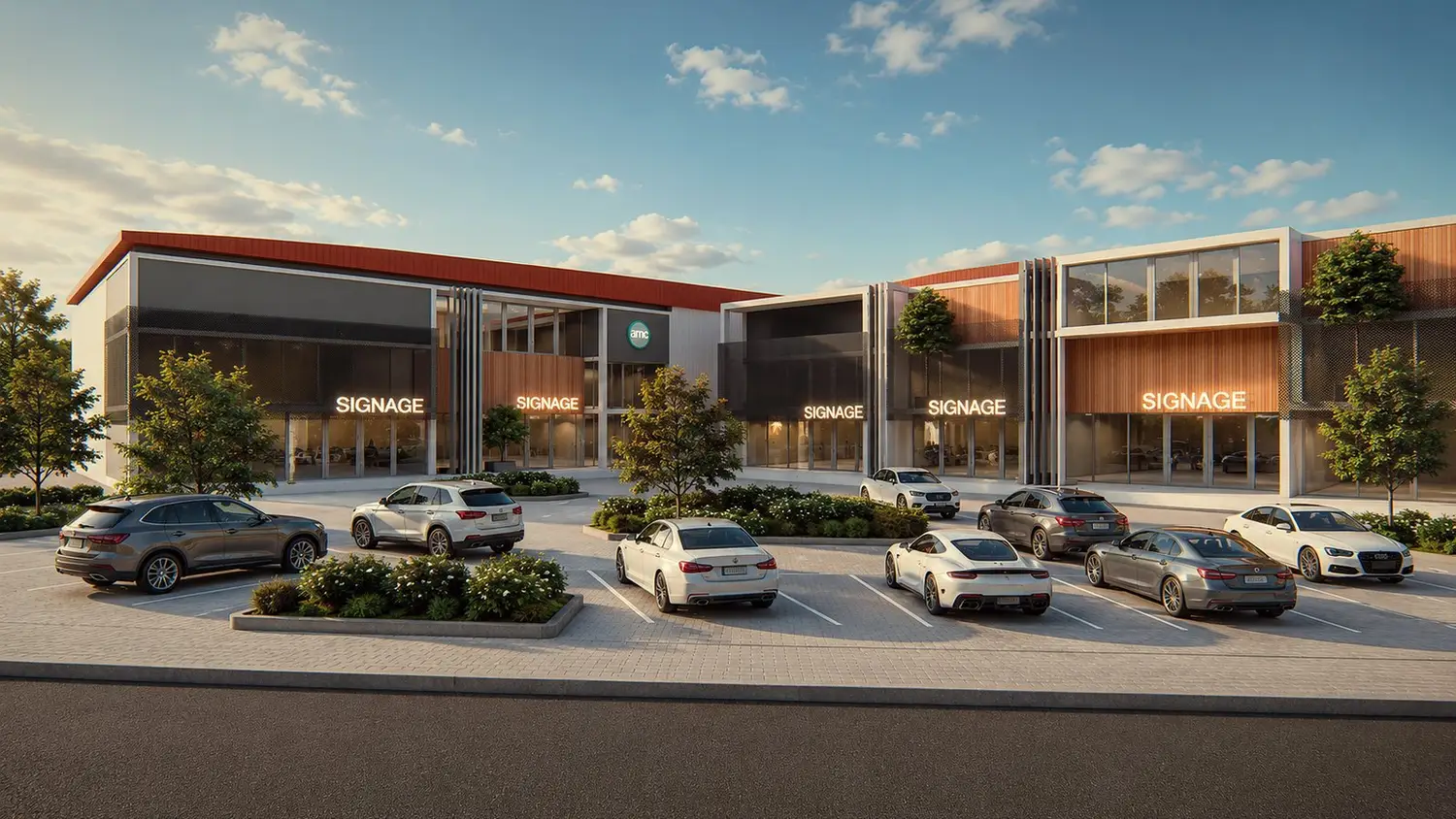
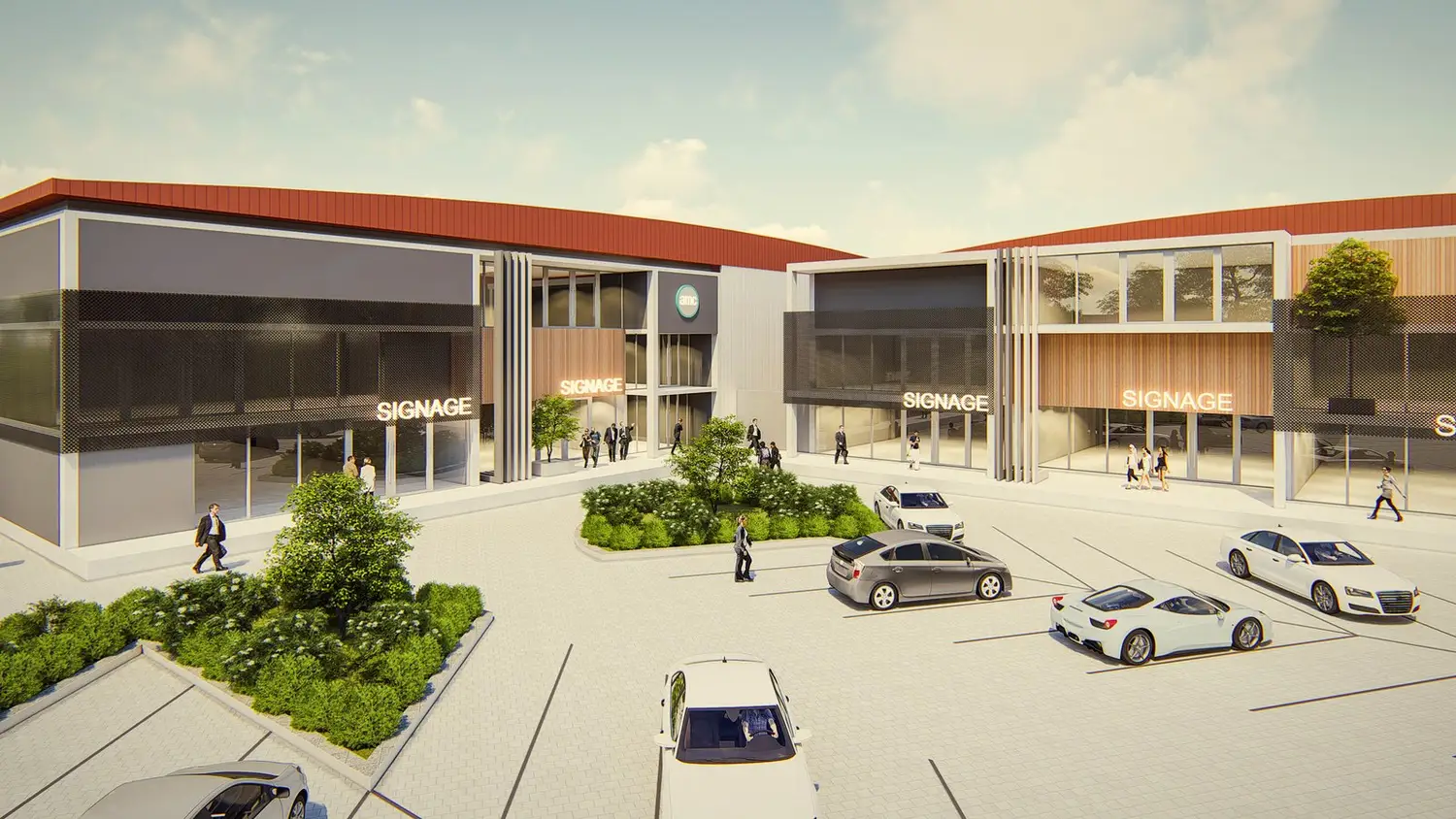
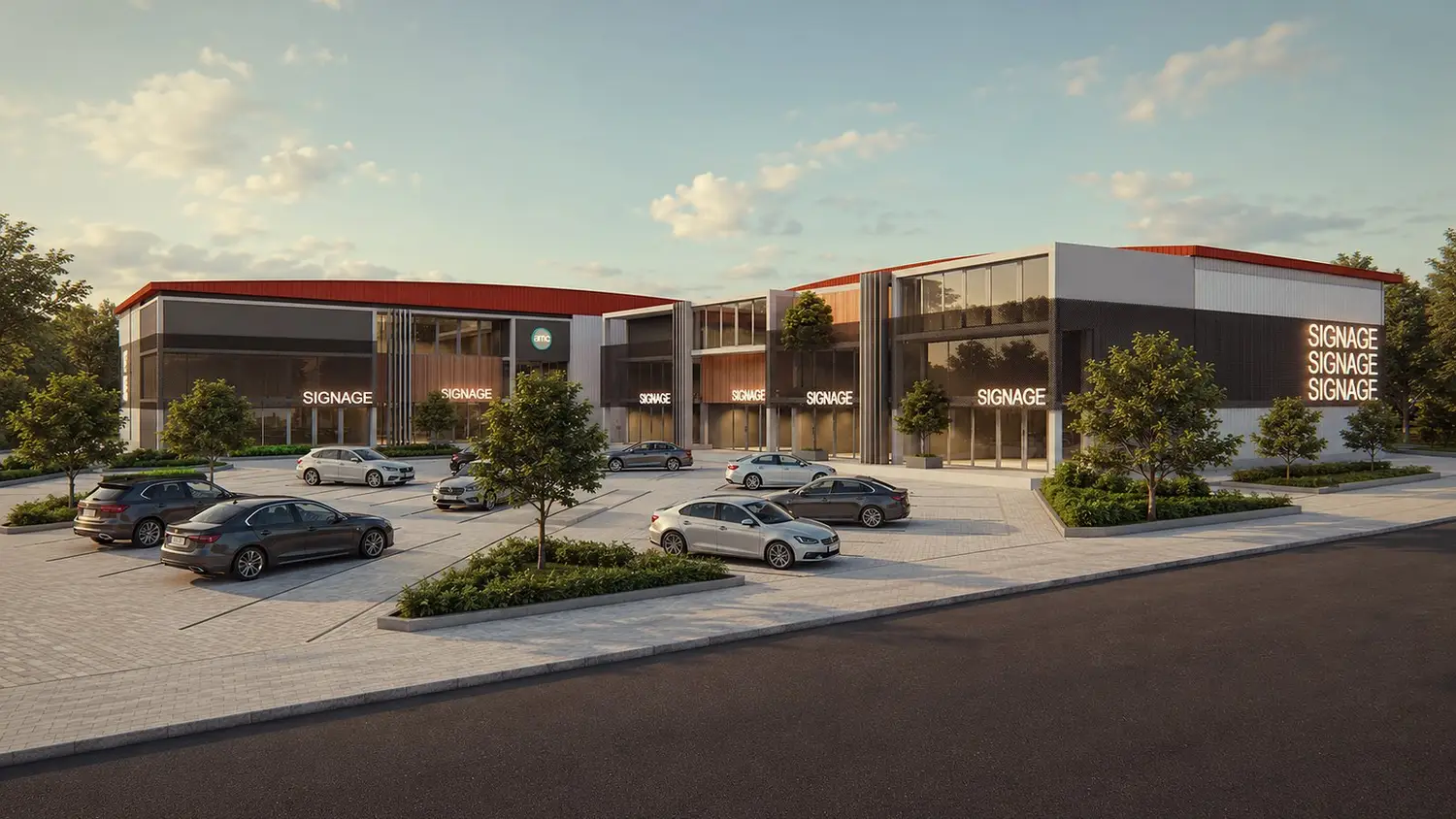
Warehouse-and-retail units on a wide, flat site. The client wanted units that could be let to a mix of tenants — automotive, light industry, retail — without the development looking like a strip mall. Each tenant needed to be visible from the street, but the row had to read as one confident building from the approach.
The plan is a long, low row of brick volumes set back behind a generous forecourt. Each unit has a deep signage bay framed in dark steel — large enough to be useful, restrained enough not to clutter. Pitched standing-seam roofs in soft red give the row a continuous skyline. On site now.
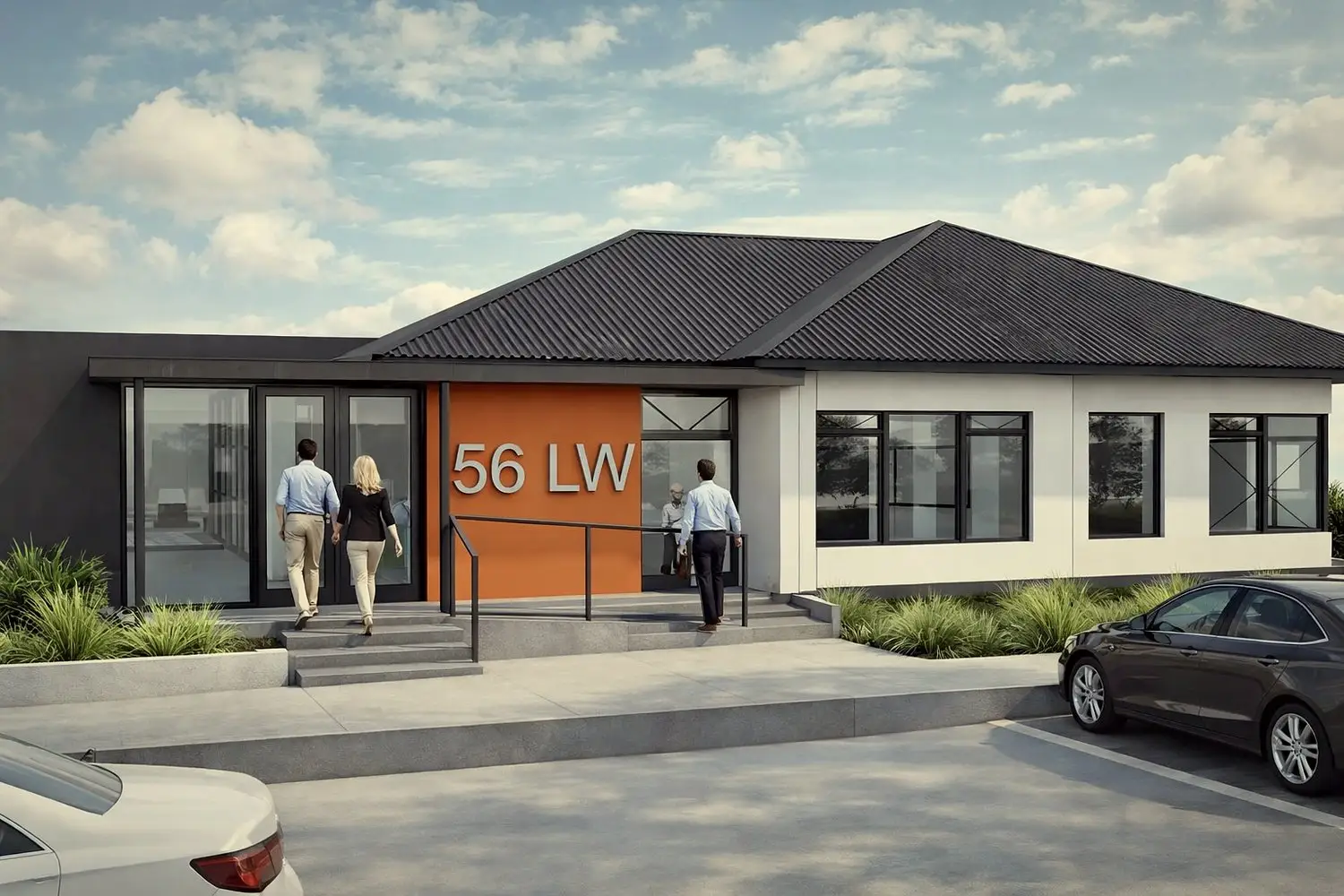
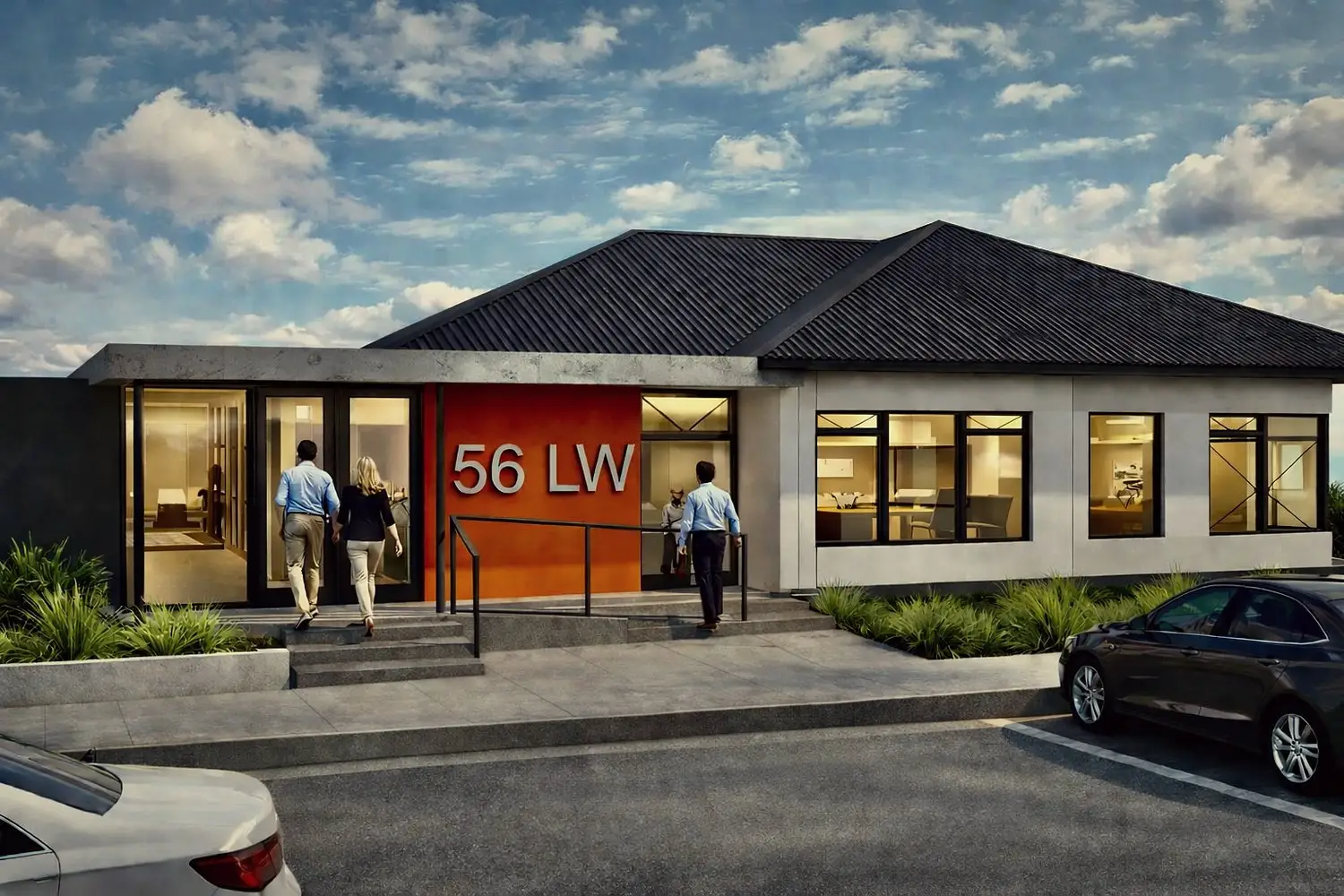
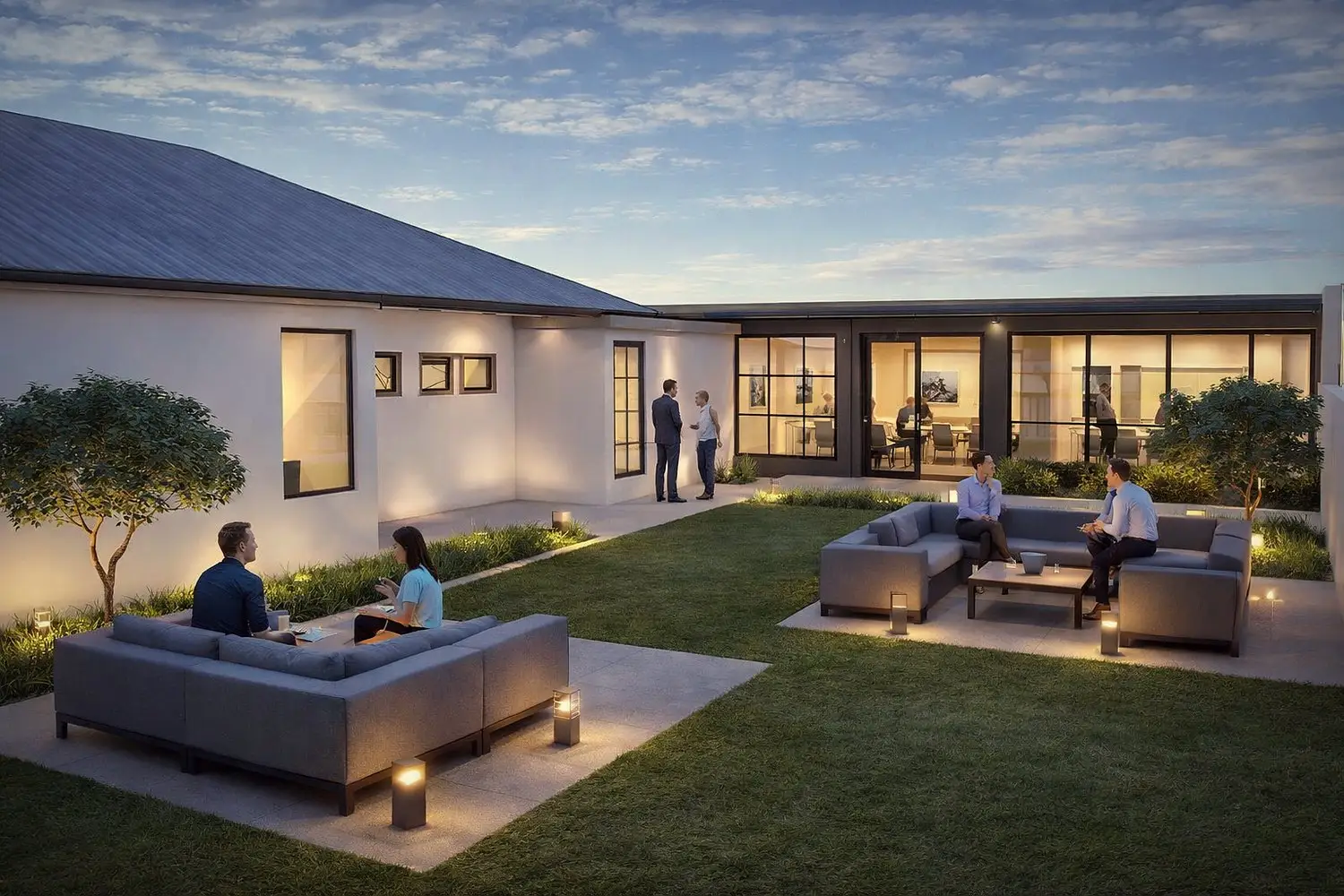
The client runs a small professional services firm where clients arrive, are met, and sit down in a real room. The brief was to design a building that reads as one welcoming threshold from the street, keeps the workspace daylit and quiet inside, and avoids the open-plan-cubicle look of a generic office park.
The plan is a long, low pavilion under a single hipped roof. A coloured signage panel marks the front door — large enough to be the building's identity, restrained enough not to feel branded. Behind that door, the workspace wraps around an internal courtyard so every desk has a view to planting and sky. On site now.
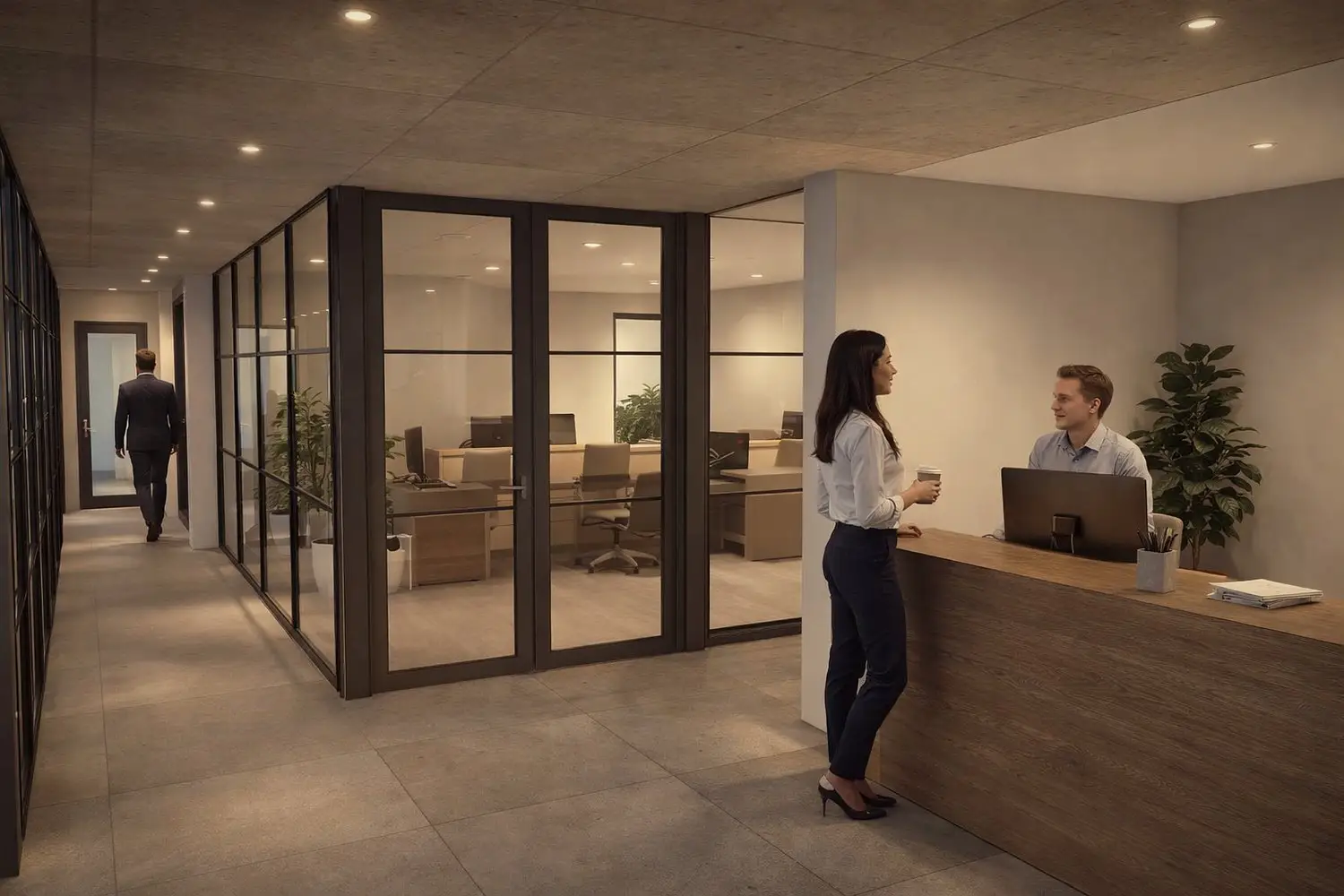
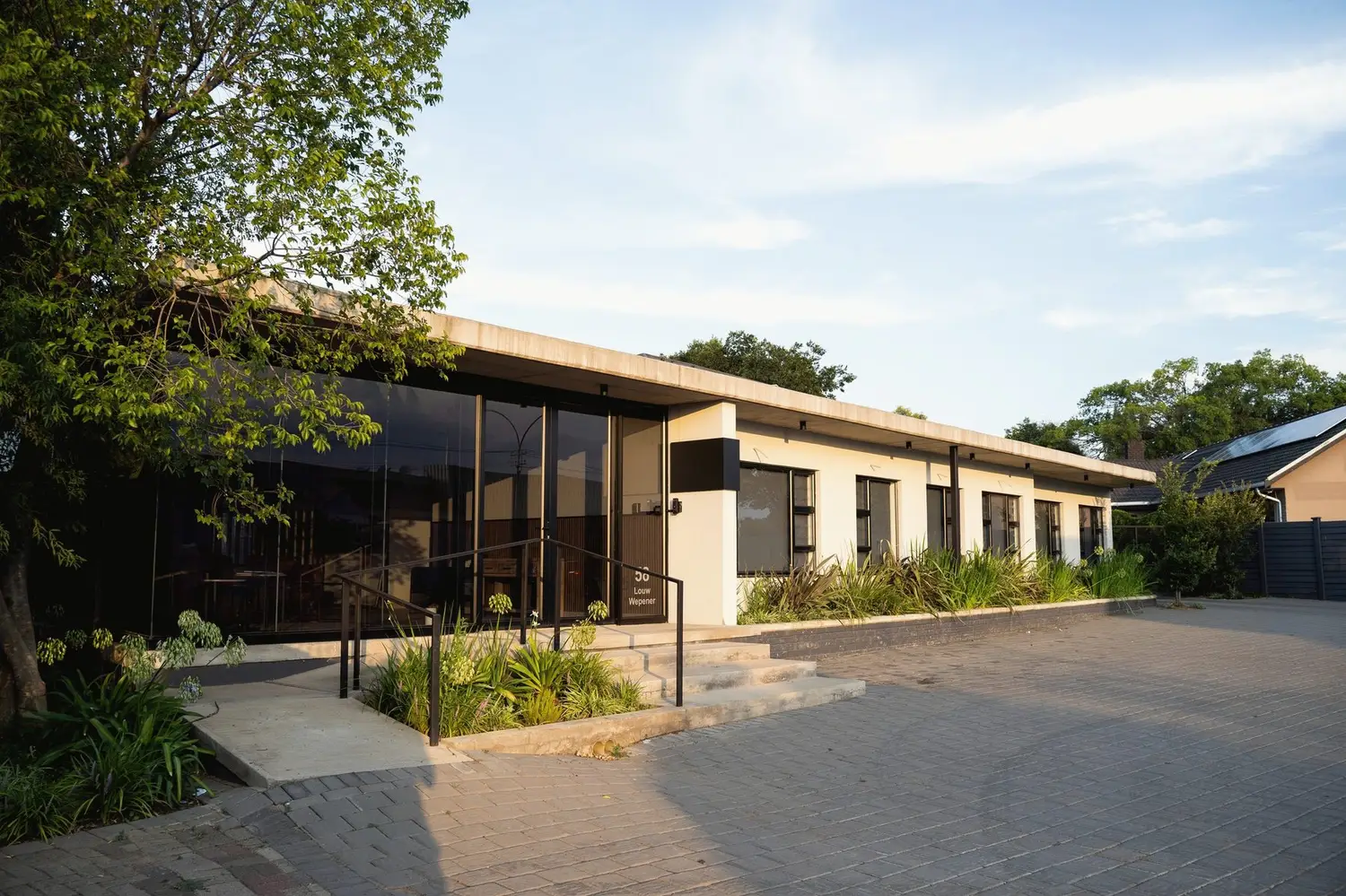
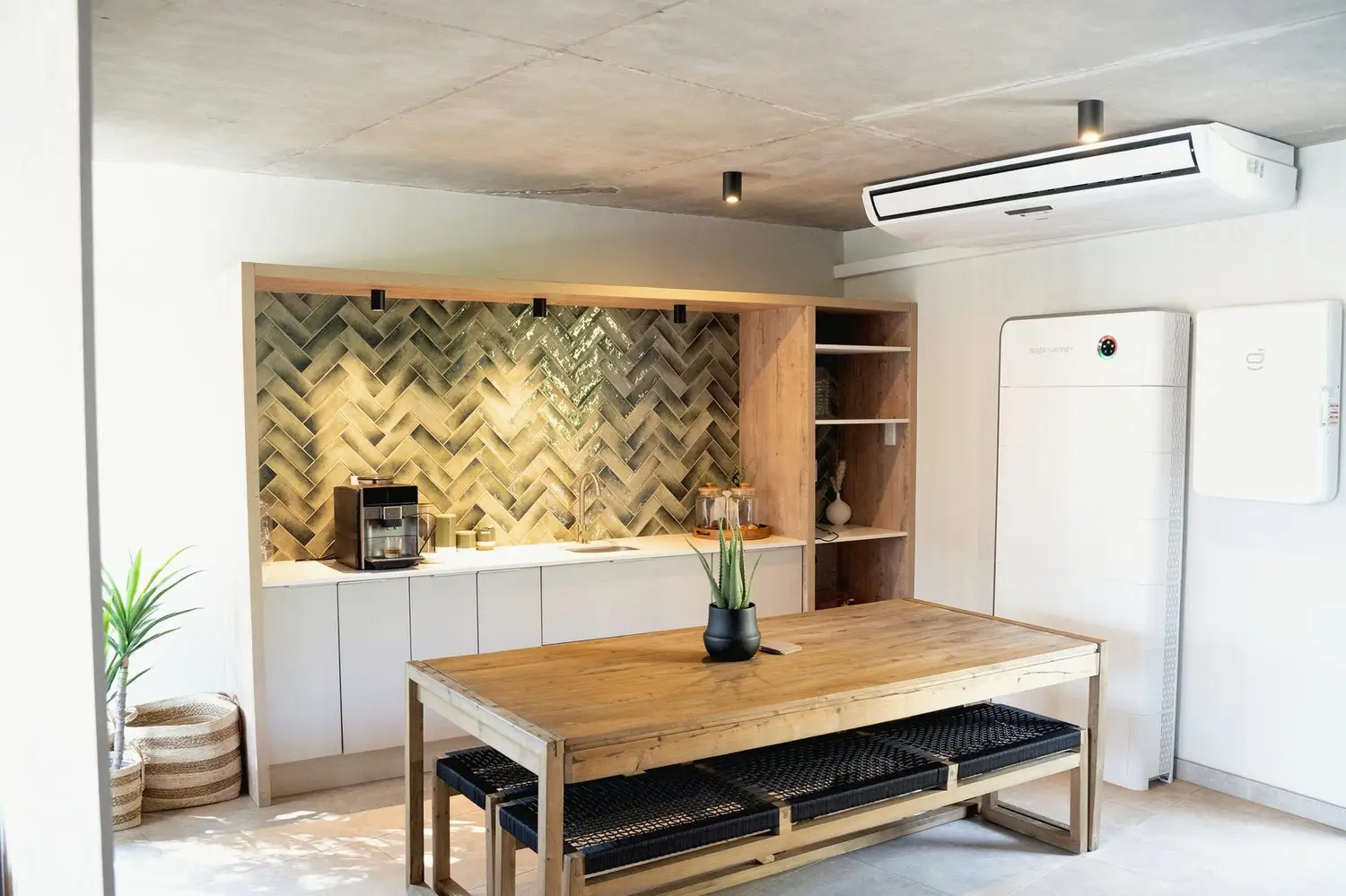
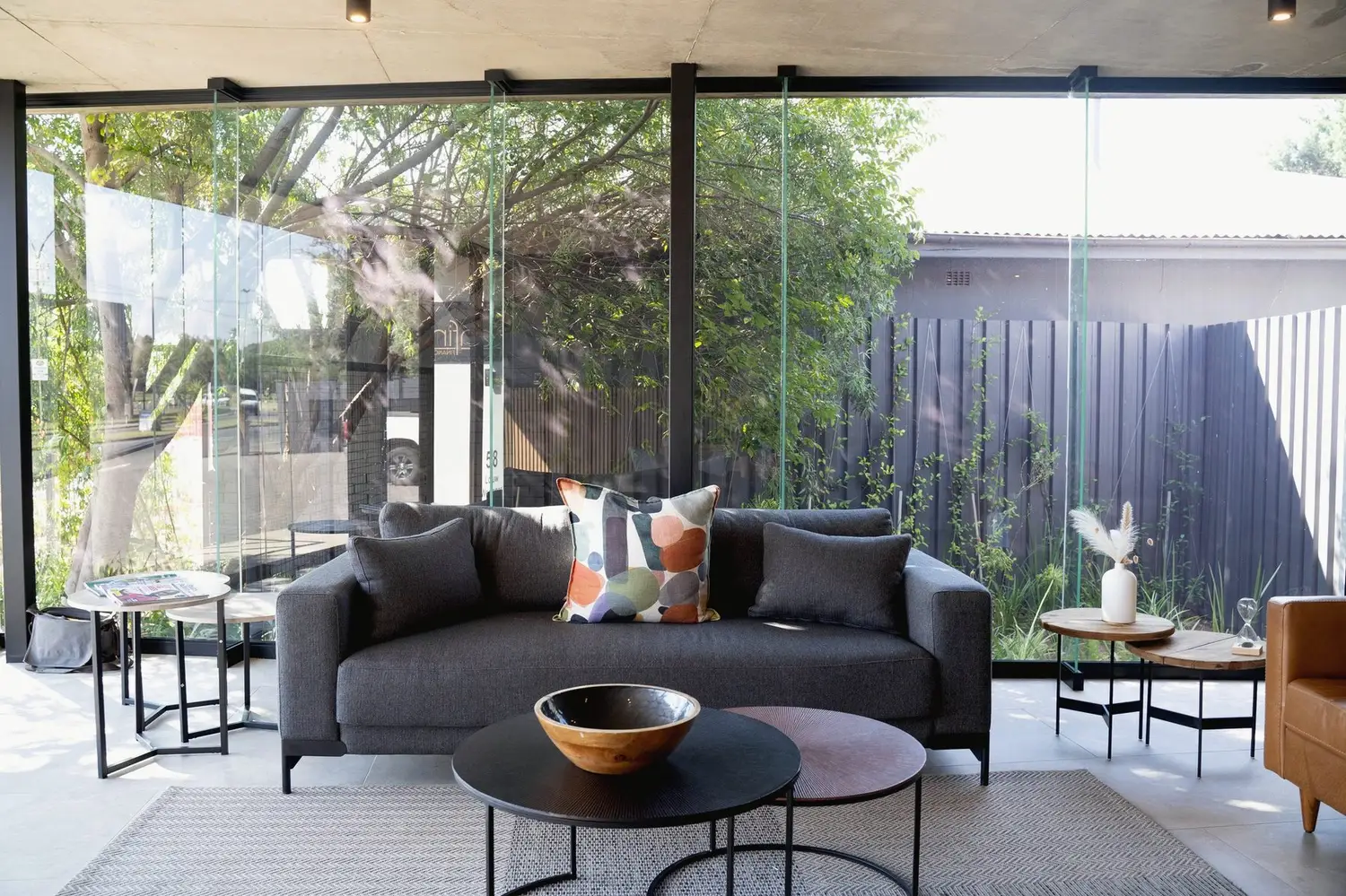
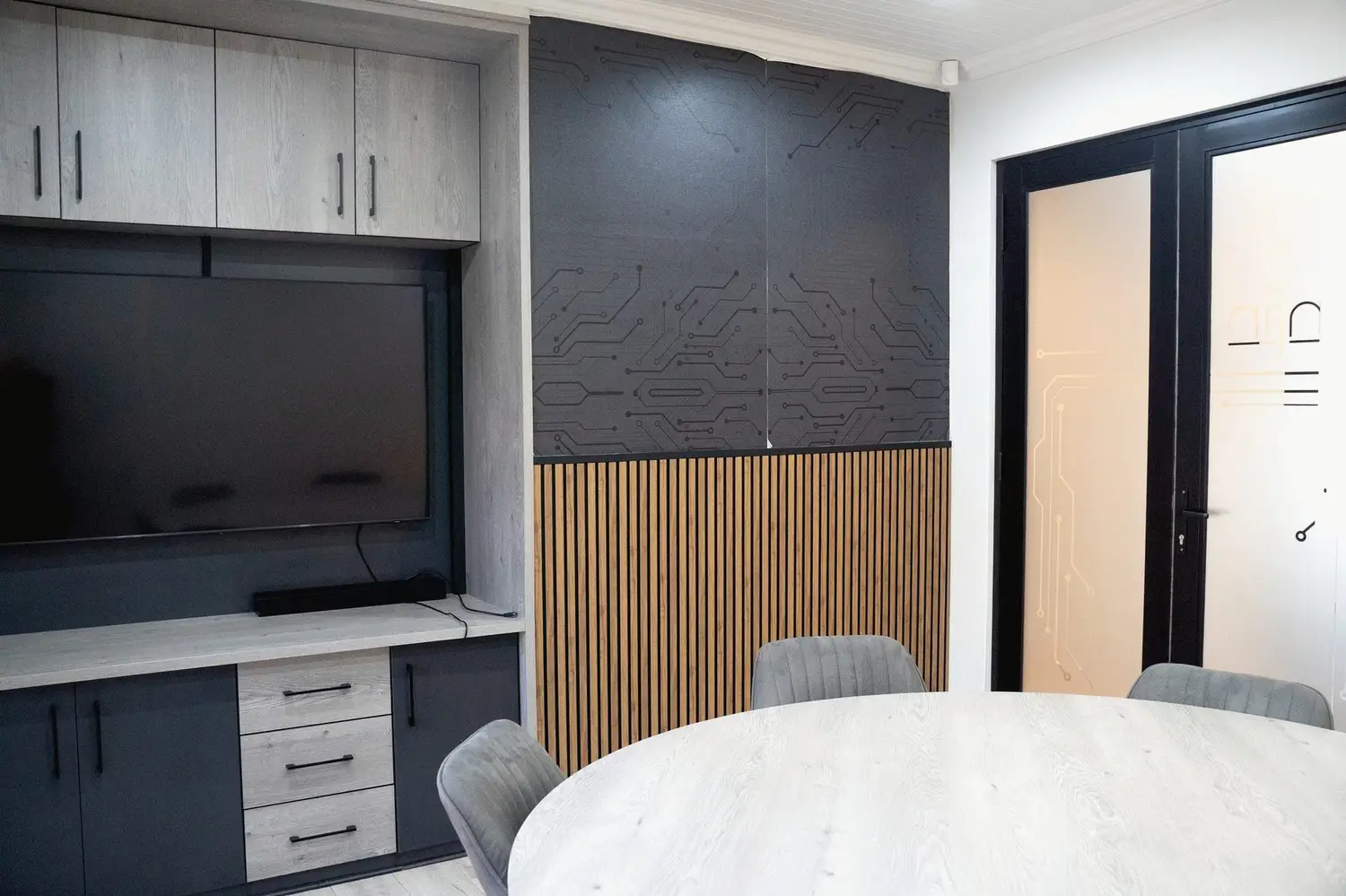
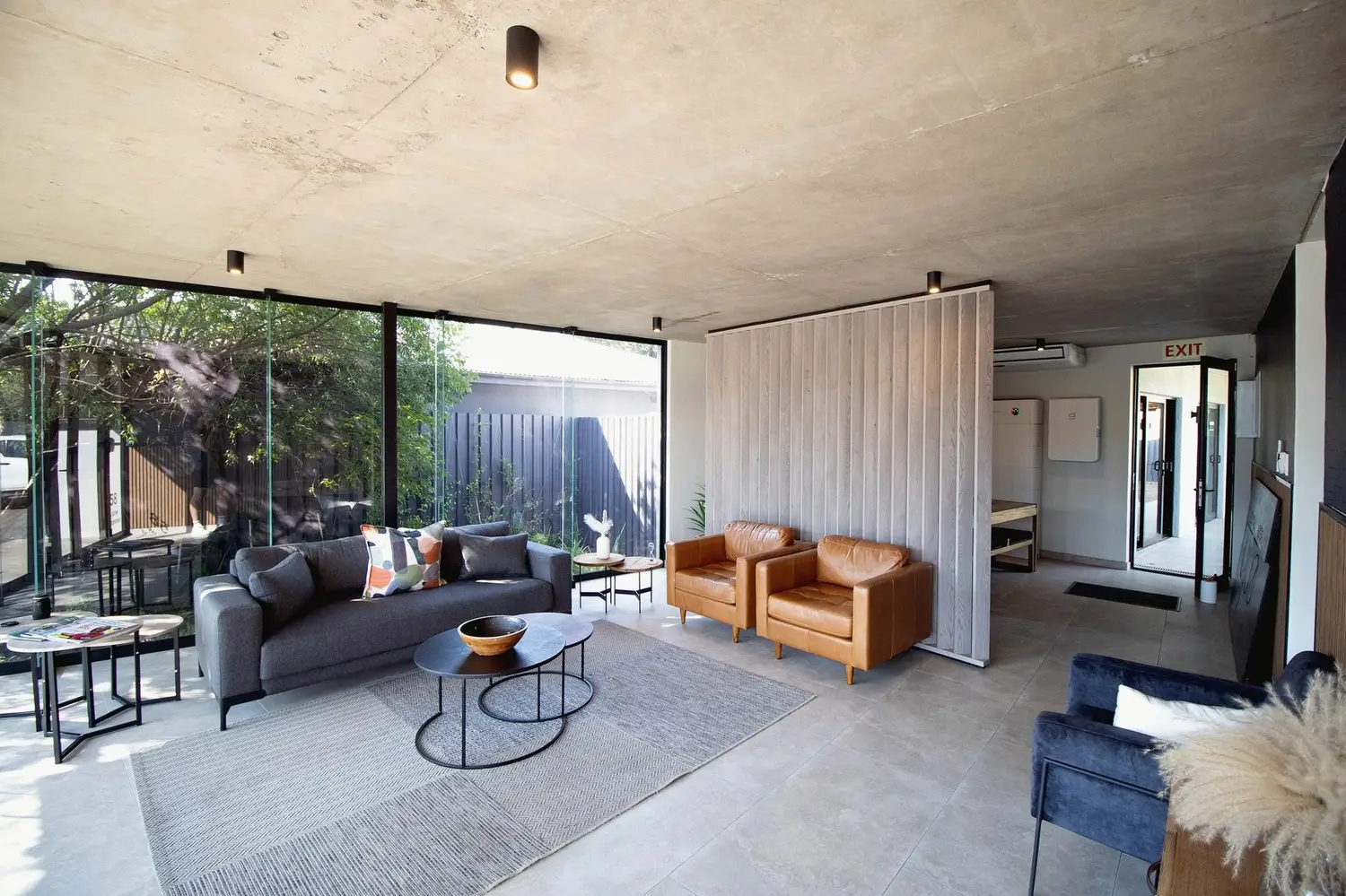
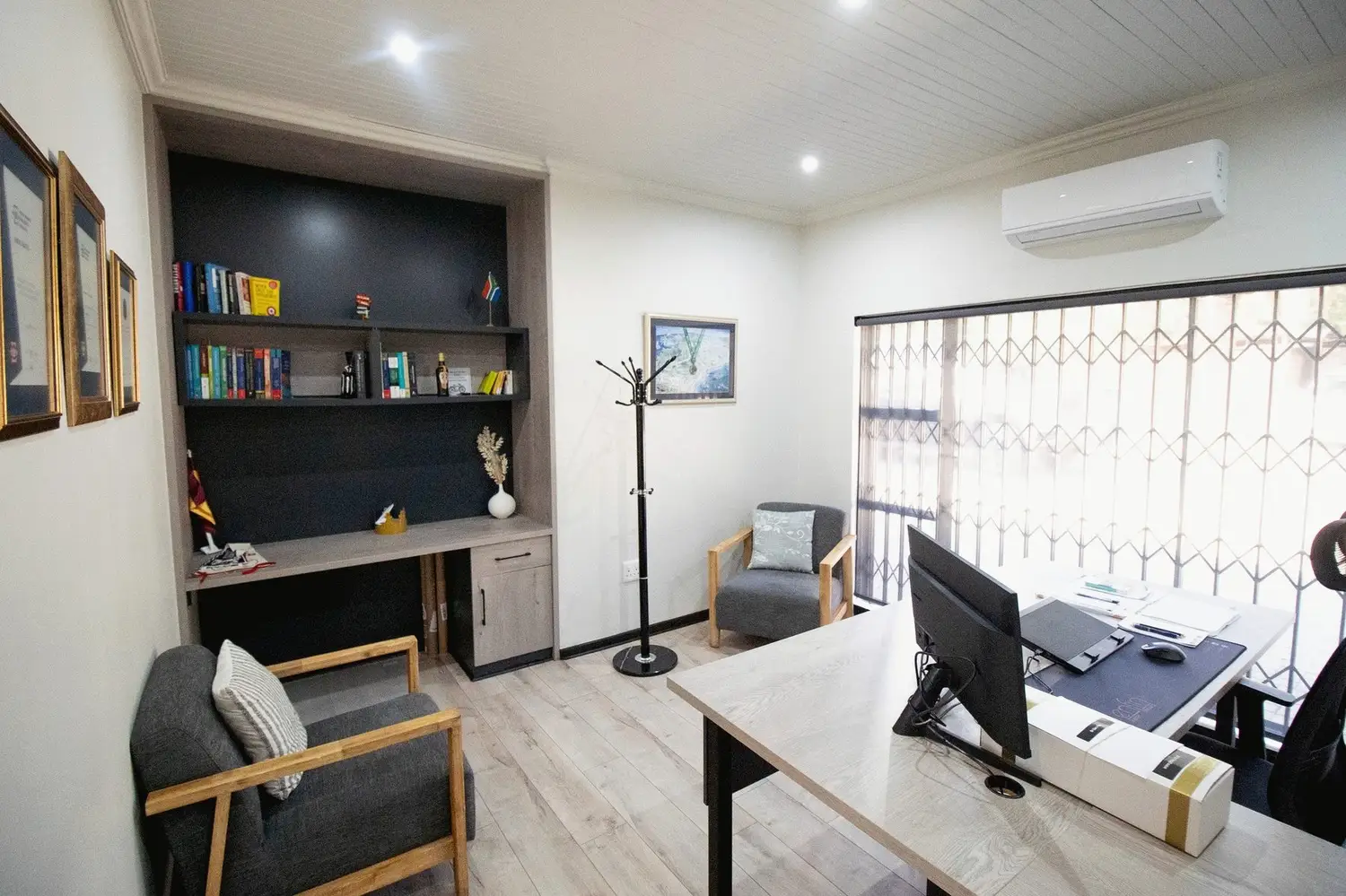
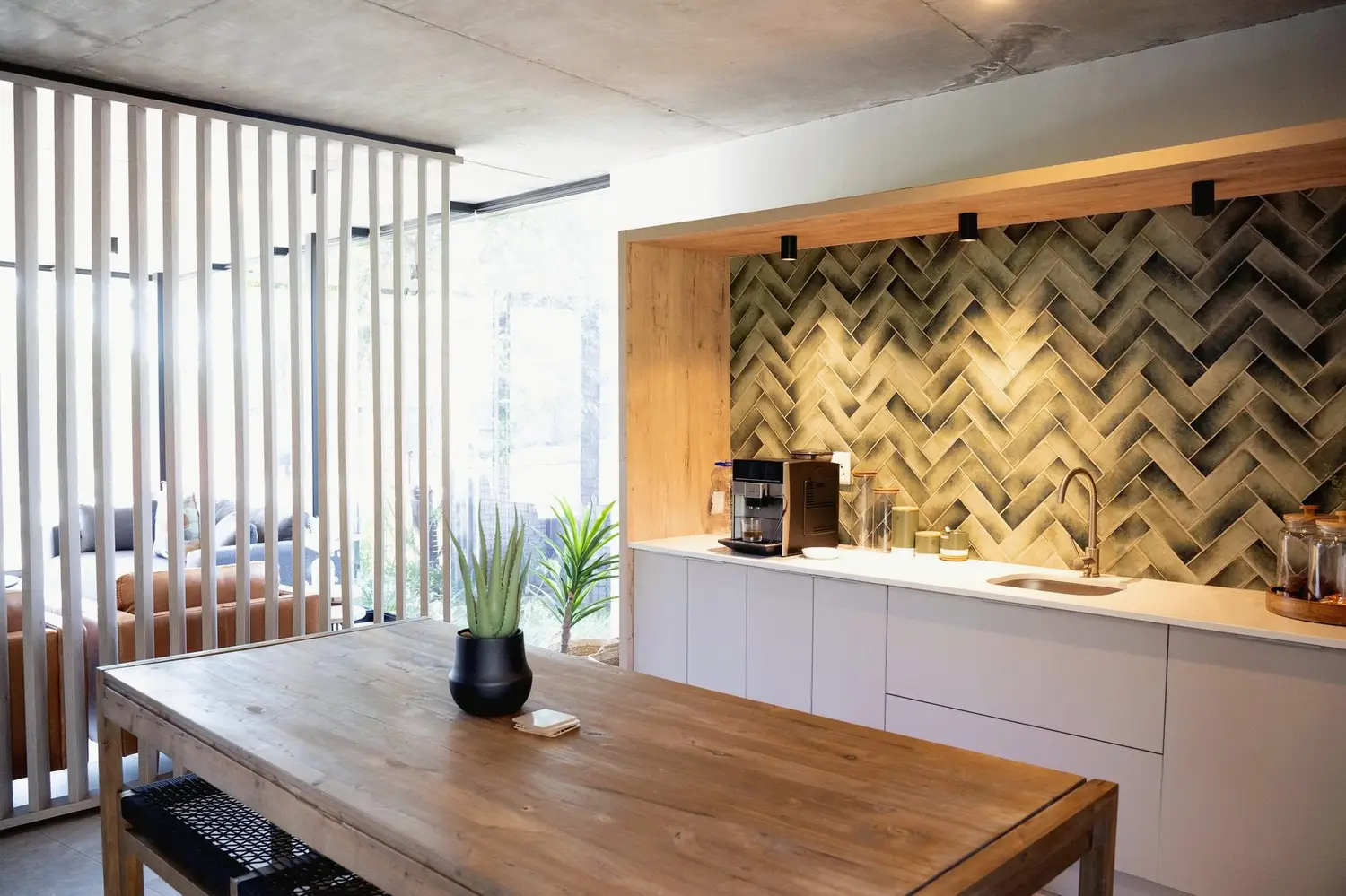
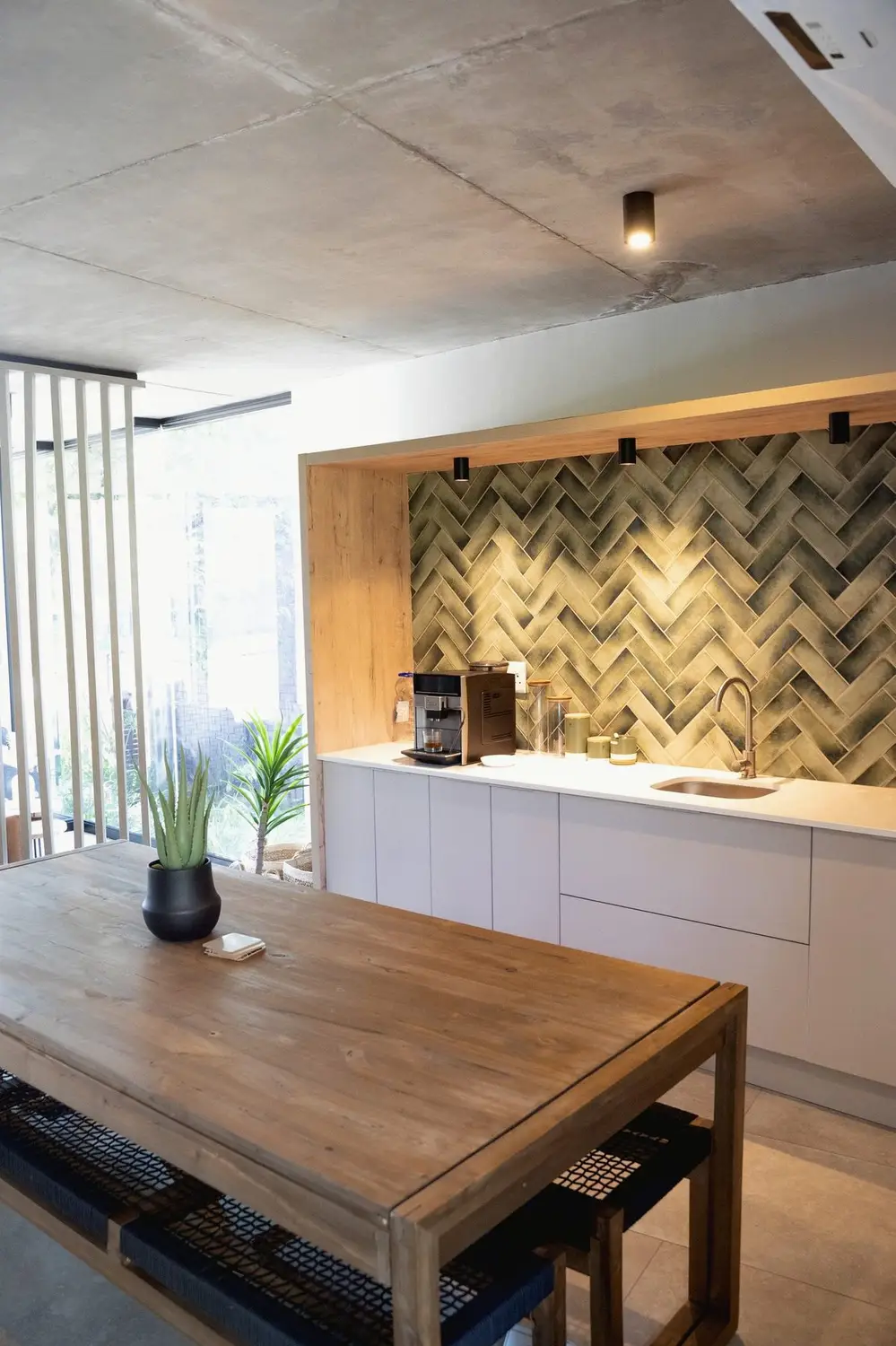
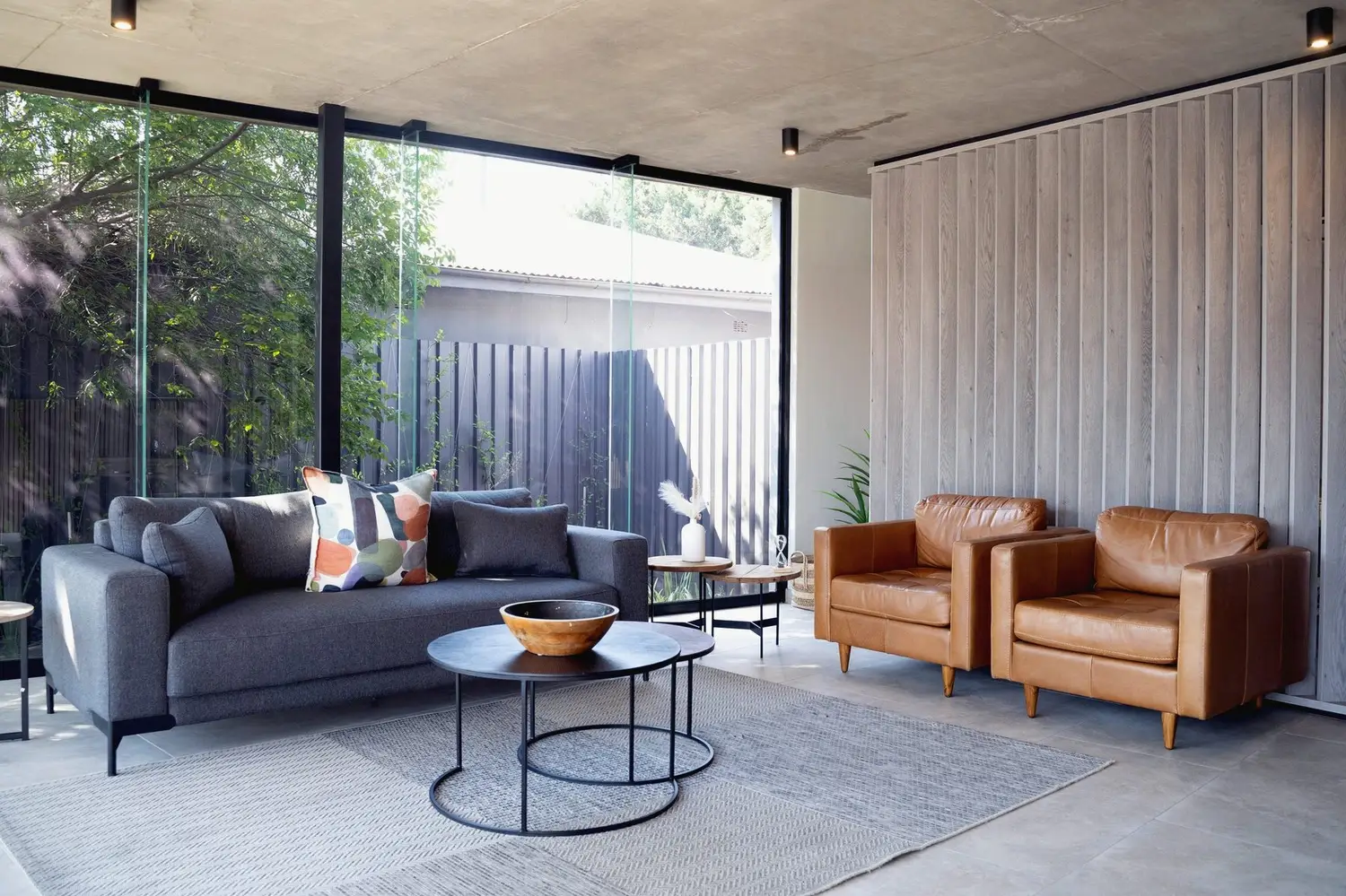
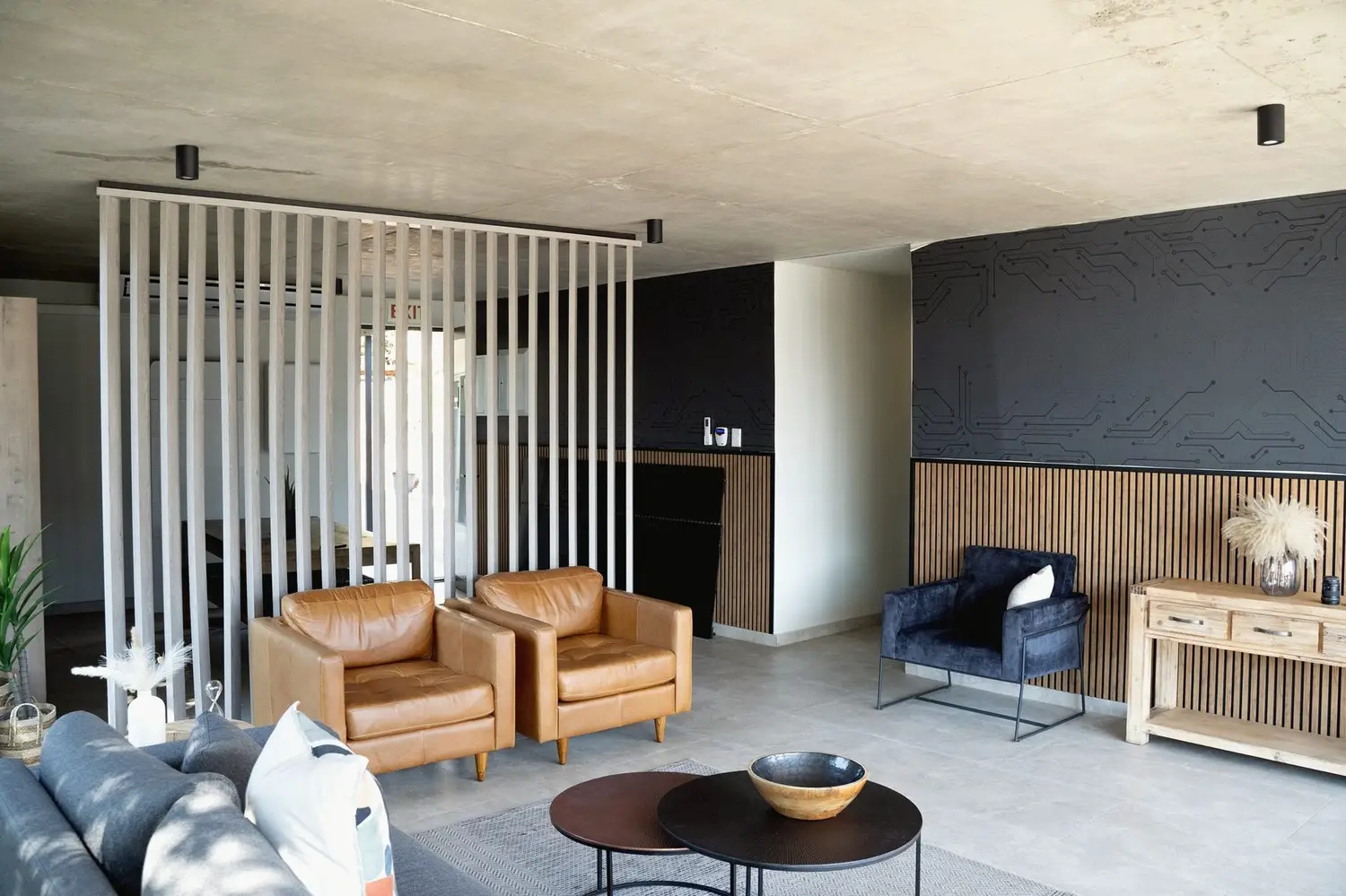
An existing office property in Bloemfontein reworked and extended into a more contemporary, client-ready workplace — with a warm reception lounge, kitchenette, meeting room, private offices and refined interior detailing.
The brief was to rework an existing office property into a more welcoming and capable workplace — professional without being cold or generic. The project combined the renovation and extension of the building shell with a full interior fit-out, reshaping both the arrival and the everyday workspaces.
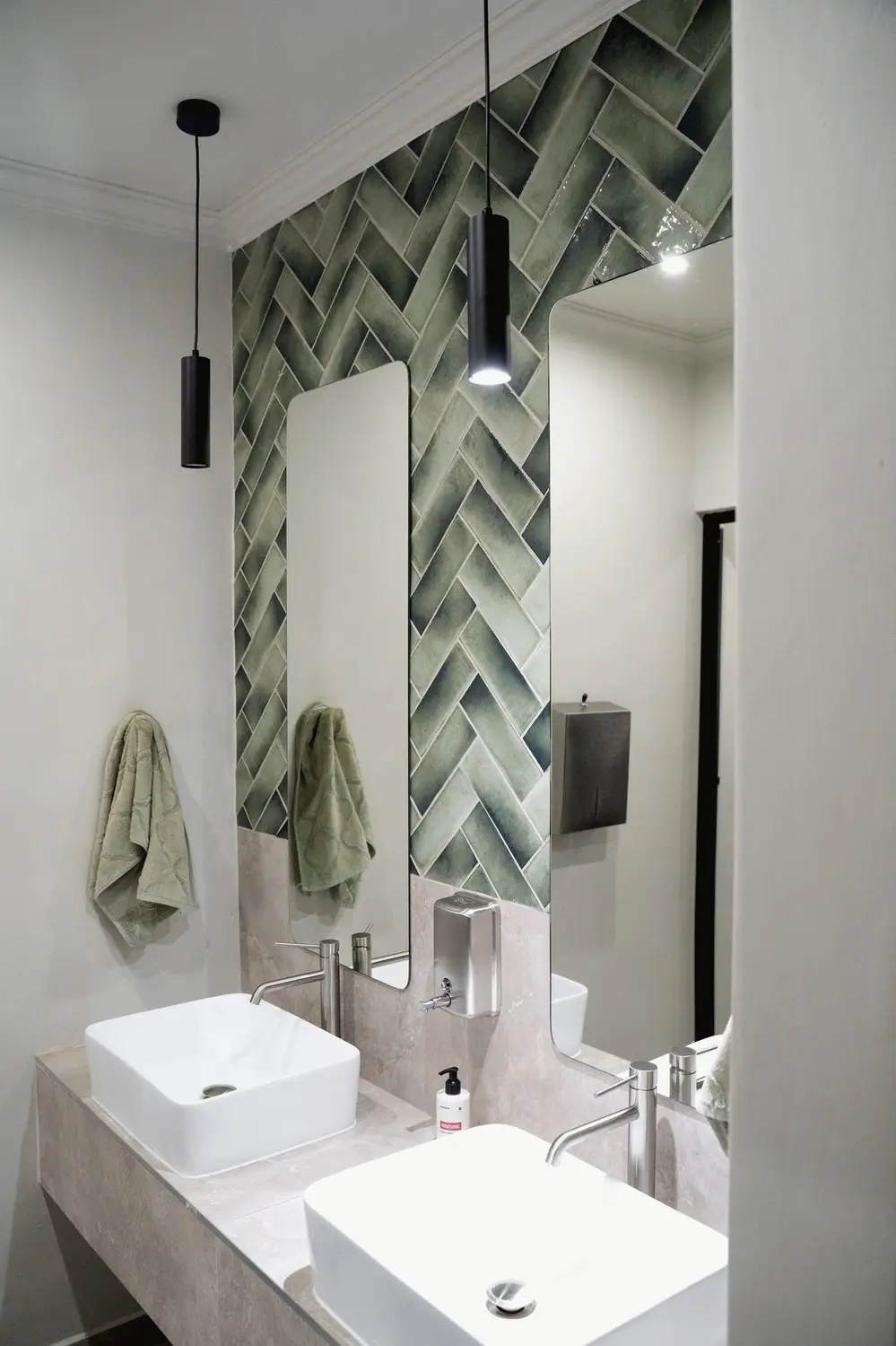
The finished interiors use a restrained palette: exposed concrete, pale timber, charcoal detailing, leather, soft grey upholstery and green herringbone tile. Full-height glazing keeps the client lounge bright. Integrated joinery, screens and layered furniture keep the space calm and measured.
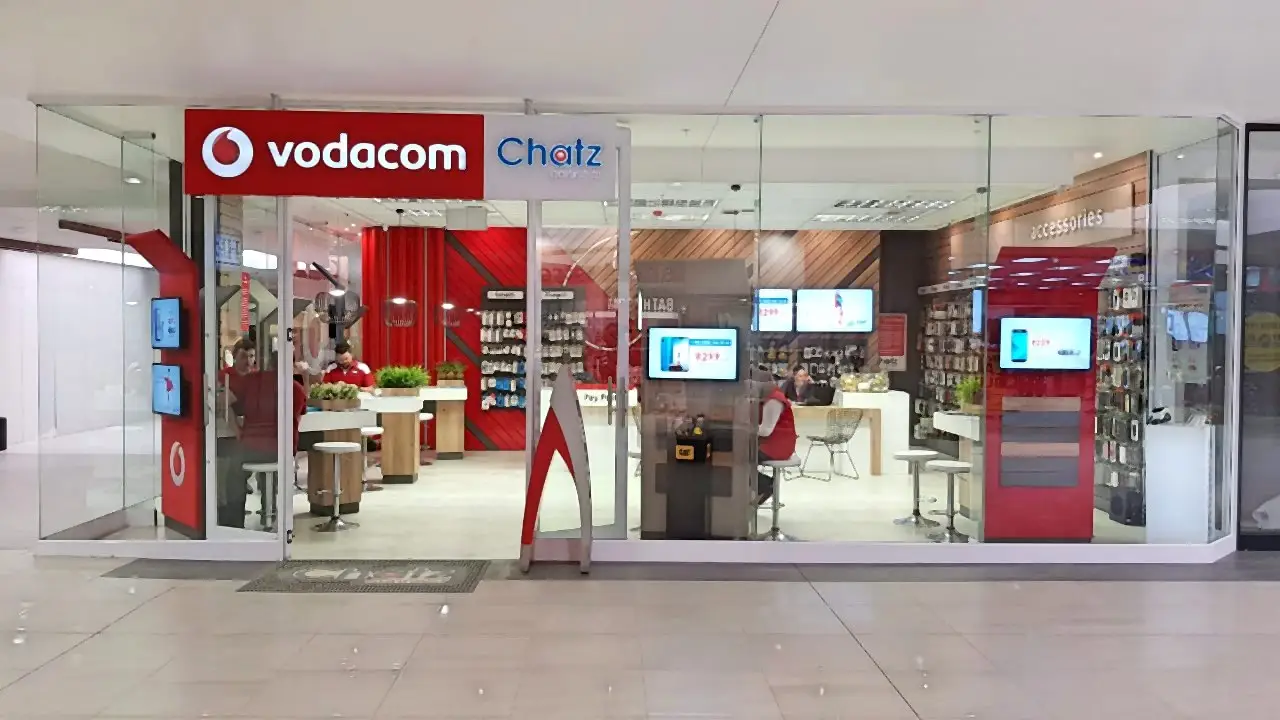
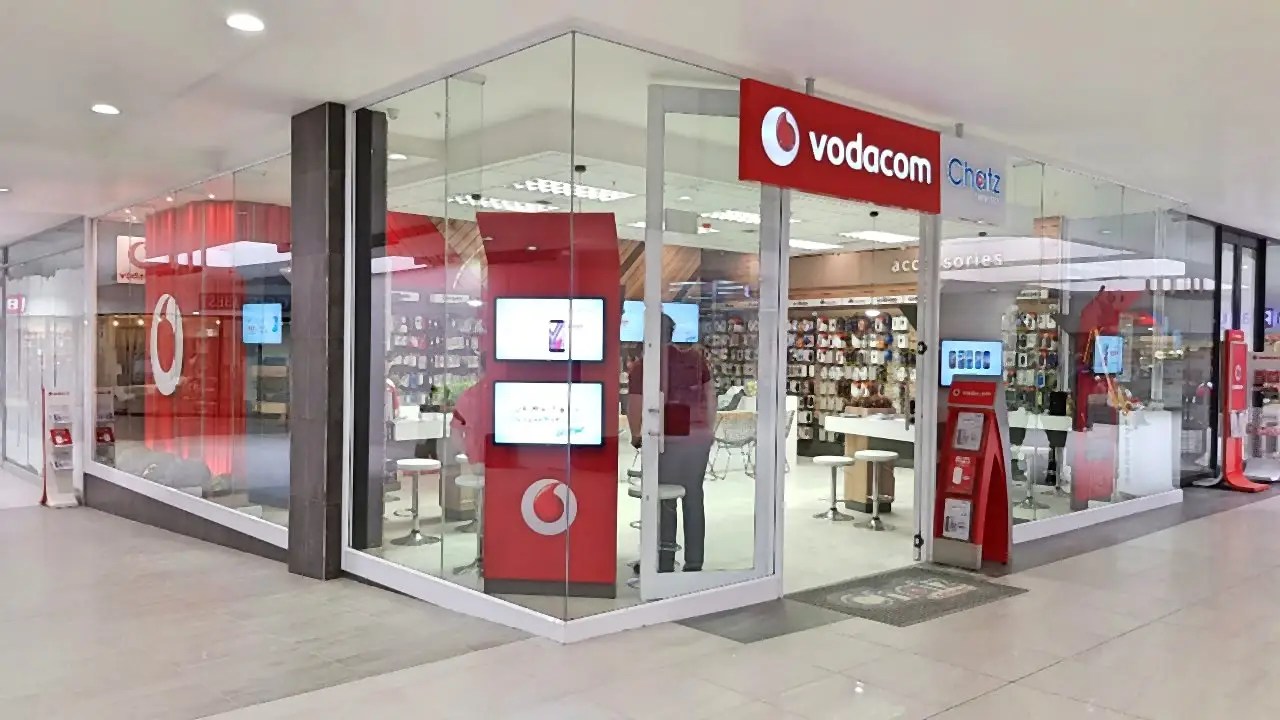
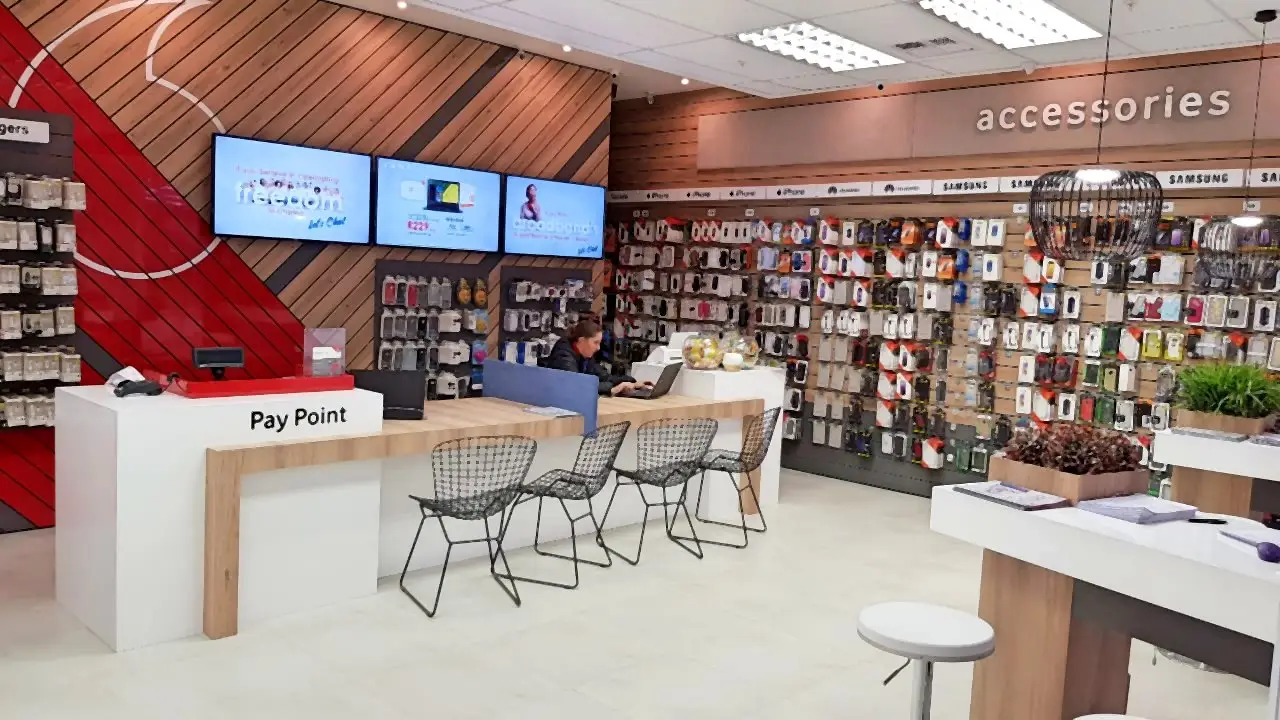
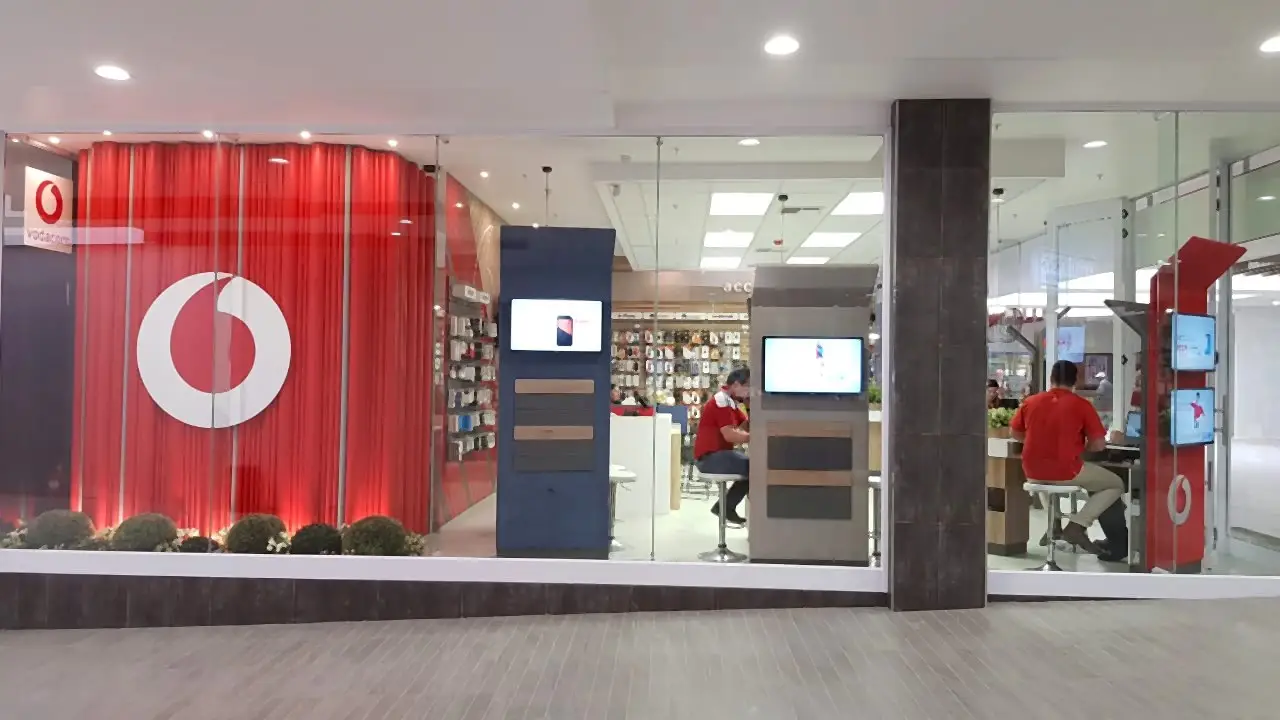
A telecom retail fit-out inside a busy shopping centre. The client wanted a shop that read as Vodacom from the concourse, but felt warmer and more considered than a typical telecom store inside. The brief was practical — display devices, sell airtime, fit two brands (Vodacom and Chatz Connect) under one roof. The design problem was atmospheric.
We anchored the corporate red where it does its job — signage, back wall, kiosks — and used slatted timber and clean white casework everywhere else. The shop reads as Vodacom from twenty metres, and as a calm, well-organised retail interior from one.
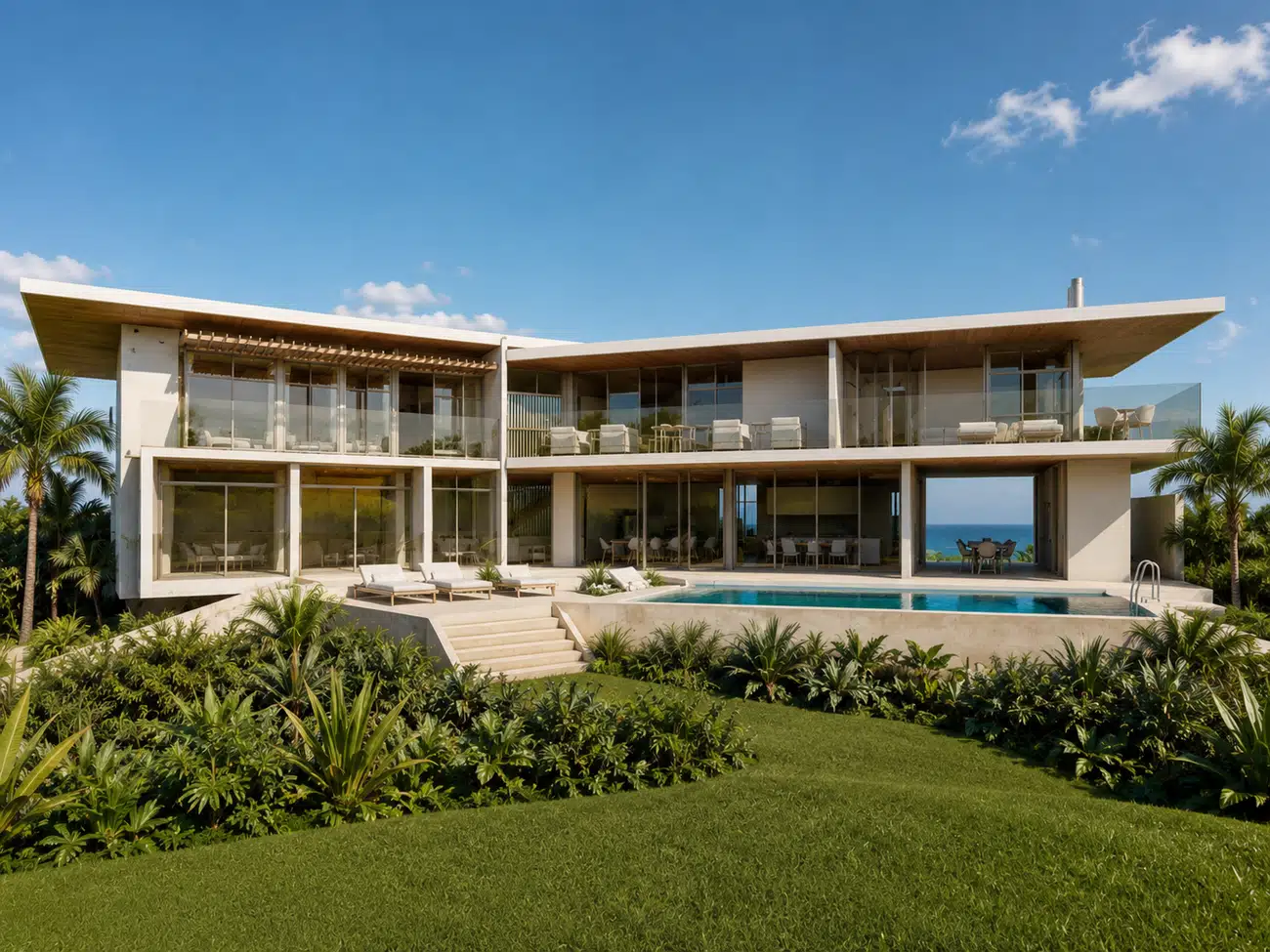
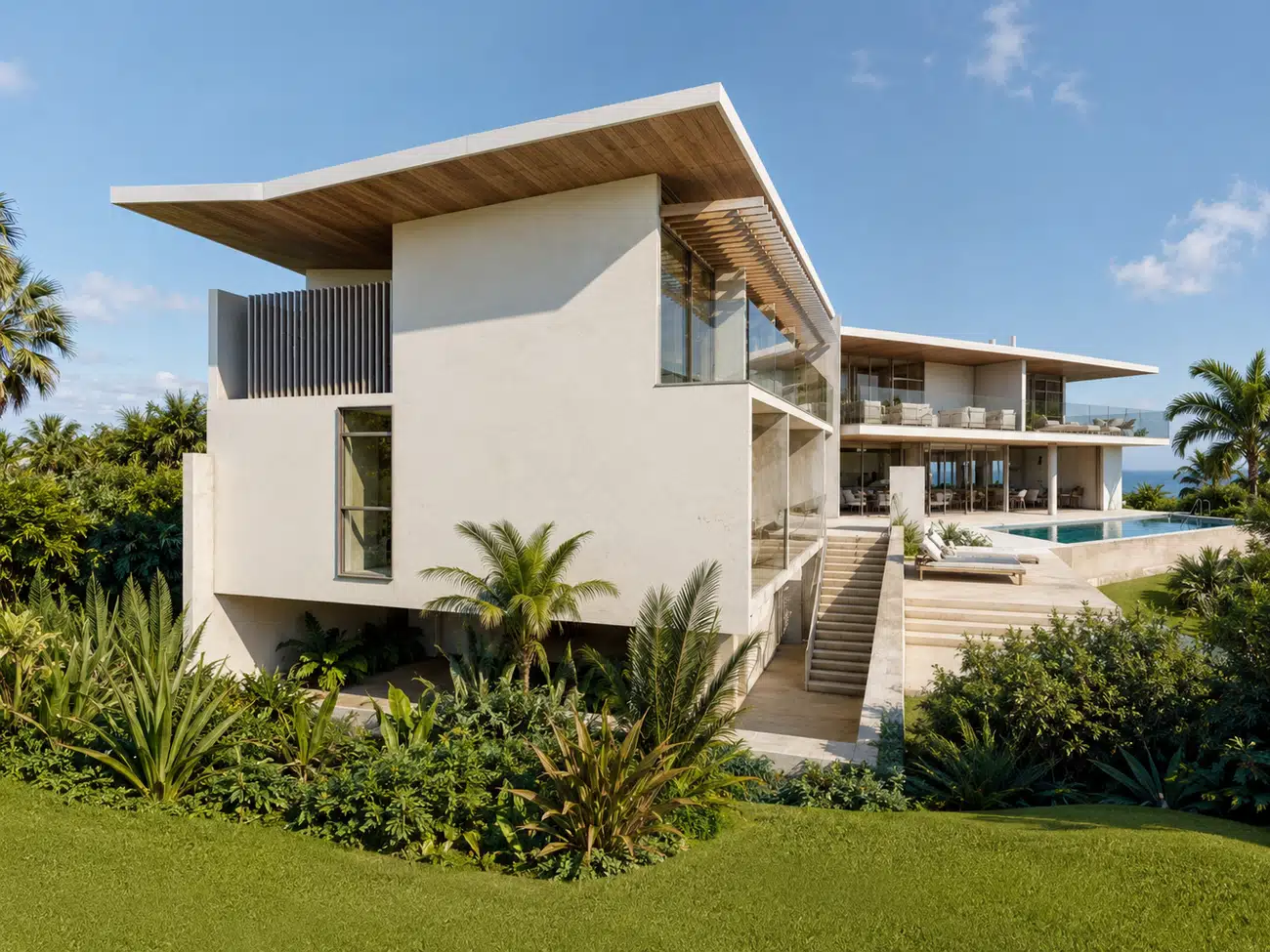
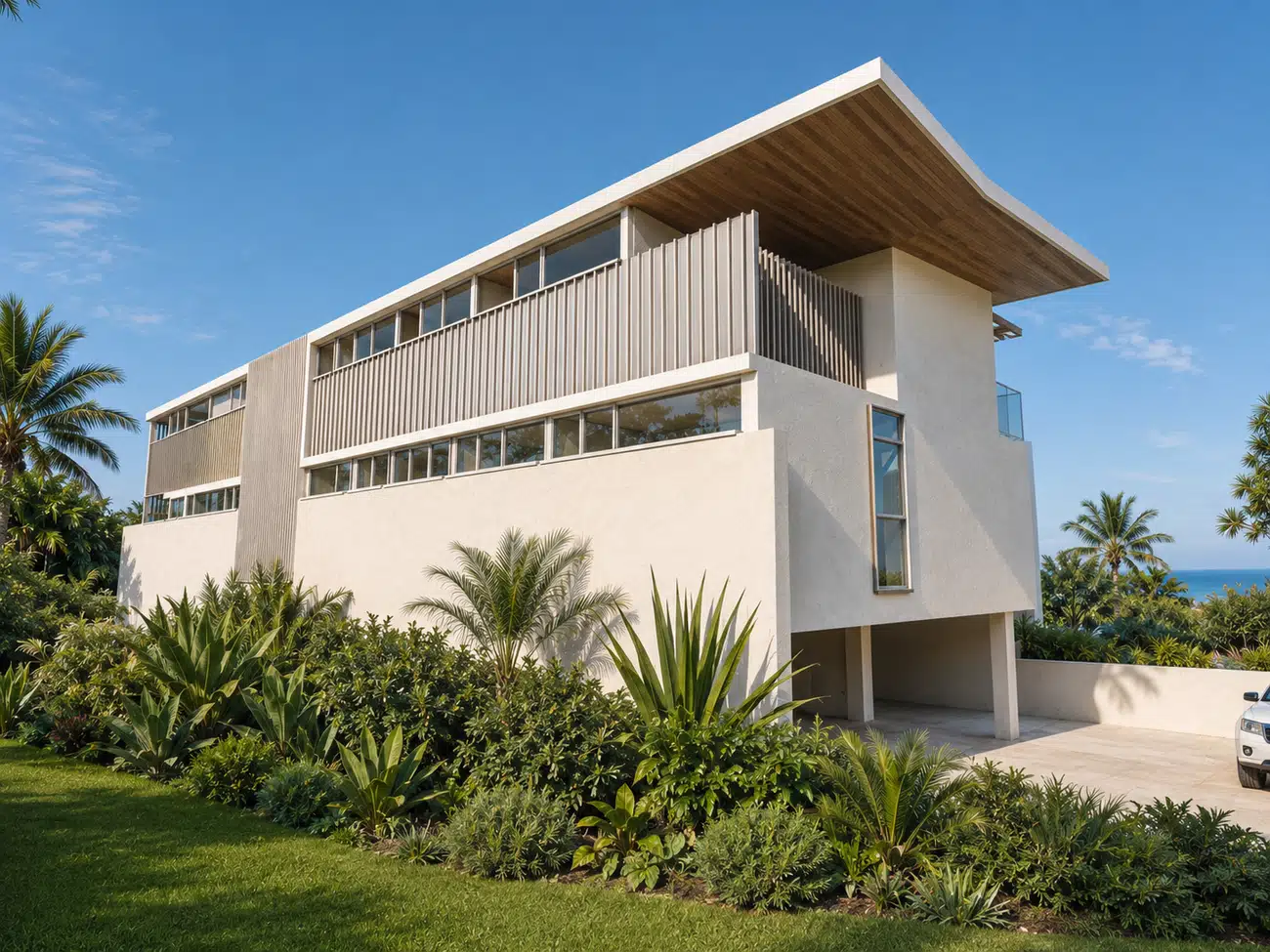
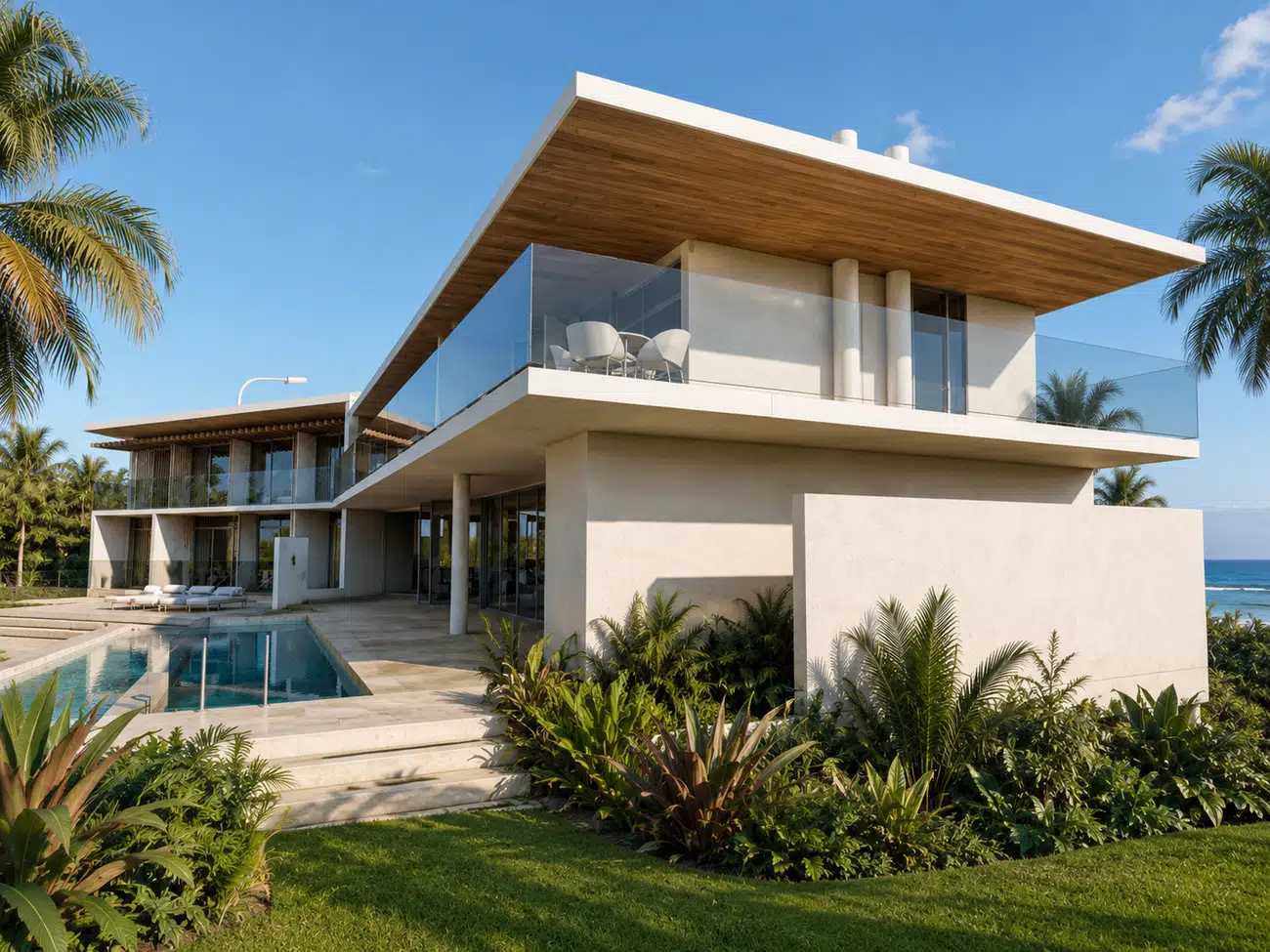
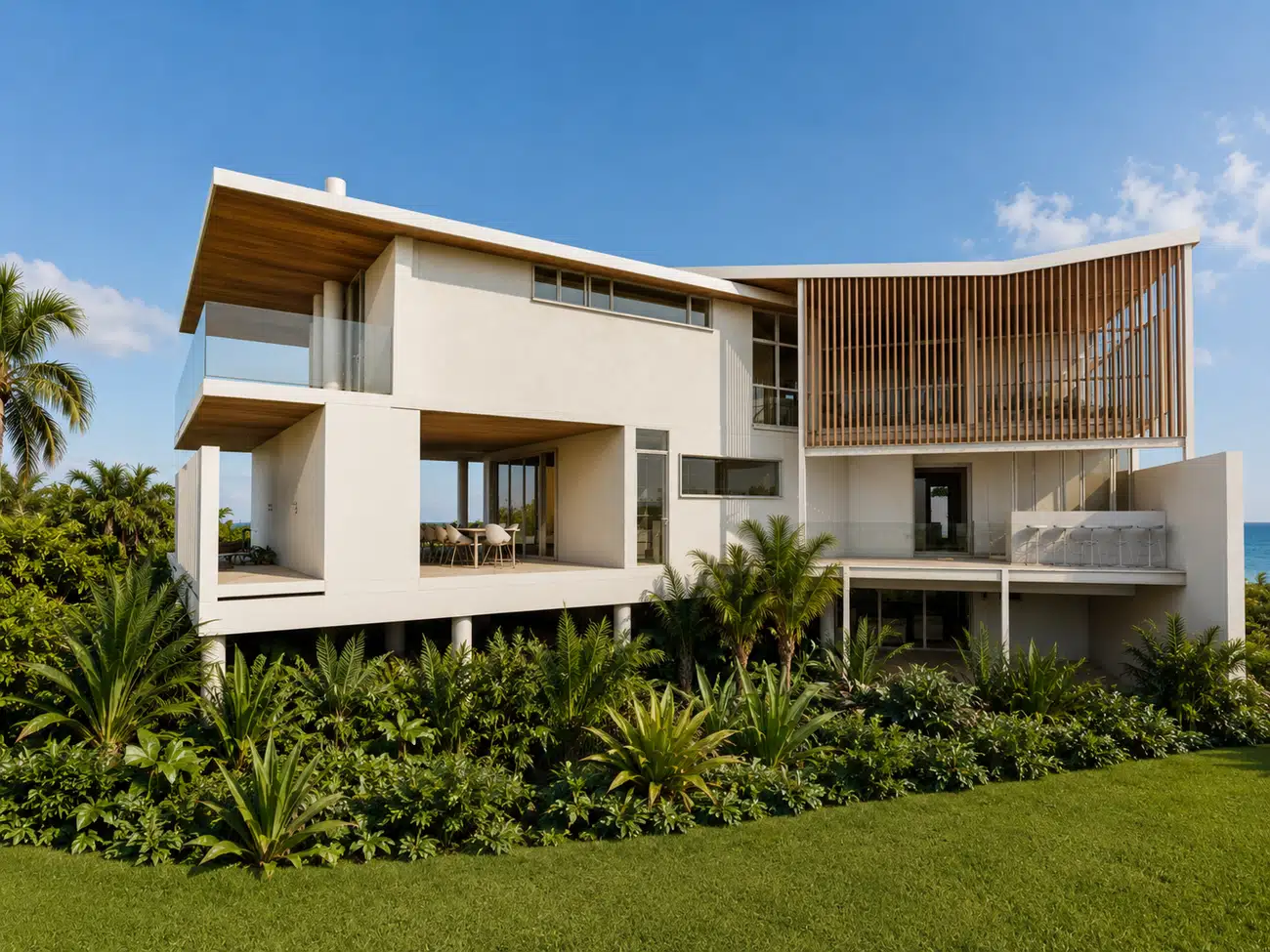
The project is positioned as a warm, contemporary coastal home where the architecture is opened to light, sea air and garden life. Large shaded terraces, deep roof overhangs and planted edges soften the scale of the house while allowing the primary living spaces to remain closely connected to the landscape.
The rendered studies replace the earlier concept images, giving the project a more complete KZN South Coast atmosphere with subtropical trees, dense planting, lawn and ocean views.
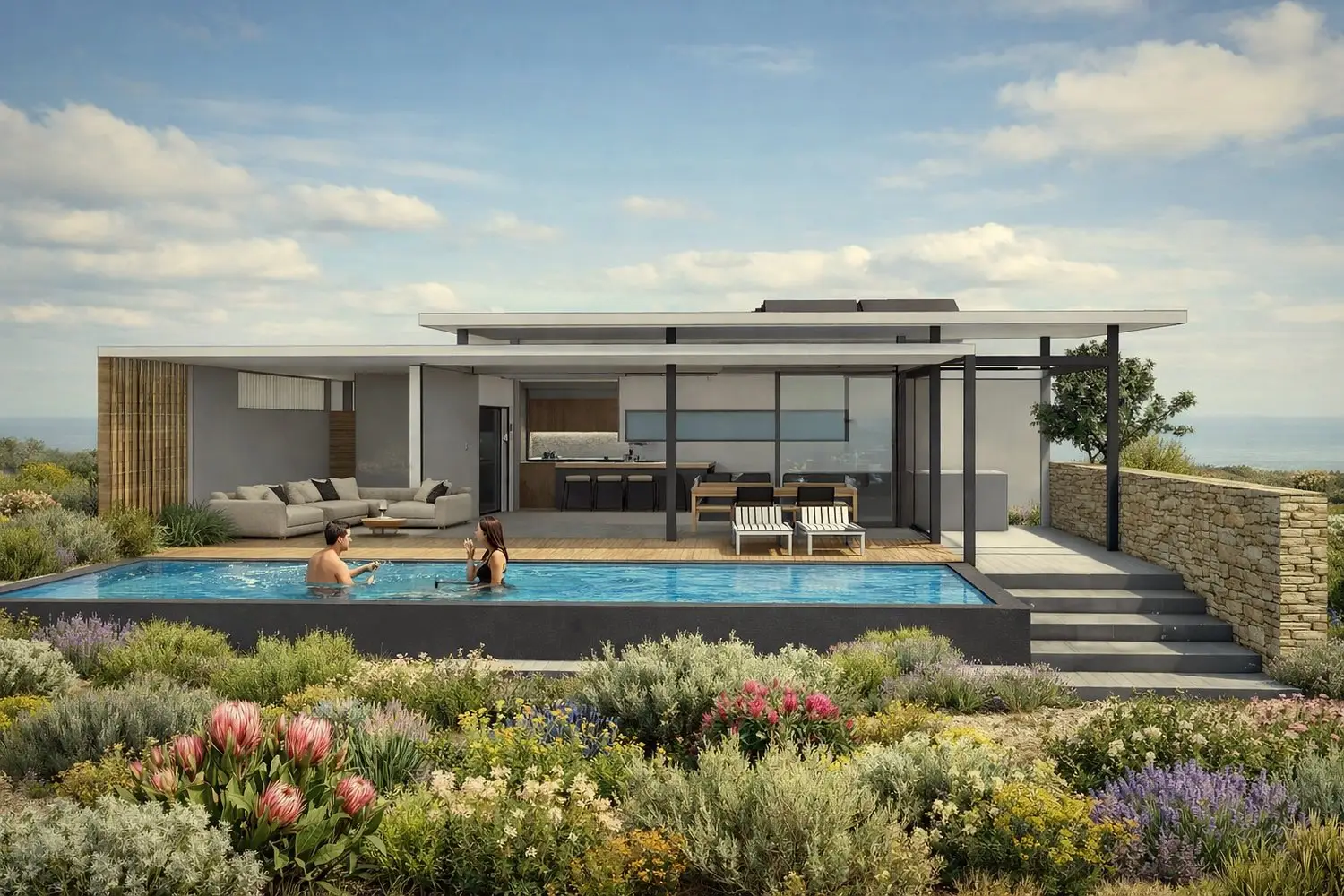
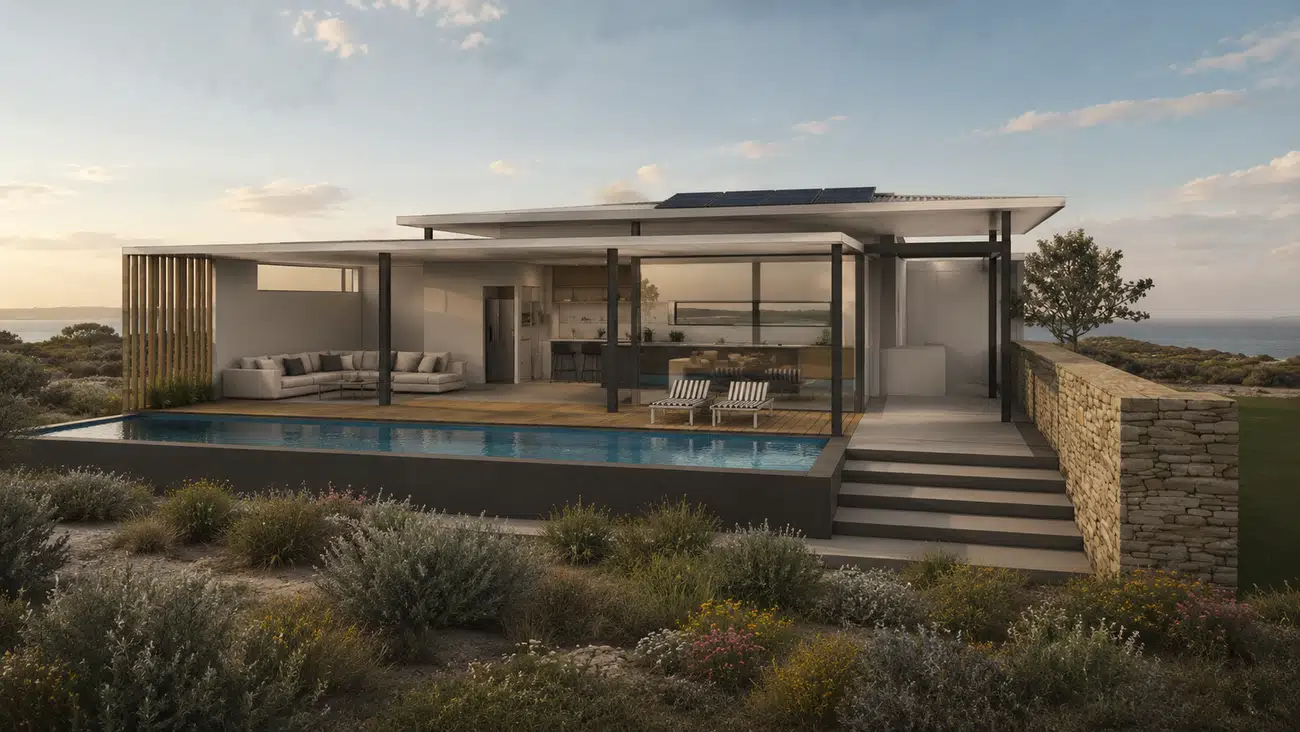
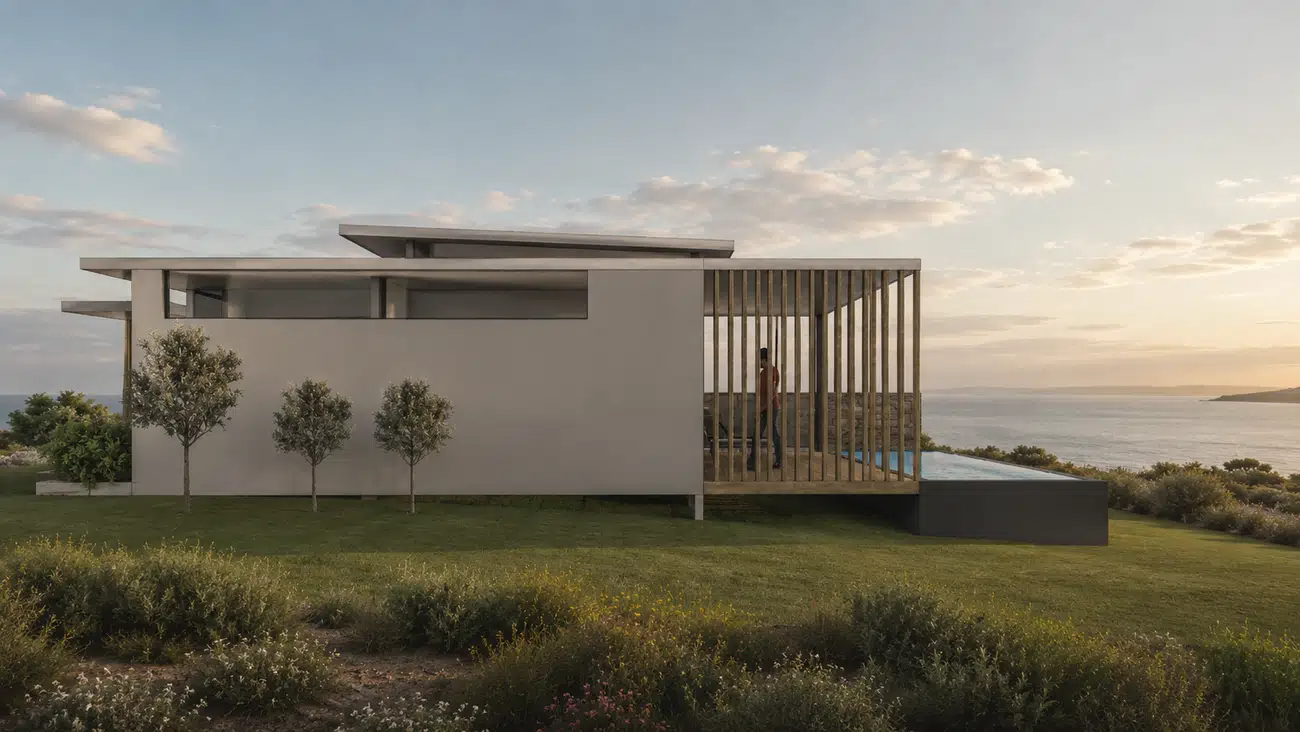
The project is imagined as a quiet Western Cape beach house with a restrained architectural language, protected outdoor rooms and long views over the coastal setting. The new rendered studies are added to the project while keeping the overall identity of the project unchanged.
The imagery develops the concept further through a series of exterior views that show the pool terrace, stone boundary wall, soft planting and the low horizontal form of the house in a more resolved website-ready presentation.
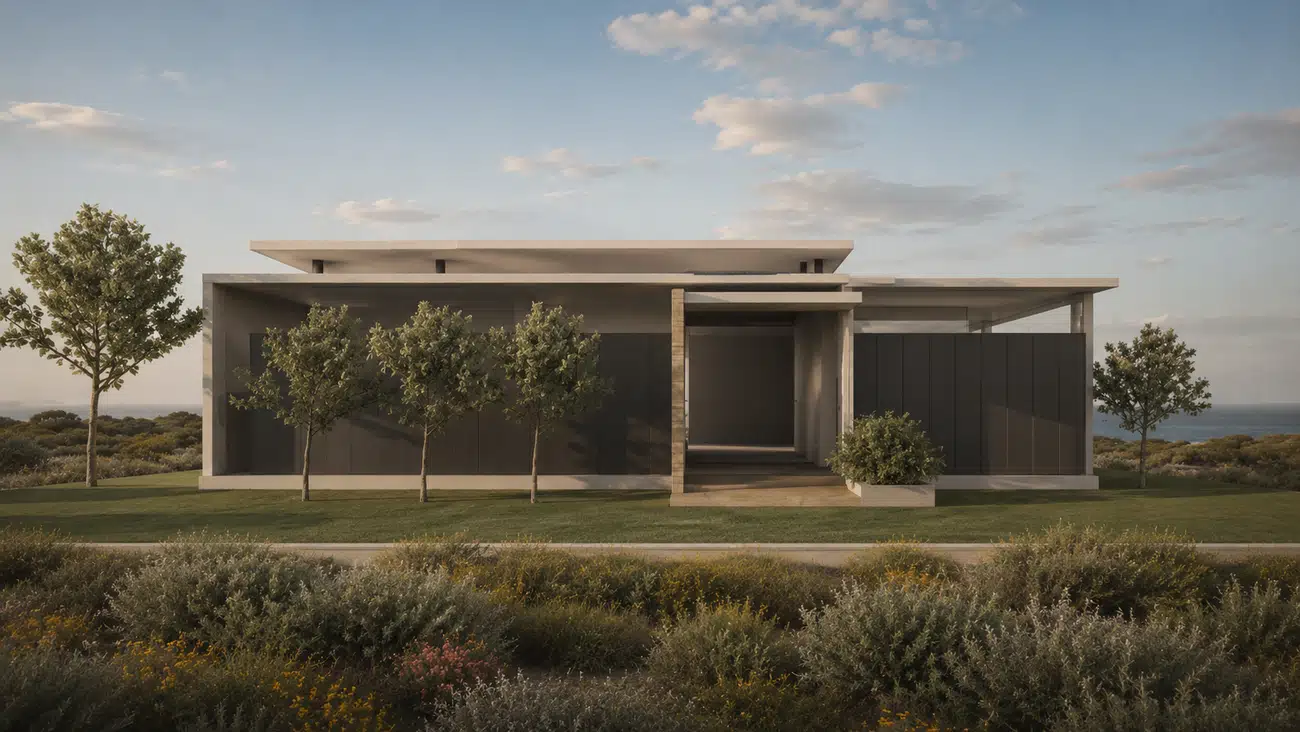
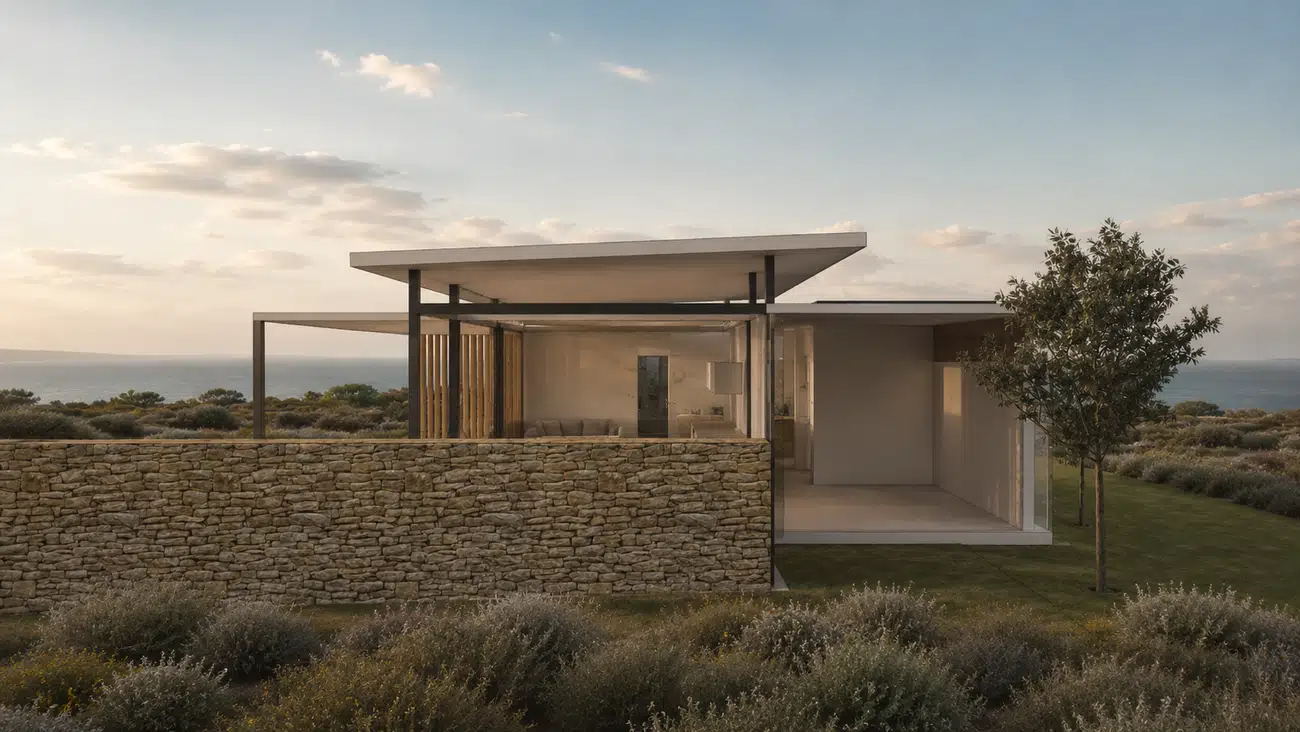
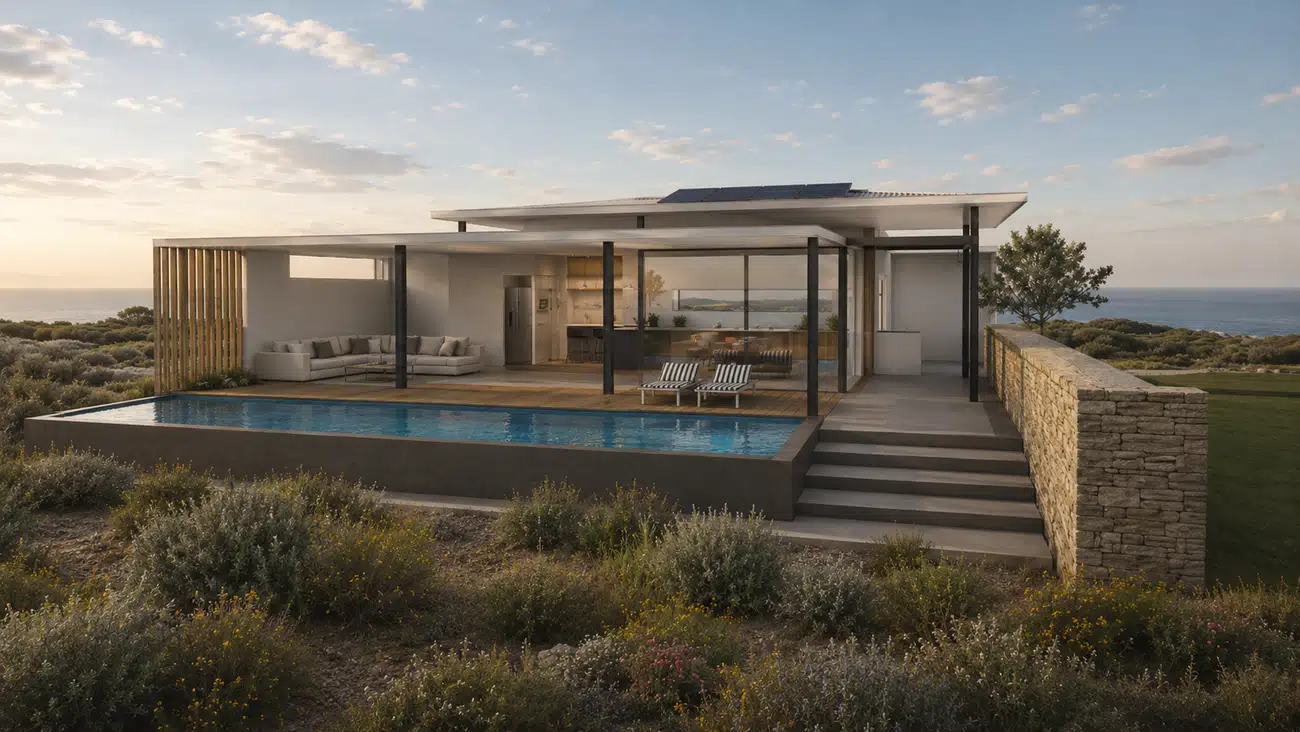
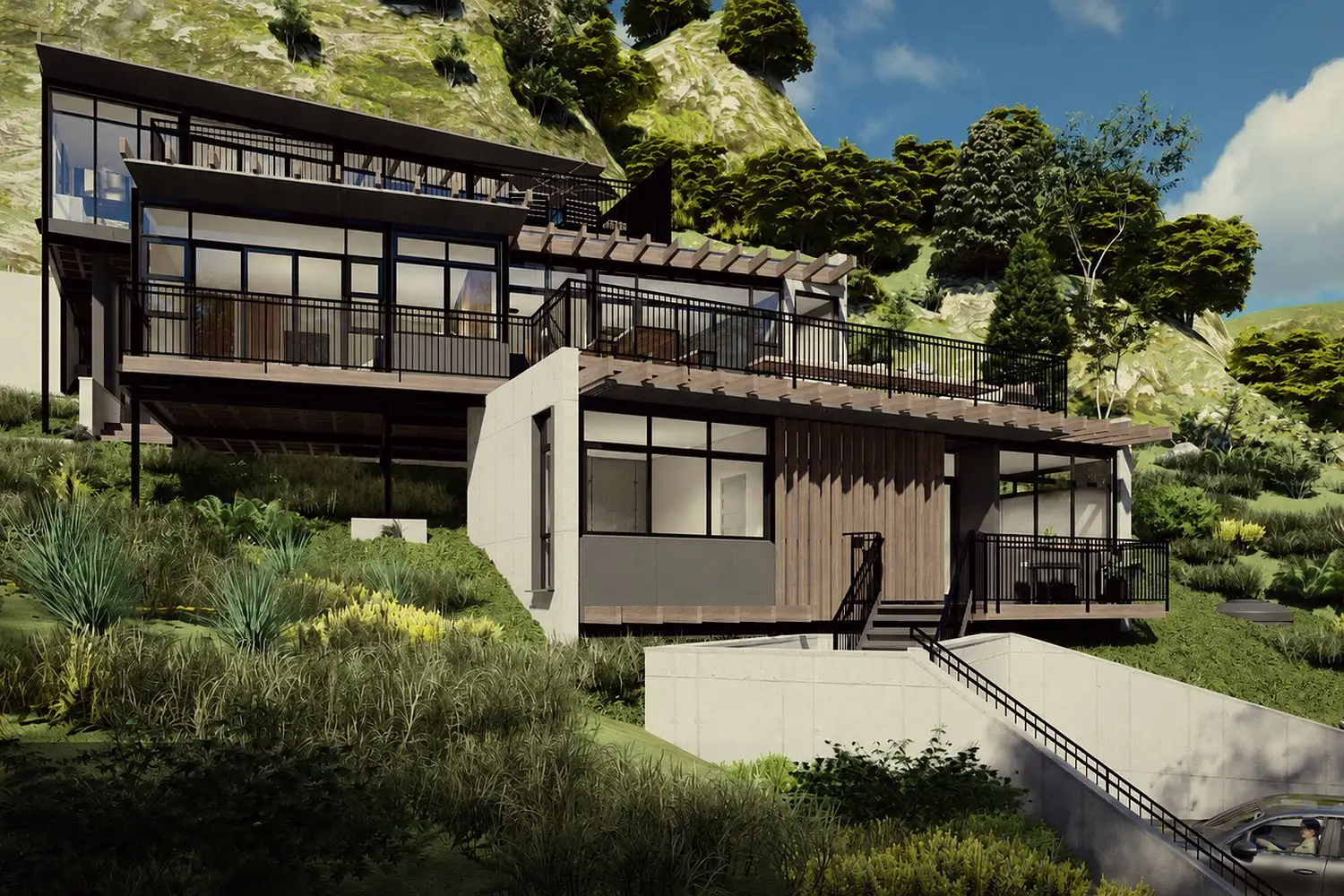
A steep coastal site dropping toward the sea, exposed to the south-easter, with one uninterrupted view across the bay. The clients wanted a house that took full advantage of the view without pretending the wind wasn't there. Generous indoor living, weather-protected outdoor decks, a clear separation between the bedroom and the gathering wings.
The plan is terraced. A main living level perched at the highest level, bedrooms stepping down with the slope towards the road and parking, decks where the wind allows and enclosed courtyards where it doesn't.
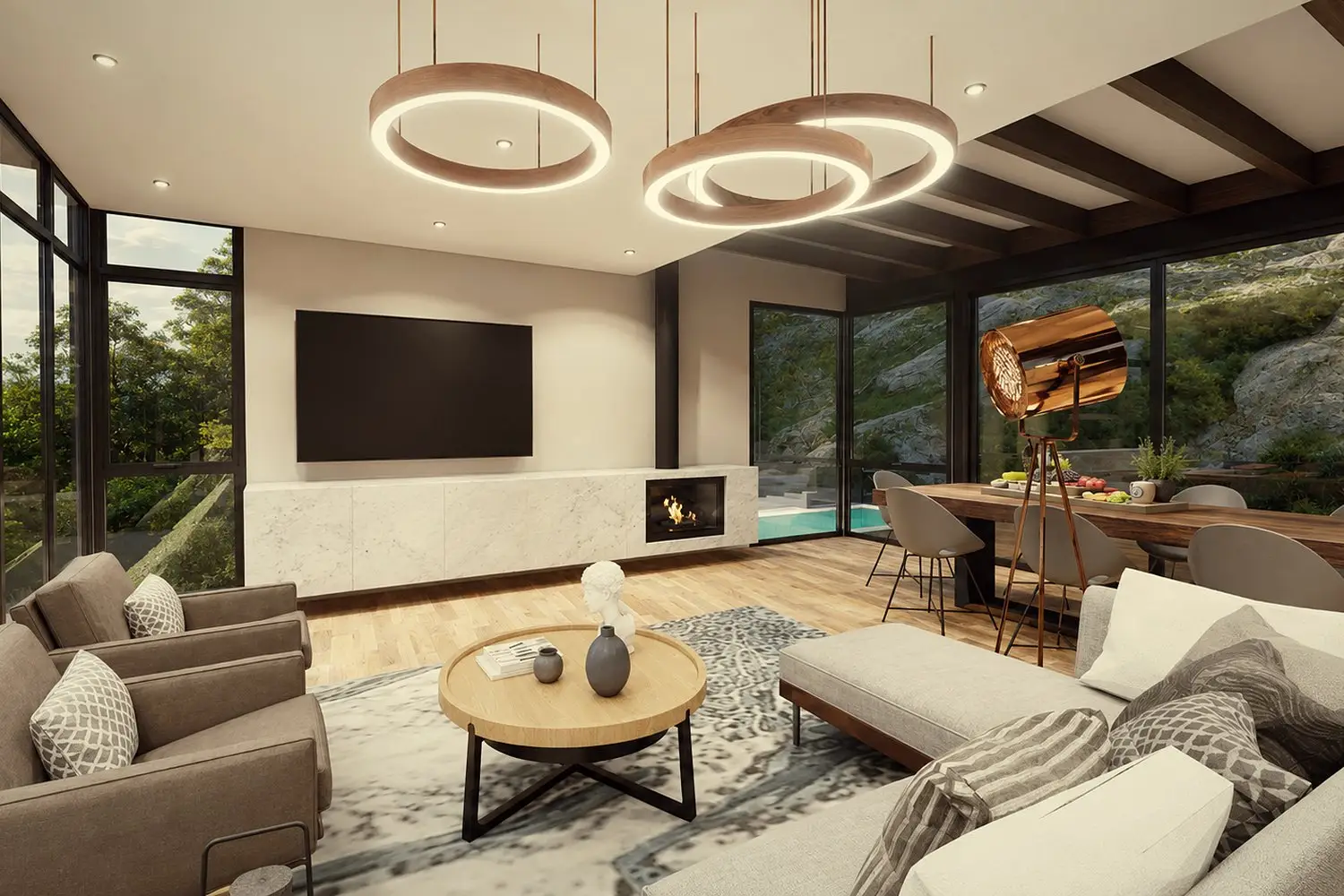
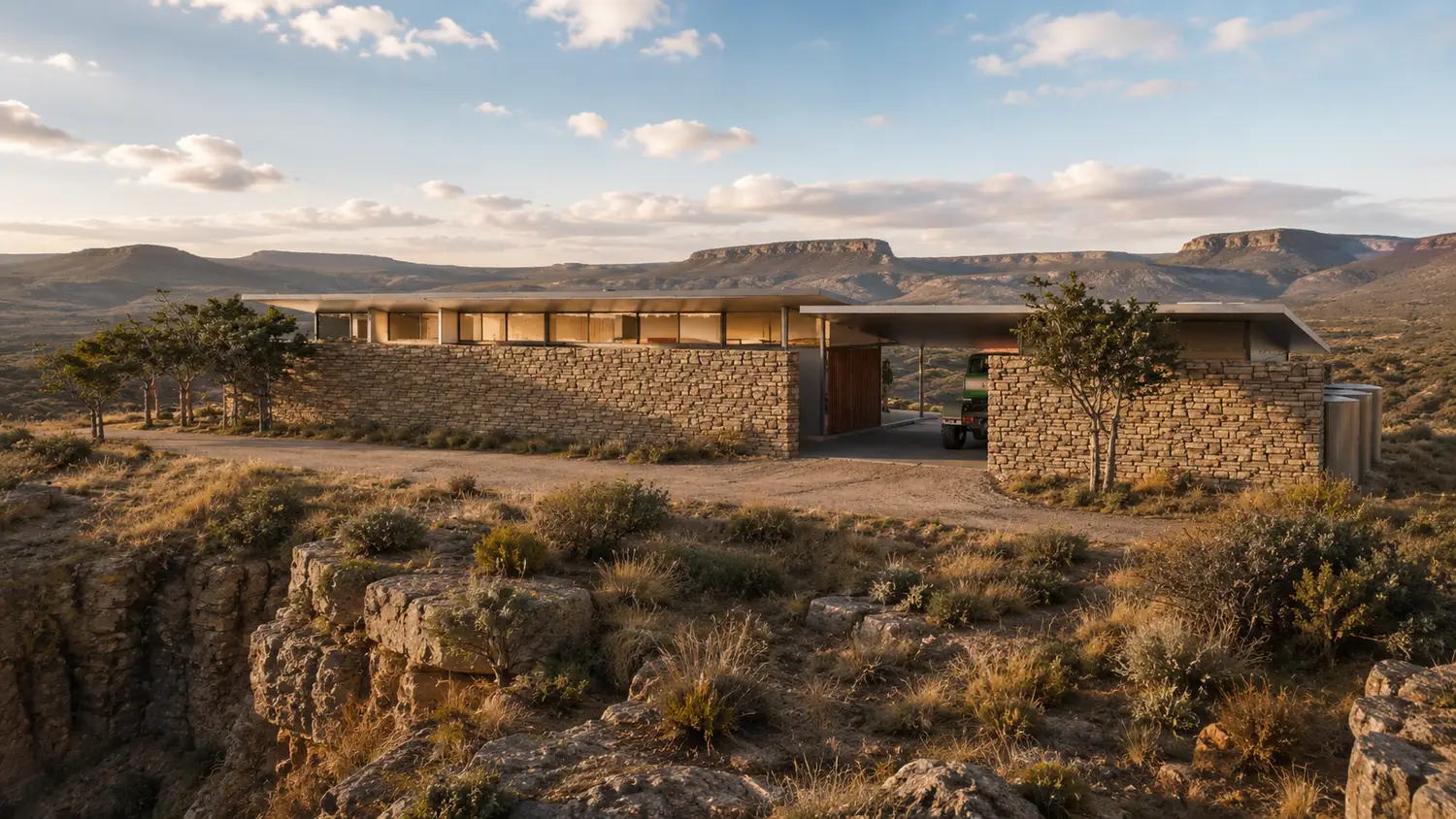
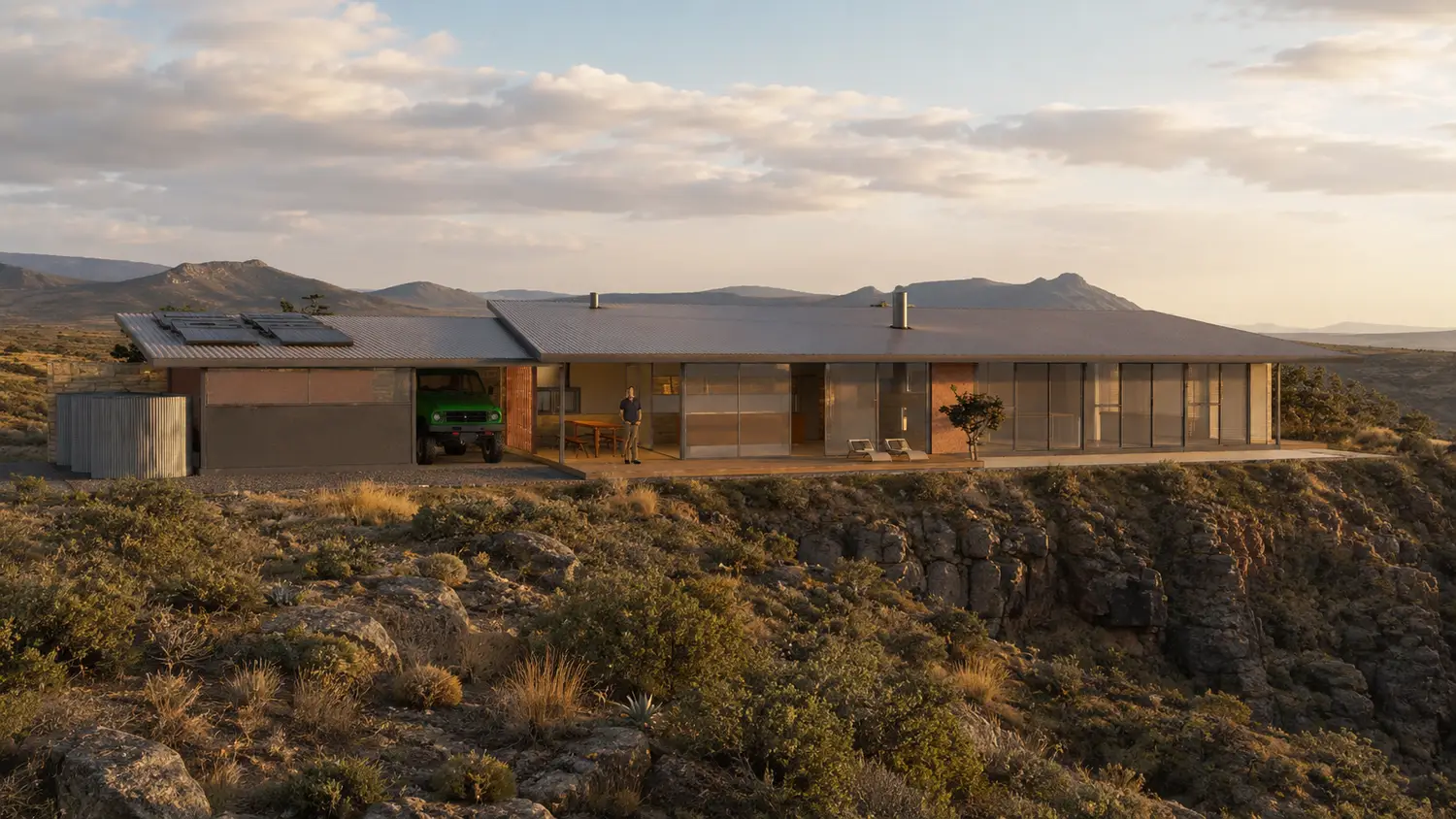
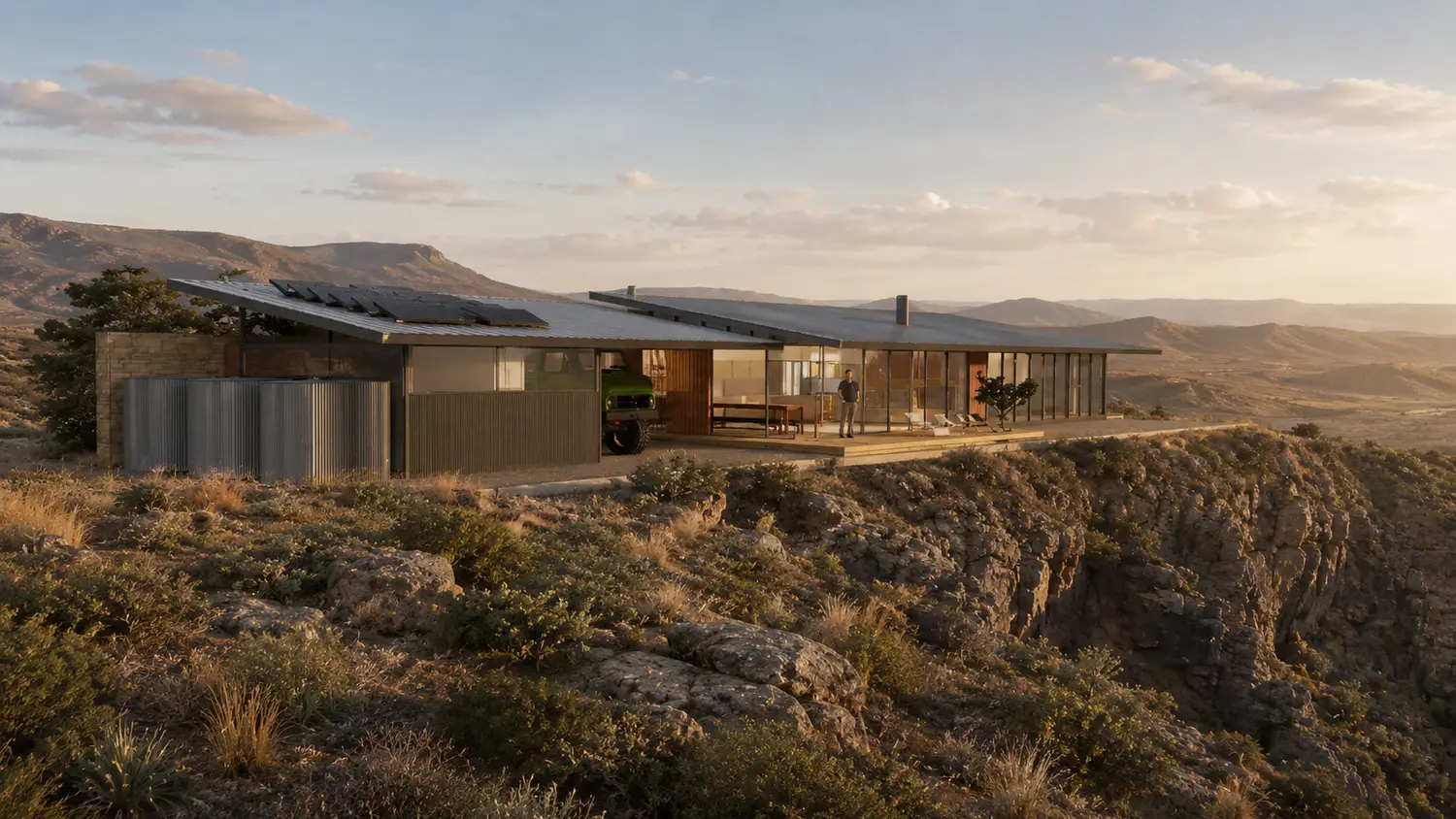
The site is remote, exposed and cinematic: a hilltop position with a ravine dropping away from the deck side and a long Karoo horizon beyond. The house is conceived as a single, quiet line in the landscape — low enough to belong to the ridge, but generous enough to frame the scale of the view.
The design balances shelter and exposure. Stone, steel, glass and deep overhangs create a robust edge to the climate, while the deck becomes the memorable threshold between the interior and the ravine. The intention is not to dominate the site, but to sit with it — calm, restrained and deliberately grounded.
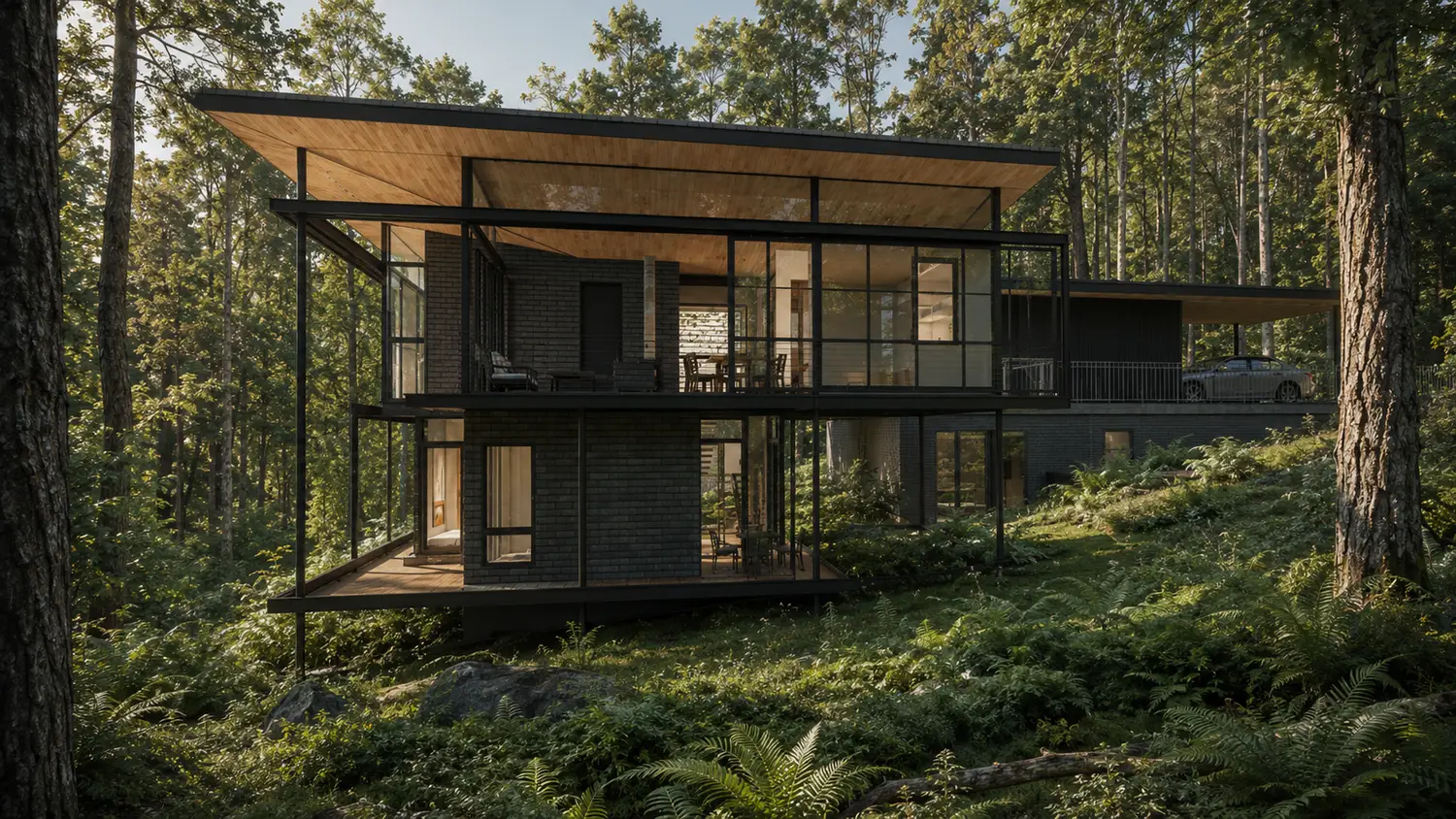
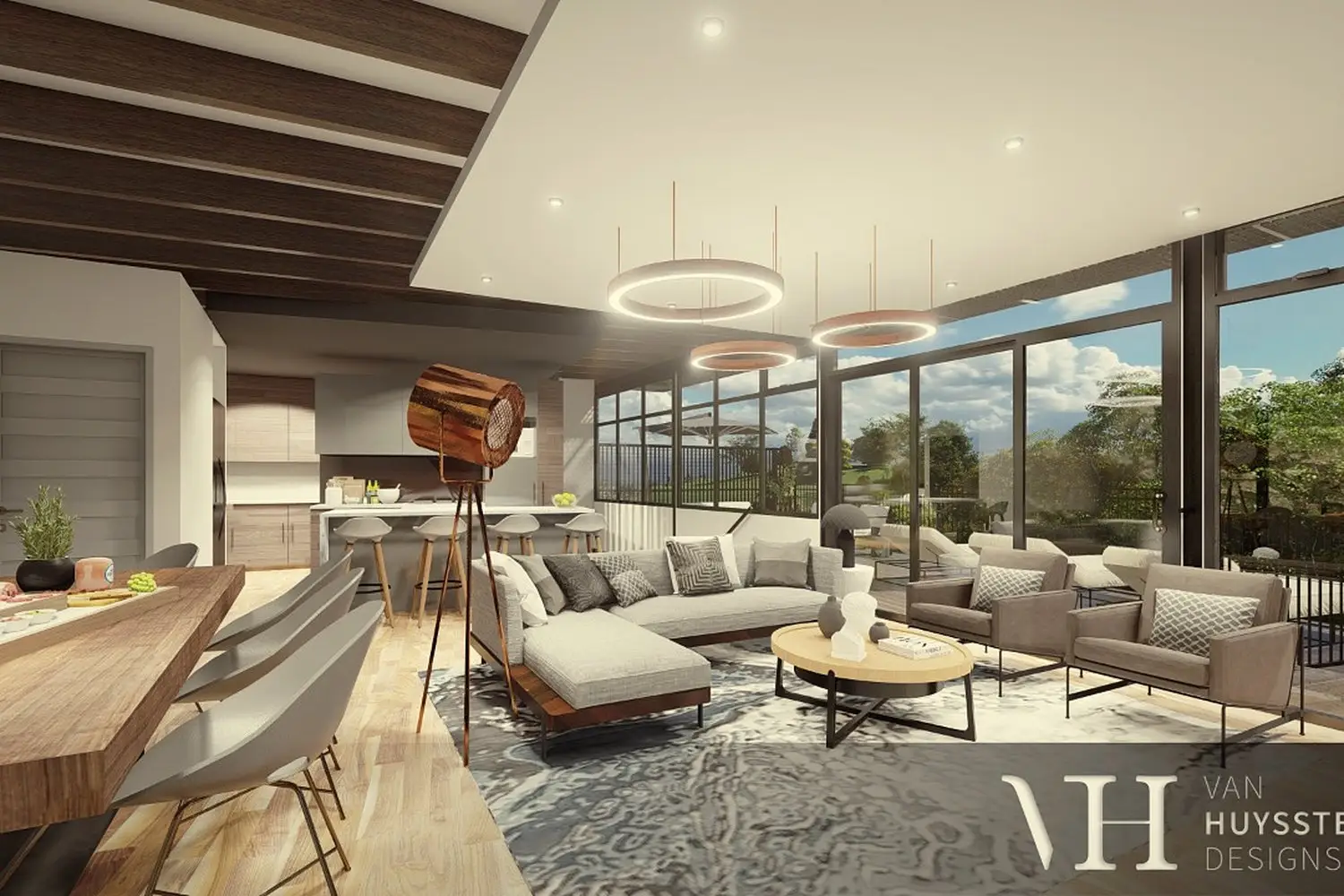
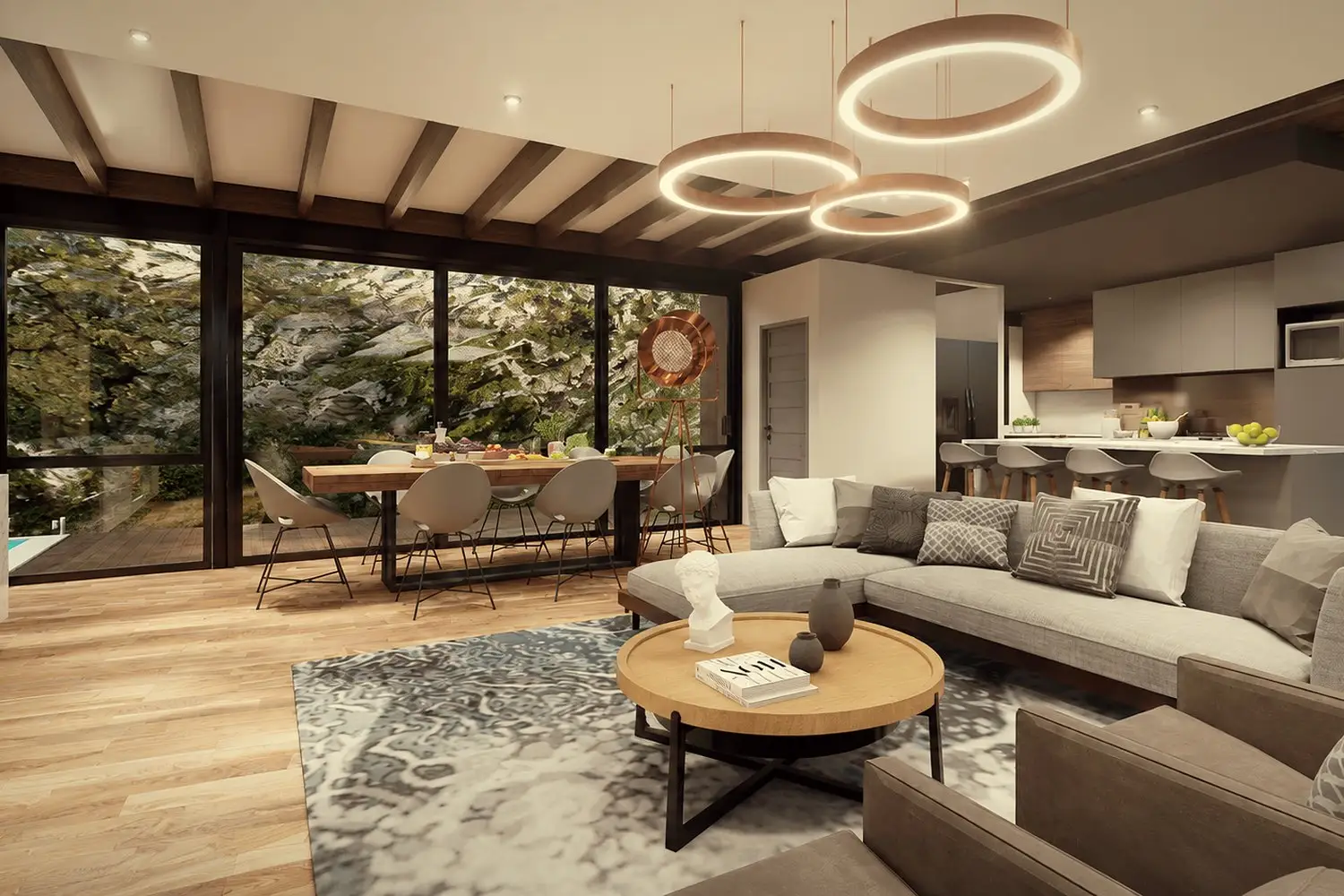
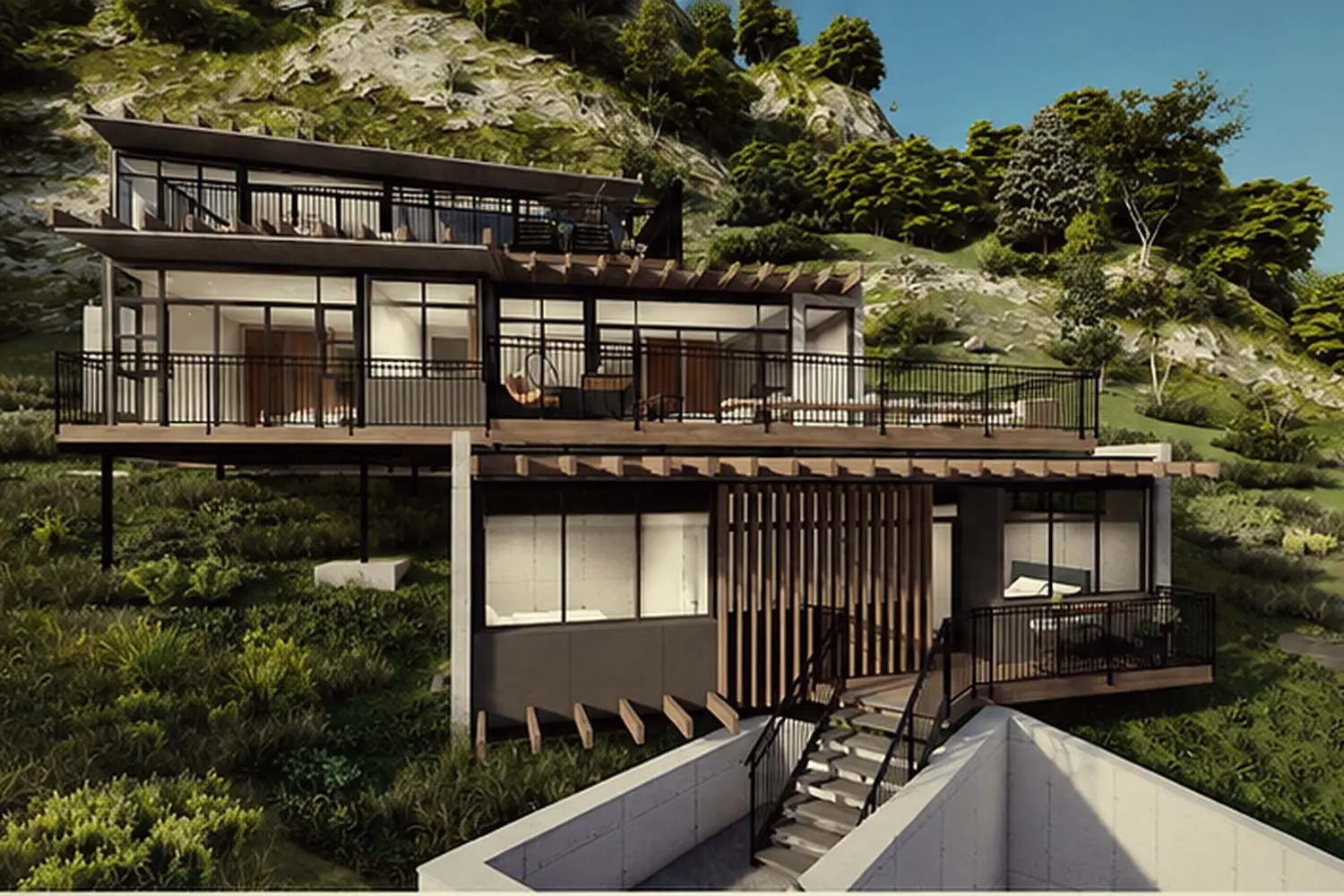
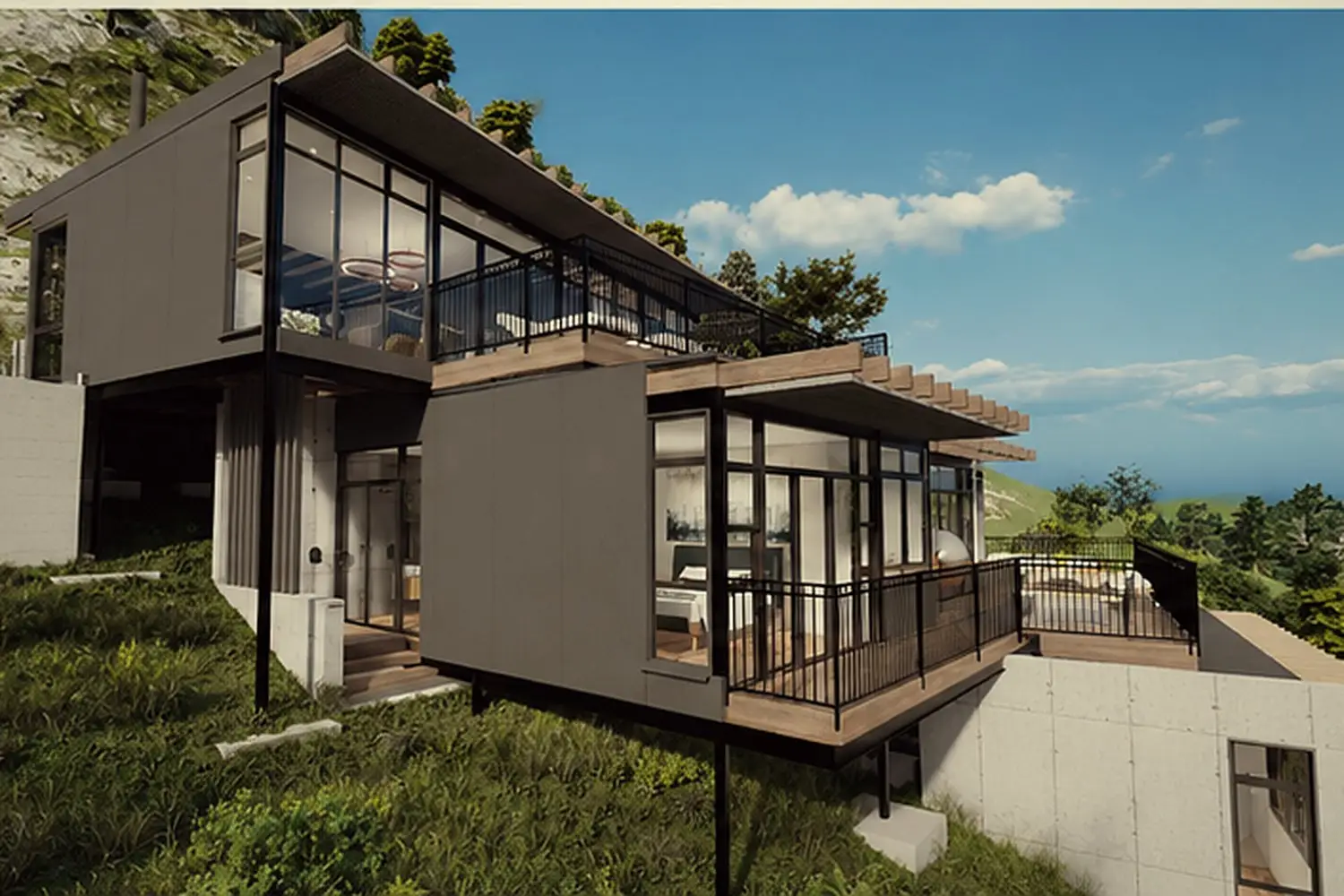
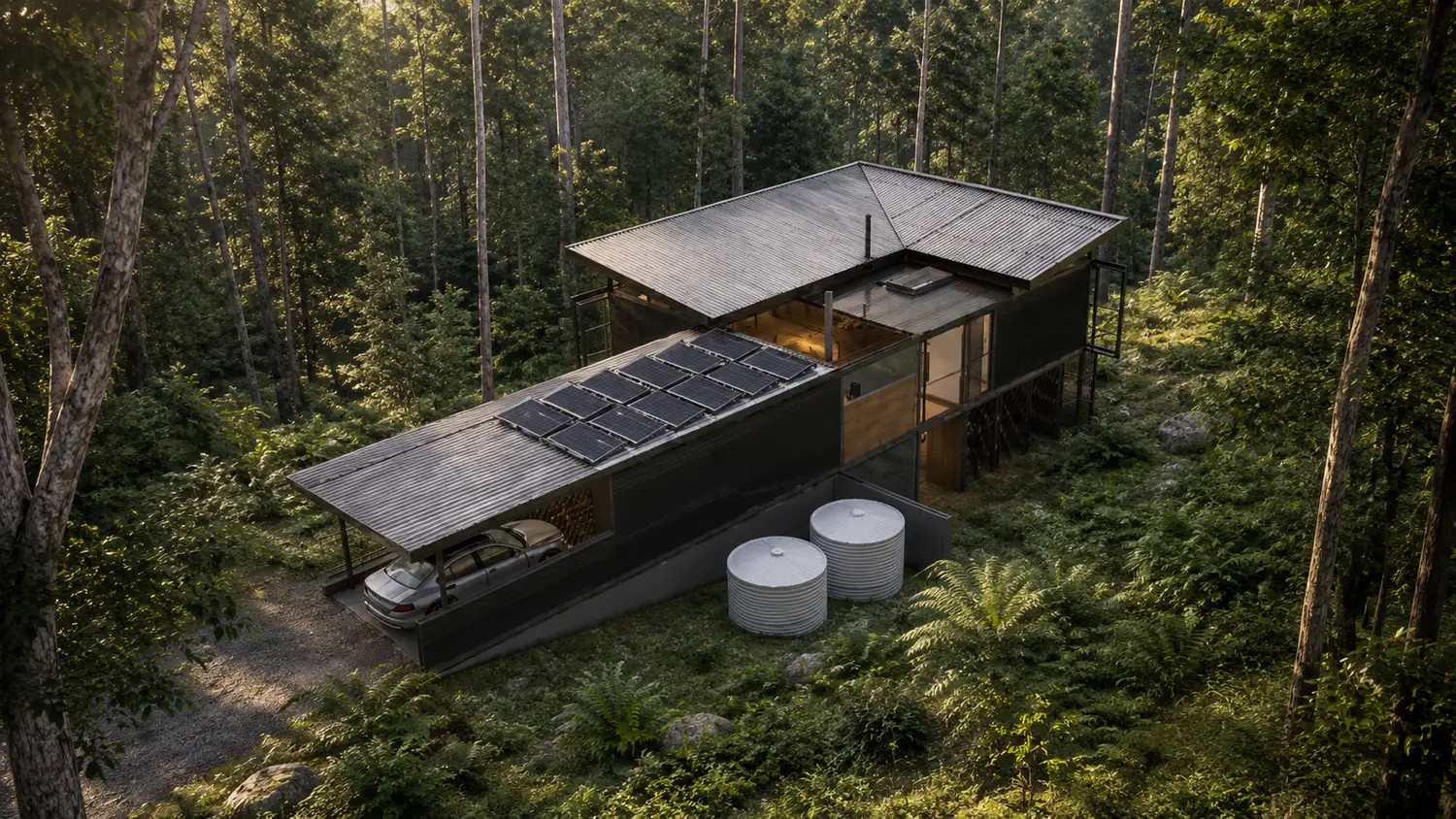
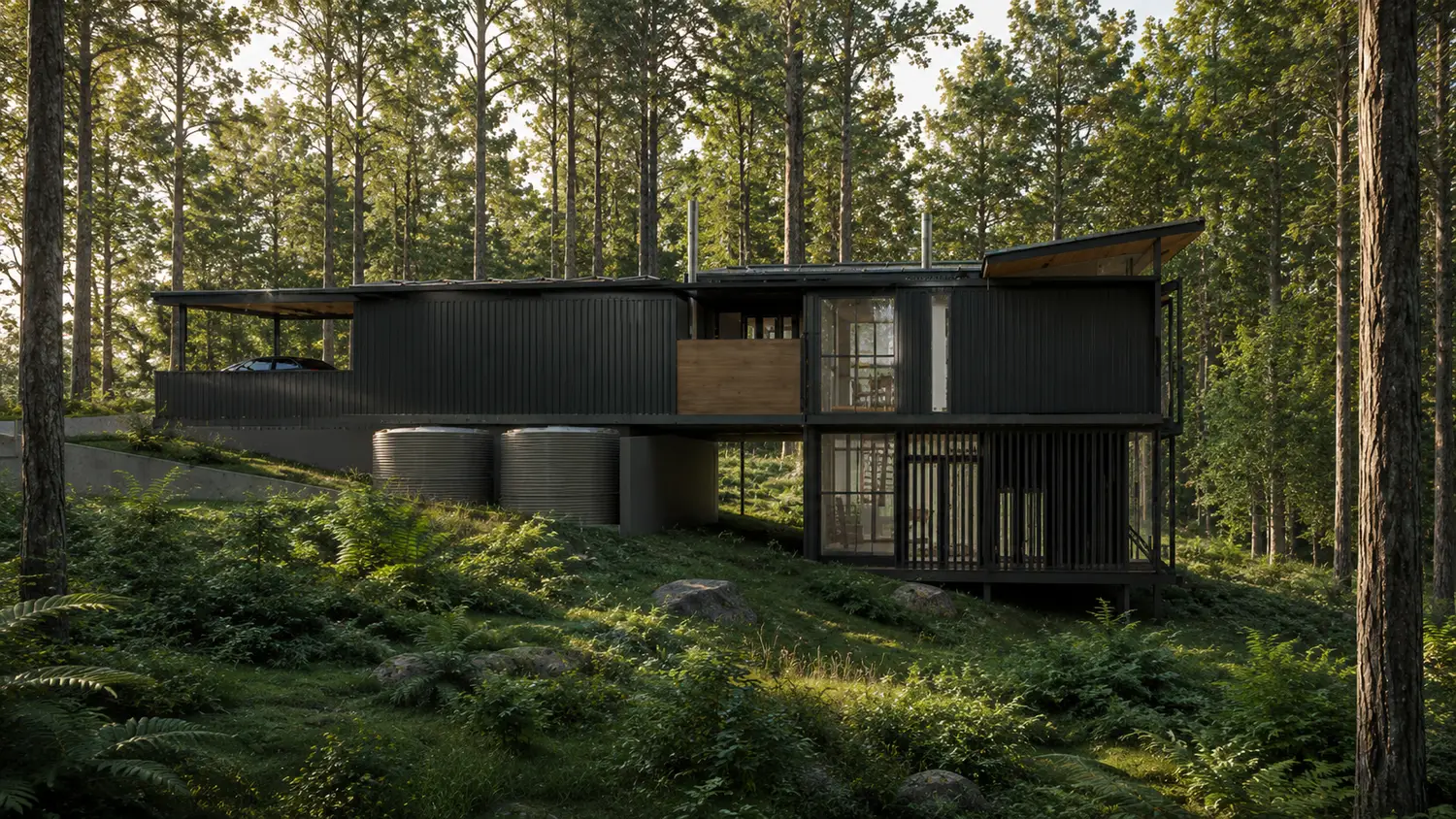
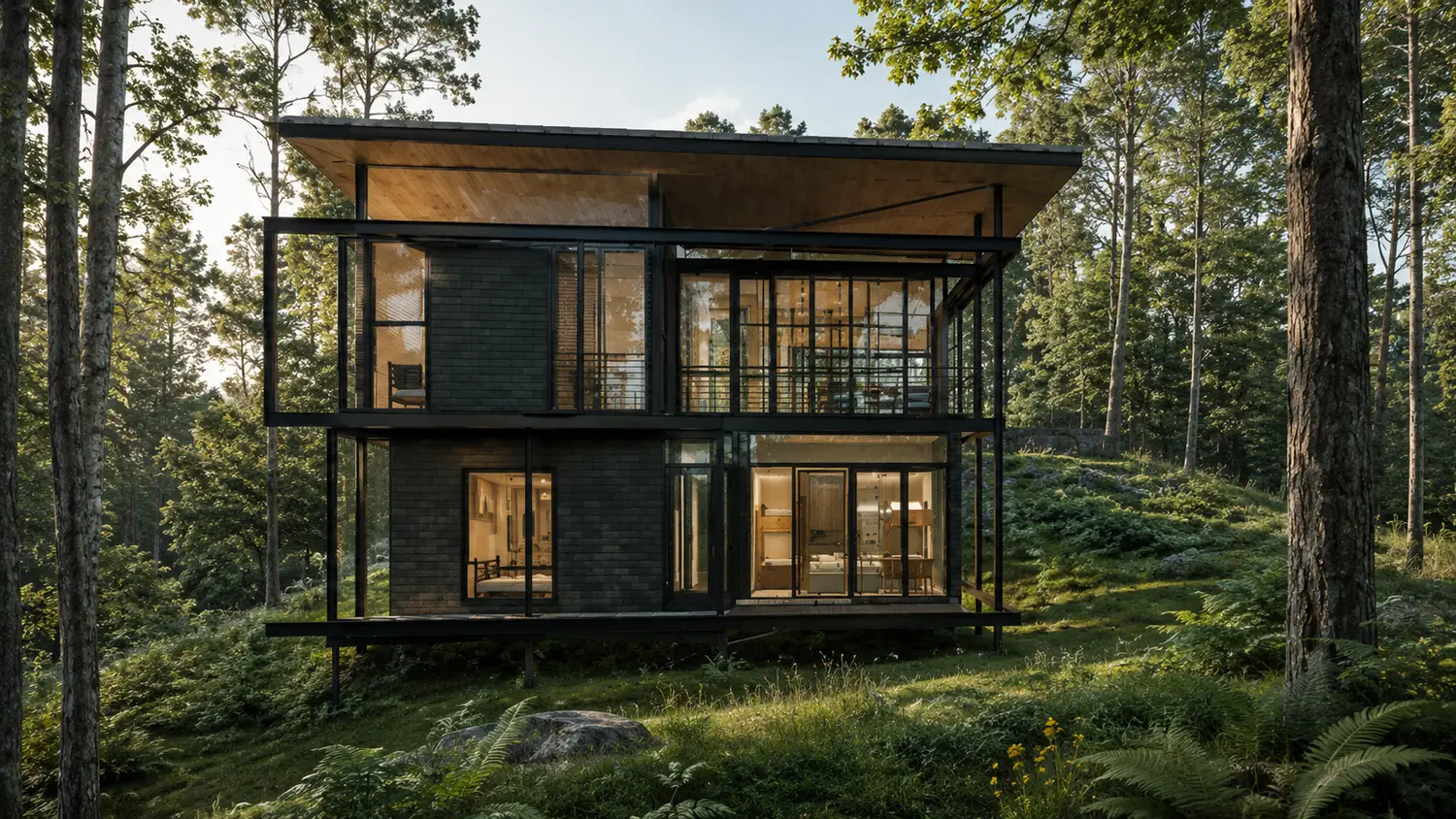
This residence is conceived as a refined contemporary retreat within a wooded setting. The architecture steps with the slope, opening generous glazed living spaces toward the landscape while keeping a protected arrival edge and covered parking to the street side.
The composition balances lightness and shelter: a dark steel frame wraps the glass volumes, deep roof overhangs provide shade, and warm timber soffits soften the crisp geometry. Set among forest planting, the house is intended to feel calm, immersive and closely connected to its site.
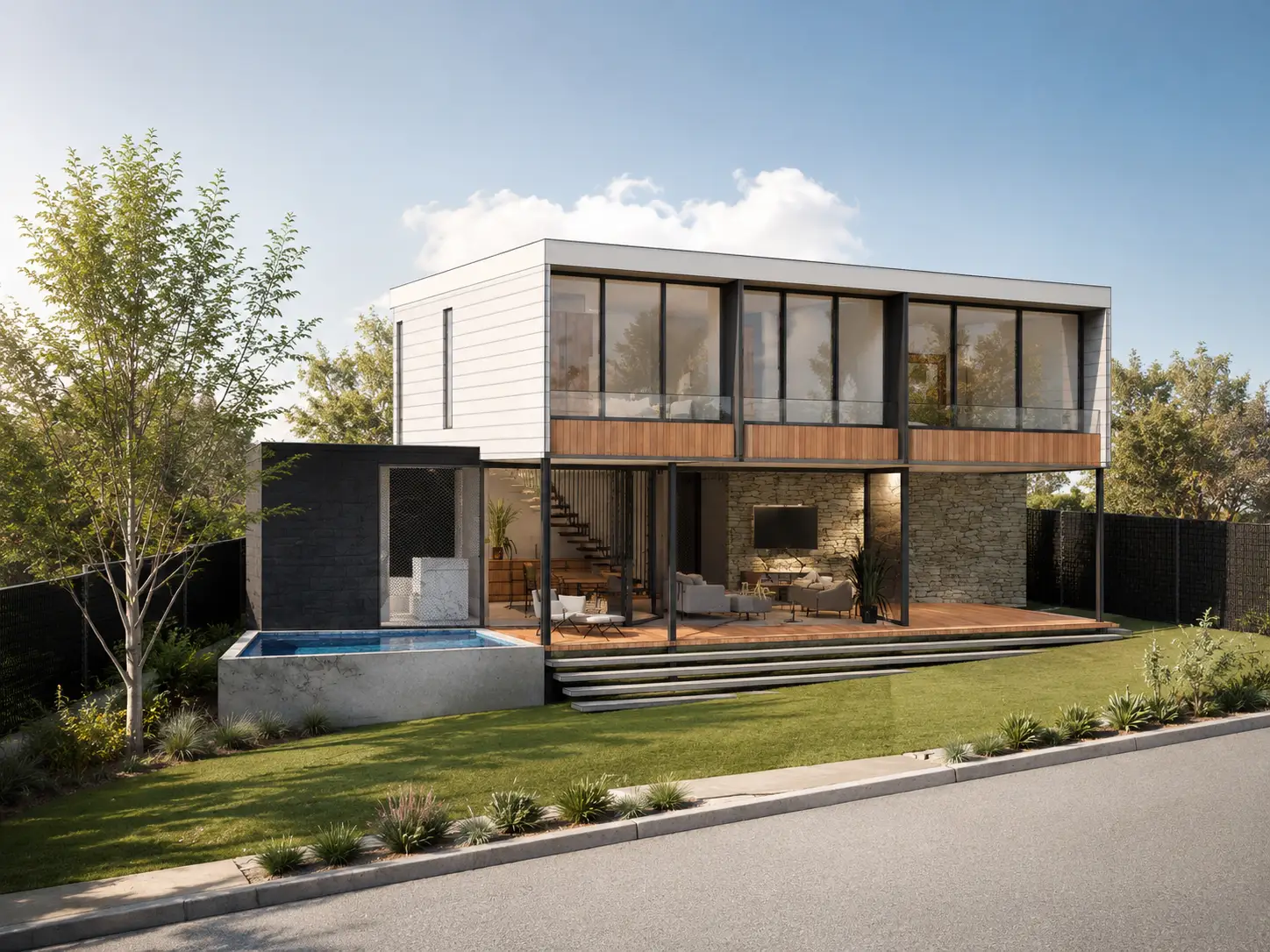
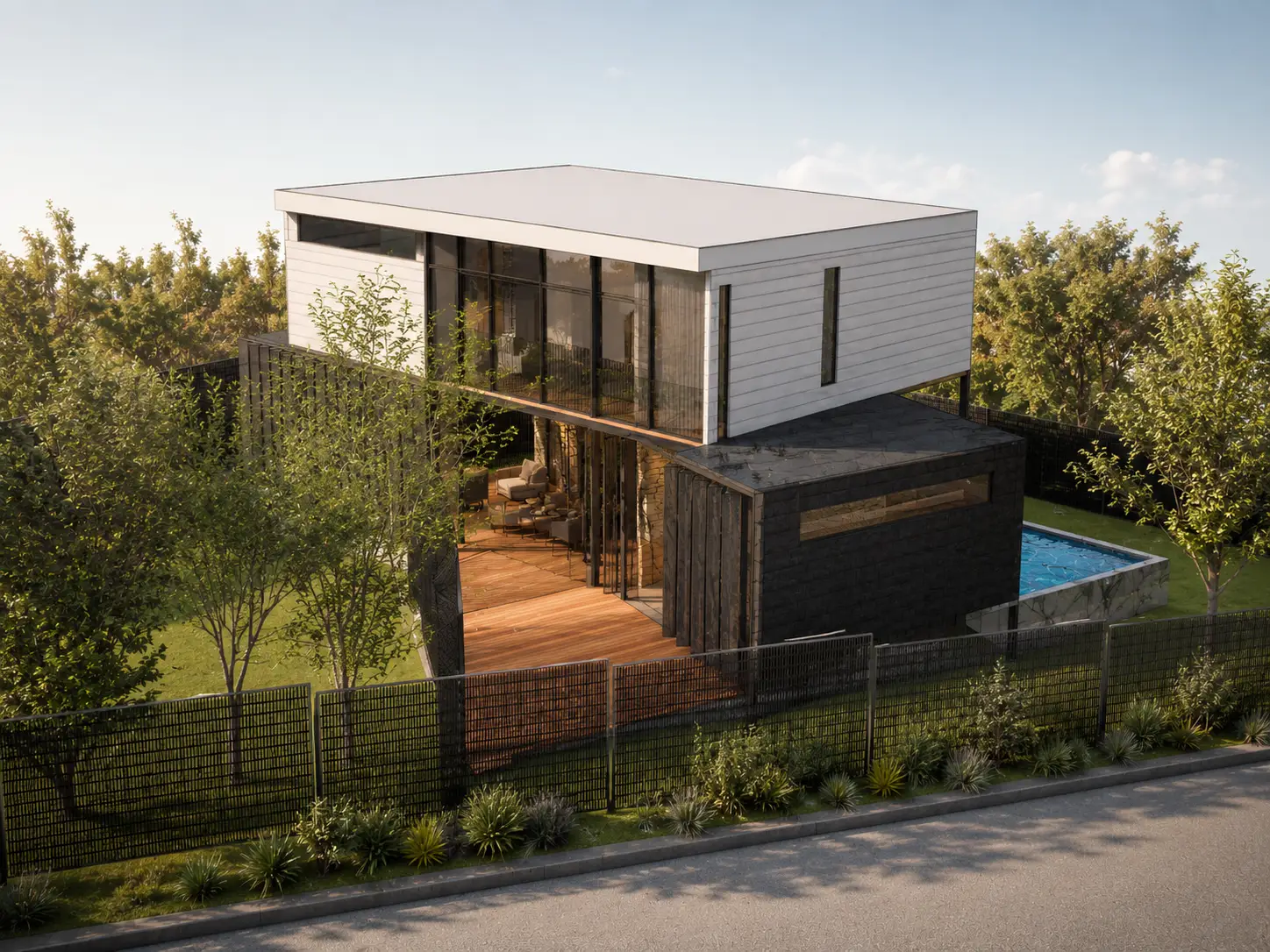
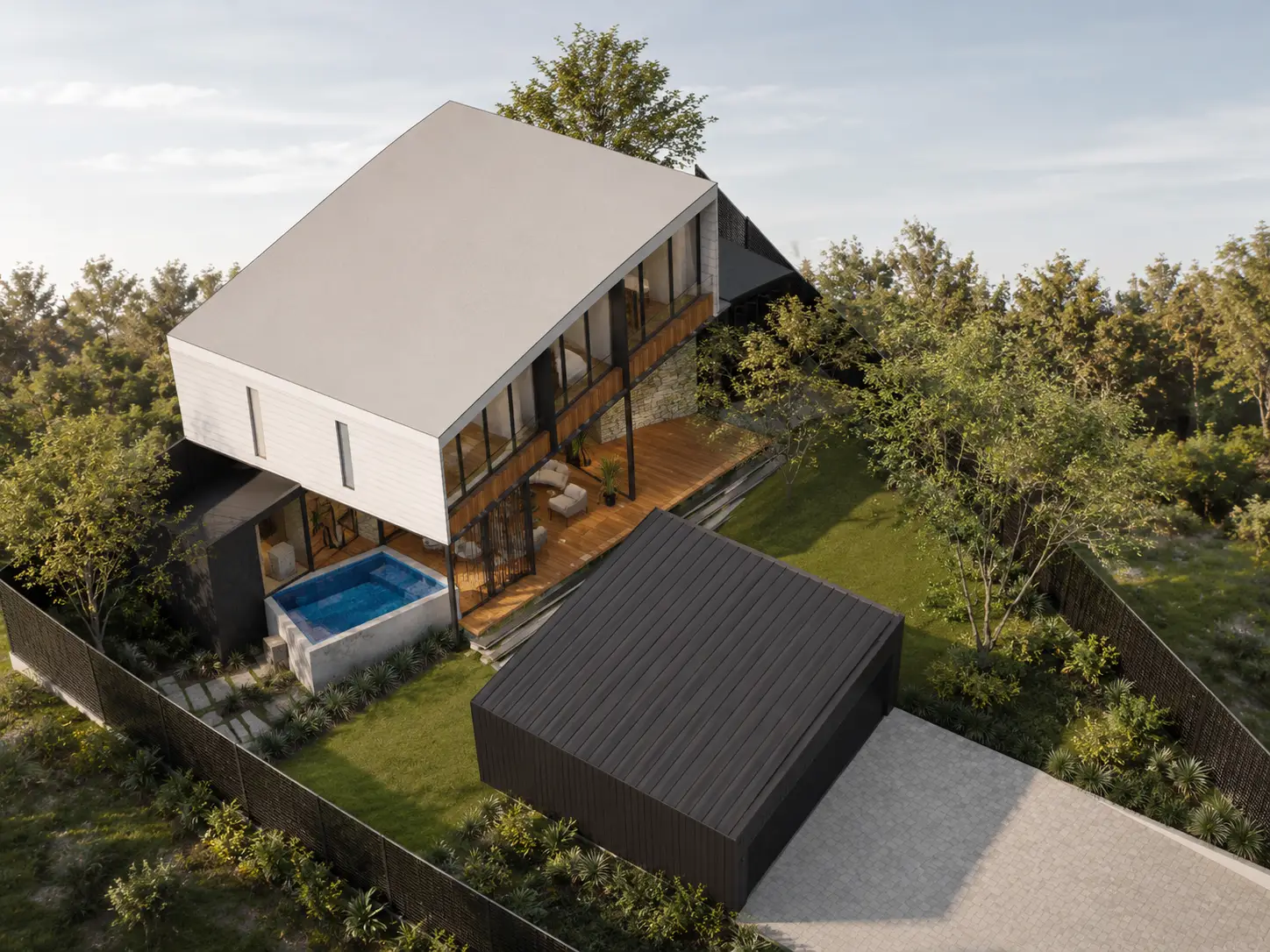
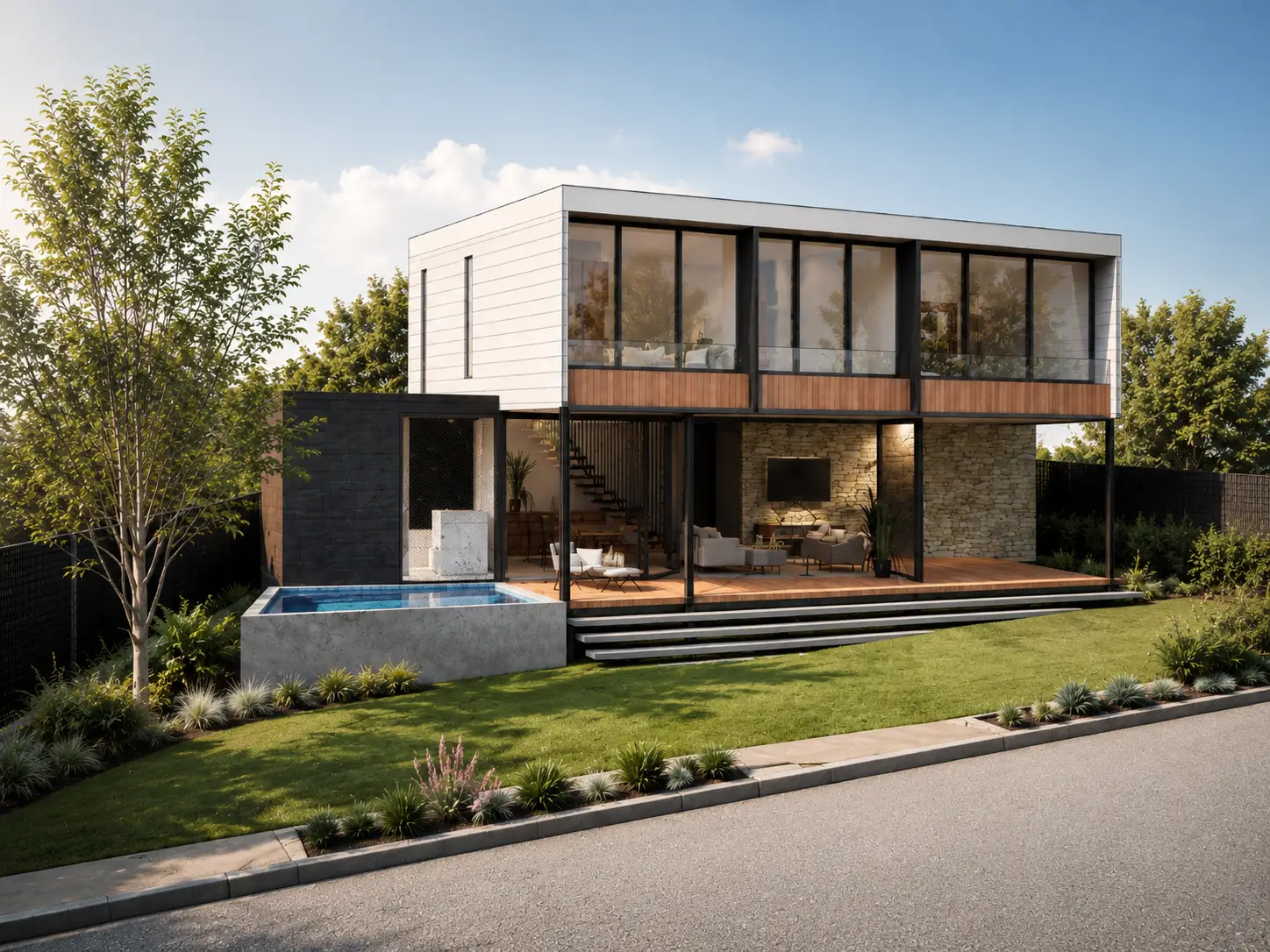
George House is arranged around a sheltered garden-facing ground floor and a lighter upper volume that sits above it. The intent is to keep the architecture crisp and legible while allowing planting, timber, stone and shade to soften the experience of the home.
The design balances privacy and openness: the street edge is controlled, while the garden elevation opens to lawn, pool, deck and trees. It is a compact contemporary house with a strong architectural silhouette, but the atmosphere remains warm, residential and easy to live with.

A wine estate with exceptional product needed a tasting room that matched its quality. We designed a low-slung pavilion of rammed earth, reclaimed oak, and steel. The rammed earth was sourced from the estate's own soil — the colour of the walls is literally the colour of the farm.
The client was clear about what they didn't want: exposed ducts painted black, neon signs, Scandi furniture, branded walls. They wanted somewhere that felt more like a well-run atelier than a tech startup. We kept the concrete slab and column grid and worked around them. The office is quiet. It looks like people who know what they're doing work there.
Nothing that would feel out of place in the landscape, nothing that would distract from it. Raw timber beams, leather furniture in colours pulled from the landscape, and a gabion feature wall using stone from the site. The interiors are deliberately quiet — they provide the container; the bushveld provides the spectacle.
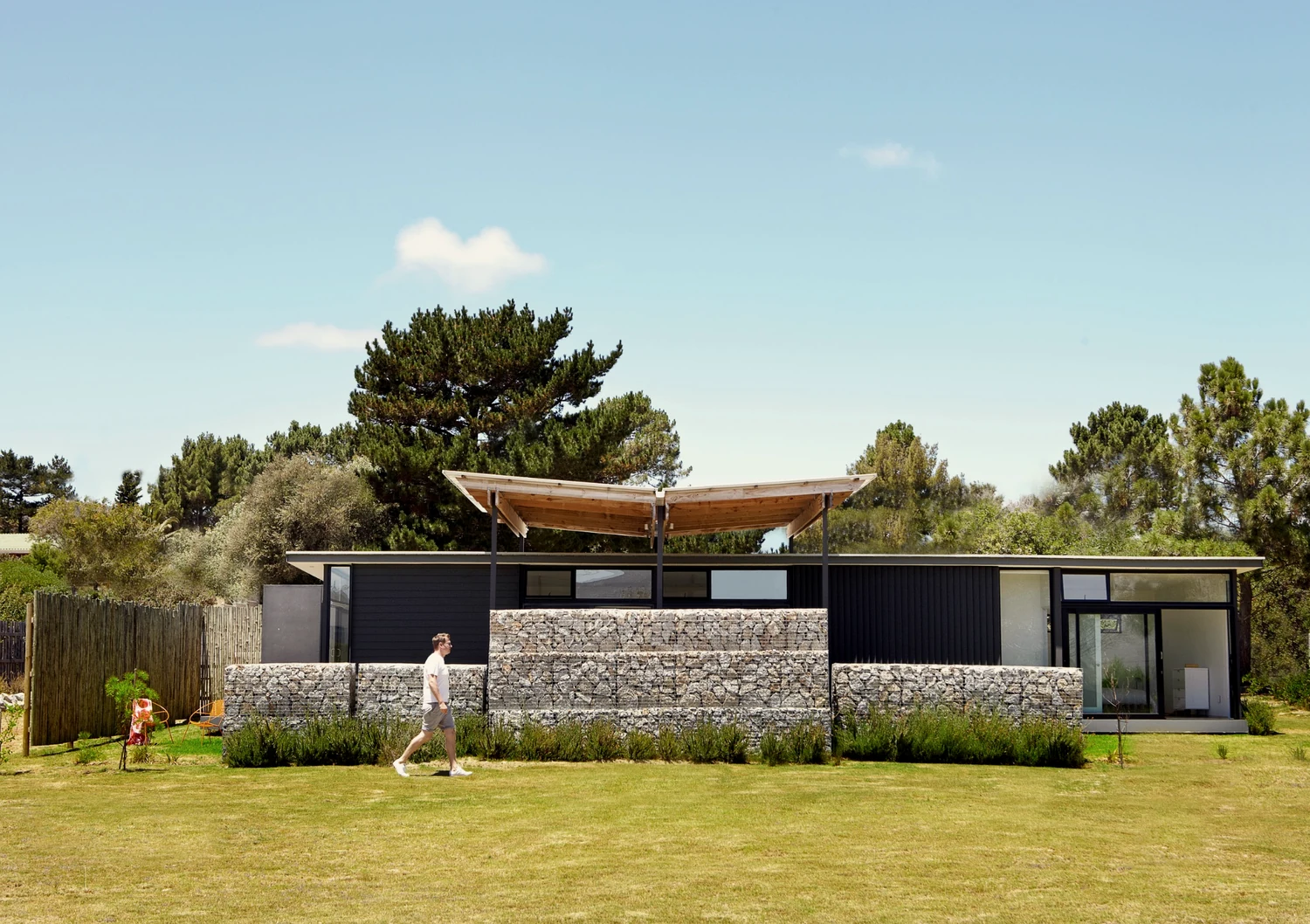
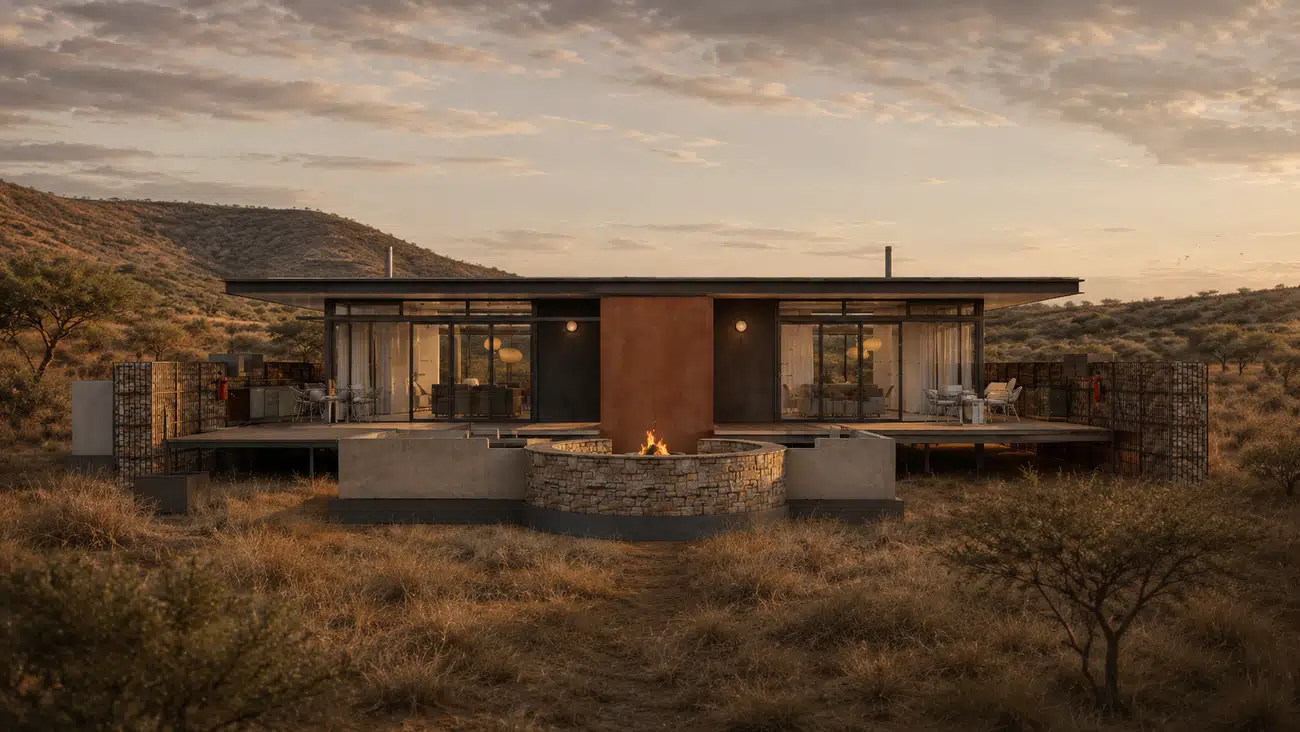
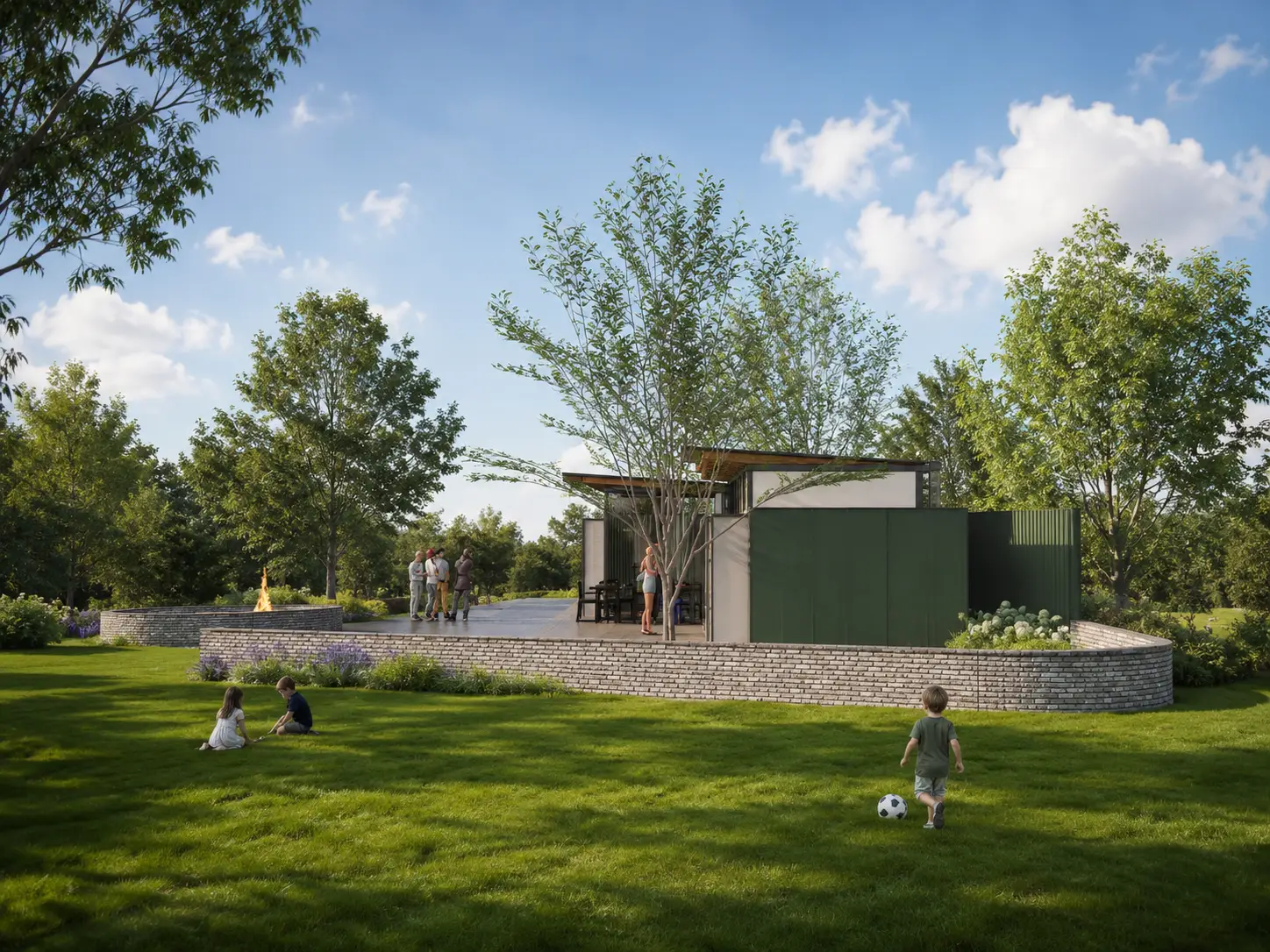
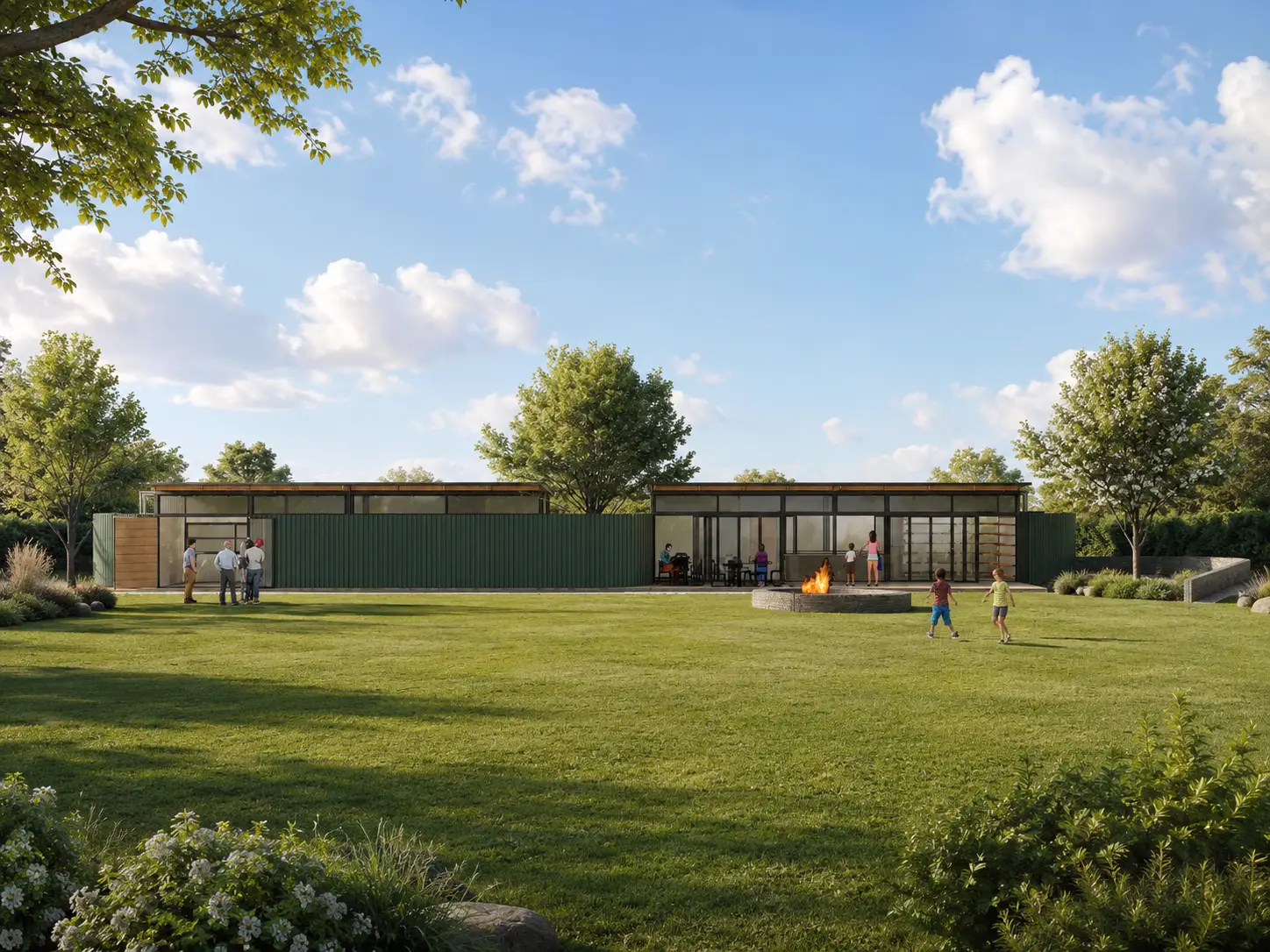
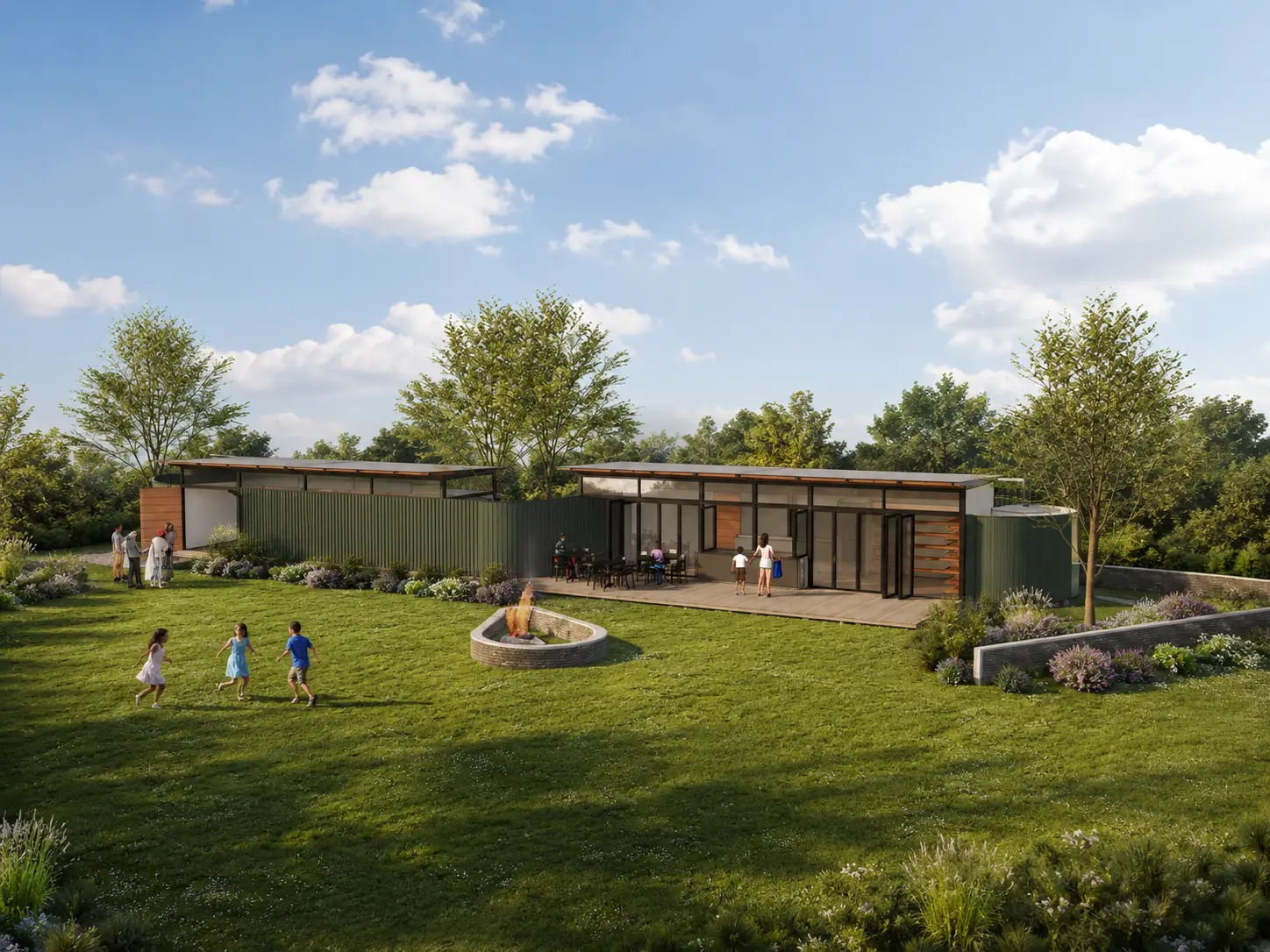
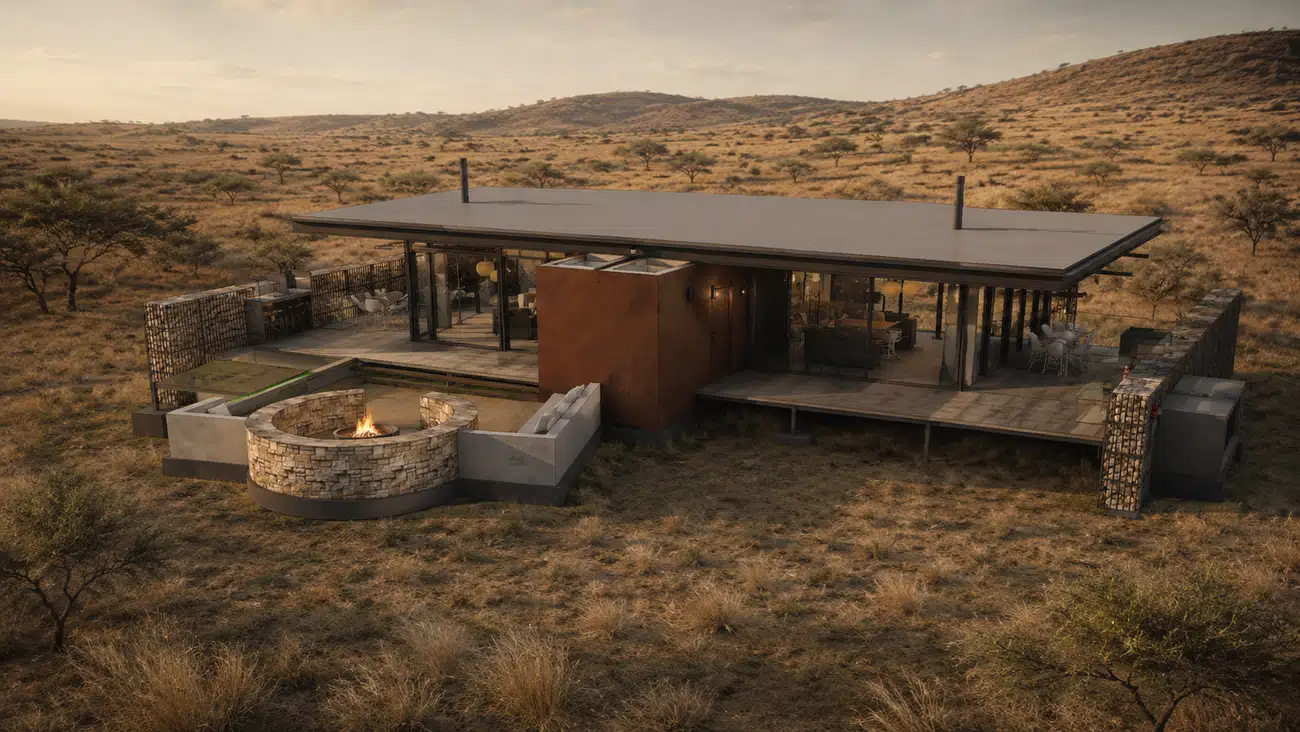
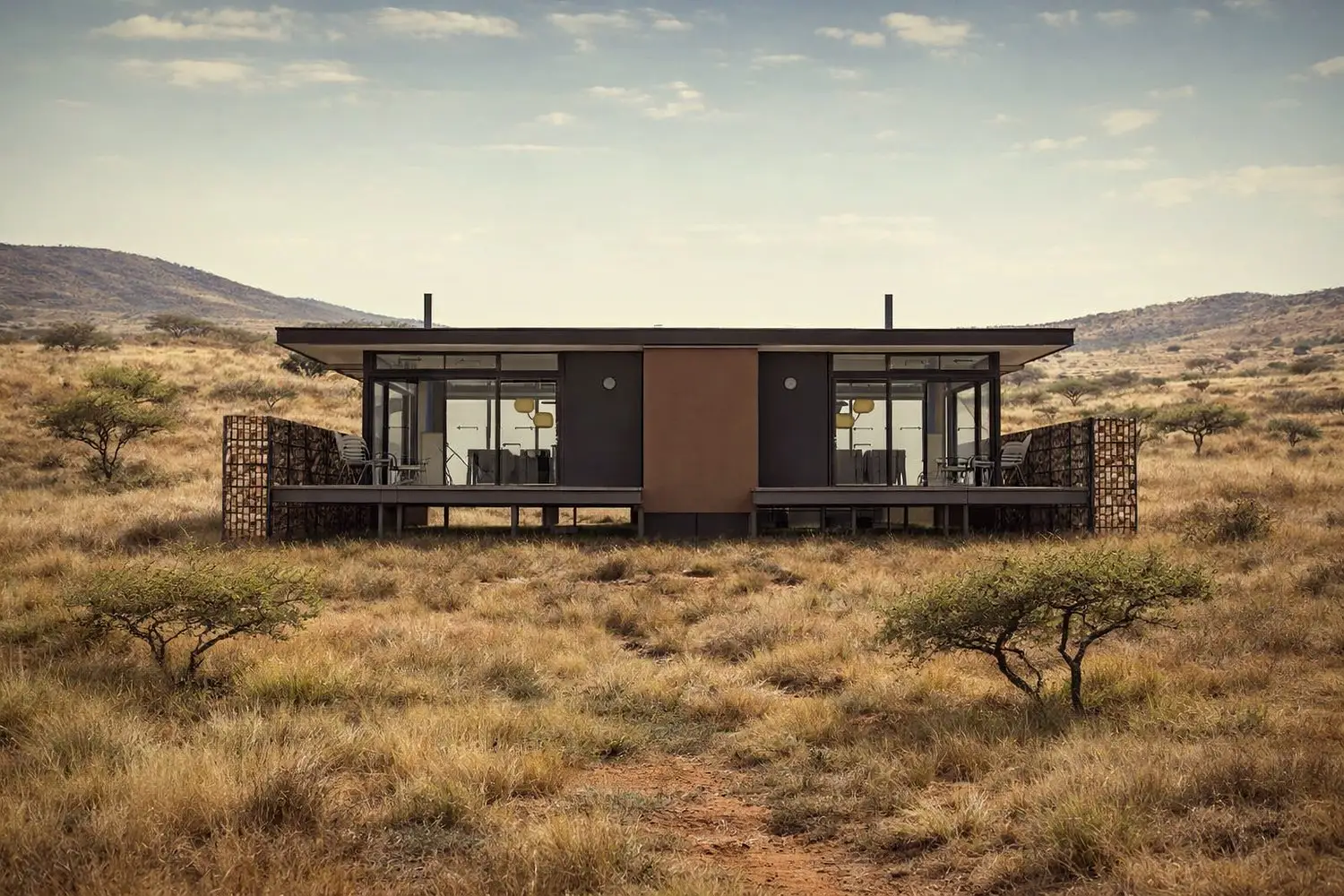
Game Farm Lodge is conceived as a contemporary retreat that sits quietly within the Kalahari landscape. The composition is deliberately horizontal and protected, with deck edges, gabion walls and deep overhangs working together to frame views while providing shelter from sun and wind.
The heart of the project is an outdoor gathering court built around a circular fire pit. From there, the lodge opens into generous interior living spaces and outward to covered terraces, giving the project the atmosphere of a relaxed bush escape rather than a formal building object.
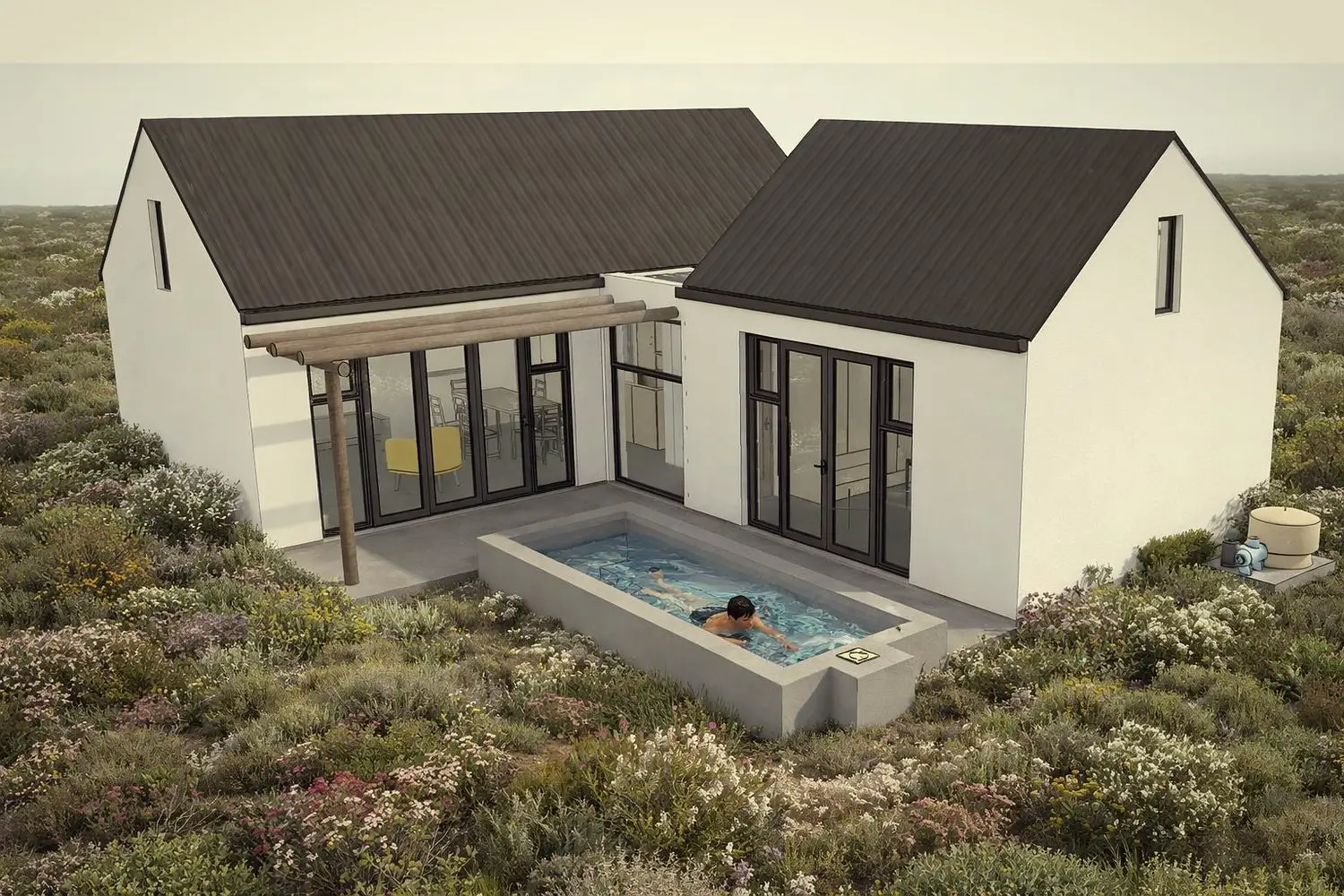
Guest Cottage is conceived as a calm retreat on the Hermanus coast. The architecture keeps the form simple and familiar while opening the interior toward a private courtyard with a plunge pool and outdoor living terrace.
The material language is deliberately restrained, allowing the project to feel warm, modest and easy to inhabit. Large glazed openings and the covered link space help the cottage move naturally between inside and out.
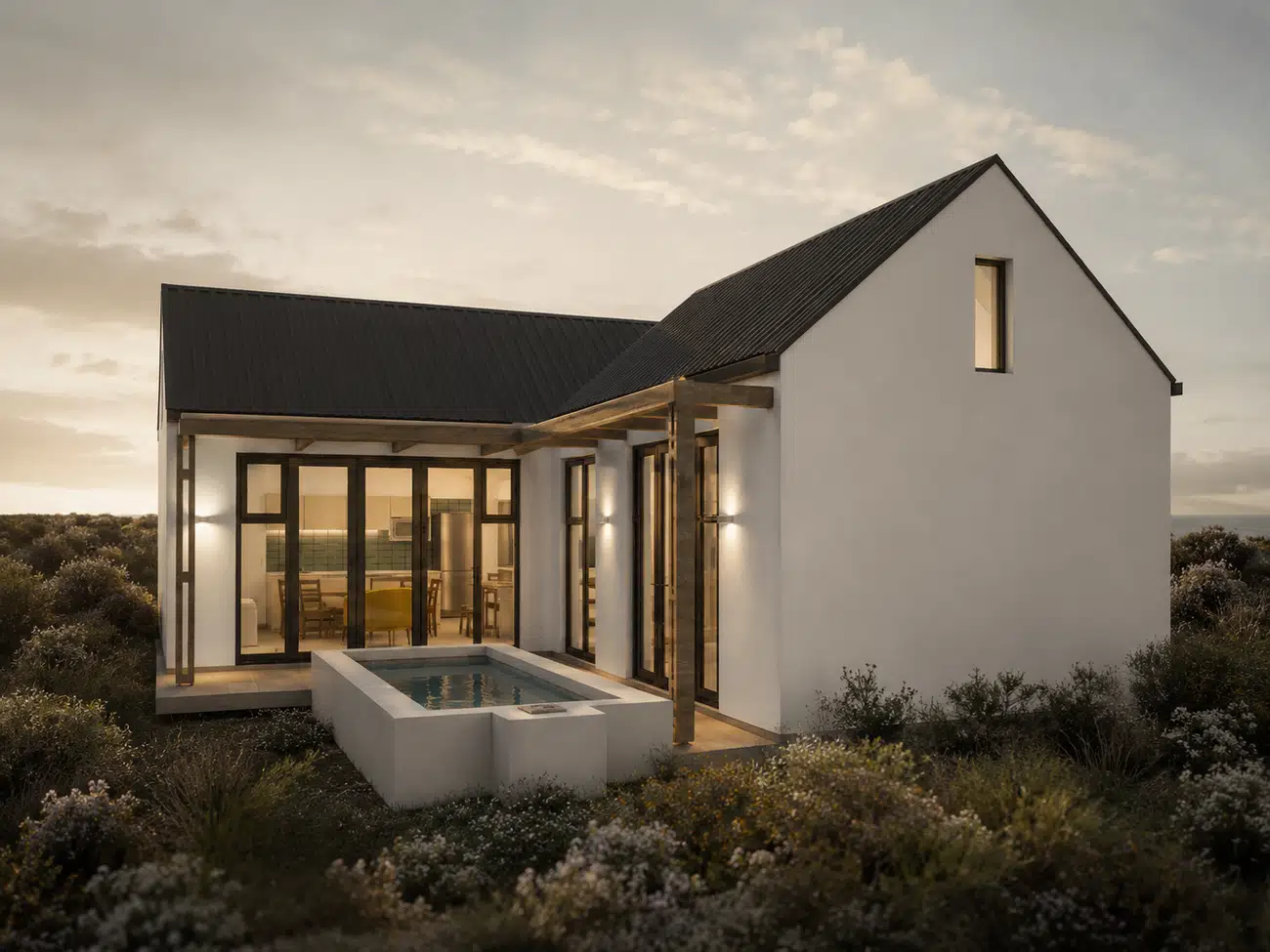
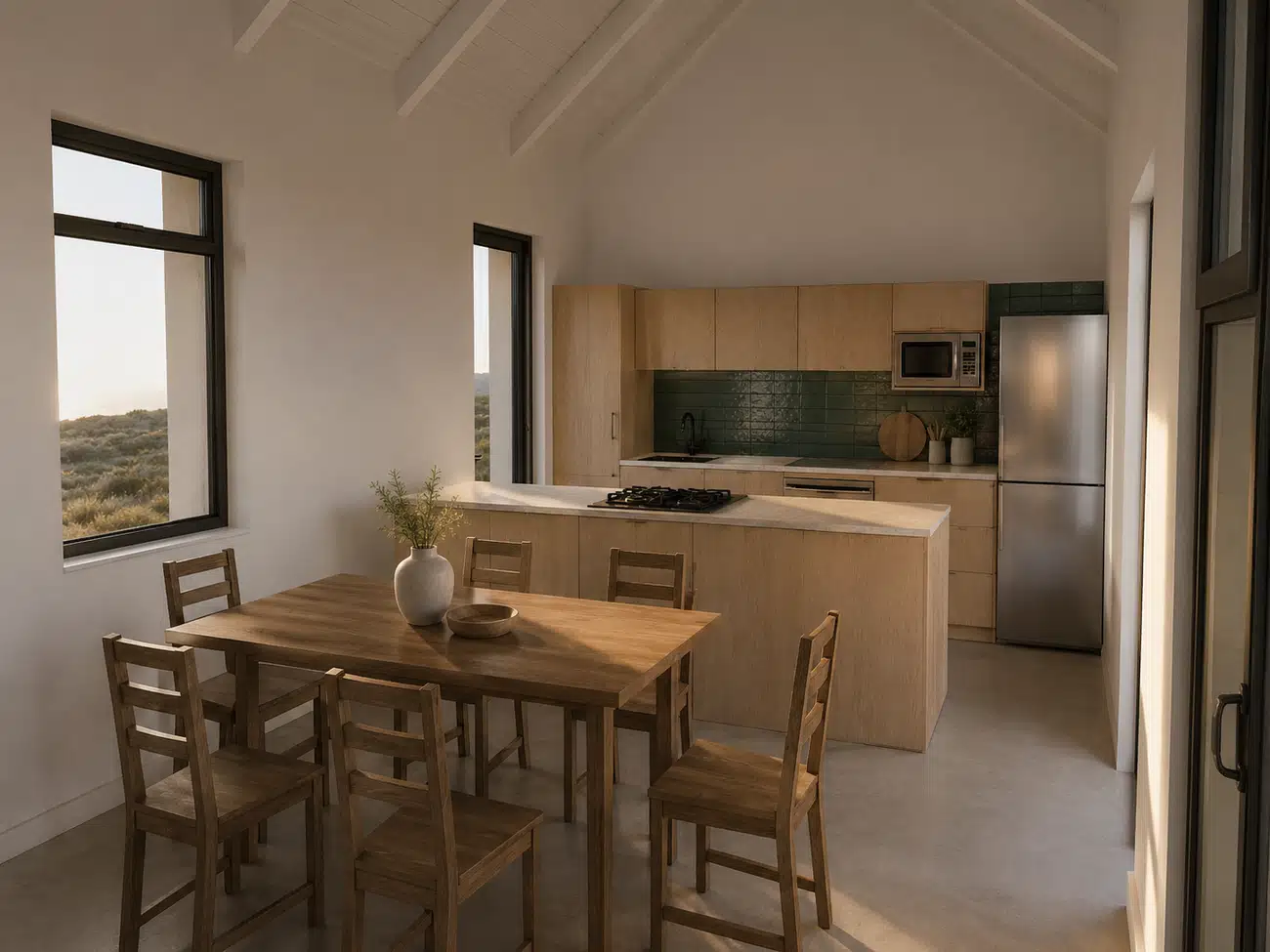
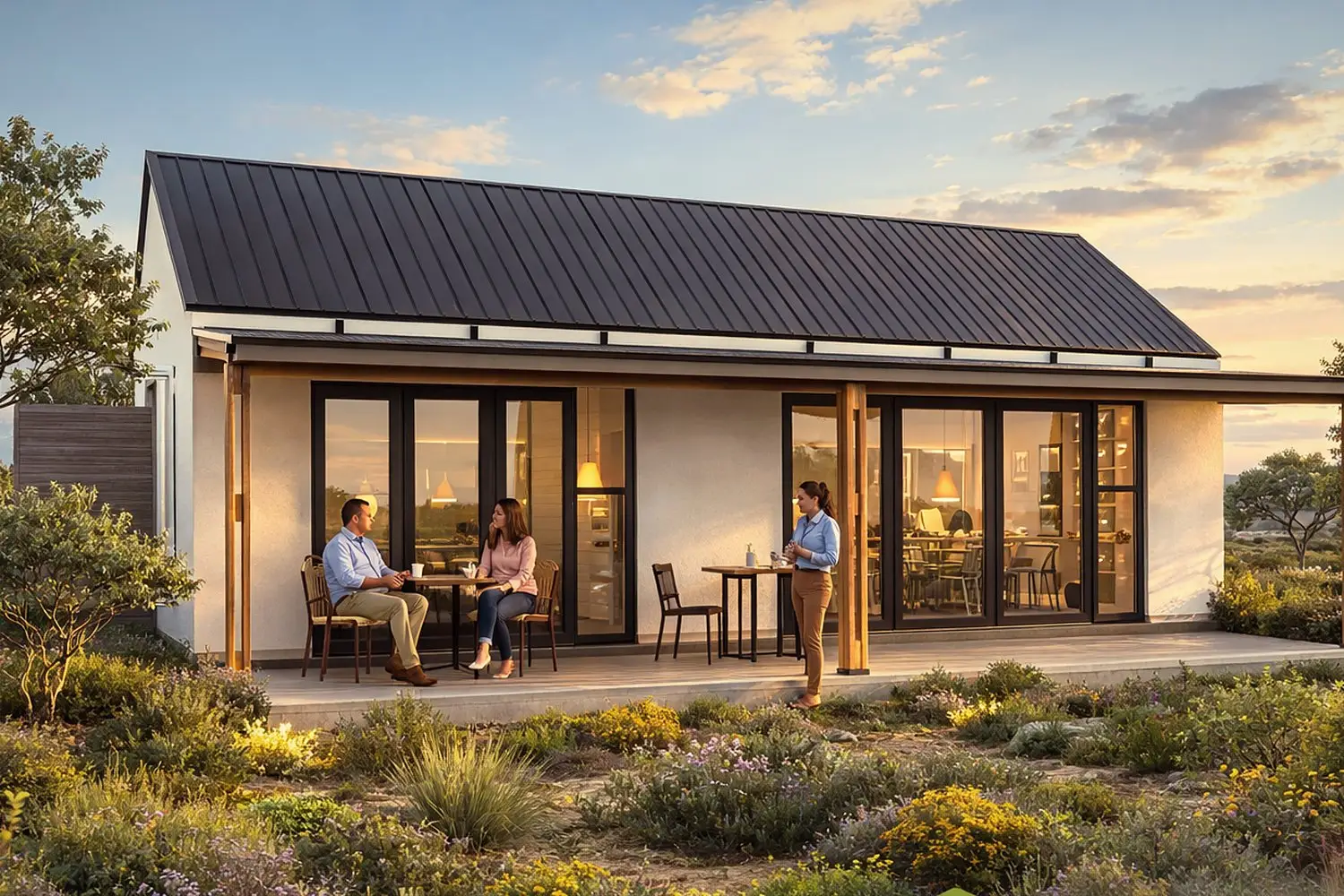
Holiday Cottage is conceived as a calm retreat in the Overberg. The architecture keeps the form simple and familiar while opening the interior toward outdoor living and a softened planted setting.
The material language is deliberately restrained, allowing the project to feel warm, modest and easy to inhabit. Large glazed openings and covered outdoor edges help the cottage move naturally between inside and out.
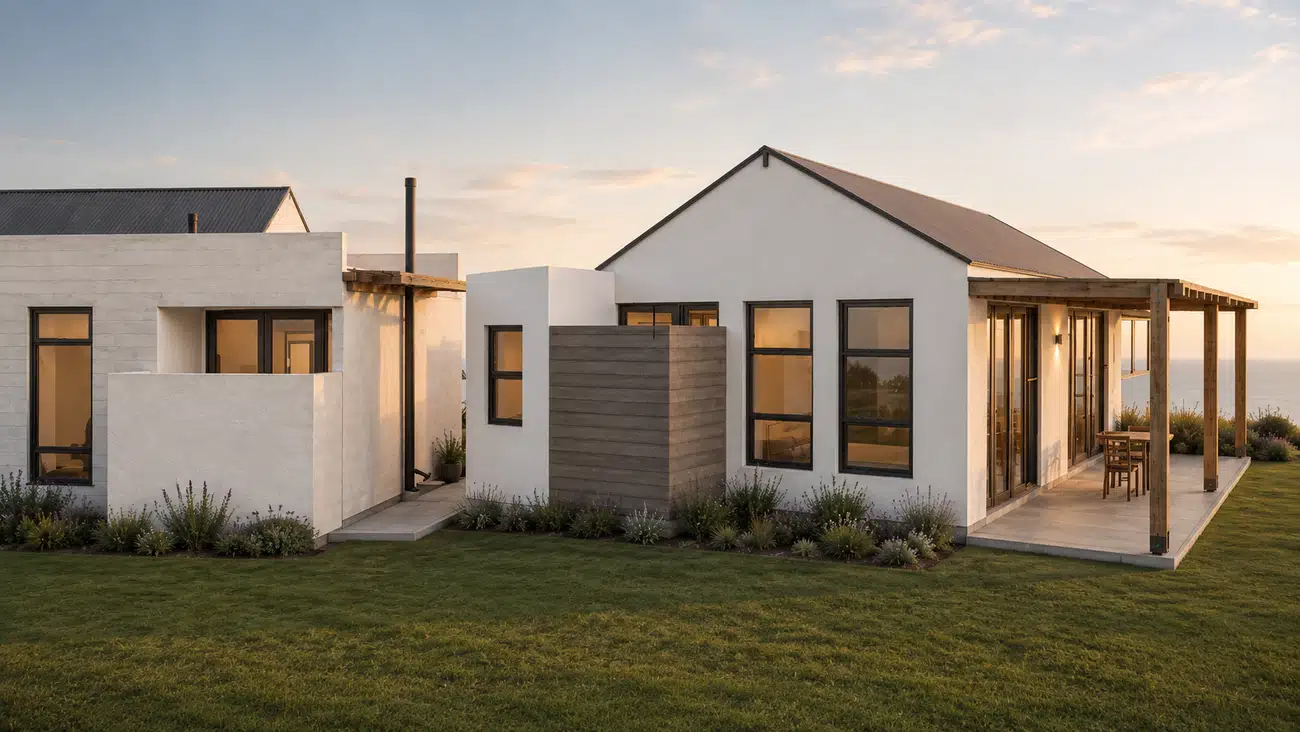
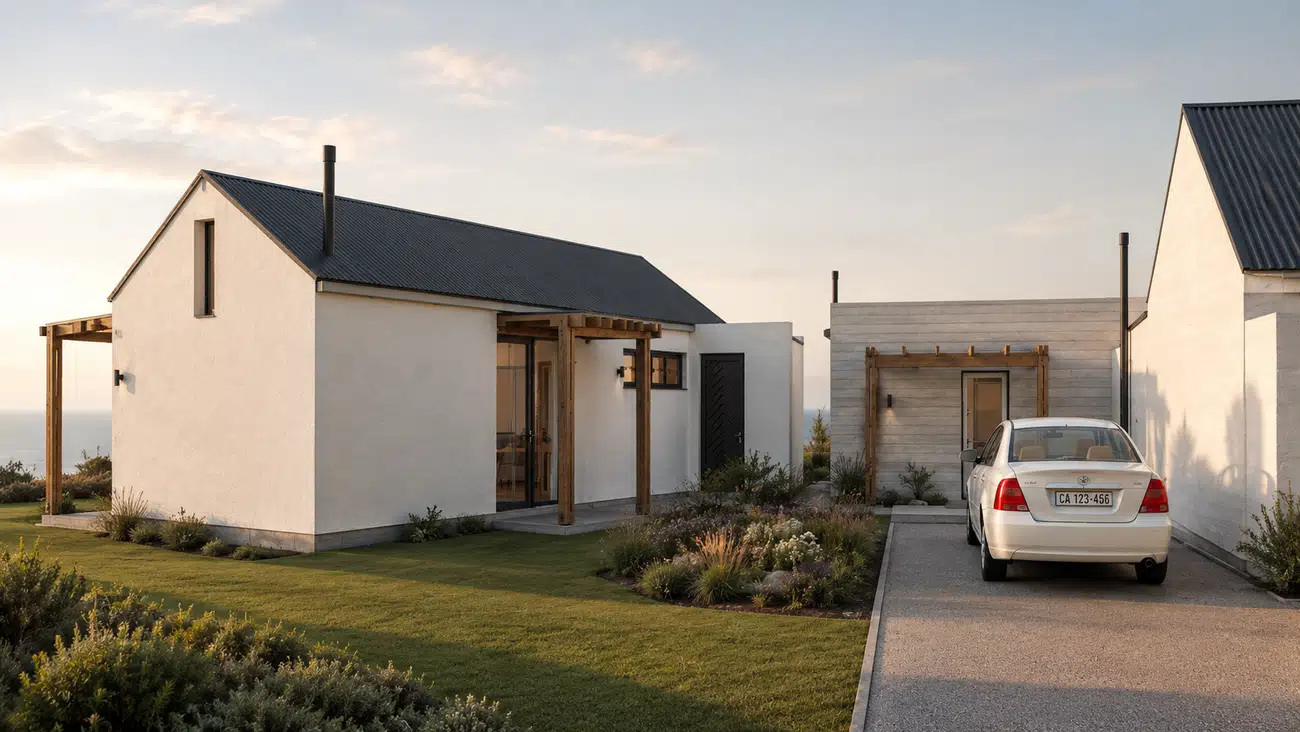
We guide the full process — from site selection and design to final handover — for clients who live abroad, live in another province, or are simply too busy to coordinate a complex build themselves.
Inizio has been designing and building in South Africa since 2009. A growing part of our work is for clients abroad — in Europe, the United Kingdom, the USA or elsewhere on the continent — who want a home here without the worry of coordinating a build from a distance.
We are not a project management company. We are architects and interior designers who take responsibility for our own projects from the first conversation through to final handover. That difference matters: the same person who designs the building also oversees the build.
A large part of our international work is in the Western Cape — Hermanus, the Overberg, the Winelands and the Cape Peninsula. We also work elsewhere in South Africa when the project and site are the right fit.
If you want a home that reflects its place rather than our location, we can do that. We travel to the site as often as the project requires. We do not hand a brief to a local contractor and hope for the best.
We help identify and assess sites — zoning, access, orientation, water supply and landform. We can represent you in planning approvals and handle negotiations with authorities on your behalf.
A complete architecture and interior design service. We present digitally — 3D walkthroughs, material samples, furnishing layouts — so you can make decisions without travelling for every meeting.
We coordinate the relationship with the contractor, carry out site inspections and manage the financial flow. You receive regular video walkthroughs and written reports. We do not accept any work that we would not accept for ourselves.
A weekend home set into the fynbos landscape. Published in Elle Decor Japan, 2021. Built for clients from Johannesburg who could not be on site regularly.
View ProjectSouth Africa’s light, space and pace attract international clients looking for more than a seasonal retreat. They want a home that is truly theirs — designed for their way of living, built for decades, and cared for by people they trust.
Our practice is small — deliberately so. Philip Nel leads each project personally. You are not handed over to a junior architect after signing the agreement.
We are strongest in Hermanus, the Overberg, the Winelands and the Cape Peninsula. We also work in the Free State and Mpumalanga — but we are honest about where our contractor network is most deeply rooted.
Most international clients are not nervous about the architecture — they worry about what happens on site when they are not there. That is exactly why we have developed our own process.
Building in South Africa comes with real challenges — delays in approvals, supply issues, contractor availability. We manage this for you. But we want you to know that from the beginning, not be surprised halfway through.
We speak before preparing a proposal. We want to understand the site, the brief, the timeline and your expectations. Together, we decide whether we are the right fit.
We visit the site ourselves — in person. We assess orientation, access, infrastructure, zoning and what the site wants to become. We present our assessment before drawing a single line.
We develop a design concept, present it with 3D walkthroughs and a material board, and agree on project scope and fees. All of this can happen digitally — you do not need to travel for design meetings.
We prepare the complete drawing package, coordinate building approvals, appoint and guide the contractor, and carry out regular site inspections. You receive written reports and video walkthroughs at each milestone.
We hand over a completed, inspected home. We are present at handover. Afterwards, we remain available — we care about how the building settles during its first year.
Inizio was founded in 2009 with one simple idea: how a building is made is inseparable from how it feels to live in. The studio grew out of construction, detail and material work — and that's still how every project gets shaped.
We're a small practice by choice. That's what keeps the work personal, careful and properly looked after.

Inizio started as a modular home practice. The word means beginning in Italian, and every project, then and now, is somebody's beginning: a new home, a new way of living, a new relationship between a person and a place.
The modular work taught us precision. Factory fabrication has no room for guesswork — every component has to be resolved at drawing stage or it fails on site. That discipline still shapes how we work, even on bigger, more bespoke projects.
We moved away from prefab as the practice grew, but not from what it taught us. We still design like builders. If a detail can't be built properly, we go back and reconsider it.
We take on a handful of residential and commercial projects each year. The site — the light, the ground, the wind, the view — is always the first client.
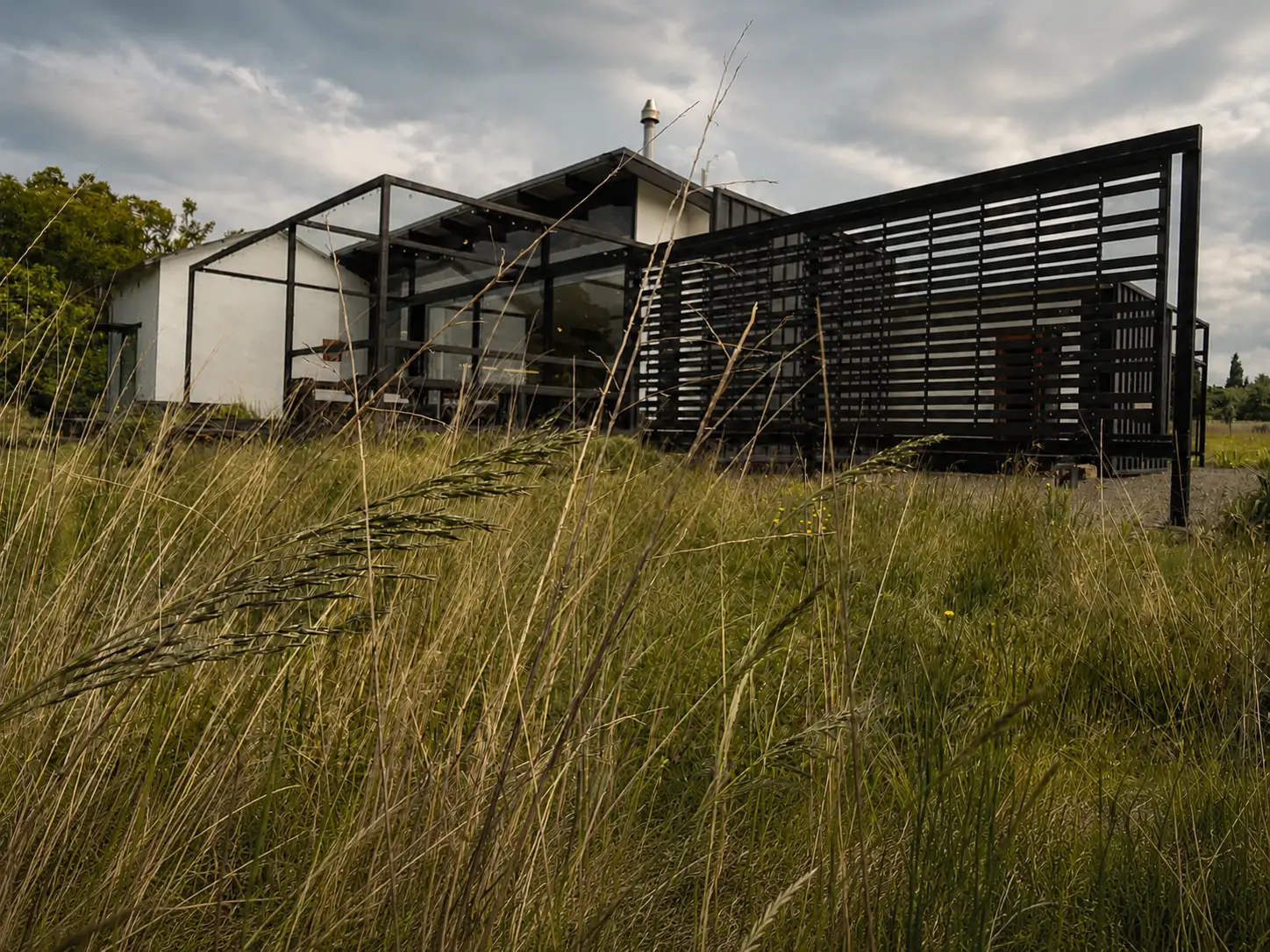
Set within the open landscape of the eastern Free State, this house is designed around a simple idea: to make the interior feel protected without cutting it off from the veld. Large glass openings hold the long views, while black steel screens and deep covered decks create shade, privacy and a slower threshold between inside and outside.
The house combines robust rural practicality with a more refined residential language — timber underfoot, framed views, soft interior layering and a palette that allows the landscape to remain the strongest presence.
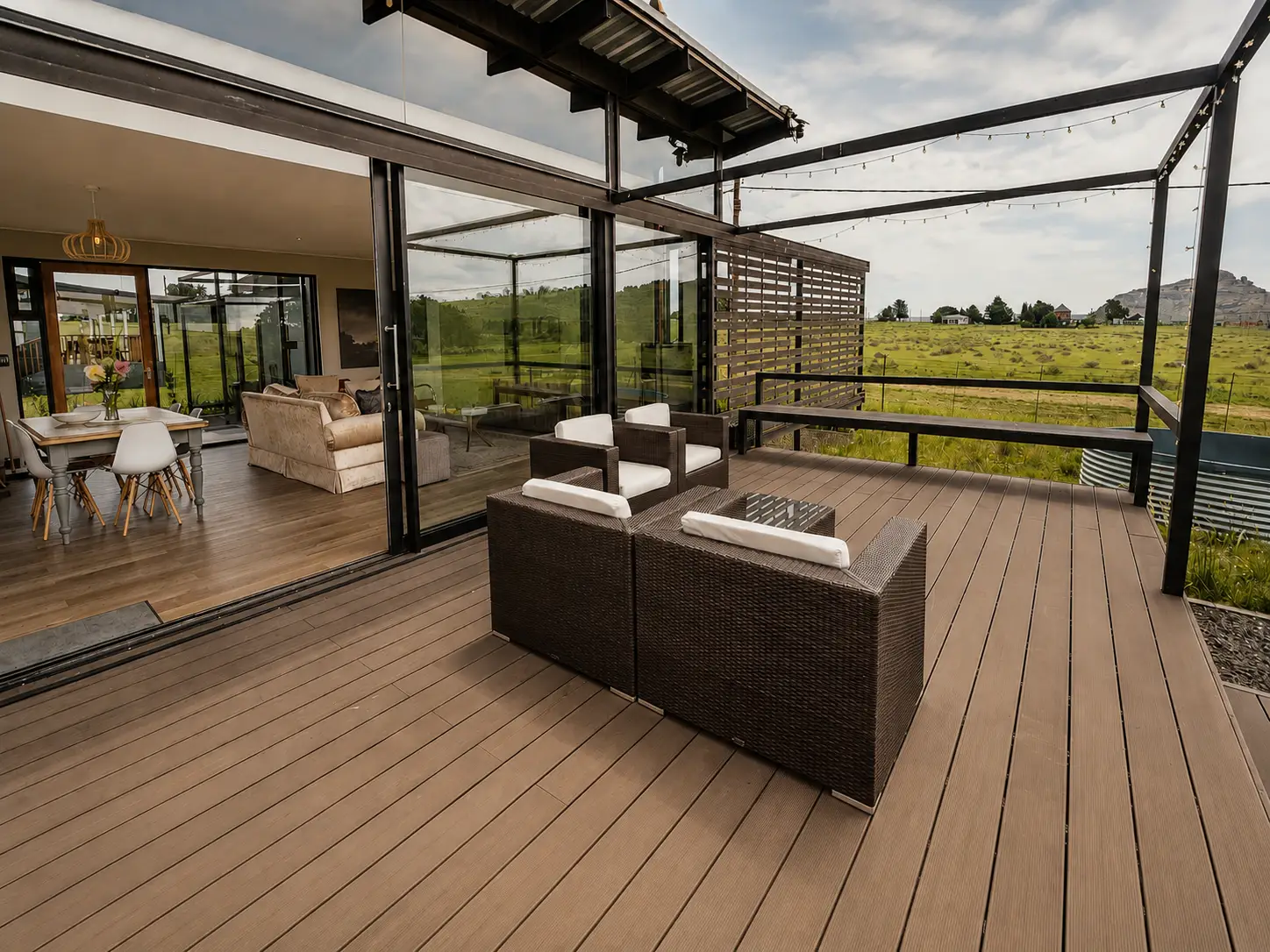
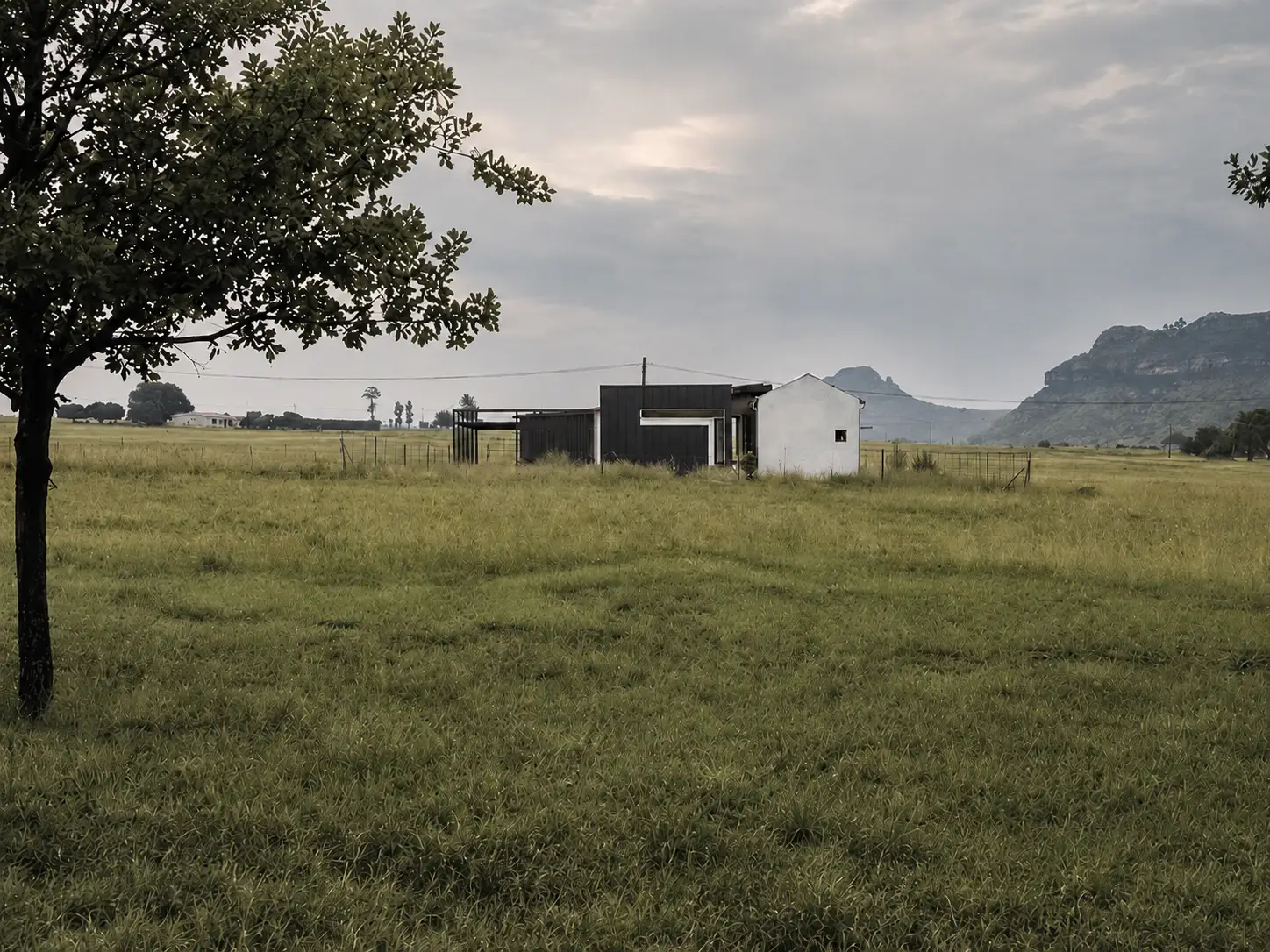
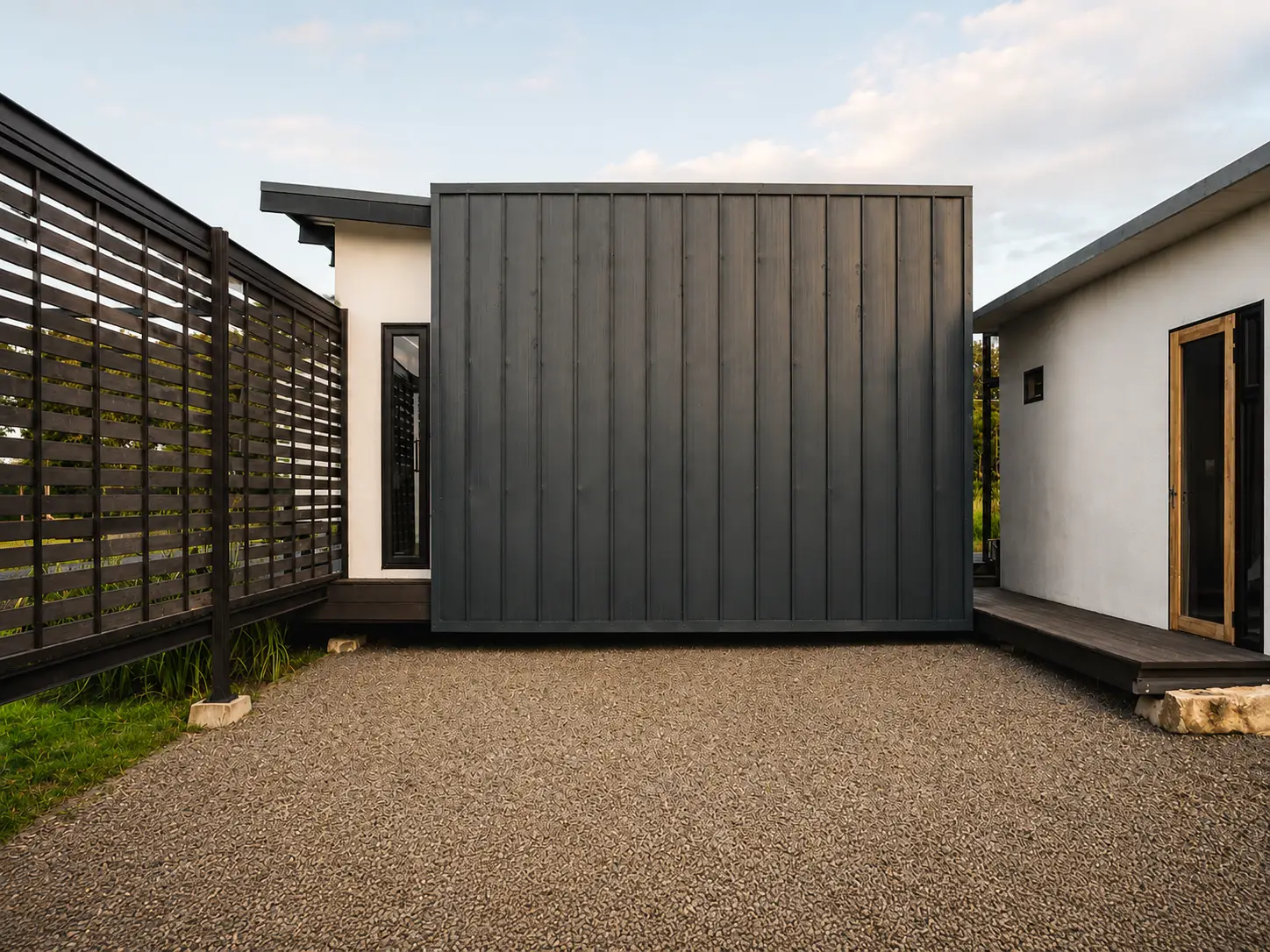
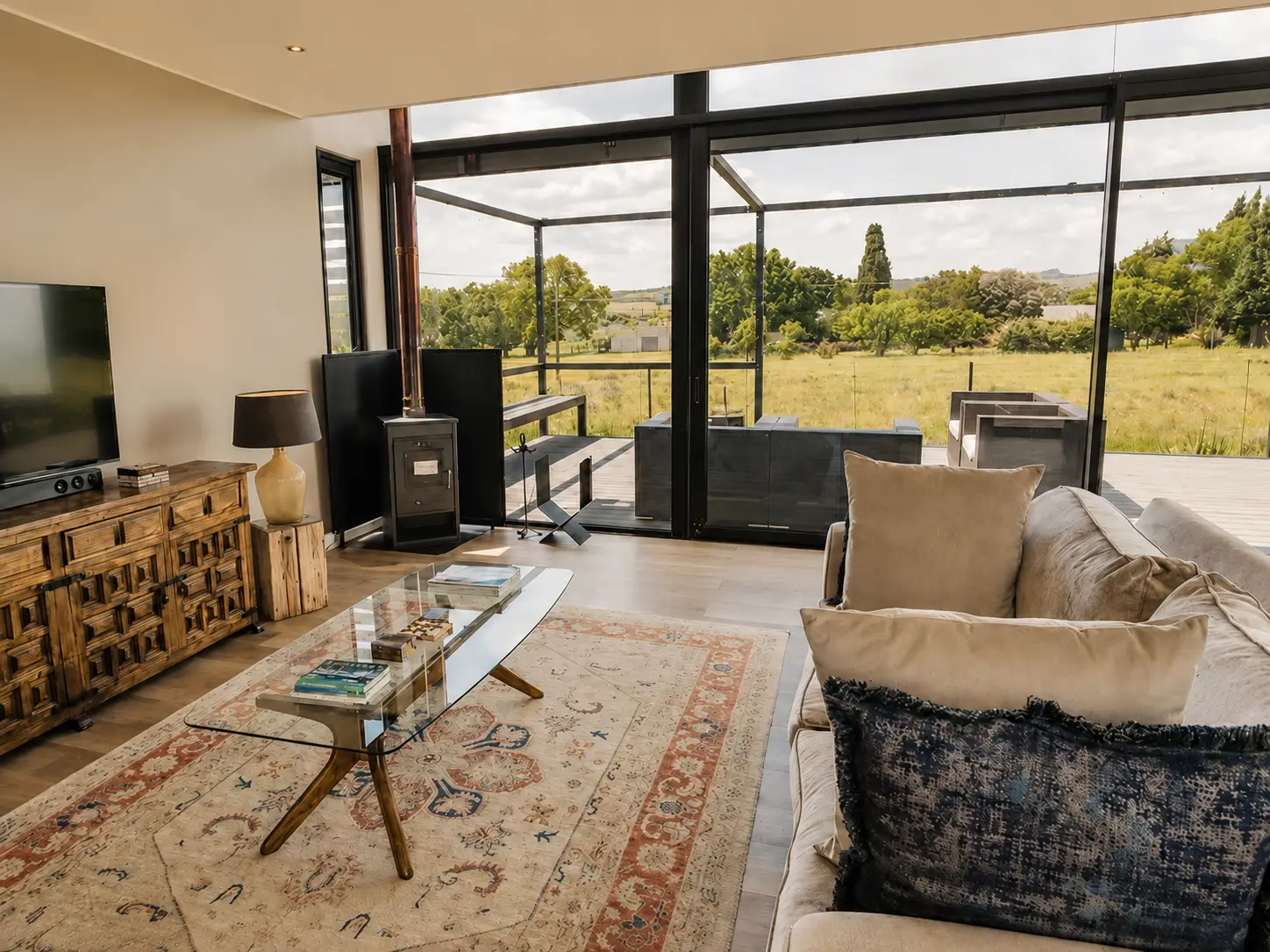
This Ladybrand residence was conceived as a warm contemporary home with a strong architectural presence but a relaxed domestic character. The exterior language is crisp and restrained — dark steel, timber screening and deep overhangs — while the interiors are lighter and softer, organised around open-plan living, custom joinery and carefully framed natural light.
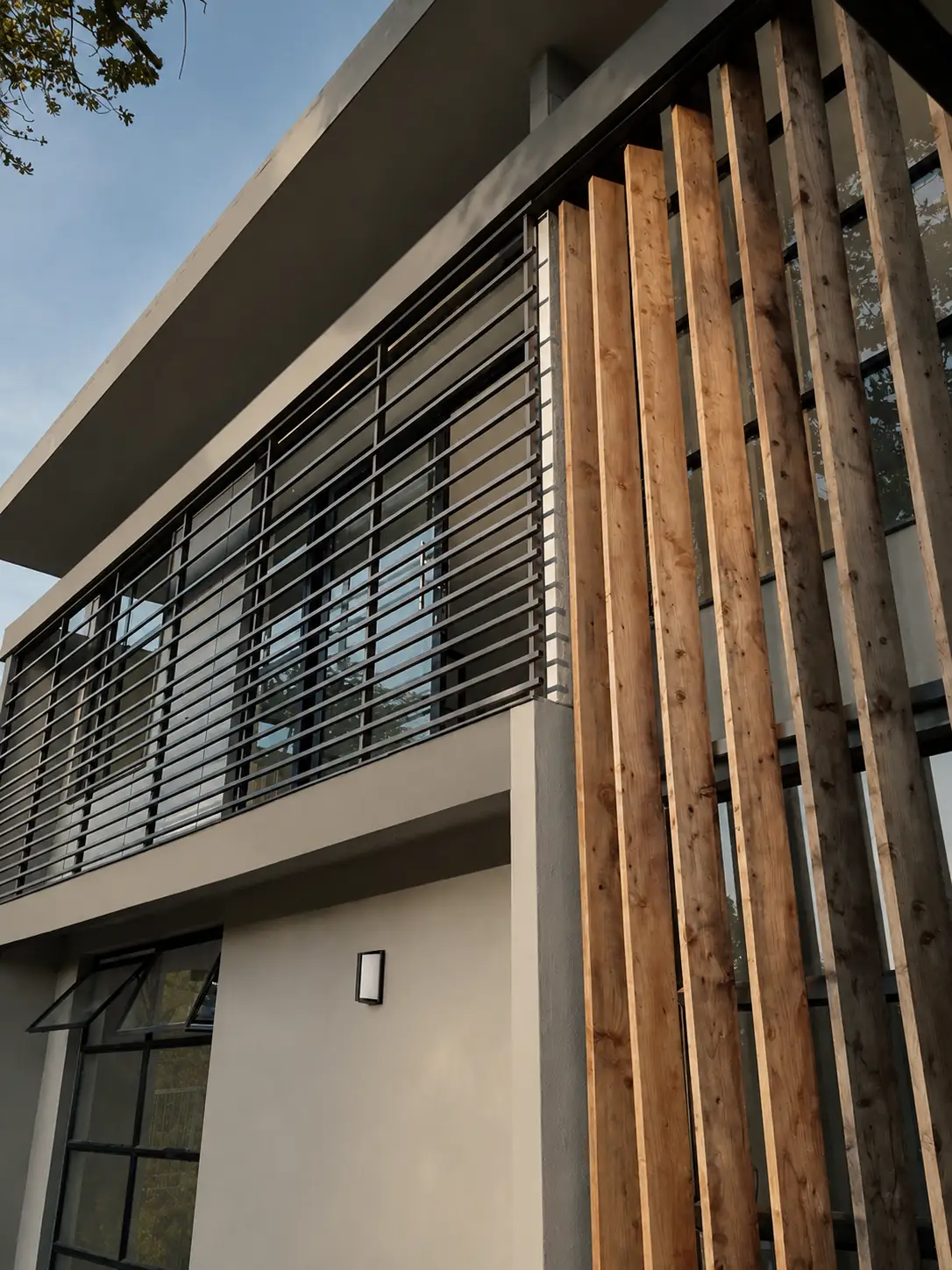
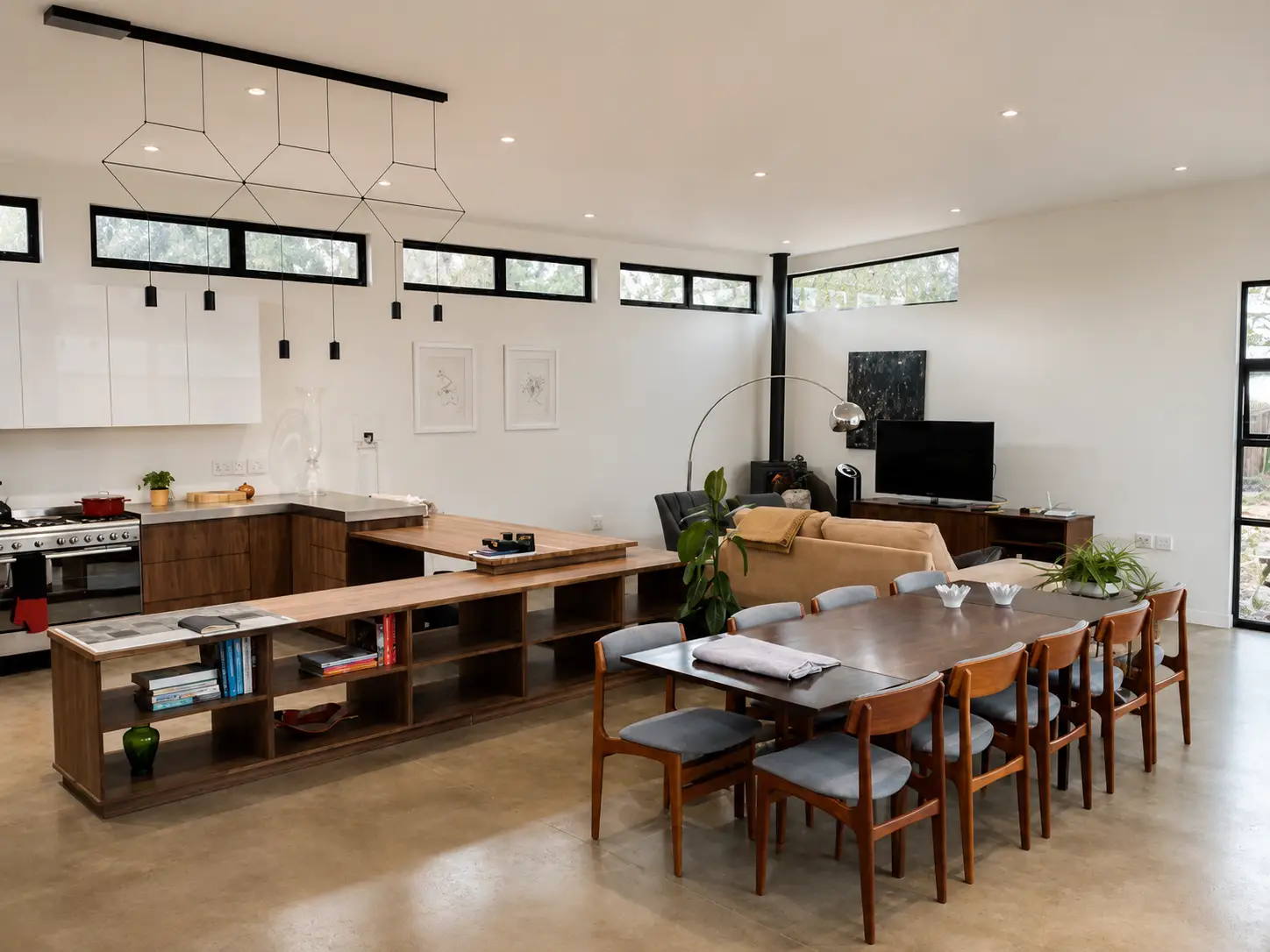
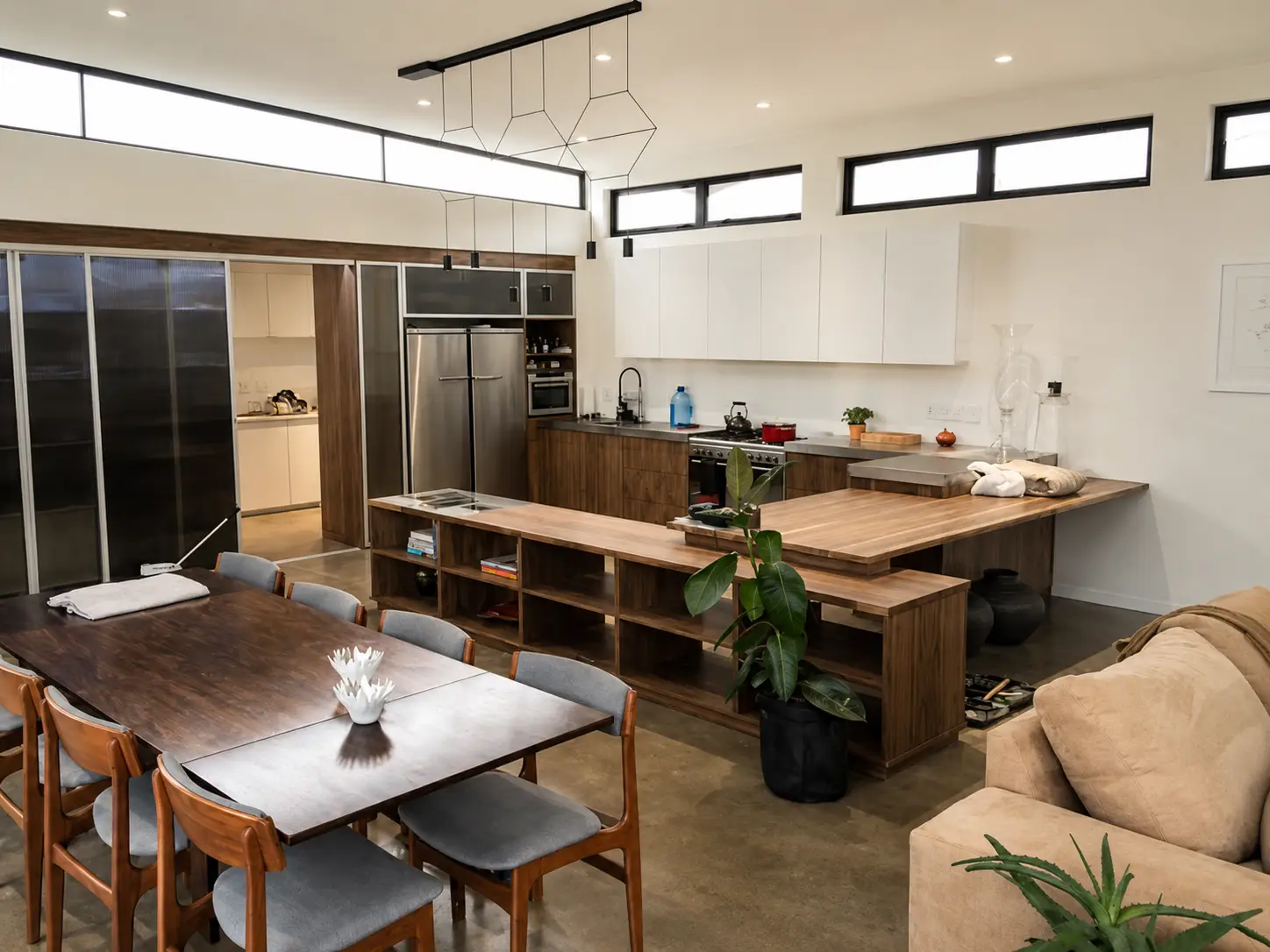
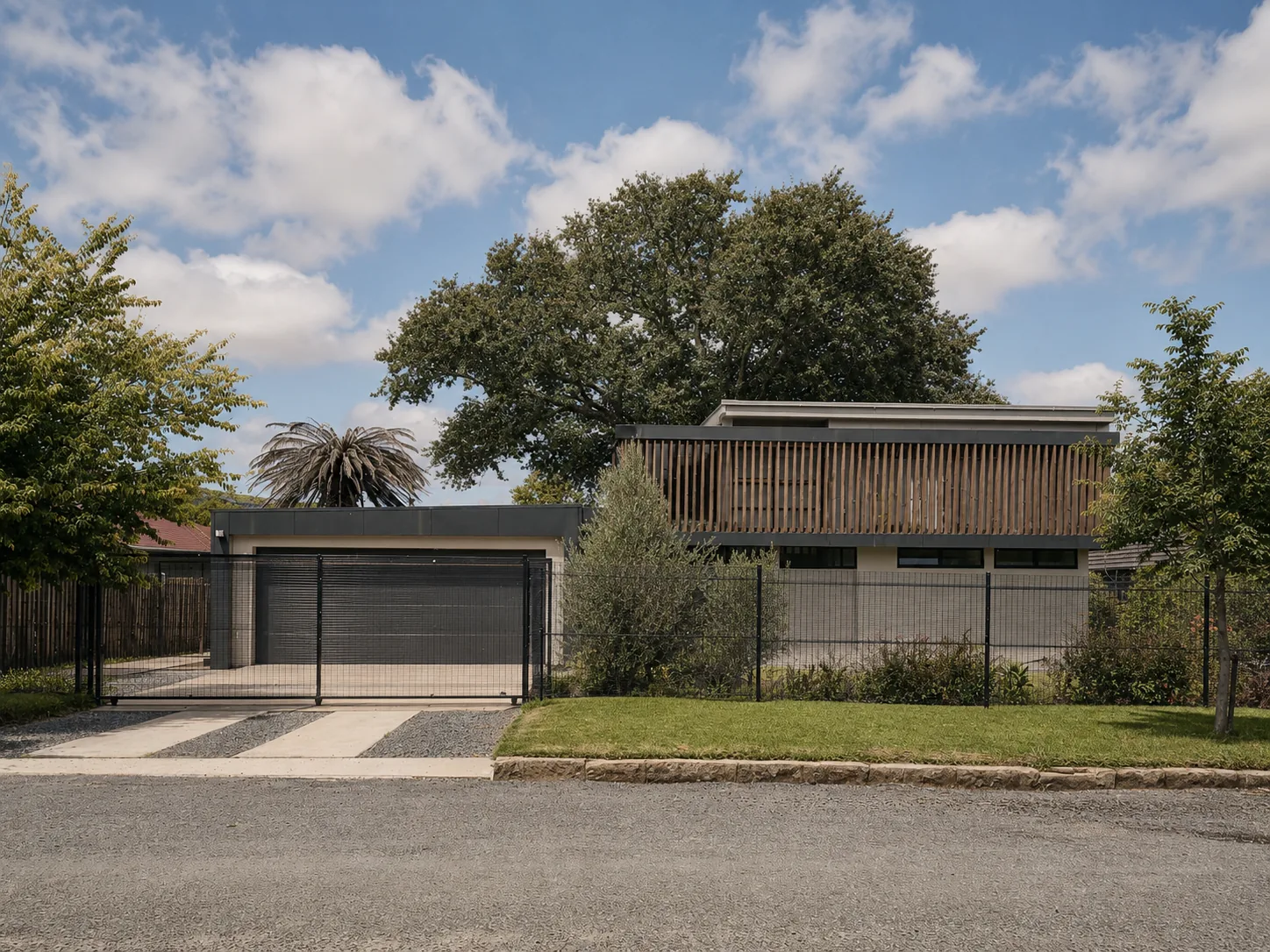
This Swellendam house was designed as a crisp contemporary residence with a strong architectural identity and a relaxed domestic atmosphere. The elevated structure responds lightly to the site, while the external language of dark steel, warm cladding and screened outdoor areas gives the building a clear, sculptural presence. Inside, the planning opens up into a bright kitchen, dining and living volume anchored by simple custom joinery, tactile timber and rich green tile accents.
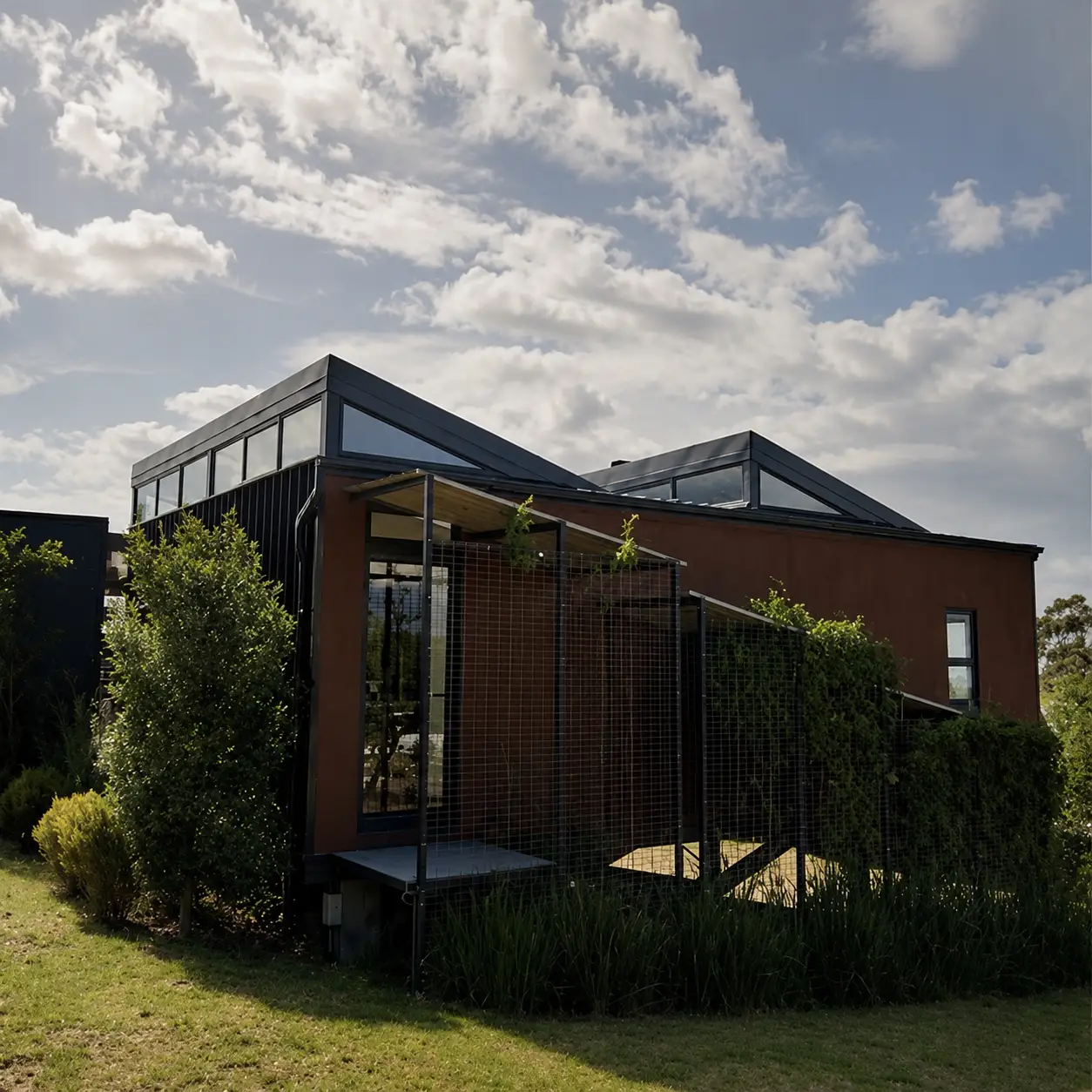
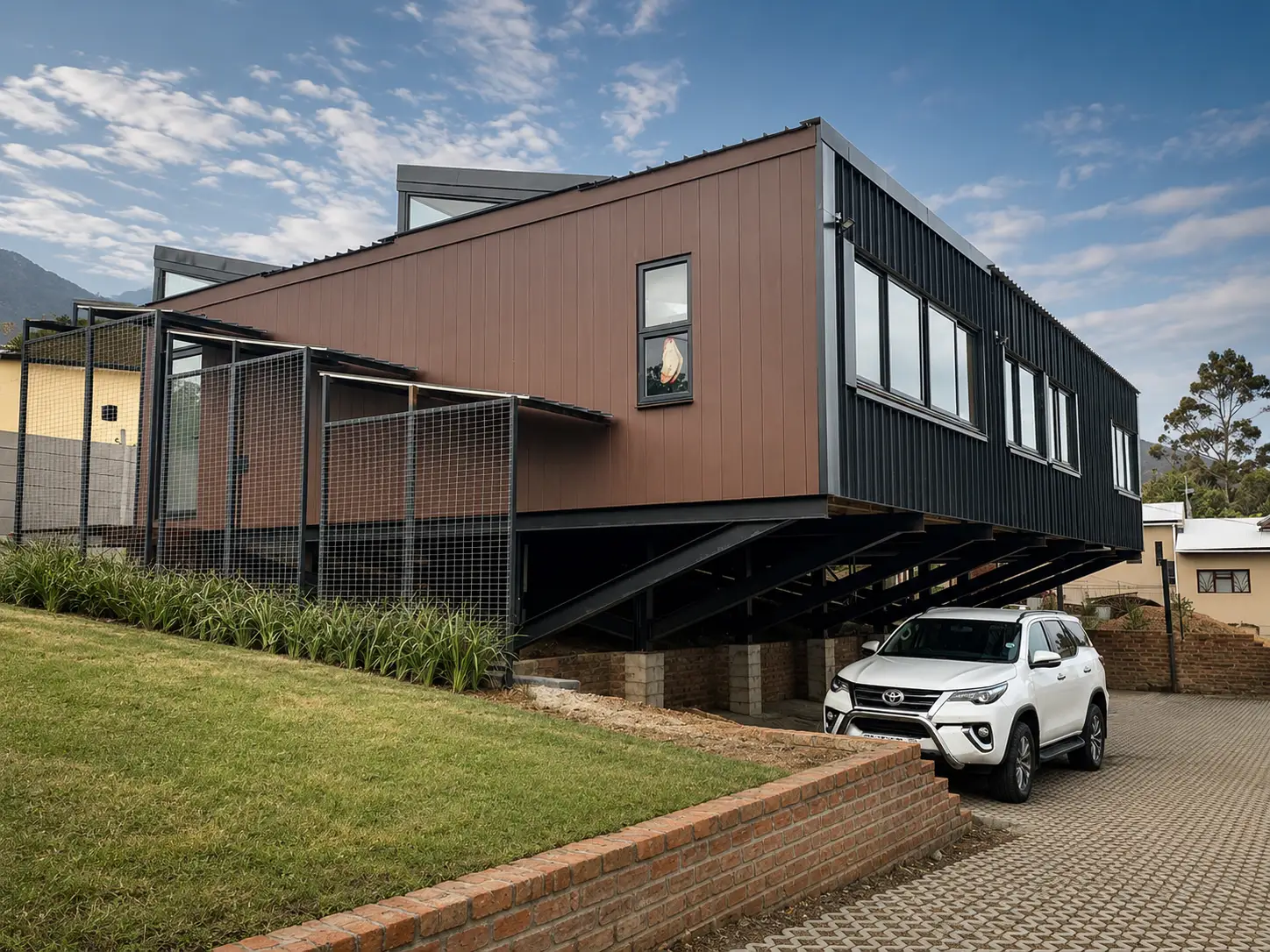
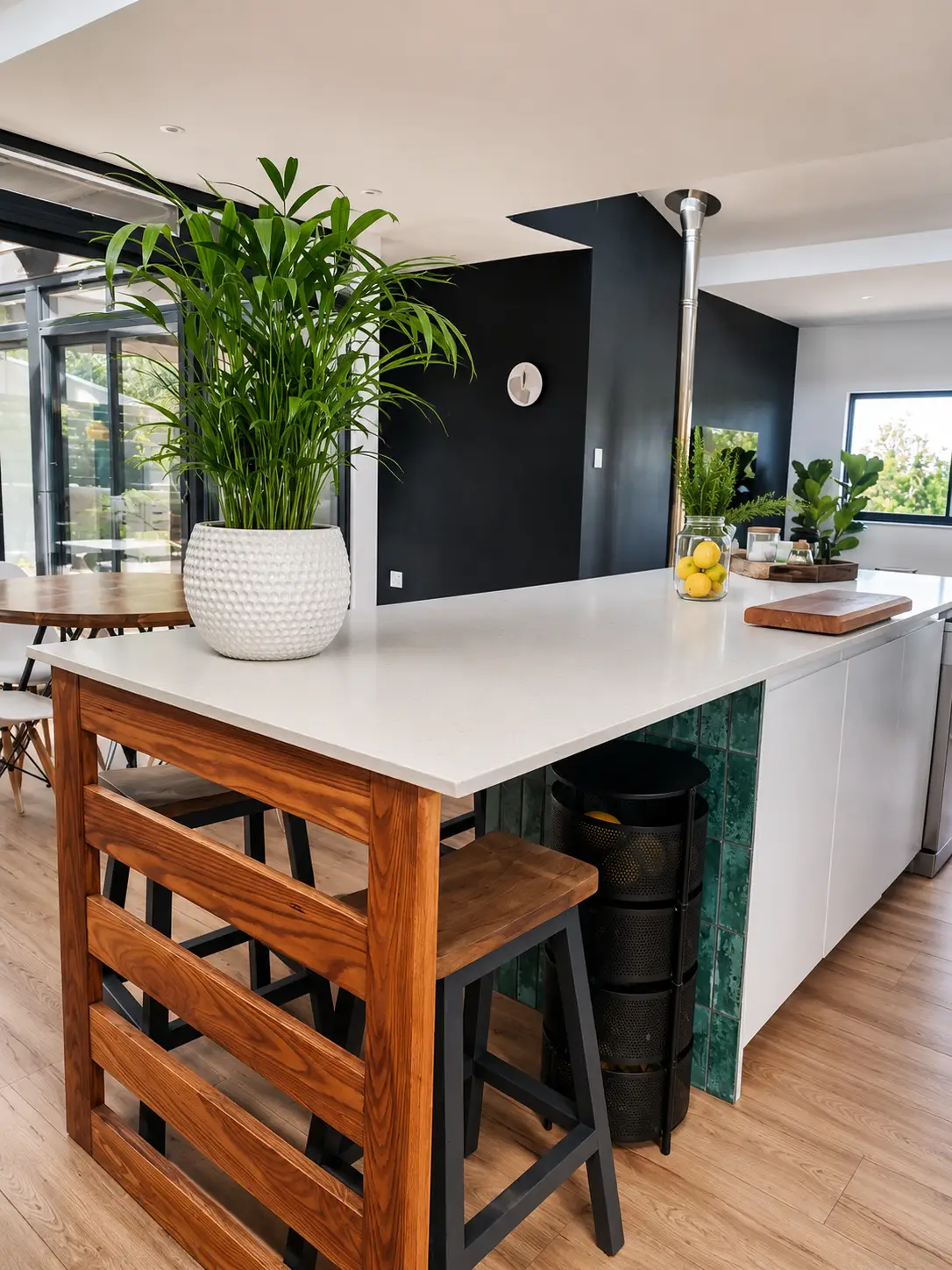
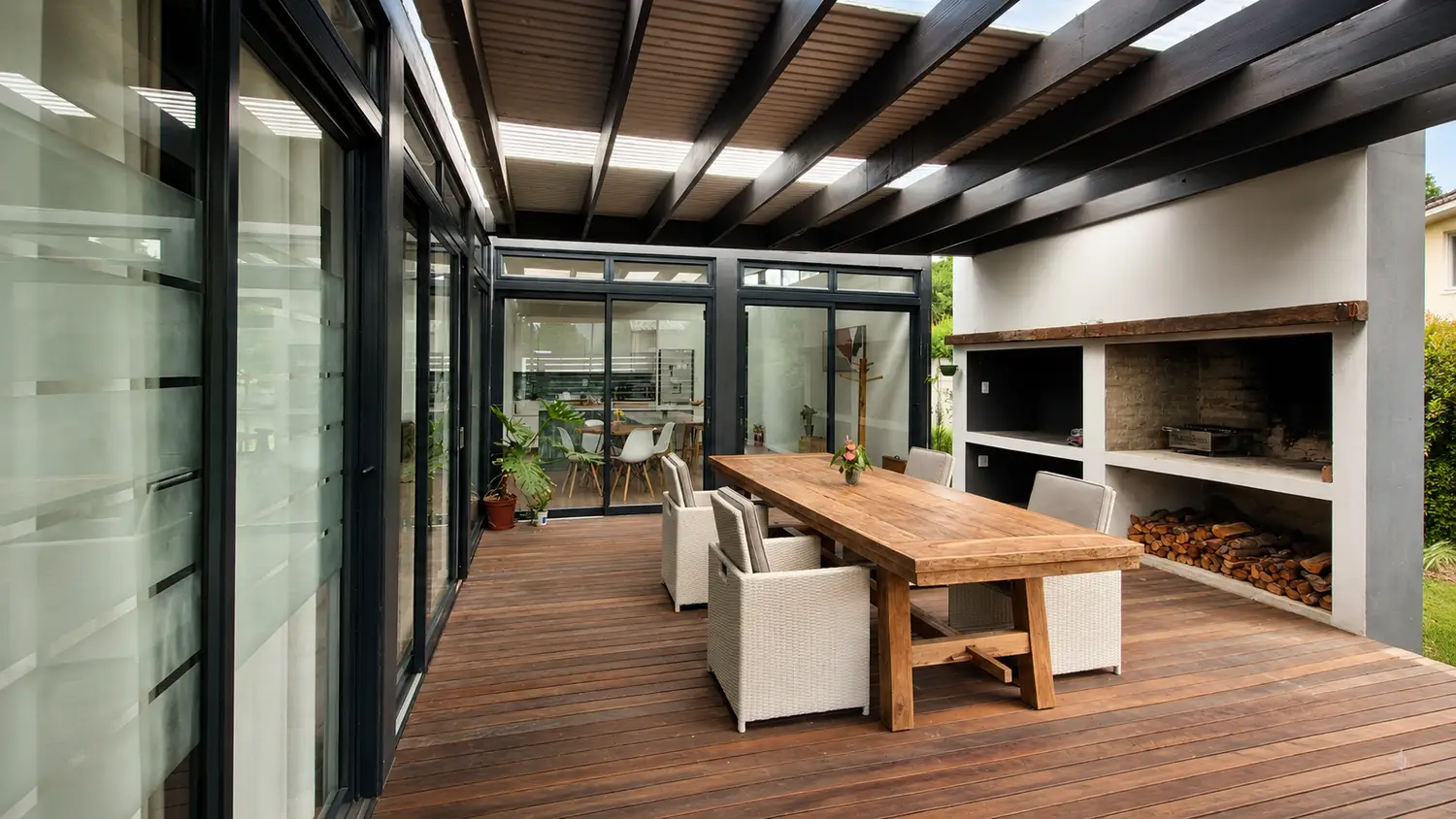
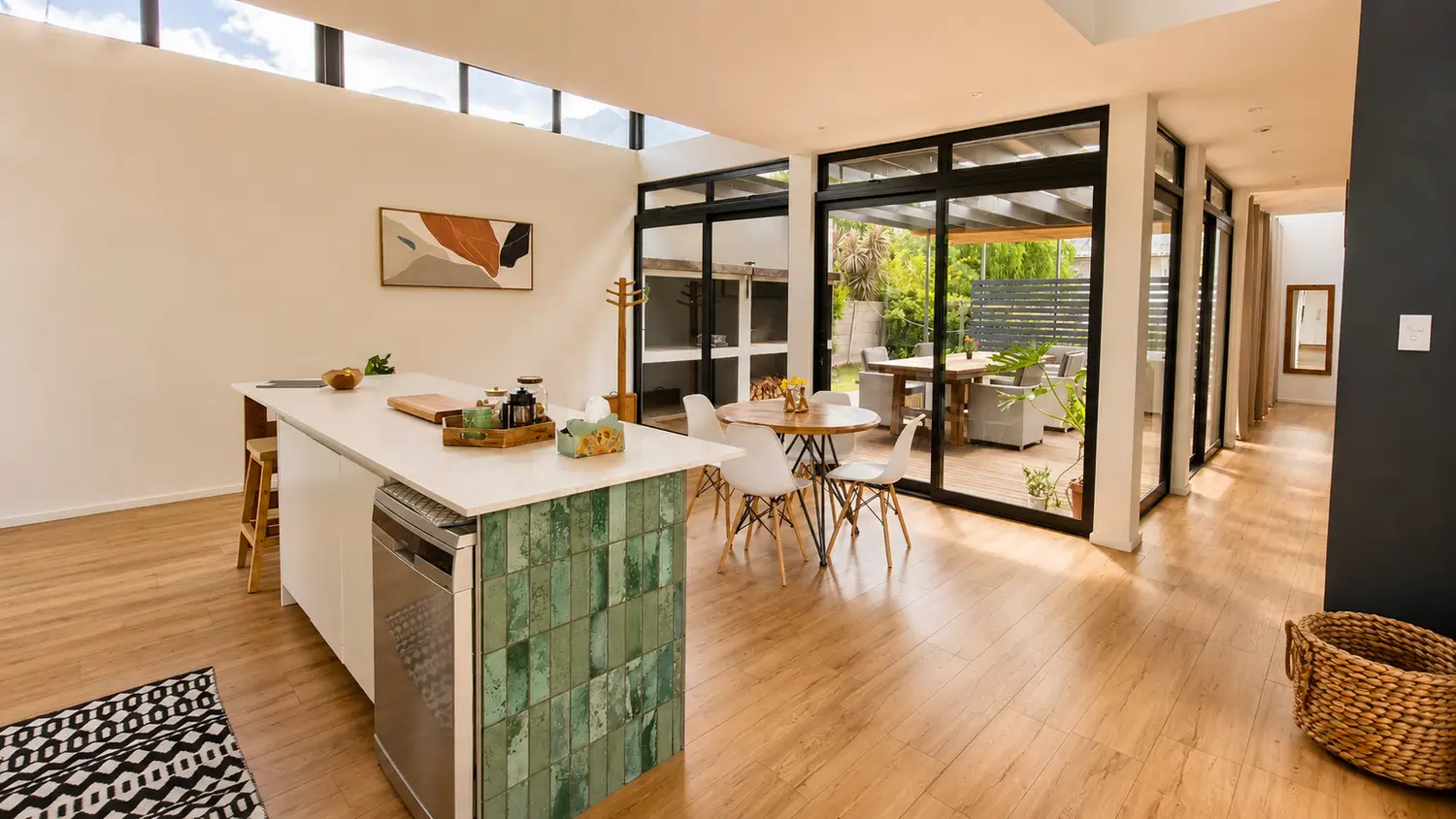
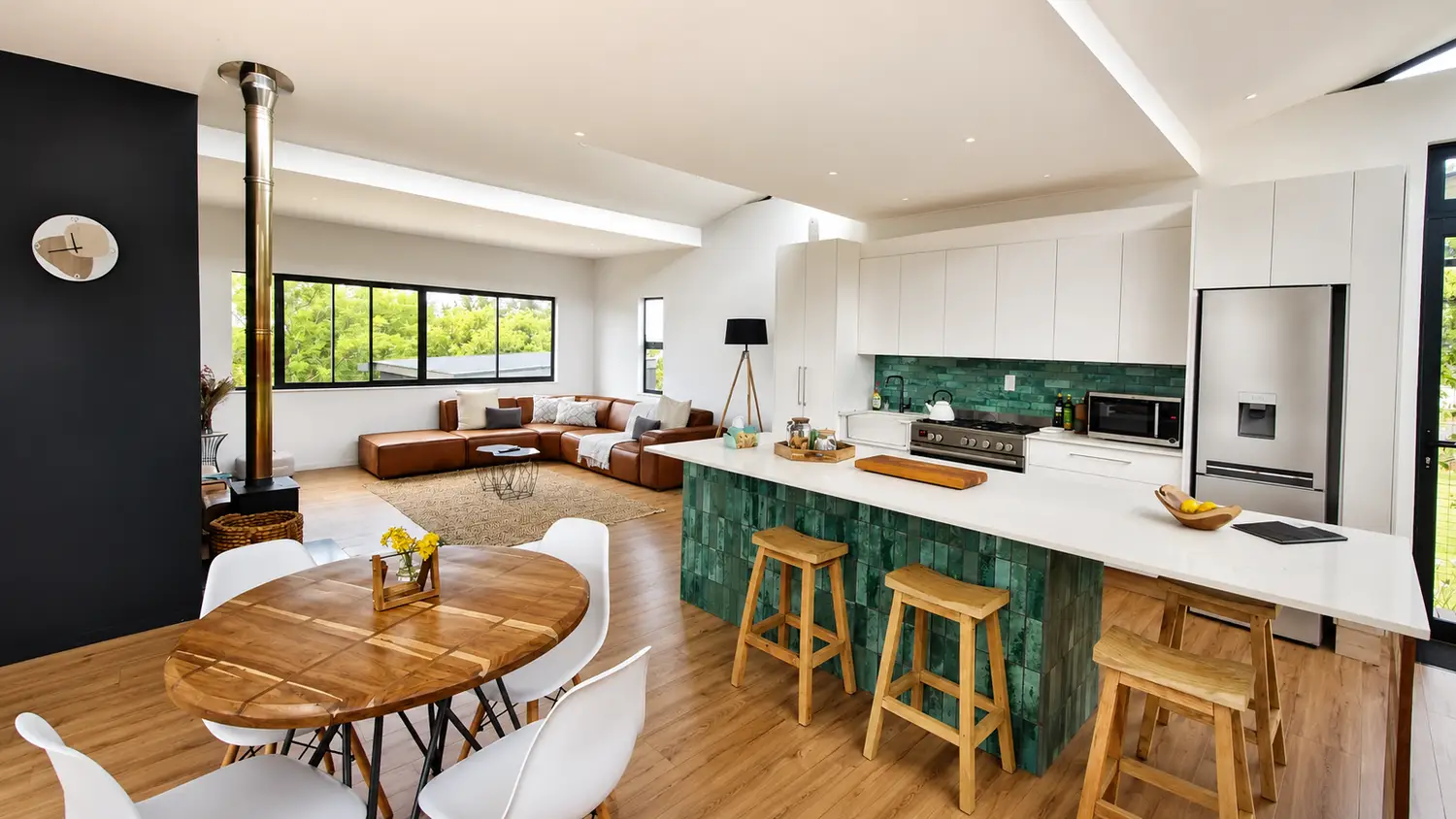
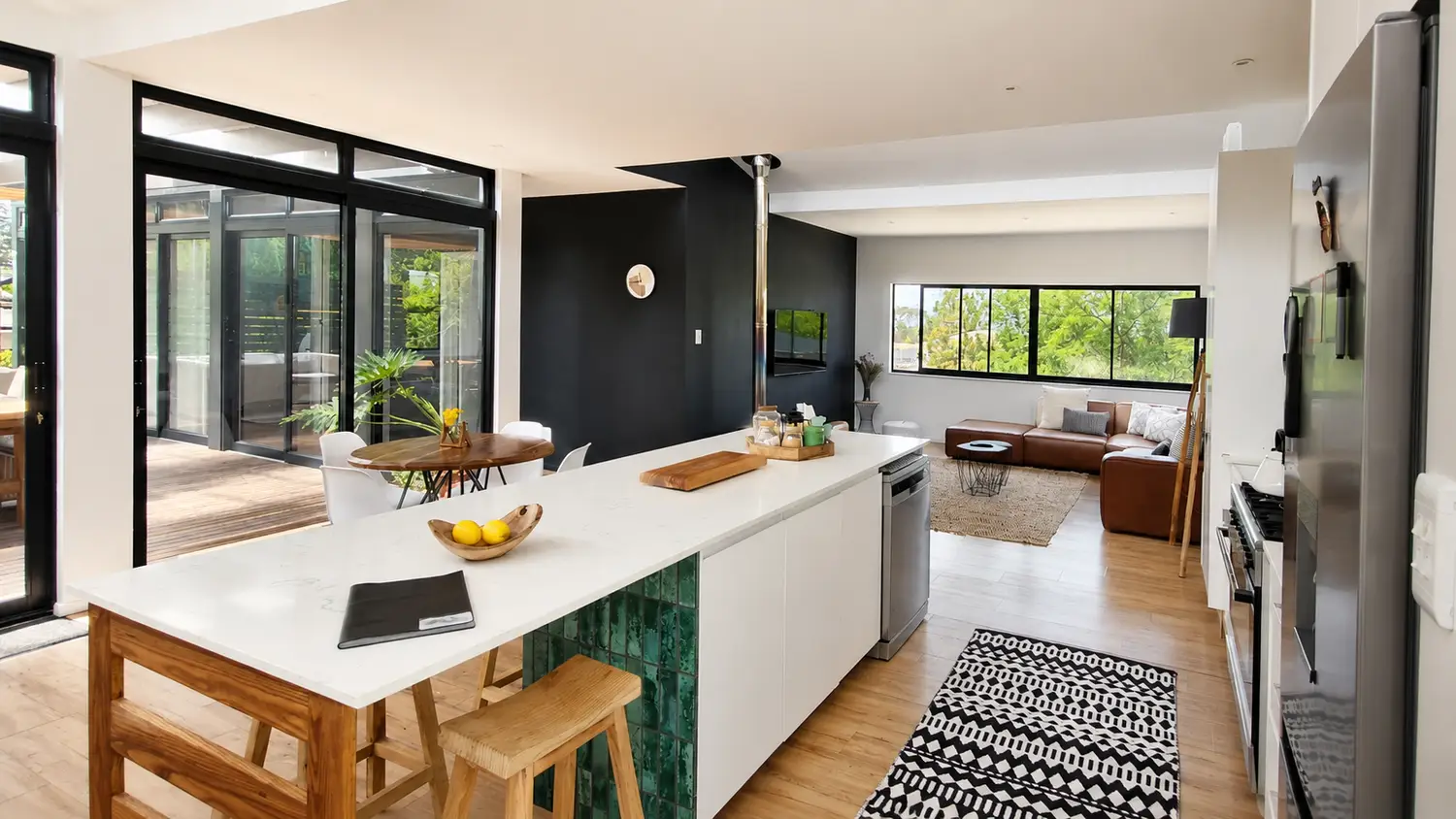
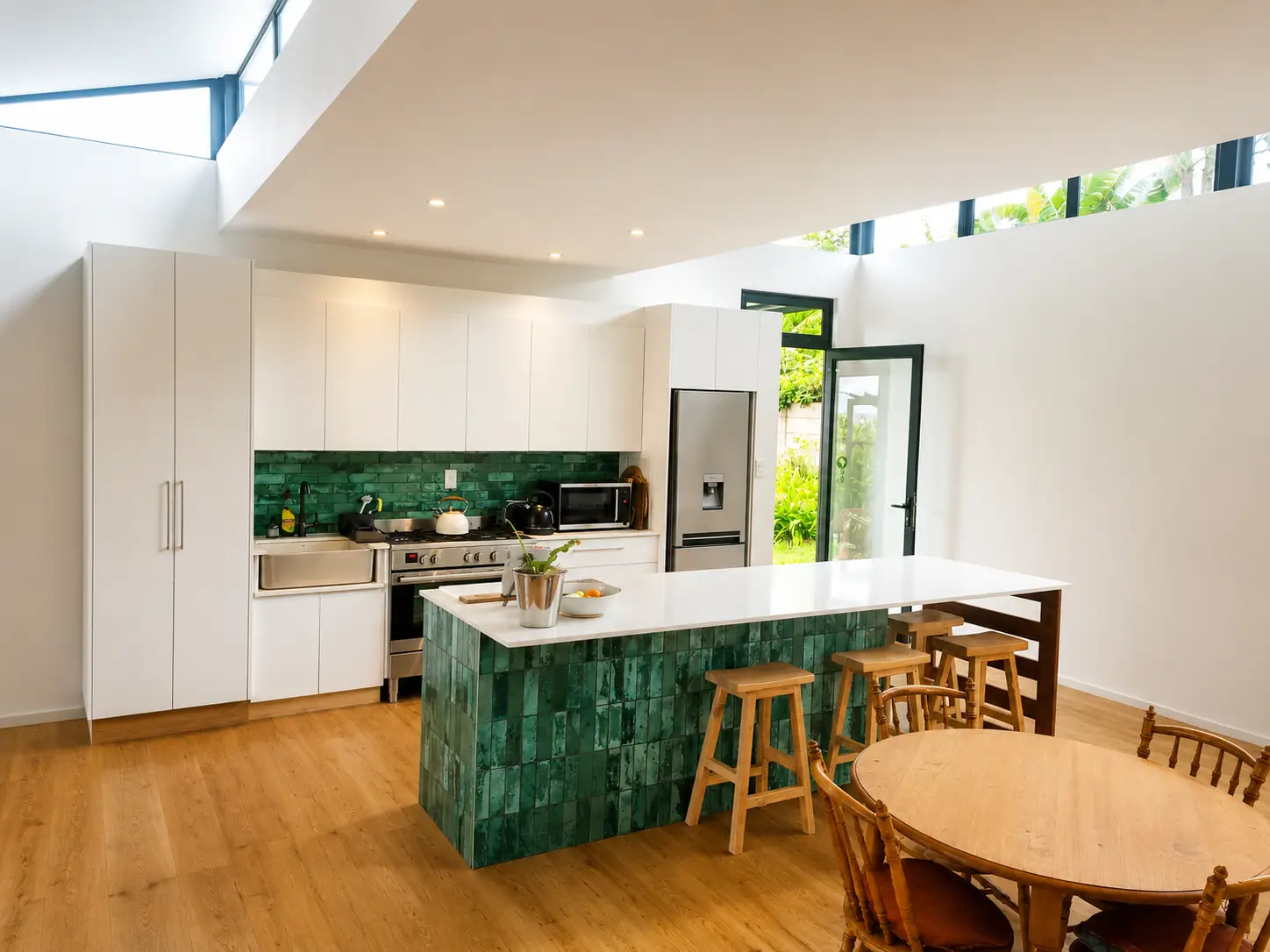
Set on a sloping site in the Cape Winelands, this house is conceived as a sequence of generous, light-filled rooms held together by a restrained material palette. The architecture is deliberately calm: strong horizontal lines, framed glazing, and sheltered outdoor areas that turn the mountain outlook into part of daily life.
Inside, the project moves between open-plan entertaining spaces and quieter private rooms. Warm timber, stone, soft lighting and carefully detailed cabinetry create a residential language that feels both contemporary and grounded — a home that is elegant without becoming showy, and highly livable throughout the day.
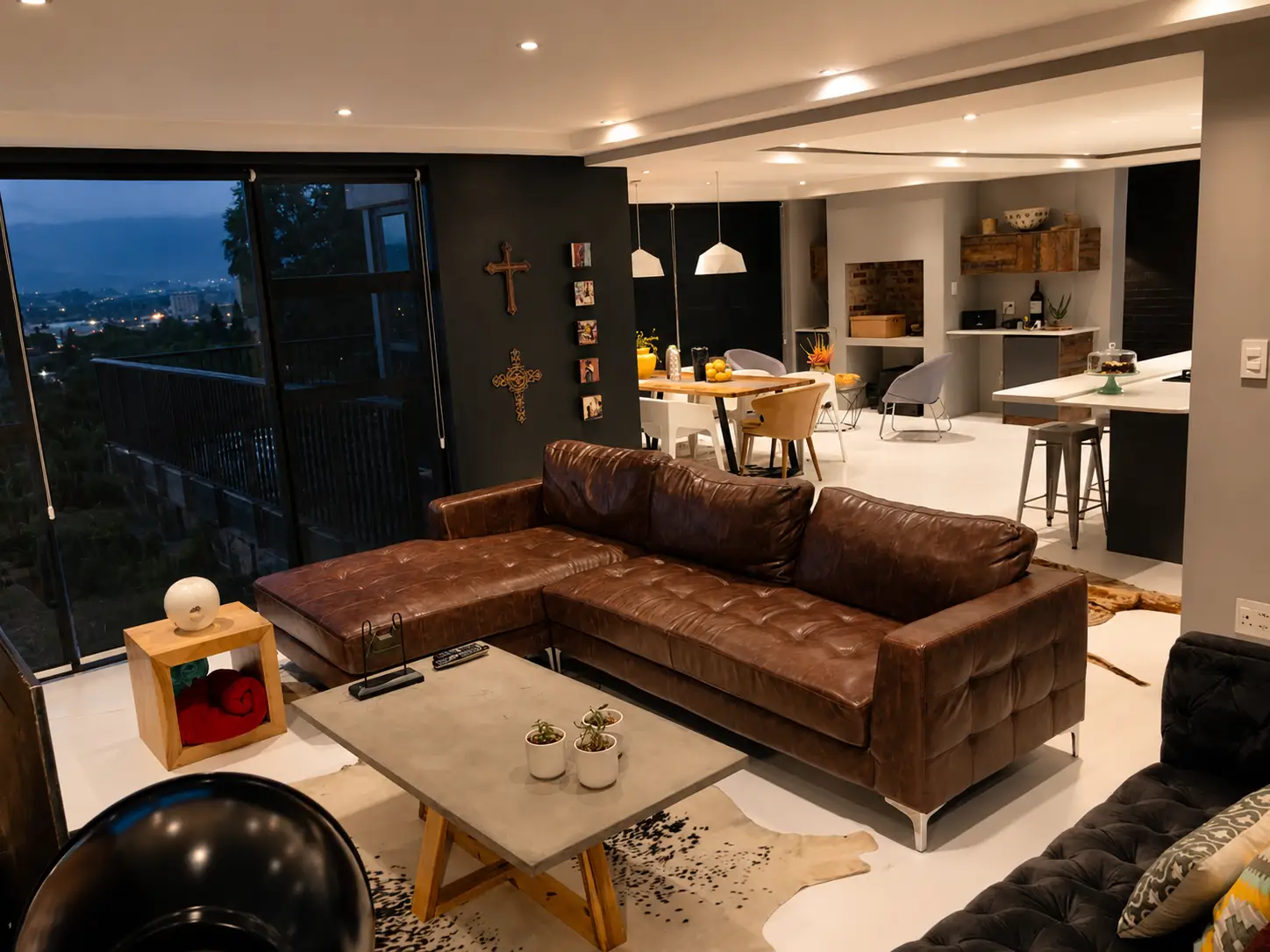
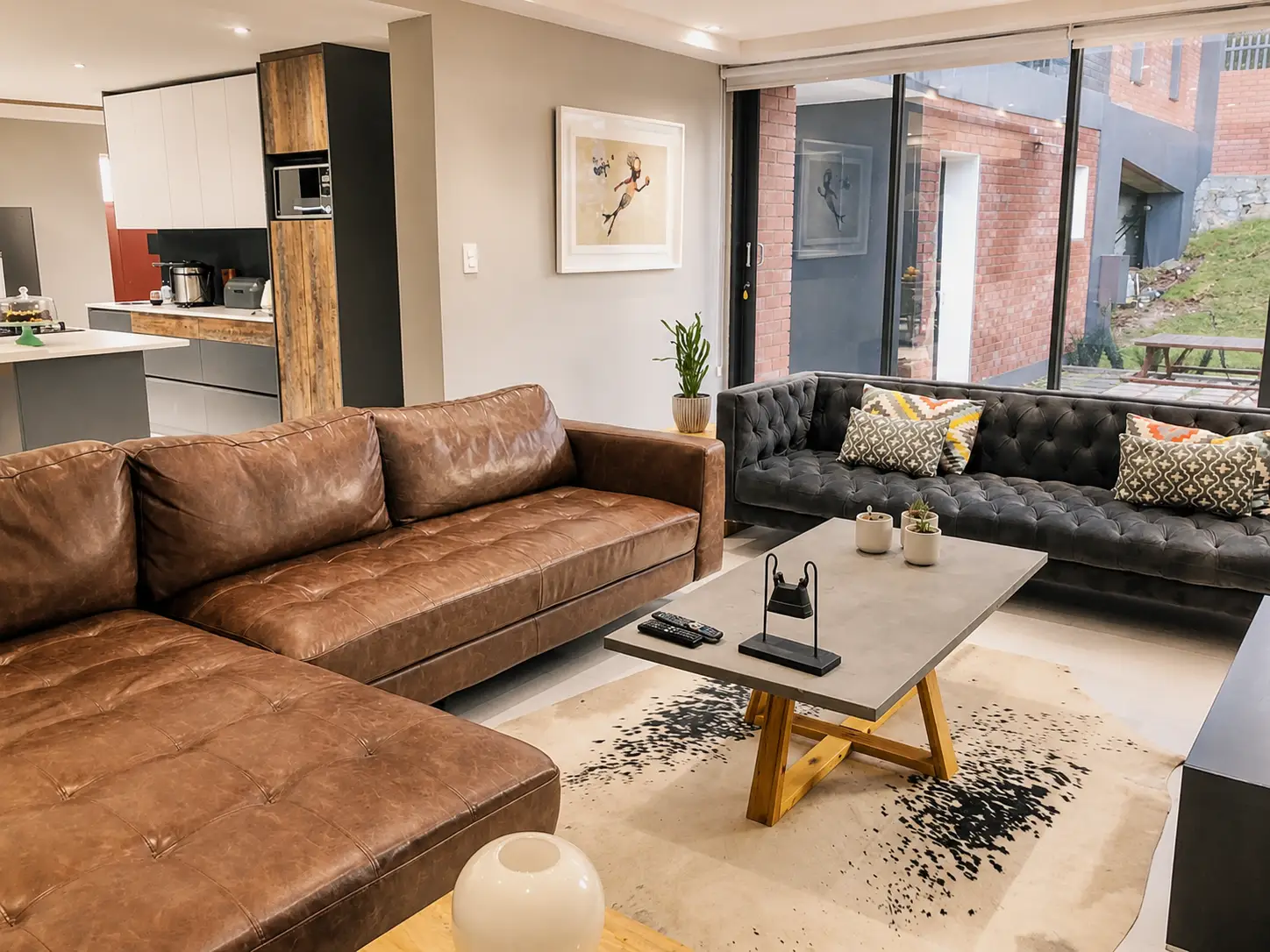
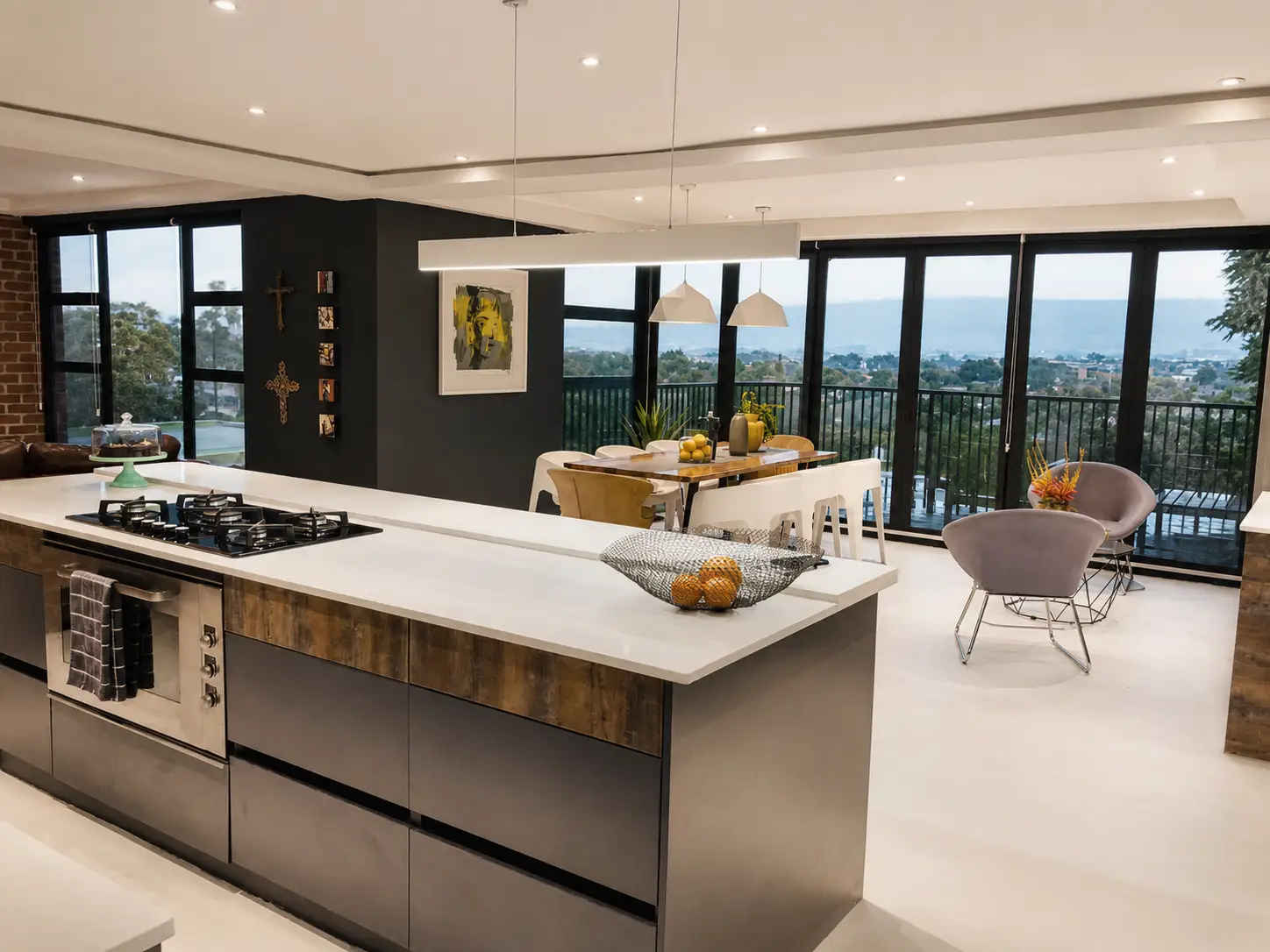
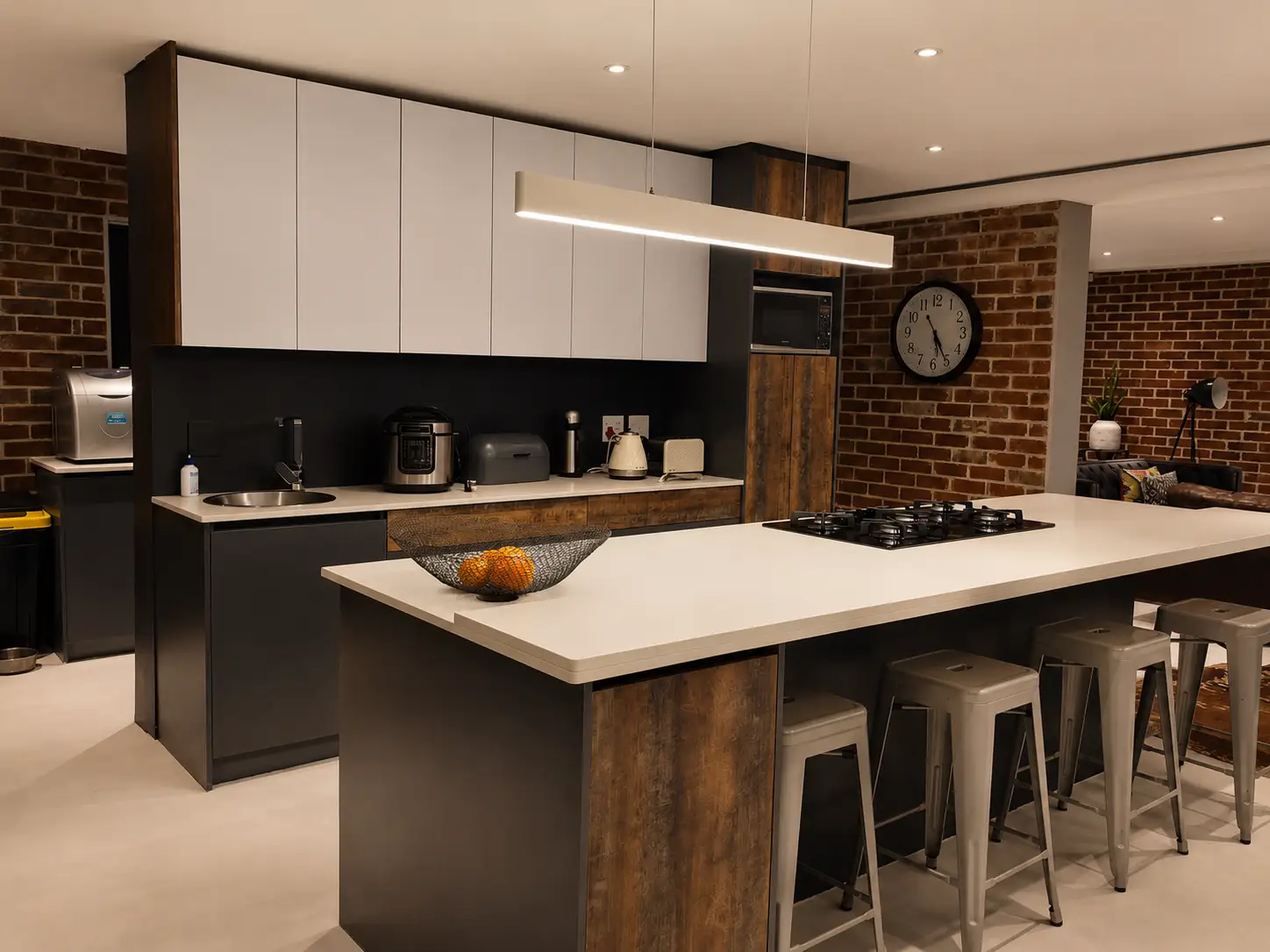
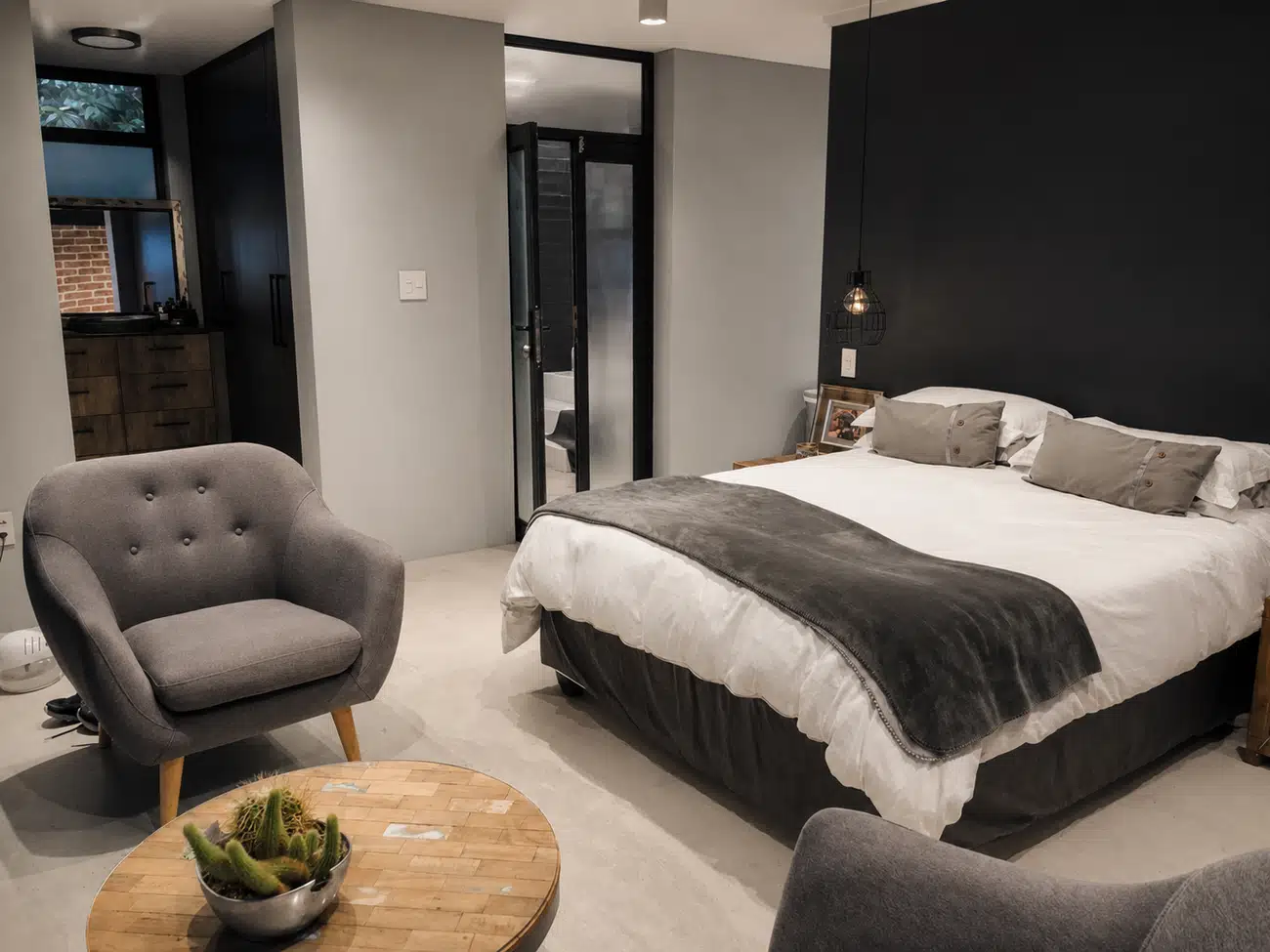
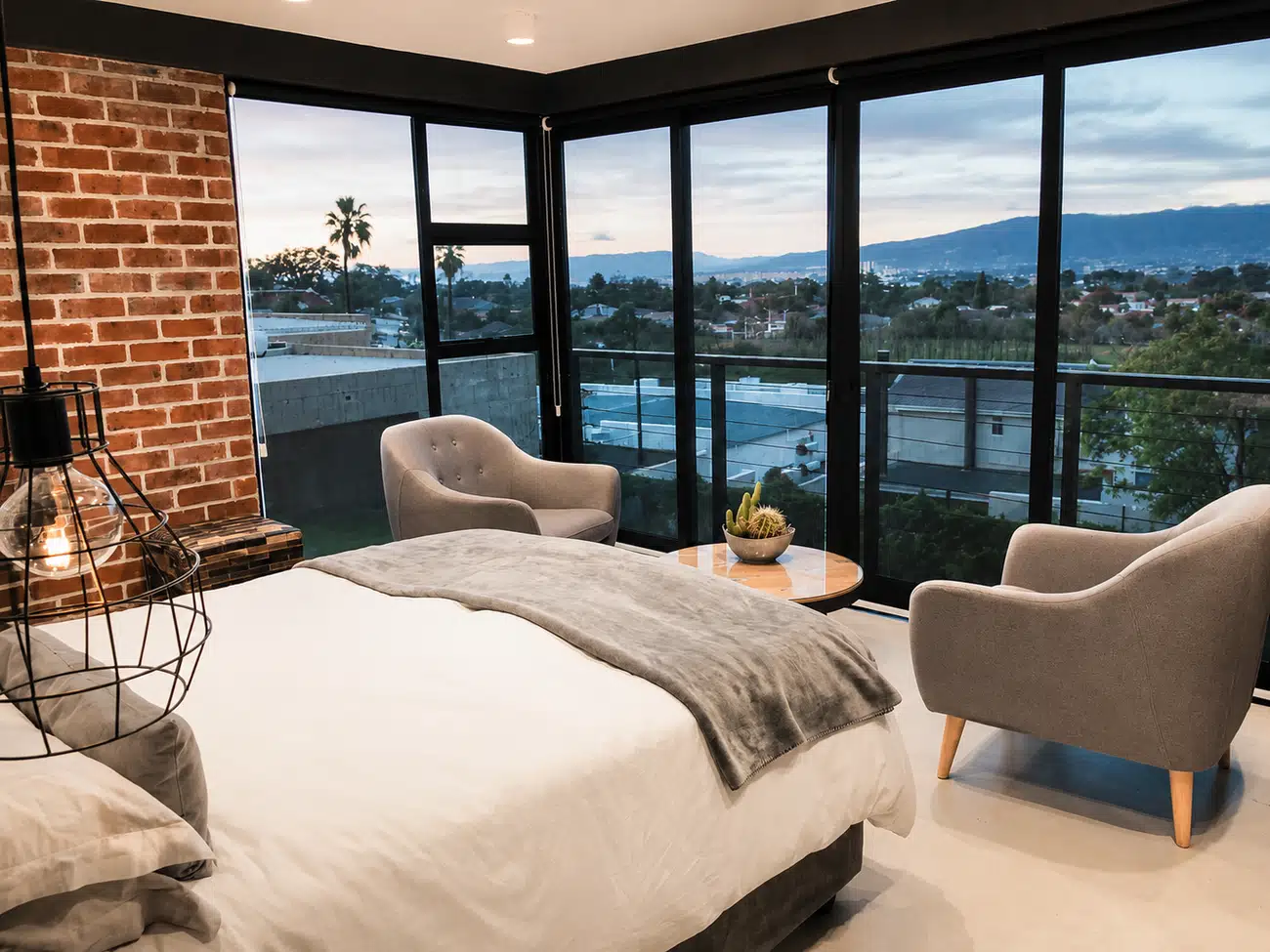
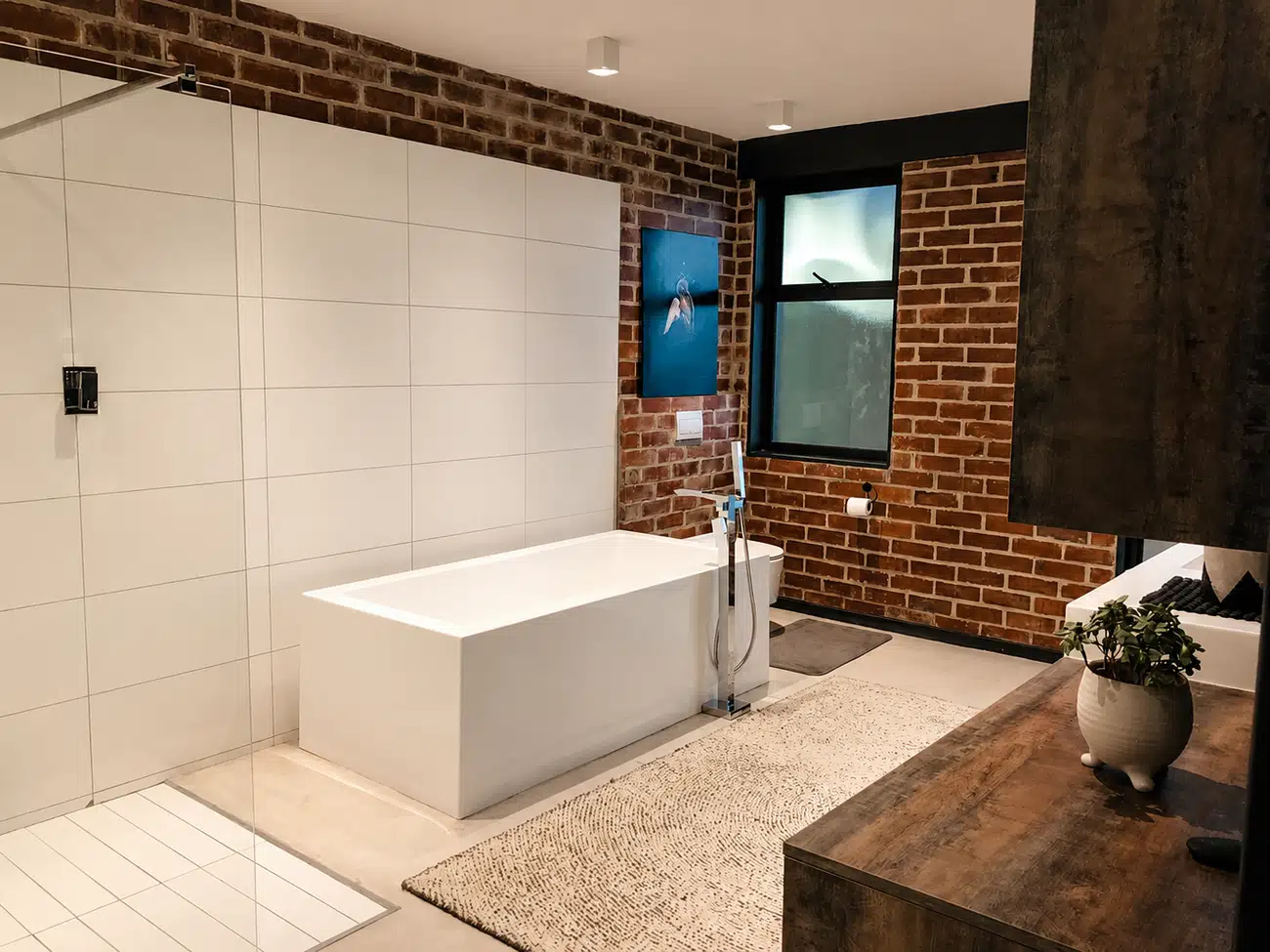
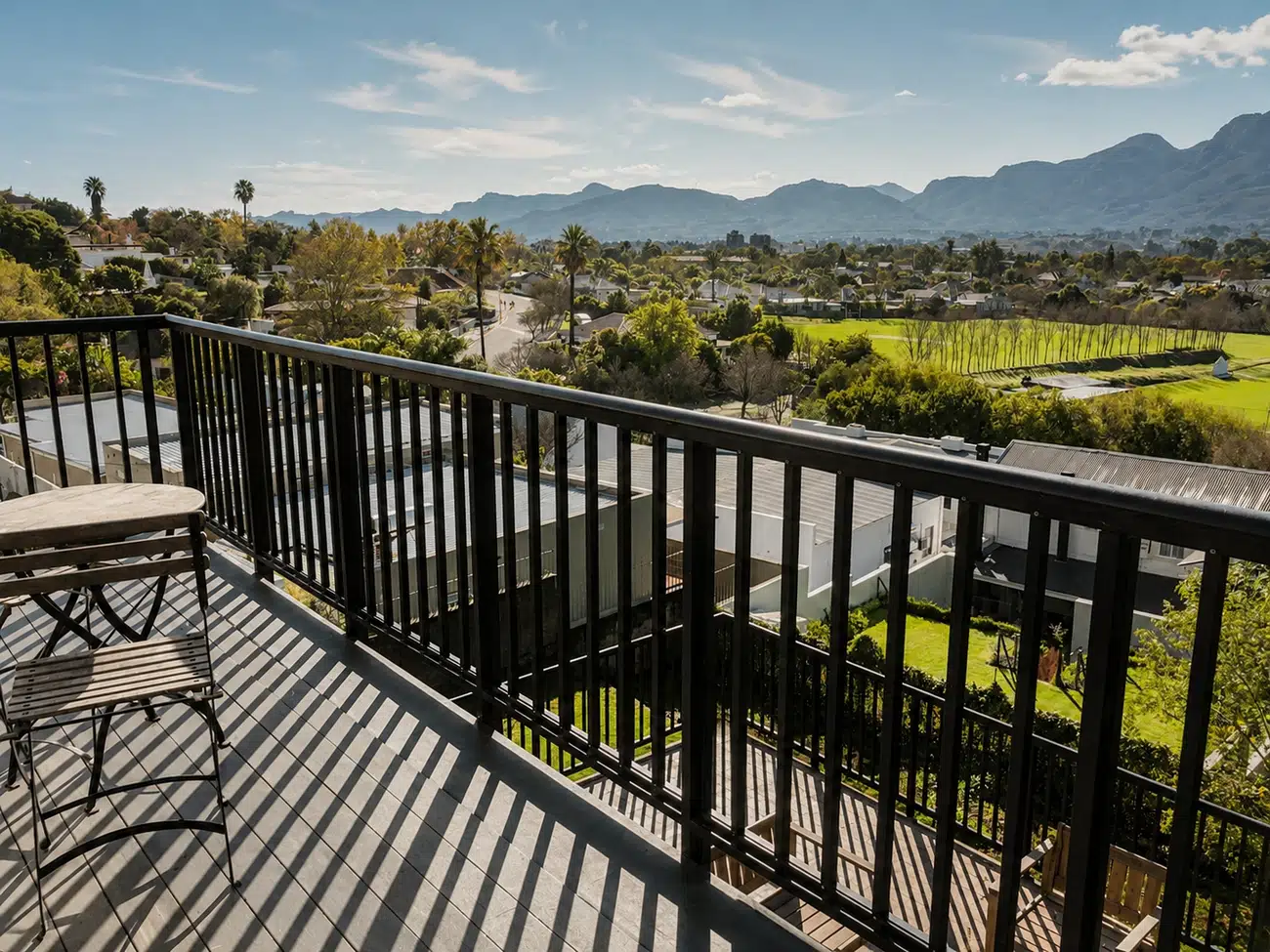
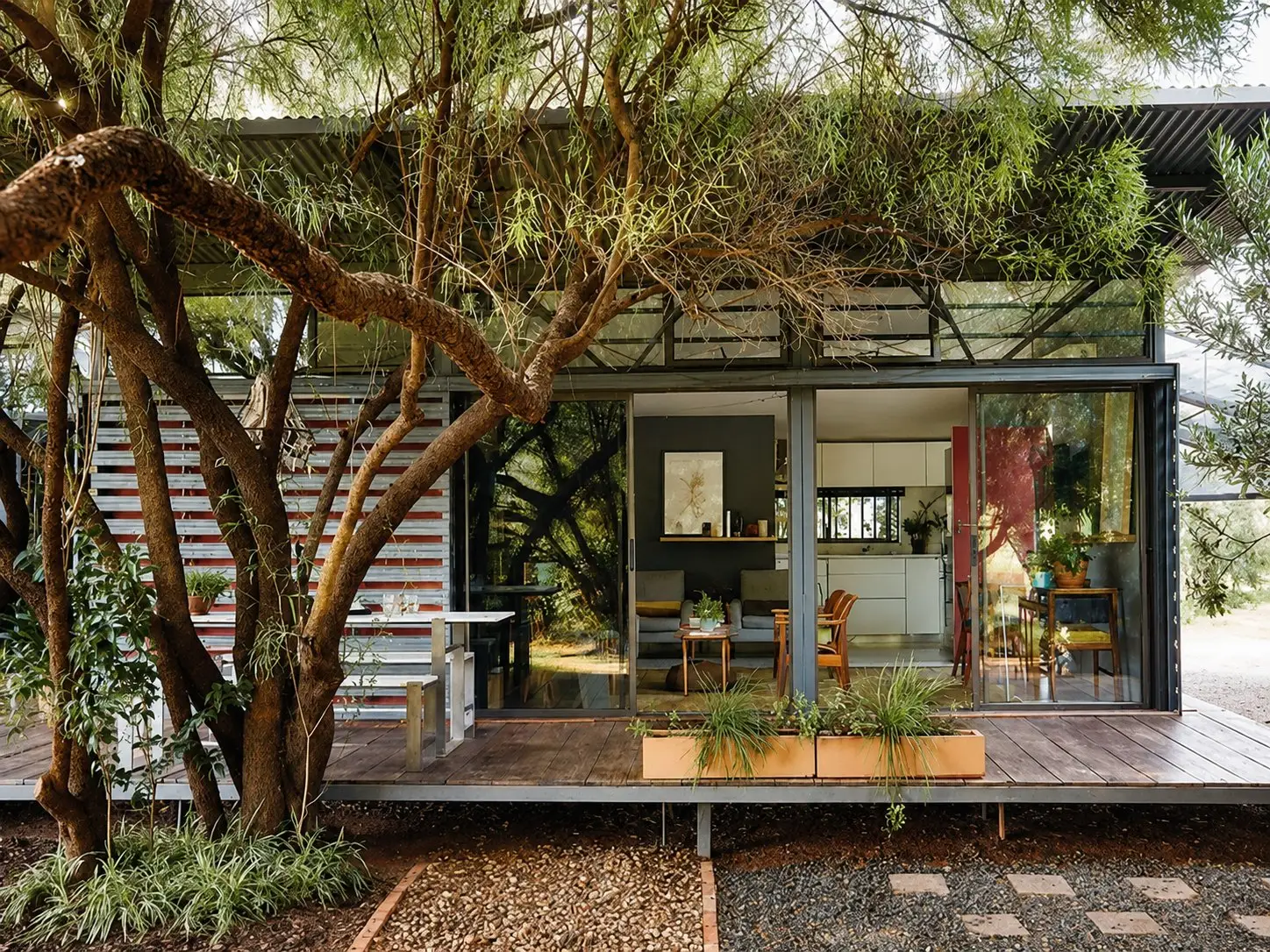
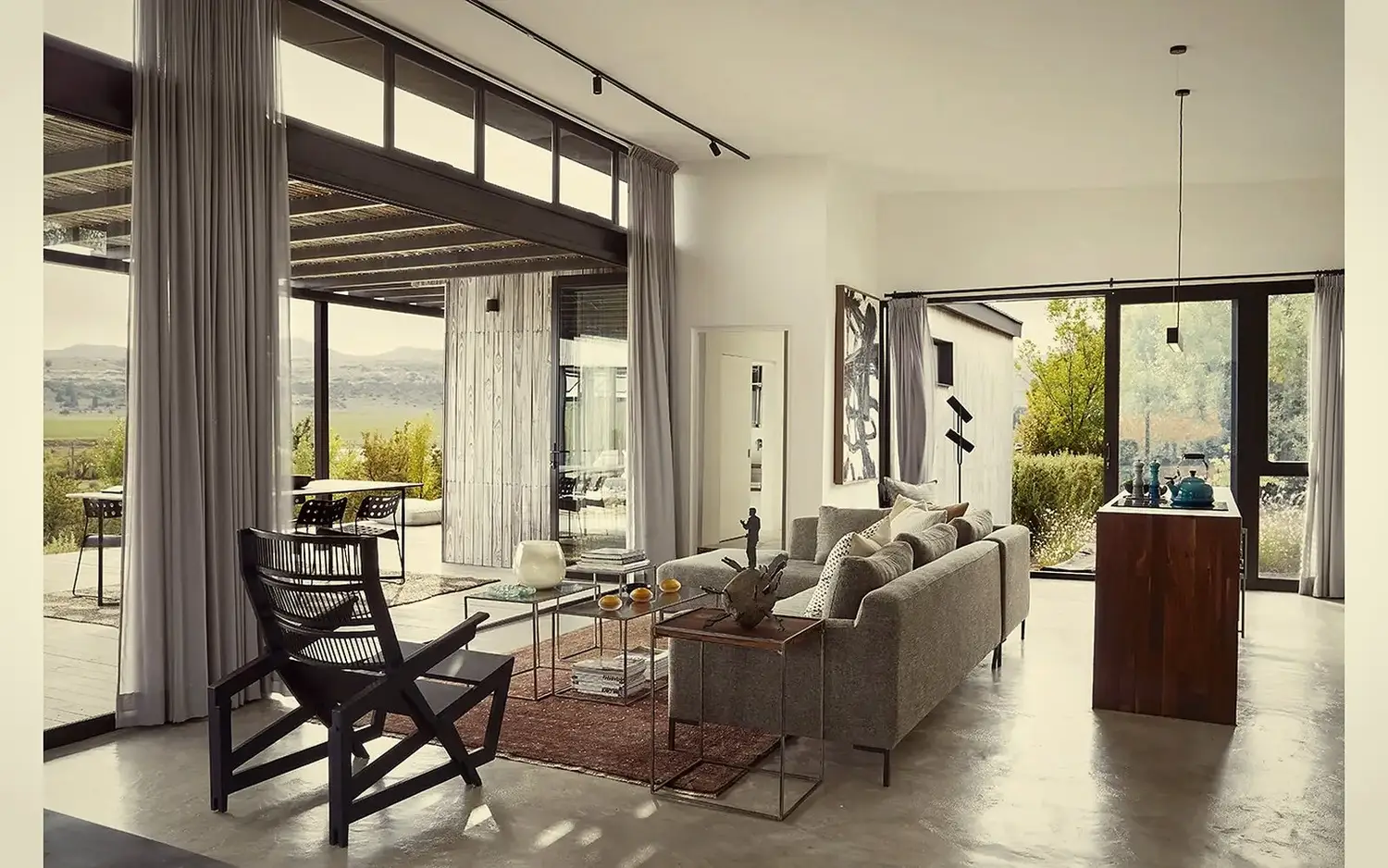
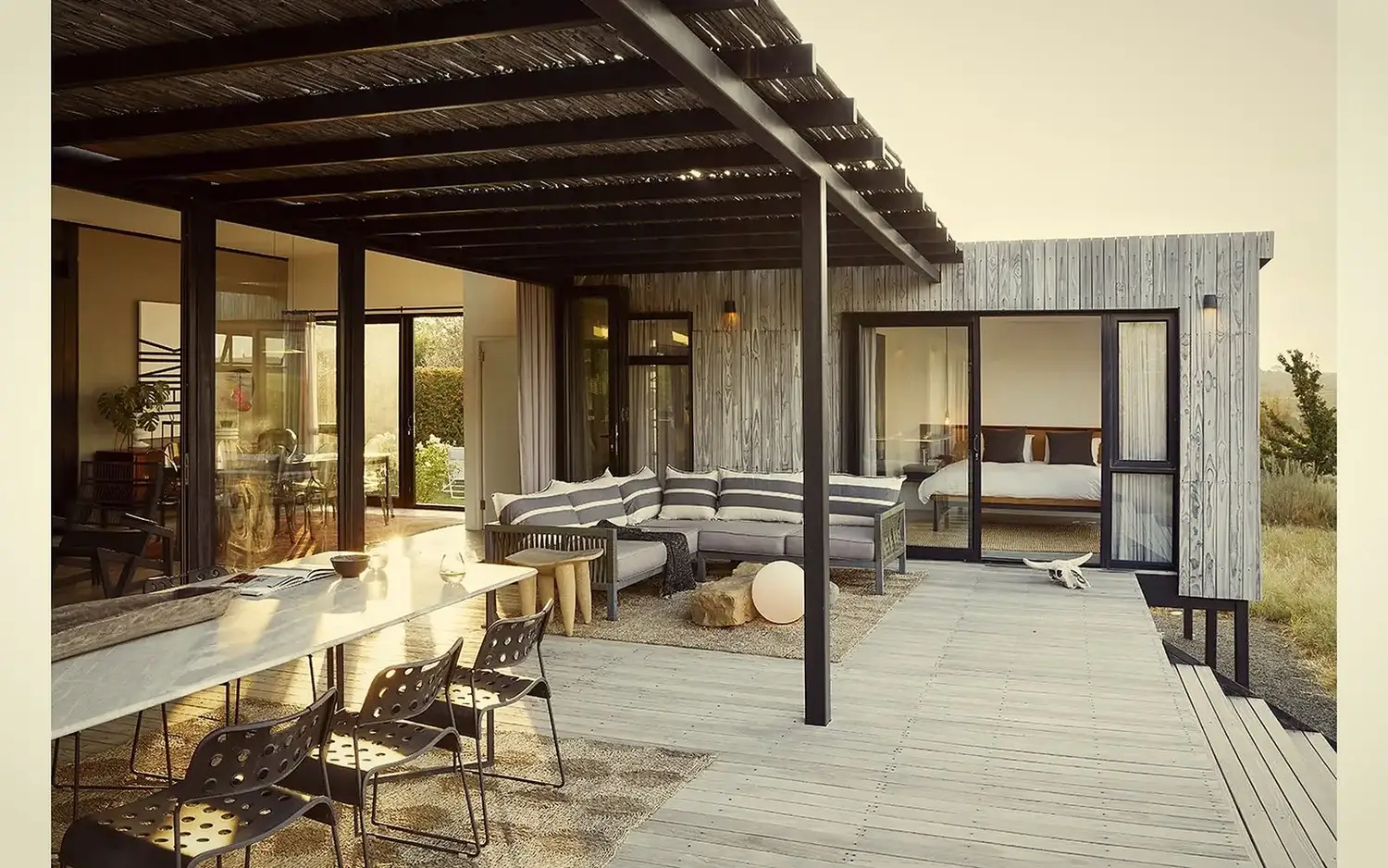
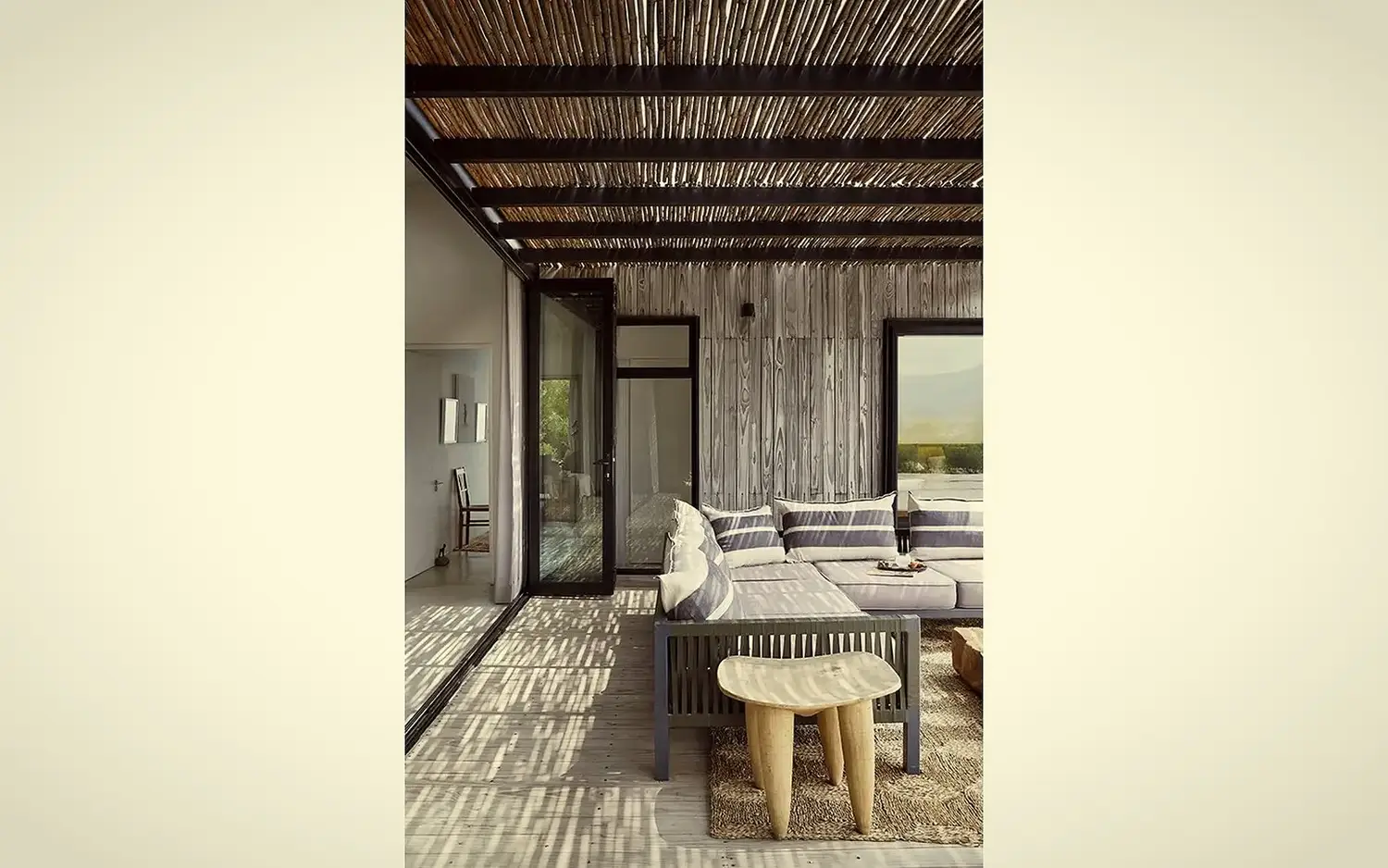
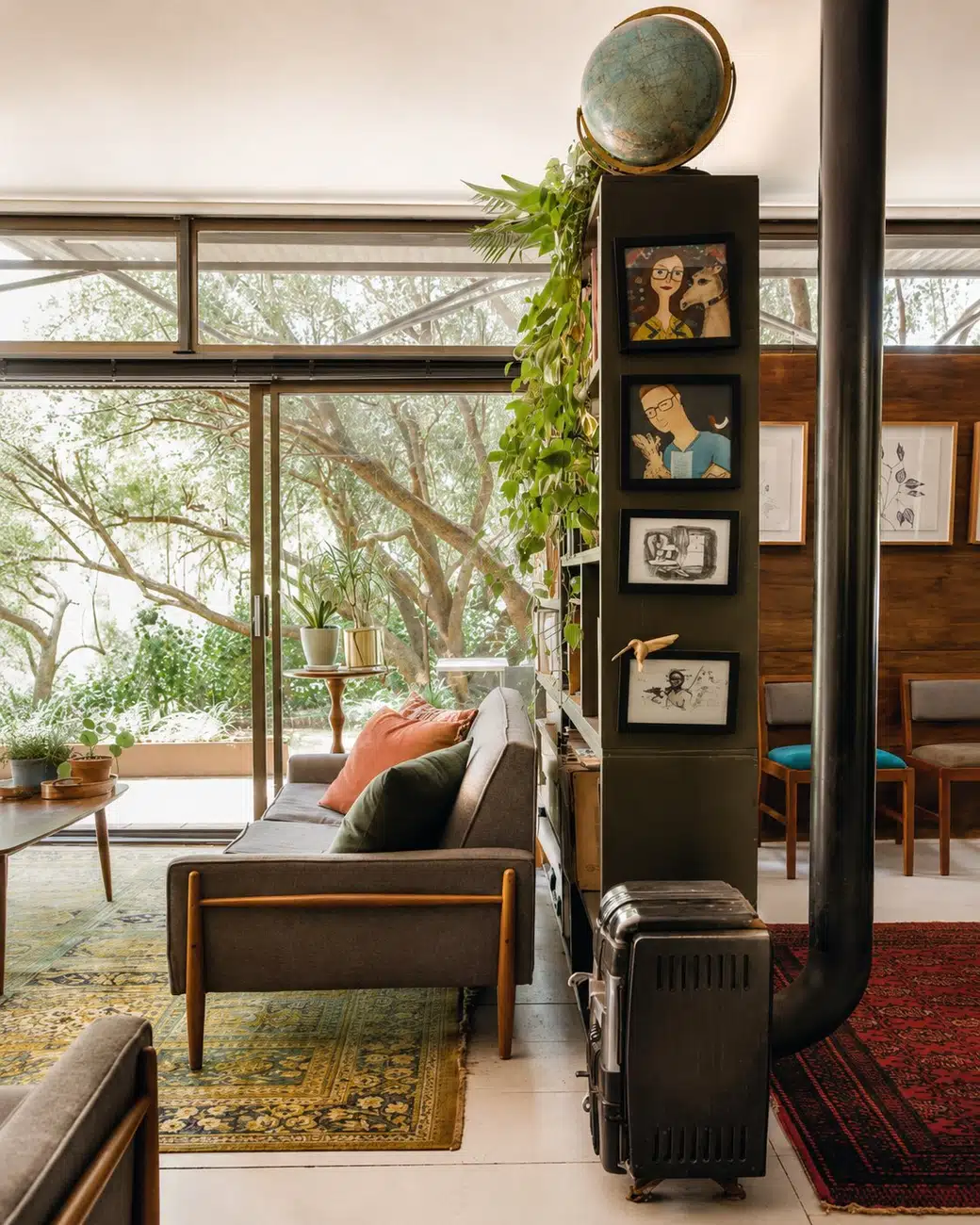
This Bloemfontein tiny home is less about smallness than precision. The project works with a compact footprint, shaded edges and a close relationship to the garden, allowing the house to feel generous through light, threshold and atmosphere rather than excess floor area.
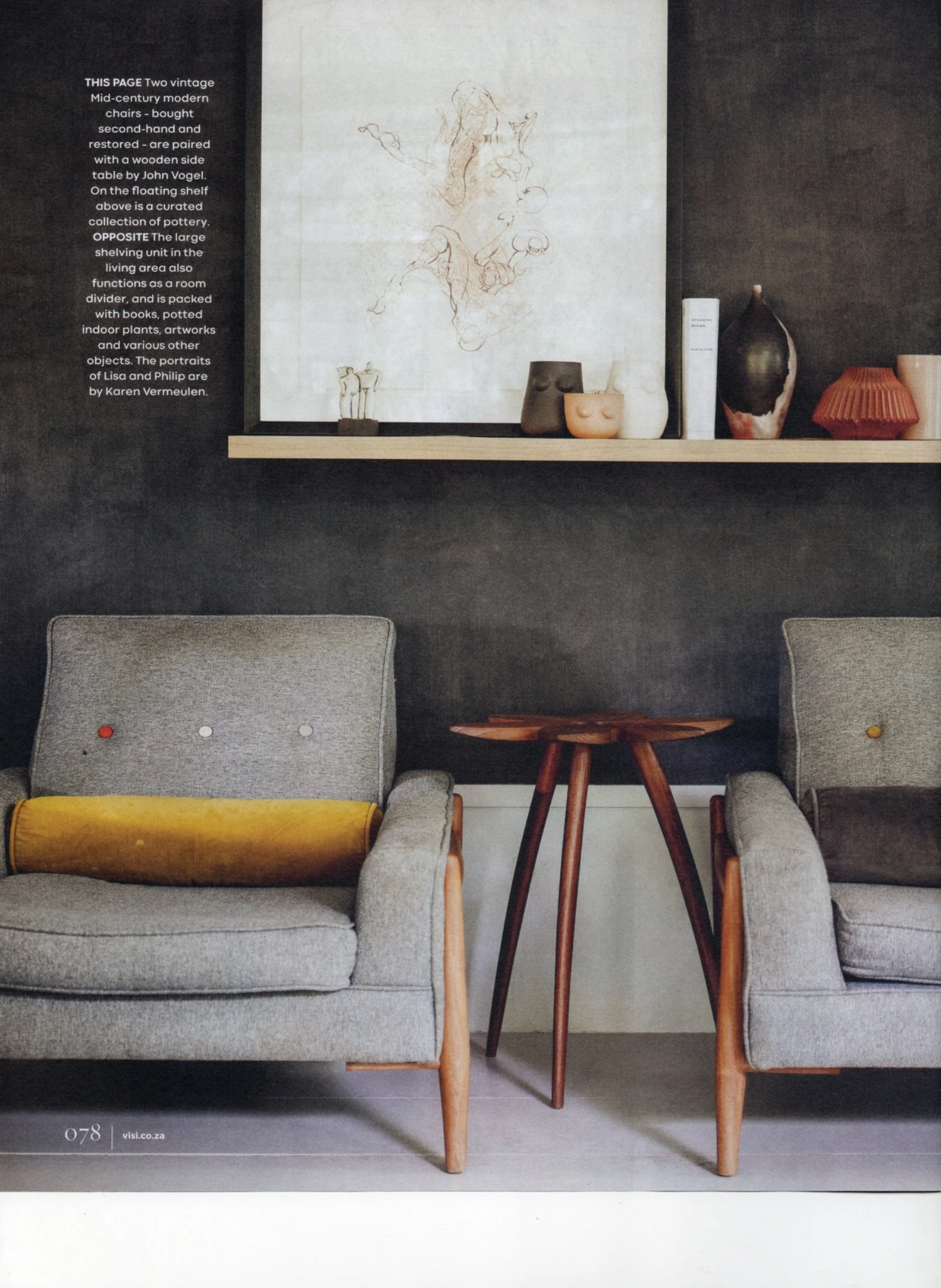
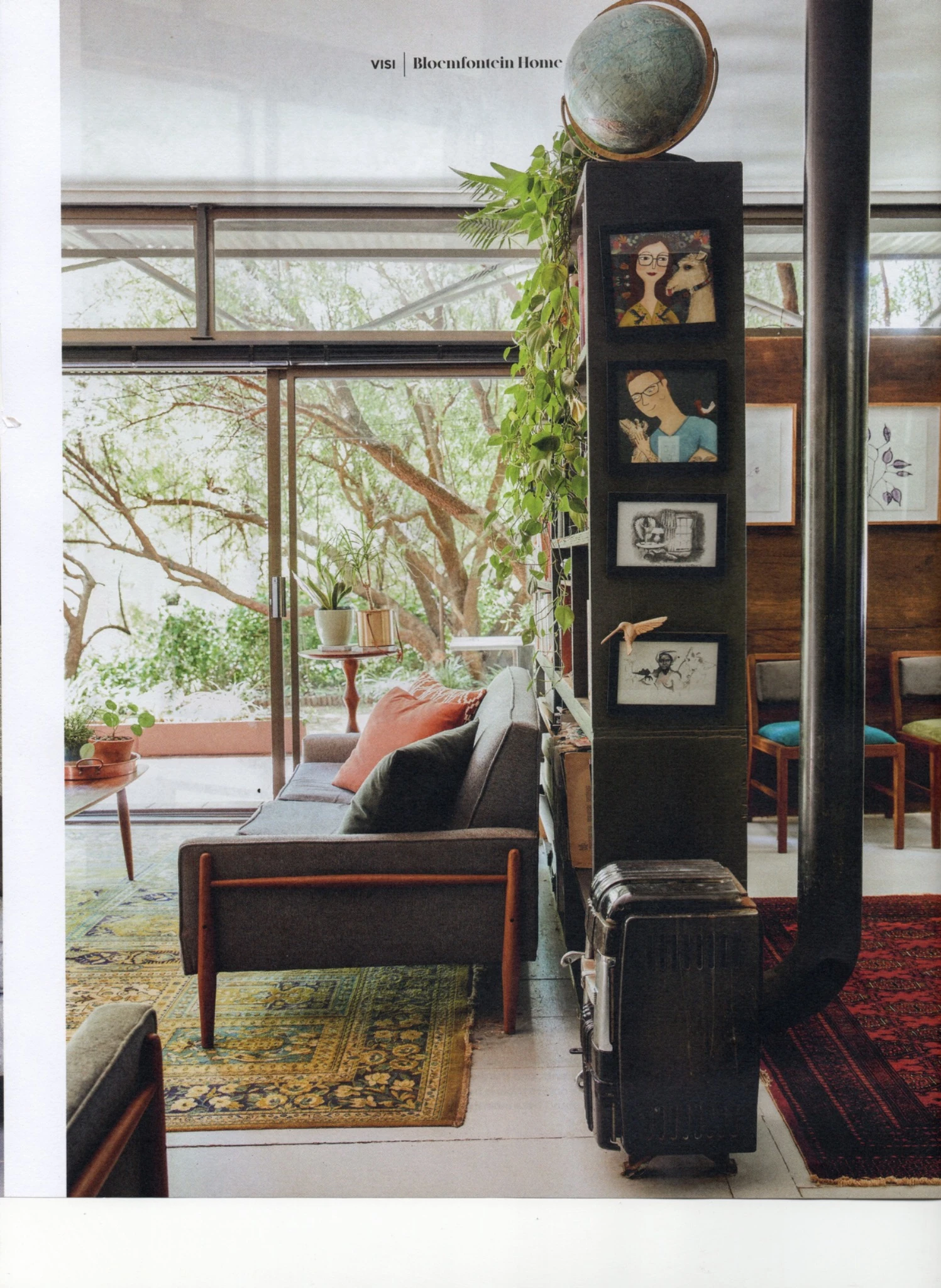
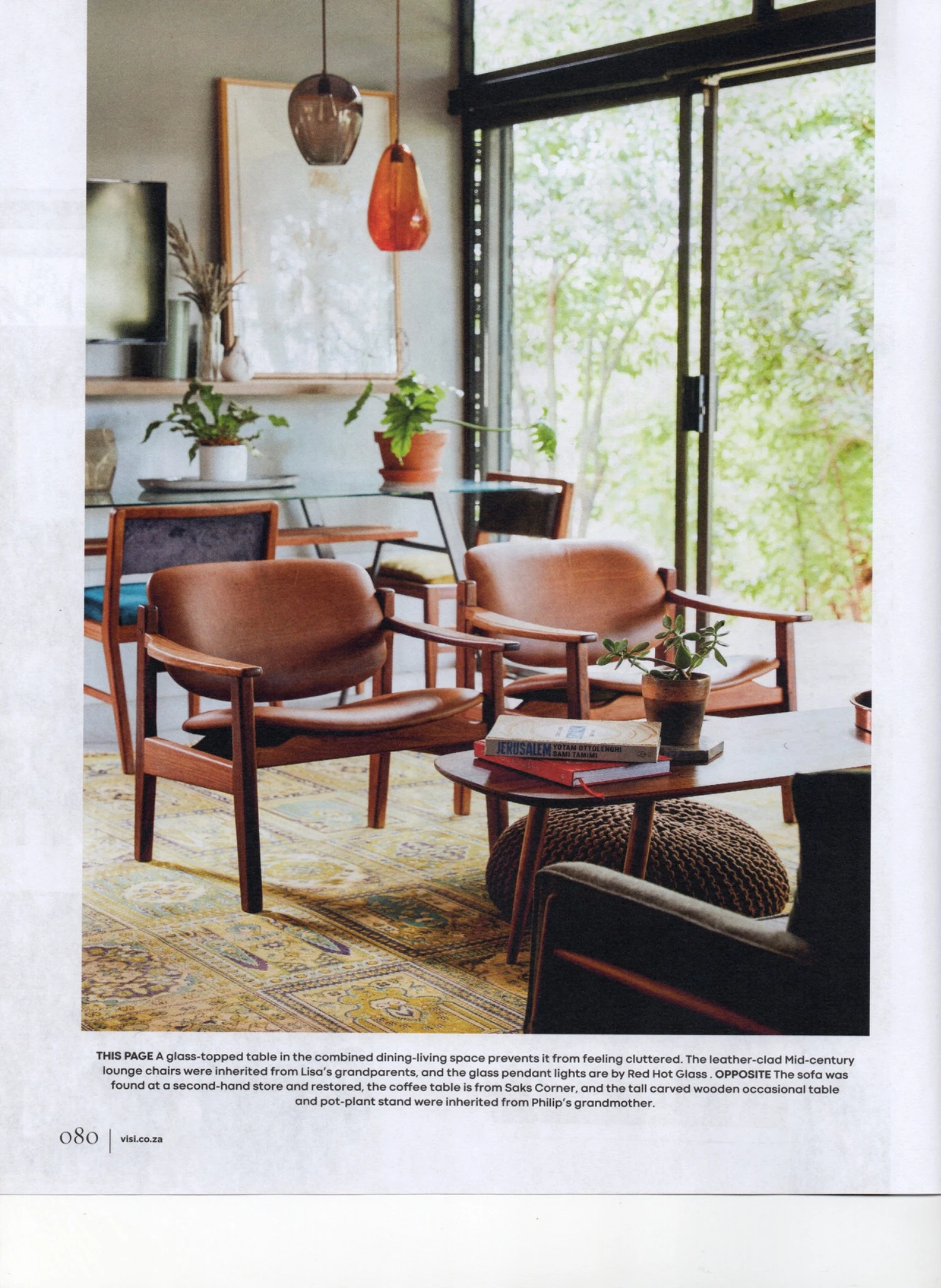
The interiors are intentionally collected: mid-century pieces, art, books, plants and personal objects give the rooms their life. Rather than treating decoration as an afterthought, the project makes space for memory, ritual and the informal patterns of daily living.
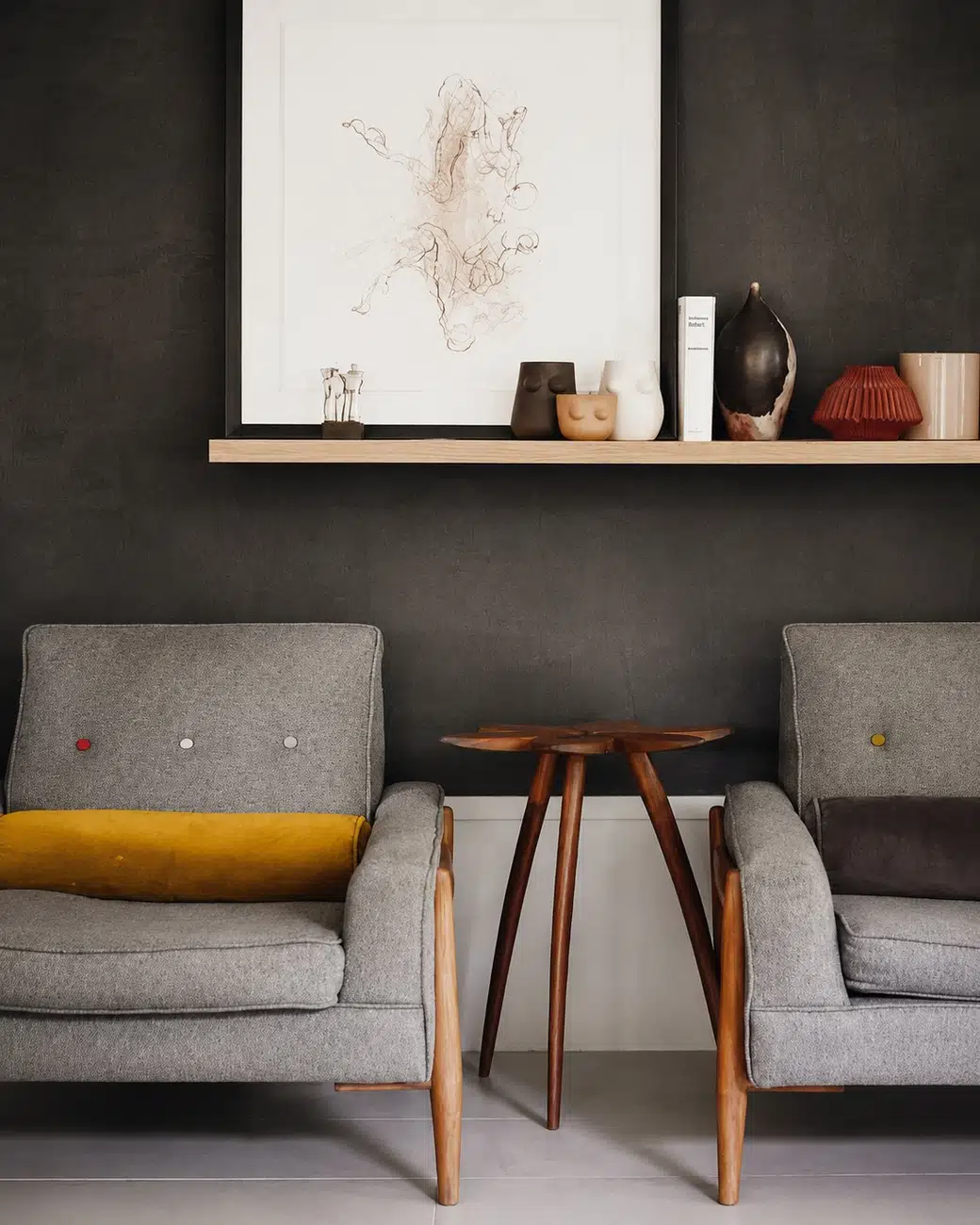
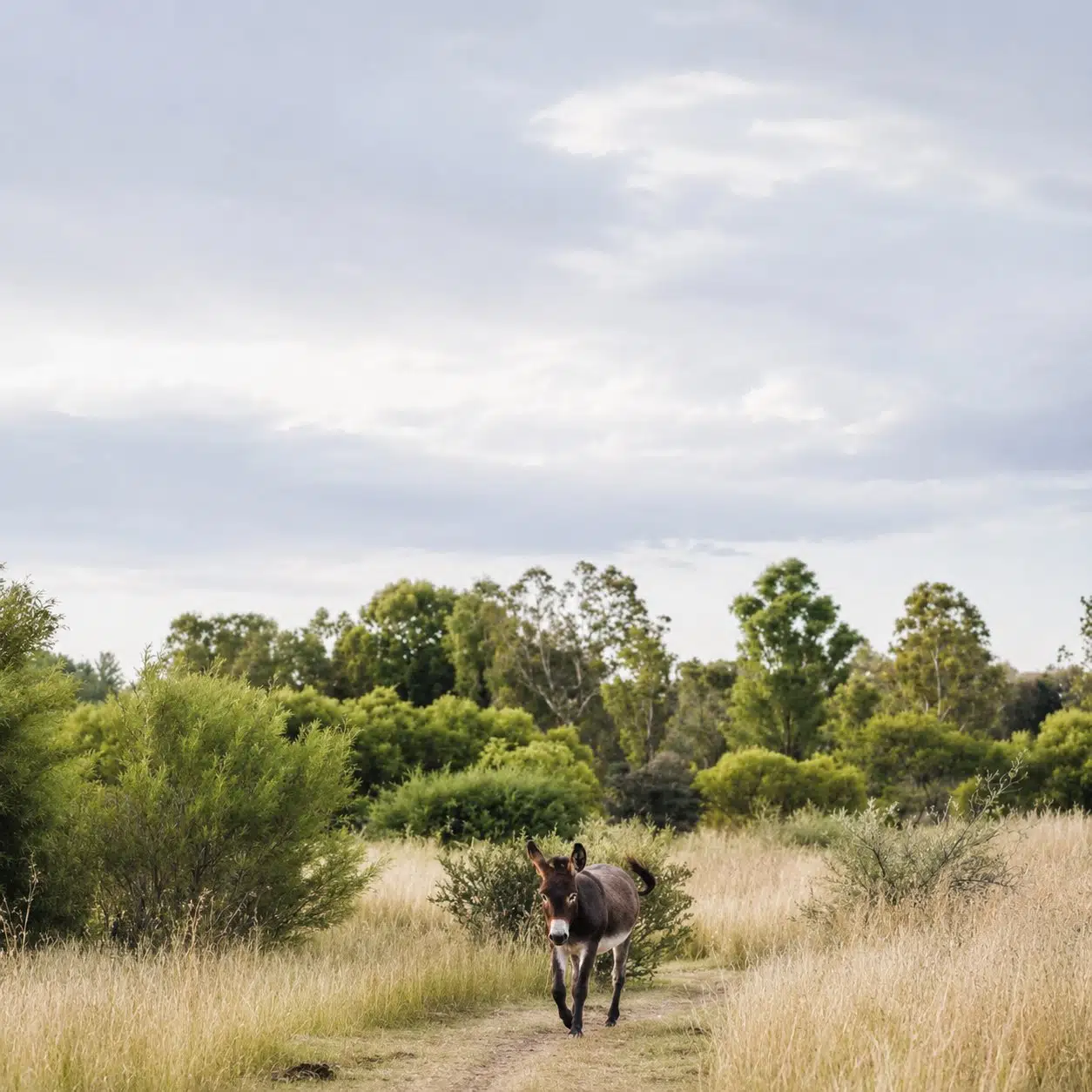
The house is read through the garden first. Mature trees, low planting, filtered light and small outdoor rooms soften the building and make the threshold between inside and outside feel informal, lived-in and personal.
I read every inquiry myself. The questions below help me understand your site, what matters to you, and how you want to live. This is the start of a conversation, not a quote request.
Answer as much or as little as you like. The questions are here to help us understand the project — there are no wrong answers.
For private clients who have the property, the ambition and the budget — but want clarity before making expensive appointments or irreversible decisions. We sit on your side of the table: shaping the brief, identifying the right architectural and specialist team, and protecting the intention of the project from first conversation to final handover.
“A good project starts before a drawing. It starts with a clear brief, the right people and someone trusted to protect the client’s interests.”
The Curator is a client-side advisory role for clients who need an informed, independent person between their private ambition and the professional world of architects, designers, consultants, suppliers and contractors. We do not act as the architect on these projects. We help you understand what should be built, who should be appointed, how the brief should be protected, and which decisions carry the greatest long-term risk. We are completely independent and unbiased. We do not accept commissions, referral fees, supplier incentives or contractor kickbacks. Our obligation is to the client, the brief and the final quality of the project.
You may already have the site, budget and ambition, but you are not yet sure who to appoint, how to brief them, or how to compare one professional team with another.
High-value projects become expensive when the brief is vague. We turn lifestyle, privacy, travel, hosting, art, staff, security and long-term use into a clear document the team can work from.
When design, budget, procurement and personal taste start pulling in different directions, we help test each decision against the original intention and the quality of the finished home.
Some clients do not want their home, budget, location or personal priorities publicly discussed. We structure conversations and references with the appropriate level of discretion from the beginning.
The brief is the first serious act of the project. It records how you want to live, what the property must become, what matters most, what should be avoided, and what the team must protect. It gives the architect and specialist team a clear starting point, and it gives the client a reference point when decisions become expensive, emotional or complicated.
We reduce uncertainty before the project gathers cost and momentum. The outcome is a clear master brief that defines what the property should become, what must be protected and what should be avoided.
We help identify and assess architectural firms, designers, consultants, makers and specialists against the brief, the client’s temperament, the site, the budget and the discretion required.
We review proposals, materials, interiors, art, landscape, lighting and sourcing in context, so the project remains one coherent environment rather than a collection of separate decisions.
We remain independent of suppliers and consultants. No commissions. No referral fees. No hidden incentives. The advice protects the client’s time, privacy, budget discipline and the quality of the final result.
The Curator does not replace the professional team. It gives the team a clear, intelligent centre to work from. From first conversation to completion, each decision is tested against the original brief, the client’s way of living and the quality of the final environment. The role is calm, independent and protective: to make sure the project remains what it was meant to become.
A private discussion around the client, the property, the lifestyle, the concerns and the opportunity. We listen before anything is proposed.
A written, client-approved brief is developed. It becomes the reference document for the property, the design team and all major decisions.
Architects, designers, consultants and specialists are considered according to fit, ability, trust and project relevance — not commission, convenience or fashion.
Design direction, interior language, sourcing and specialist input are reviewed in context so the project remains coherent and the client remains properly informed.
The project is brought together as a complete environment — spatially resolved, materially coherent, carefully considered and ready to be lived in.
Private client enquiries are handled directly by Philip Nel. The first conversation is confidential and without obligation. It is not a sales pitch; it is a careful discussion to understand whether the client, property, timing and level of trust are right for this kind of advisory relationship. Engagements are structured privately according to the scale, location, duration and level of advisory involvement required.
Client names, addresses, budgets and project details are never shared or published without explicit permission. Where references are relevant, they are introduced personally and only at the appropriate stage of an engagement.
We are paid by our clients only. We do not accept supplier commissions, consultant referral fees or contractor incentives. The purpose is to reduce the risk of the wrong appointments, an unclear brief, fragmented decision-making and a final home that does not reflect the client’s life. If we are not the right fit, we will say so clearly — and where possible, point you toward someone better suited.
All private enquiries are treated with absolute discretion.
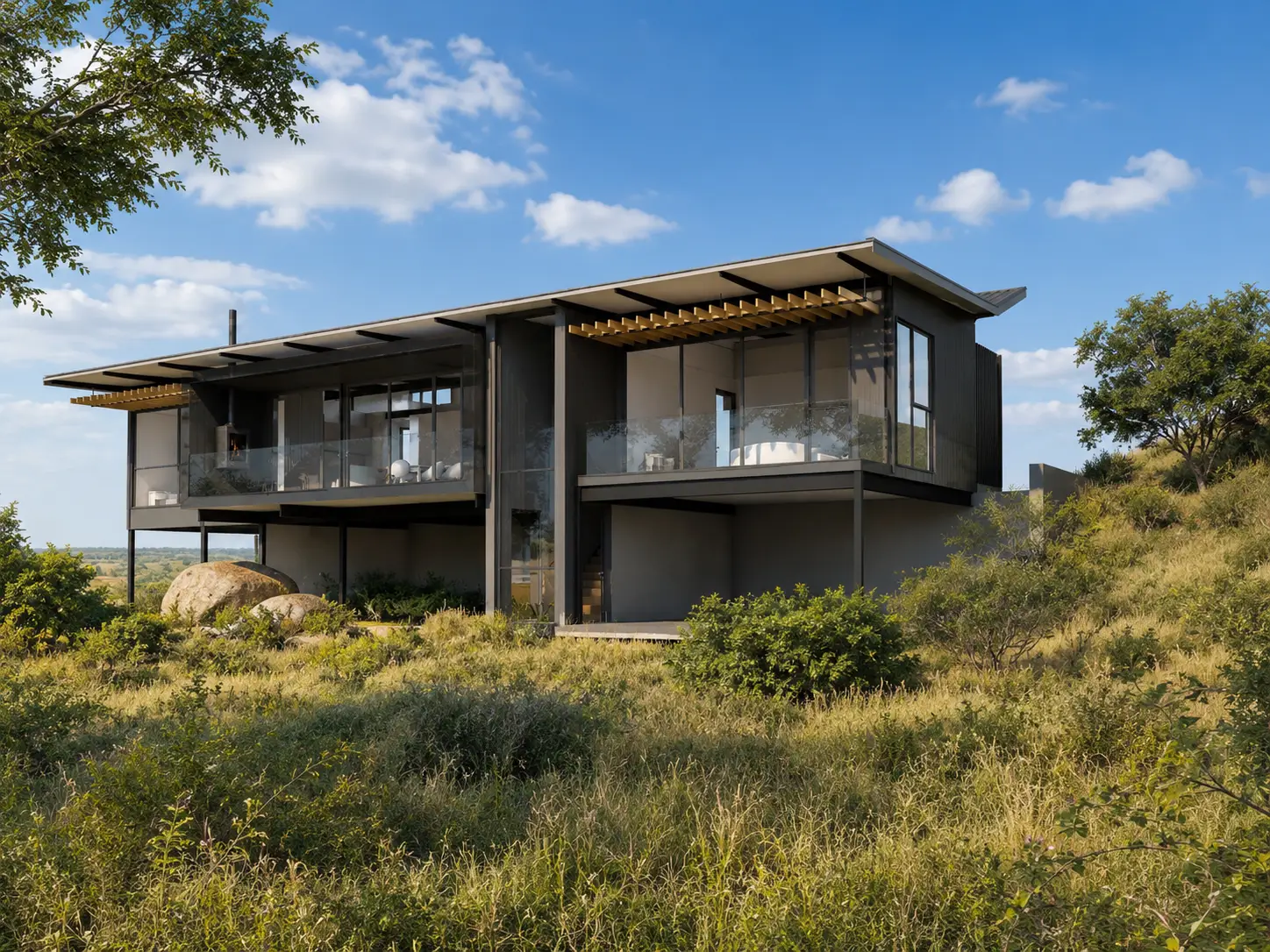
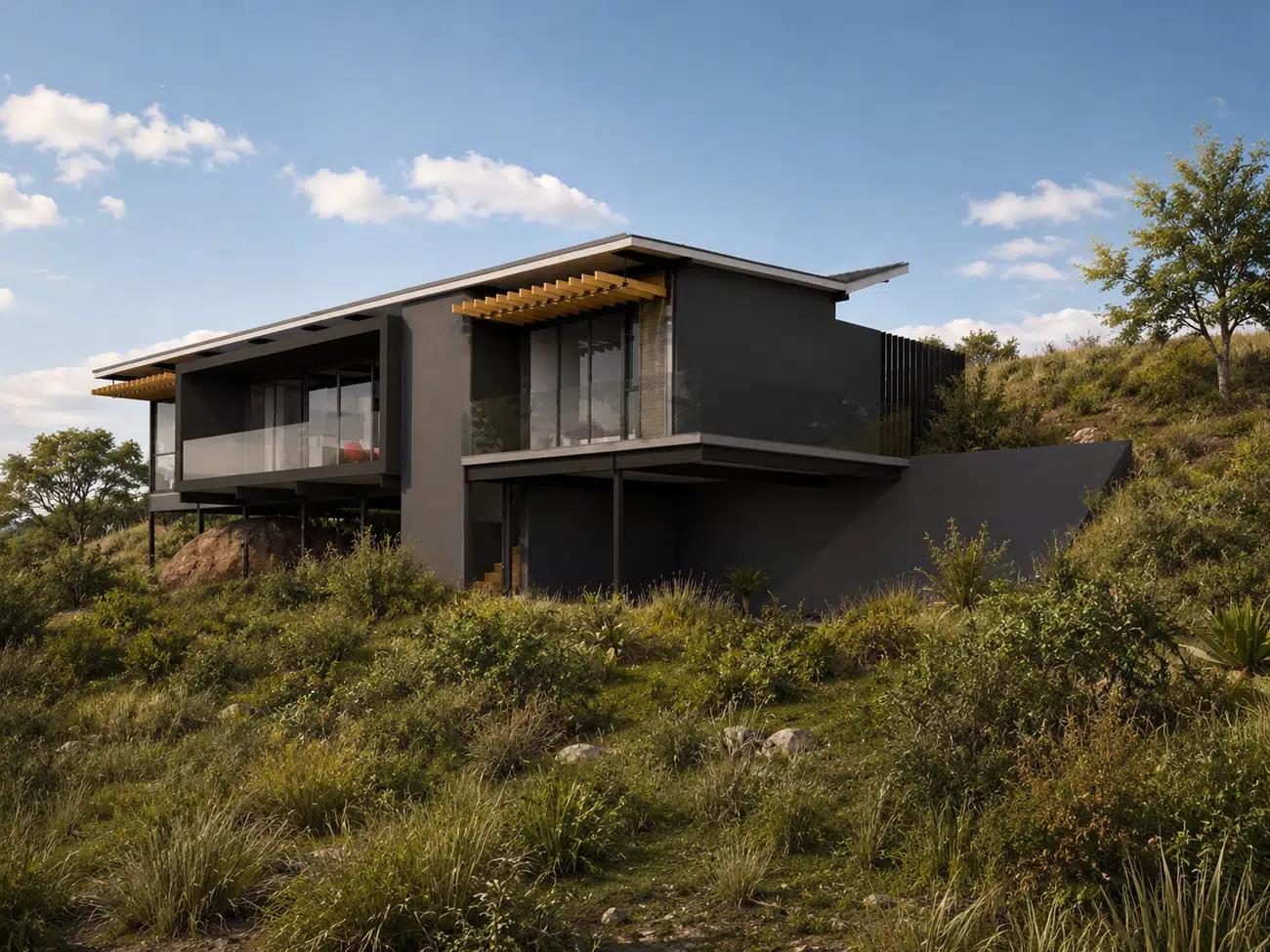
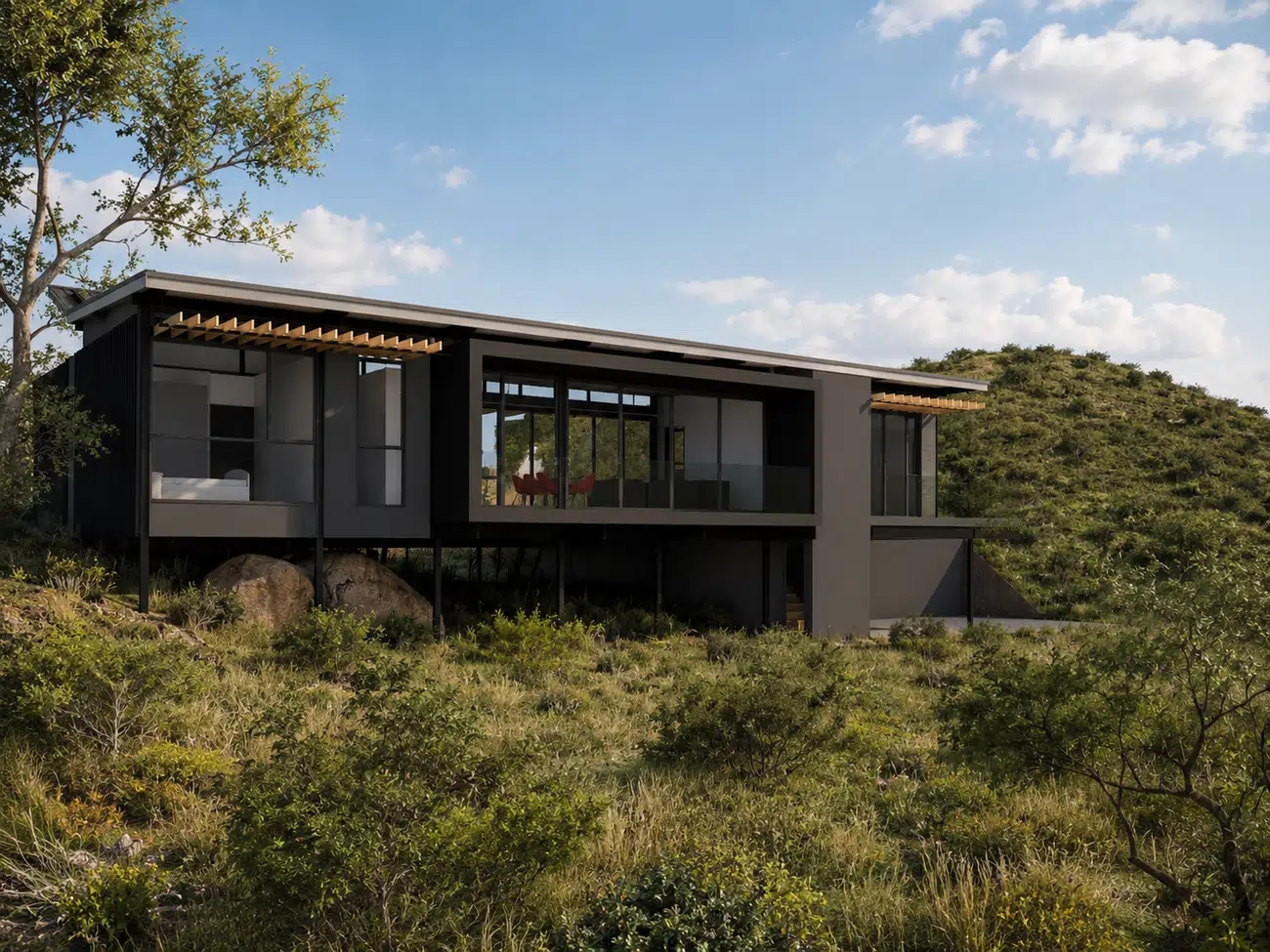
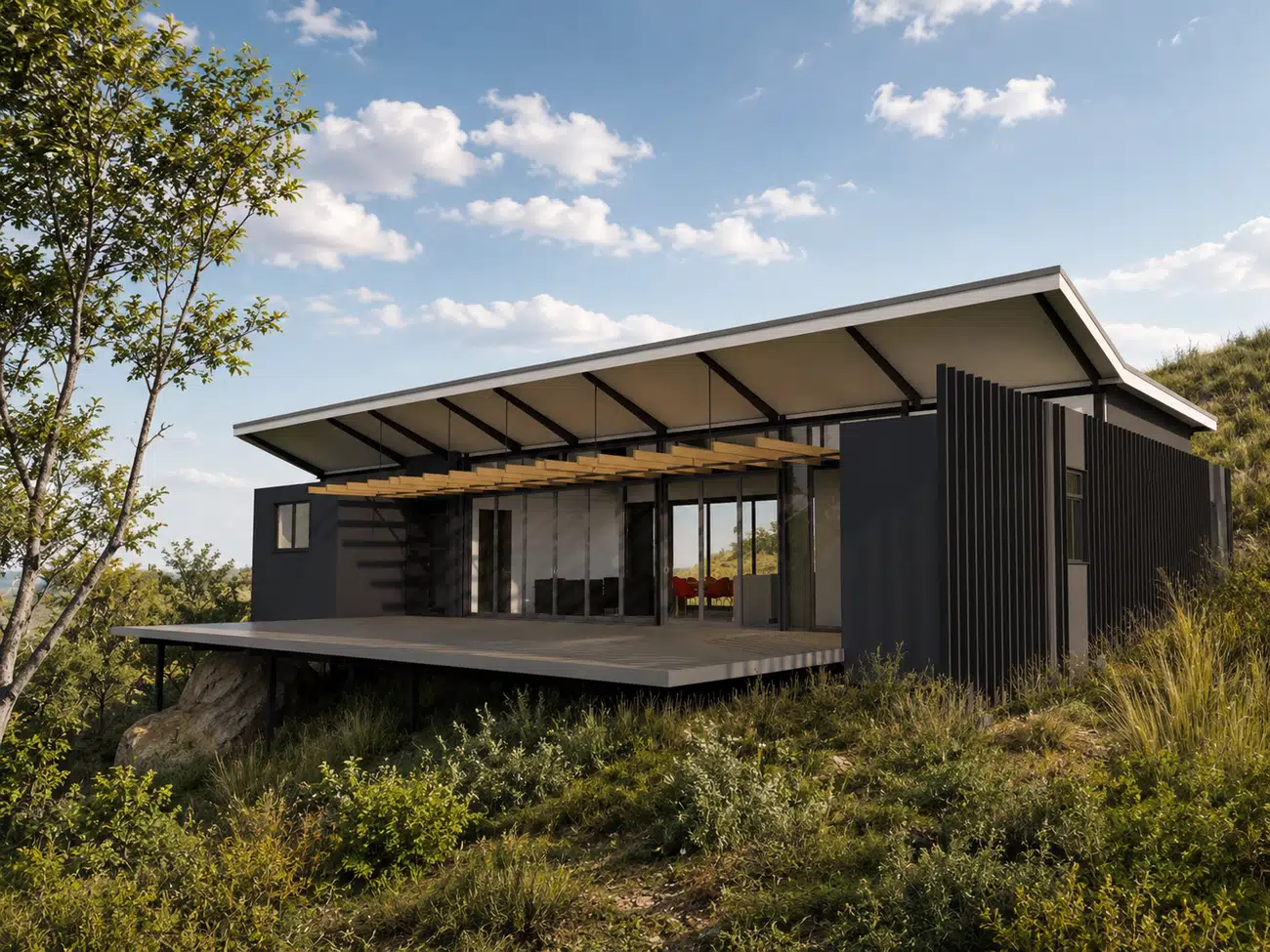
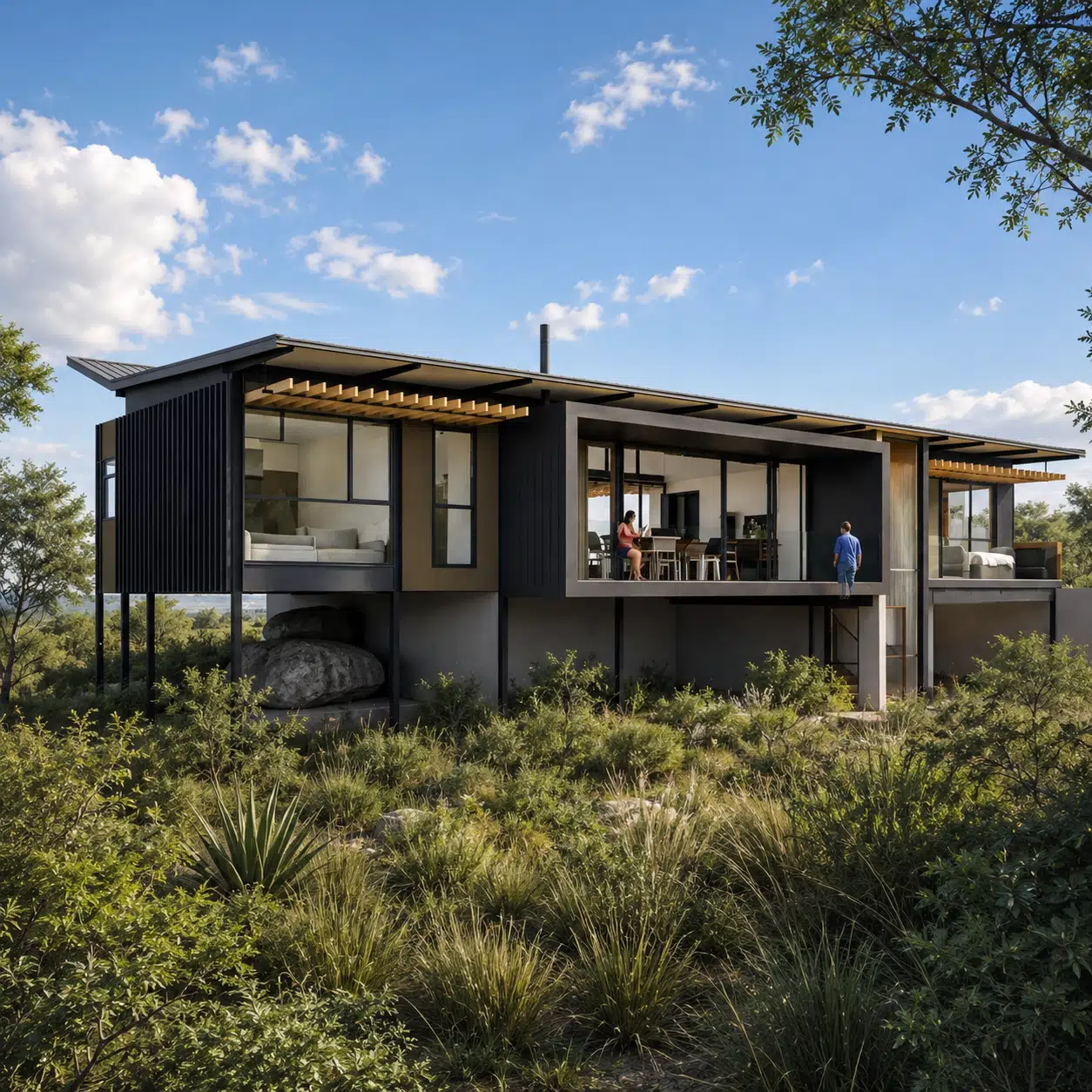
This home is positioned to belong to the bushveld rather than dominate it. The architecture steps lightly into a lush hillside setting, with long roof overhangs, broad glazing and shaded outdoor edges that invite the landscape directly into daily life.
The intention is calm, refined and site-led: a contemporary house that feels protected and open at the same time. Indigenous planting, textured groundcover and a sculptural boulder beneath the left opening help root the building naturally into its setting while preserving the light elevated character of the design.
This VISI magazine feature documents Philip and Lisa Nel's compact prefabricated Bloemfontein home — a lived example of Inizio's early thinking around design, making, material precision and a close relationship to landscape.